
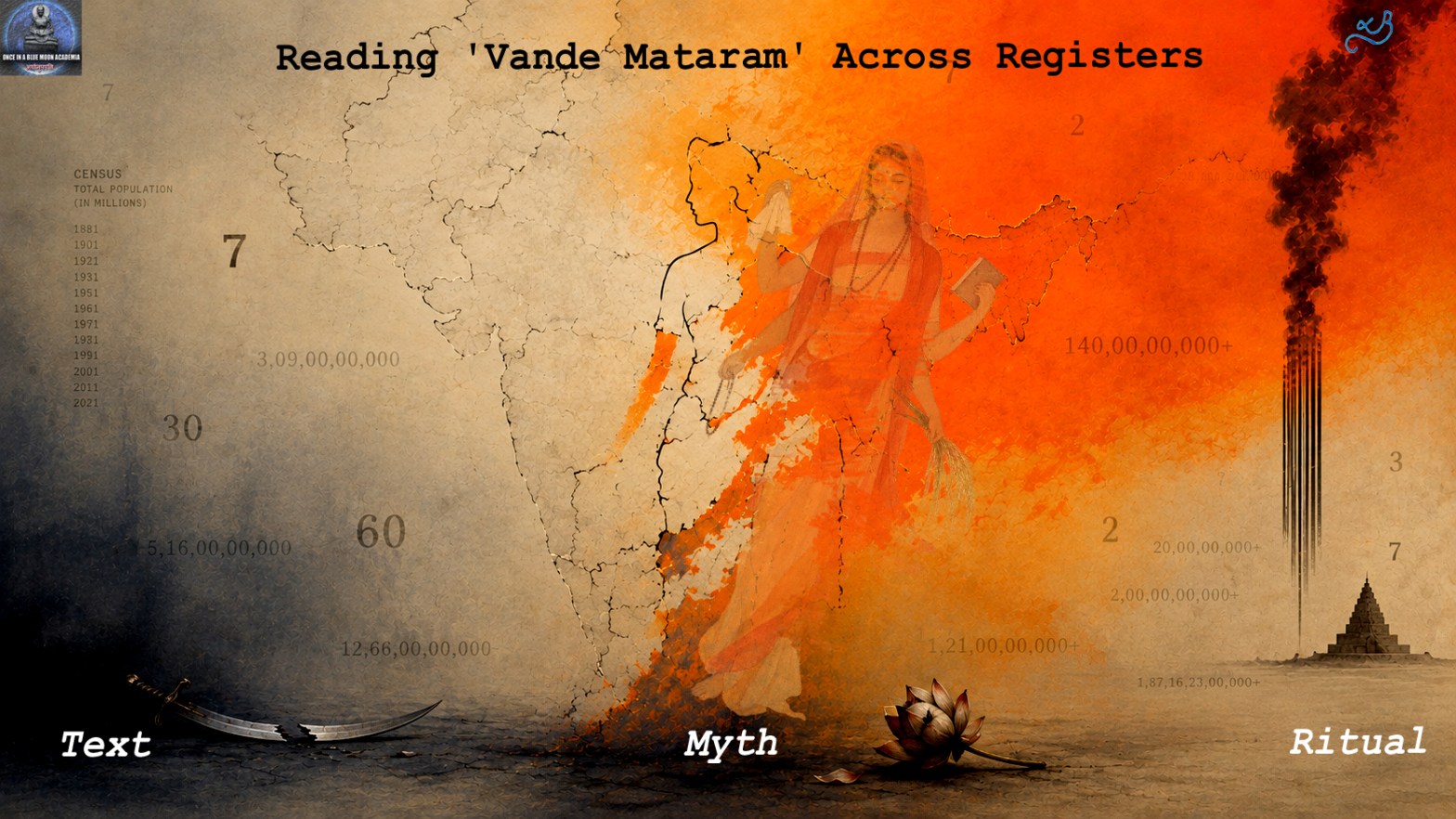
This “reading” traces Vande Mātaram’s discursive transformation(s) from a specifically Bengali hymn into an unstable national emblem and, finally, a ritualised test of belonging. It begins with the demographic hinge of saptakoṭi/dvisaptakoṭi—seven crore throats and fourteen crore arms—corresponding to the Bengal Presidency, not India, and follows its mutation from Bankim’s fixed text to the 1905 inflation of thirty crore, the Republic’s excision of the number-bearing and goddess-identifying stanzas in 1937–50, and the later dissolution into unbounded koṭi-koṭi. Across page, stage, state and popular transmission, the essay asks what happens when a countable provincial people becomes an infinite, unauditable mass. It reads the hymn through the genesis of Ānandamaṭha, Tagore’s counter-discourse of neśā, the colonial genealogy of mātṛbhūmi/mātṛbhāṣā, and the “(M)Other-Tongue” mechanism that manufactures Others. The stanza-by-stanza appendix tests the hymn’s claims of water, fertility, beauty, knowledge, feminine strength and sustaining earth against ecological depletion, educational precarity, demographic violence and extractive concentration, exposing a structure in which the signifier survives while the referent is hollowed out. The blurred number, singular vande, and 2026 penalisation of disruption converge as political ritual: citizen becomes chorus, dissent filial betrayal. The argument is not that singing is illegitimate, but that compelled, unexamined singing surrenders the critical freedom citizenship requires; to decline the chant is not to refuse the country, but to refuse a mistranslation, a miscount, a manufactured Mother, and the disappearance of the historically located citizen into an infinite chorus.
Category Archives: Art of Resistance
Following the dictum “Cultural revolution must precede political revolution”, we are striving to create the scope for an alternative cultural space, which can offer resistance to all forms of coercion, and can also serve as a medium for conducting non-violent, horizontal dialogical exchanges.
মঁসিয়ে ফুকোর খ্যামতার কলাপ আর আজকের প্রলাপ

What happens when Foucault is read not as a doctrine but as a device that reads back? Beginning with the sword suspended supposedly above Damocles, this essay follows its displacement—from sovereign threat to dispositif, from visible punishment to (in)visible surveillance, from the juridico-discursive to the rhizomatic capillary, from the sovereign who commands to the subject who learns to govern itself. Rather than applying Foucault to contemporary India, the essay de-seminates him in the context of present-day India: concepts scatter across Damocles, Orestes, parrhesia, the rhizome, the Frankfurt School, algorithmic surveillance, autocratic legalism, electoral politics, guilt and self-discipline, repeatedly returning in altered forms. The rhizome becomes both possibility and trap; the network that once promised escape from sovereign centrality can become an architecture of distributed control, while the sword need no longer fall because its possibility has been internalised. Against any simple opposition between power and resistance, the essay asks how resistance itself is captured, reproduced and redirected through the very dispositifs it contests. It is thus an exercise in meta-writing: Foucault is read through Foucault, against Foucault, and beyond the stabilising authority of “Foucauldian-ism”, as the essay moves between theory, myth, political diagnosis and its own acts of reading. What emerges is not a final thesis but a deliberately unstable map of power—one in which the question is no longer merely where power resides, but how subjects, networks, institutions and affects continually participate in making, unmaking and remaking its forms.
Azadi, or Democratic Unfreedom? A Video Message from OBMA

This video asks what “Azadi” (freedom) means in India today, and whether the formal existence of democracy can coexist with a lived condition of democratic unfreedom. Tracing the period from 2014 to 2026, it examines the erosion of civil liberties, institutional accountability, democratic participation, ecological security, and economic justice, before asking what genuine freedom might require: the Right to Reject, the Right to Recall, a partyless democracy, and an ecological politics rooted in Oikos — our shared home.
The Shah Dossier: Resign, Union Home Minister!

This citizens’ charge-sheet documents twenty-one instances of foreclosed accountability, institutional failure and the systematic manufacture of impunity under Amit Shah as Union Home Minister — from the Gujarat encounter cases and the tadipaar externment, through surveillance, financial opacity, the architecture of control in Kashmir, CAA–NRC and electoral machinery, to security collapses in Manipur, Pahalgam and on the China border, culminating in the use of brutal and repressive force against unarmed students at Jantar Mantar. It demands his resignation and the democratic rights of recall and reject.
FINANCE MINISTER and CORPORATE AFFAIRS MINISTER: RESIGN! SCRAP IBC!
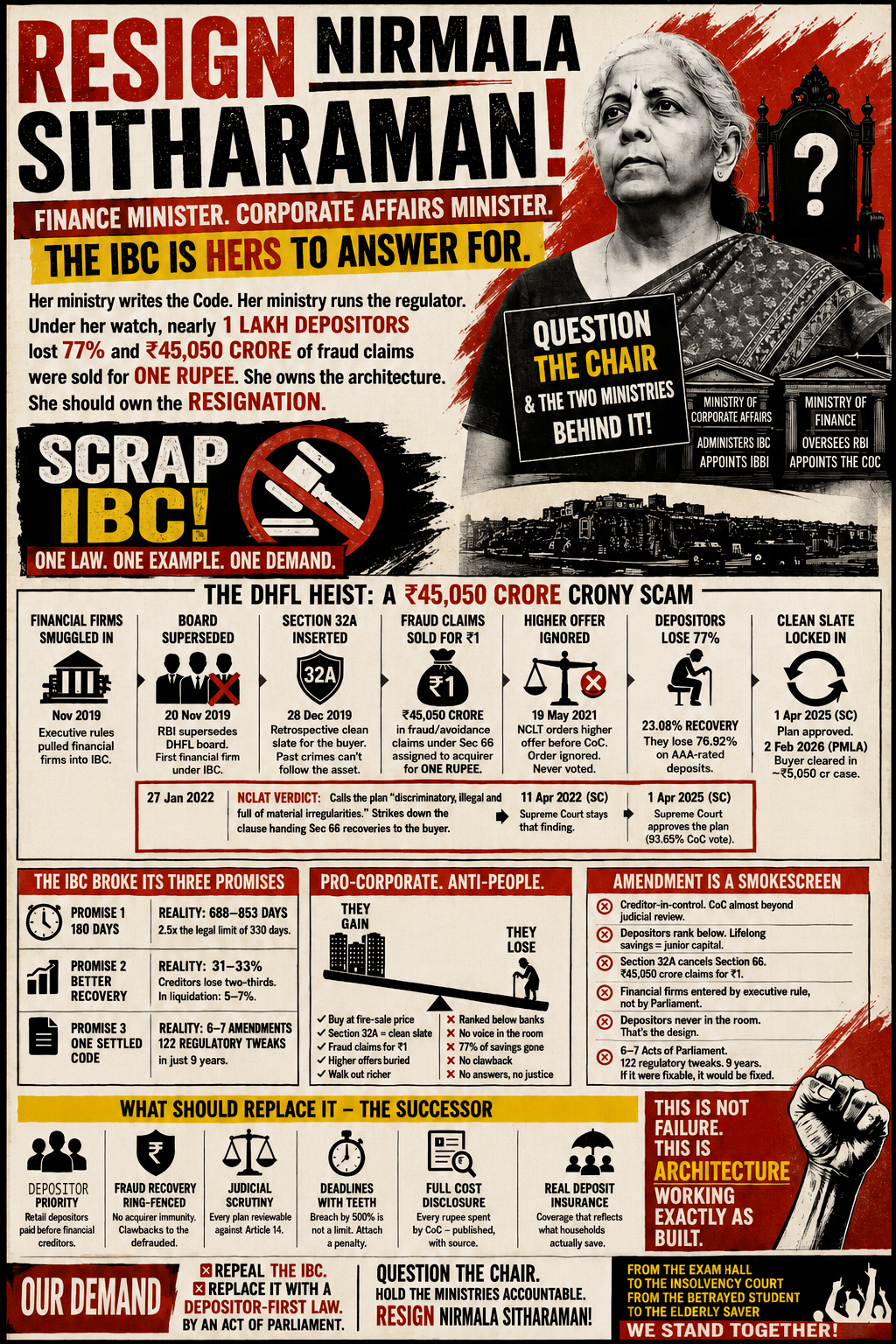
In the shadow of nationwide student uprisings demanding the resignation of Education Minister Dharmendra Pradhan and the overhaul of NEET and the NTA, this manifesto stands in unbreakable solidarity and expands the battlefield: Finance and Corporate Affairs Minister Nirmala Sitharaman must resign, and the Insolvency and Bankruptcy Code 2016 must be repealed outright. Under her dual ministries the IBC has delivered its true design—nearly one lakh mostly elderly DHFL depositors stripped of 77 percent of their AAA-rated savings while ₹45,050 crore in proven fraud claims were sold to the acquirer for one rupee and wiped clean by the retrospective shield of Section 32A. A law sold as swift justice now averages 688–853 days, recovers only 31–33 percent, and has been rewritten by at least six parliamentary amendments plus 122 regulatory tweaks in nine years. Financial firms were smuggled in by executive notification, tribunal orders protecting higher offers for depositors were ignored, and the very Committee of Creditors that decided the fate of public money cannot account for its own spending. This is not failure; it is architecture working exactly as built—public risk socialised, private reward privatised. Scrap the Code. Replace it with a depositor-first resolution law passed by Parliament. Question the chair. Resign Nirmala Sitharaman. #SCRAP_IBC
A Solidarity Statement for Sonam Wangchuk, Satyagrahi of the Anthropocene
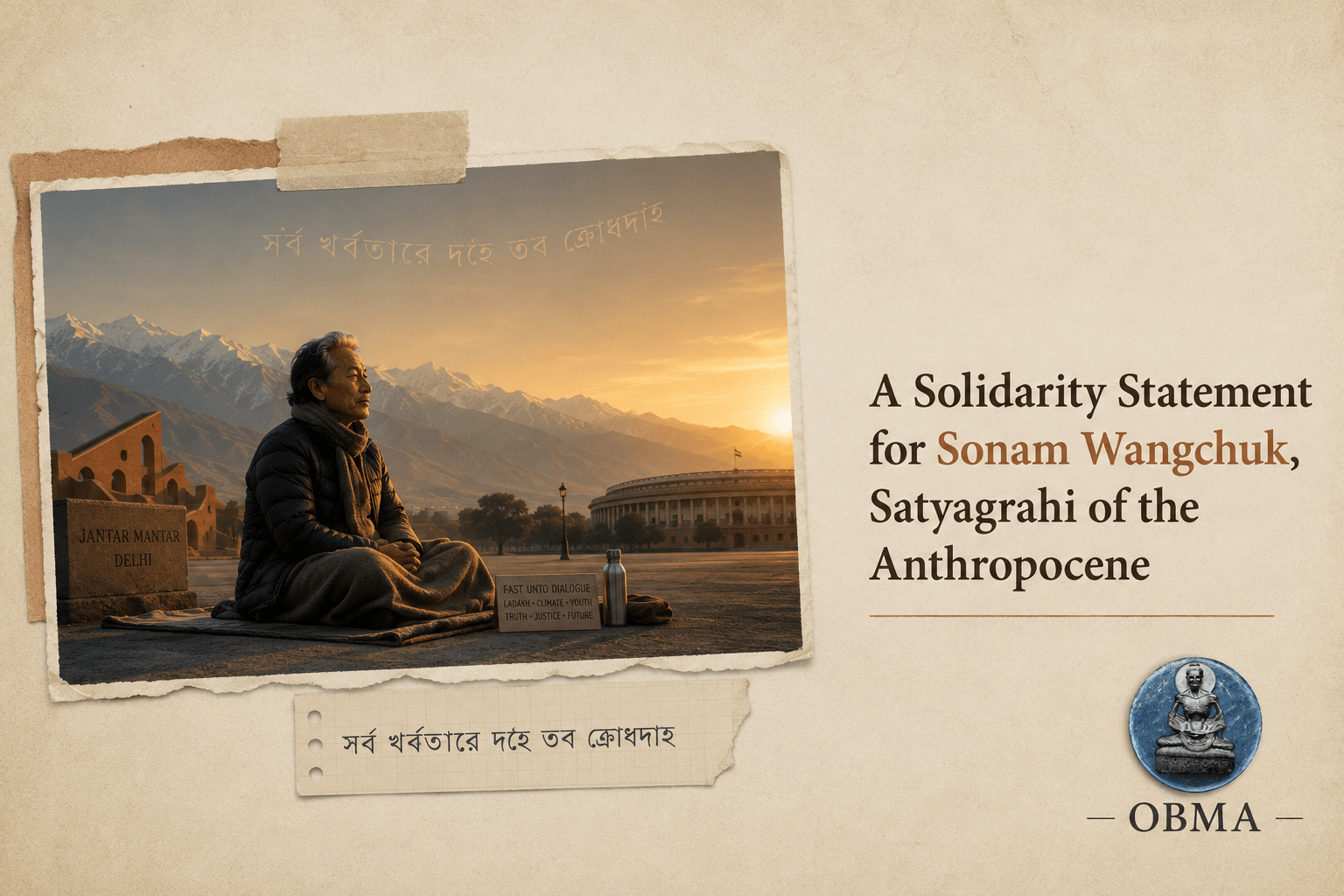
On the 17th day of his indefinite hunger strike at Jantar Mantar, Sonam Wangchuk continues his non-violent resistance for justice, dialogue, and ecological protection of Ladakh. Echoing Jatin Das’s 1929 martyrdom and G.D. Agarwal’s sacrifice for the Ganga, Wangchuk’s ātmaśakti exposes the Indian state’s moral deafness and hypocrisy in the face of genuine satyagraha. Invoking Tagore’s fiery Bhairava hymn — “sarva kharvatāre dahe tava krodhadāha” — this post calls for solidarity with a man who has become the moral centre of a republic that has abandoned its conscience.
Godiwood Stripped: An Exposé of BJP-Hindutva Propaganda Films (Review Series— Part I)

This review series (Part-I) examines a growing cycle of Hindi cinema—from PM Narendra Modi (2019) to Dhurandhar 2 (2026)—that have widely been characterized as aligned with BJP/Hindutva Islamophobic messaging, spanning hagiographic biopics, Partition and Kashmir “history” dramas, and jingoistic war thrillers. Drawing on MouthShut, Times of India, IMDb, and Rotten Tomatoes reviews by OBMA members alongside box office data and social media reception, each entry is read as trading historical nuance and artistic craft for majoritarian narrative-building, victimhood framing, and militarism. The pattern across titles is uneven: a handful (Uri, The Kashmir Files, Dhurandhar 2) found commercial success through polarized mobilization, while most (PM Narendra Modi, Tejas, Emergency, Udaipur Files, Operation Valentine, The Taj Story, Main Atal Hoon) underperformed financially and drew sharply negative critical notices despite inflated partisan audience scores. The series argues that this divergence between critical consensus and box office fate exposes the limits of state-aligned cinema as propaganda, with Part II promising further entries (The Kerala Story, Article 370, Swatantrya Veer Savarkar, and others).
Damn the Dams!
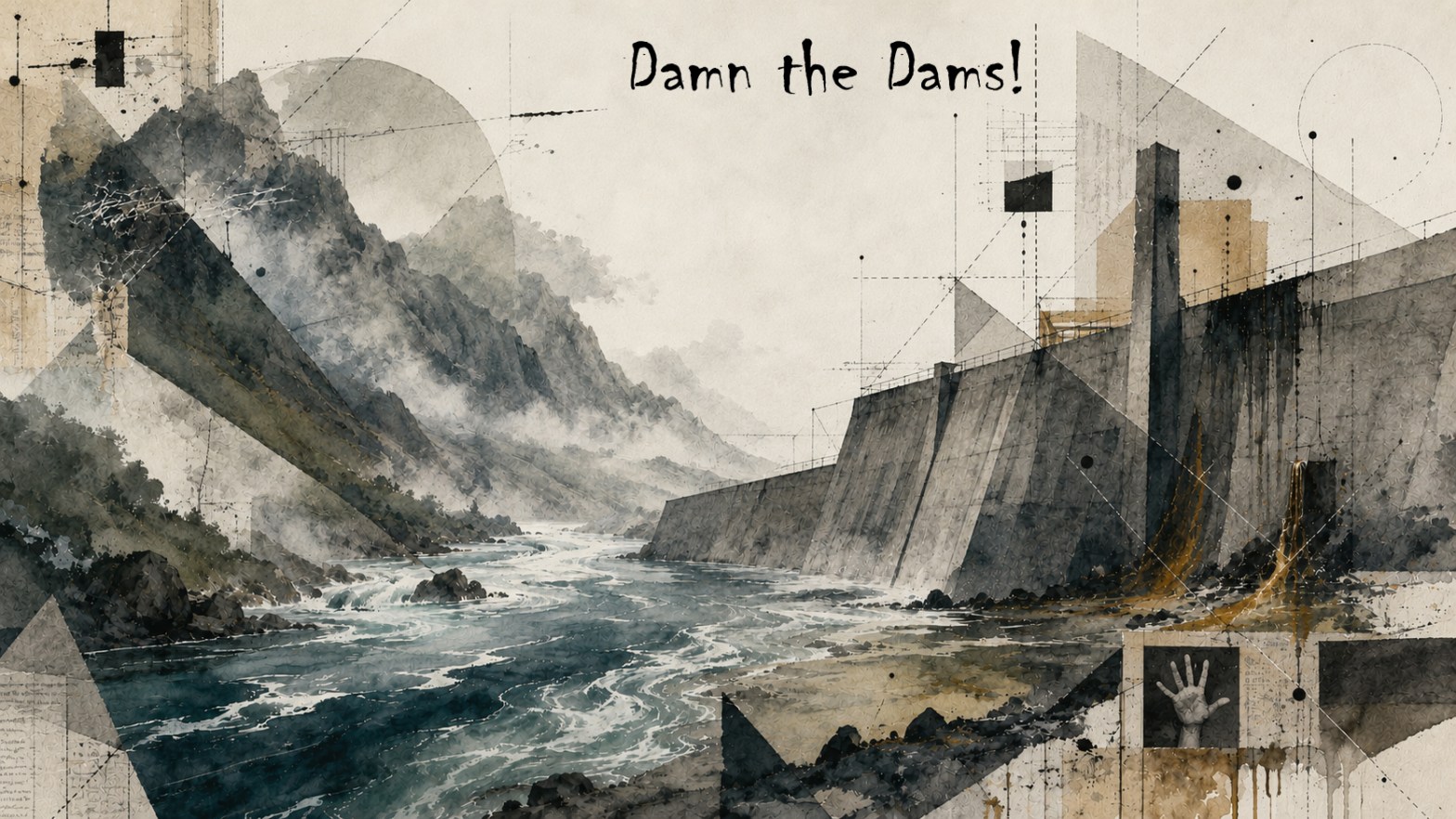
This paper critically examines the political ecology of mega dams and hydroelectric power through historical, scientific, and activist lenses, exposing the profound environmental, geological, and social costs that often eclipse their touted benefits. From Lenin’s GOELRO electrification drive and Nehru’s “temples of modern India” to the suppressed warnings of scientists Meghnad Saha and Kapil Bhattacharya, the analysis reveals how hydraulic nationalism has repeatedly silenced ecological knowledge, leading to reservoir-induced seismicity (as in Koyna), catastrophic siltation, landslides, and dam failures. Drawing on cases like the Tehri Dam, Farakka Barrage, Vaiont, and Banqiao disasters, alongside Gandhian resistance by Sundarlal Bahuguna, Baba Amte, and the Narmada Bachao Andolan, and cultural critiques in Tagore’s Muktadhara and Tarkovsky’s Stalker, the author argues for a fundamental reevaluation prioritizing river integrity, democratic consent, and geological realism over technocratic hubris. In an era of climate change, the paper calls for letting rivers flow as essential to ecological justice and human survival.
The Aeroplane’s Gaze: Mountain, Market and Martyrs
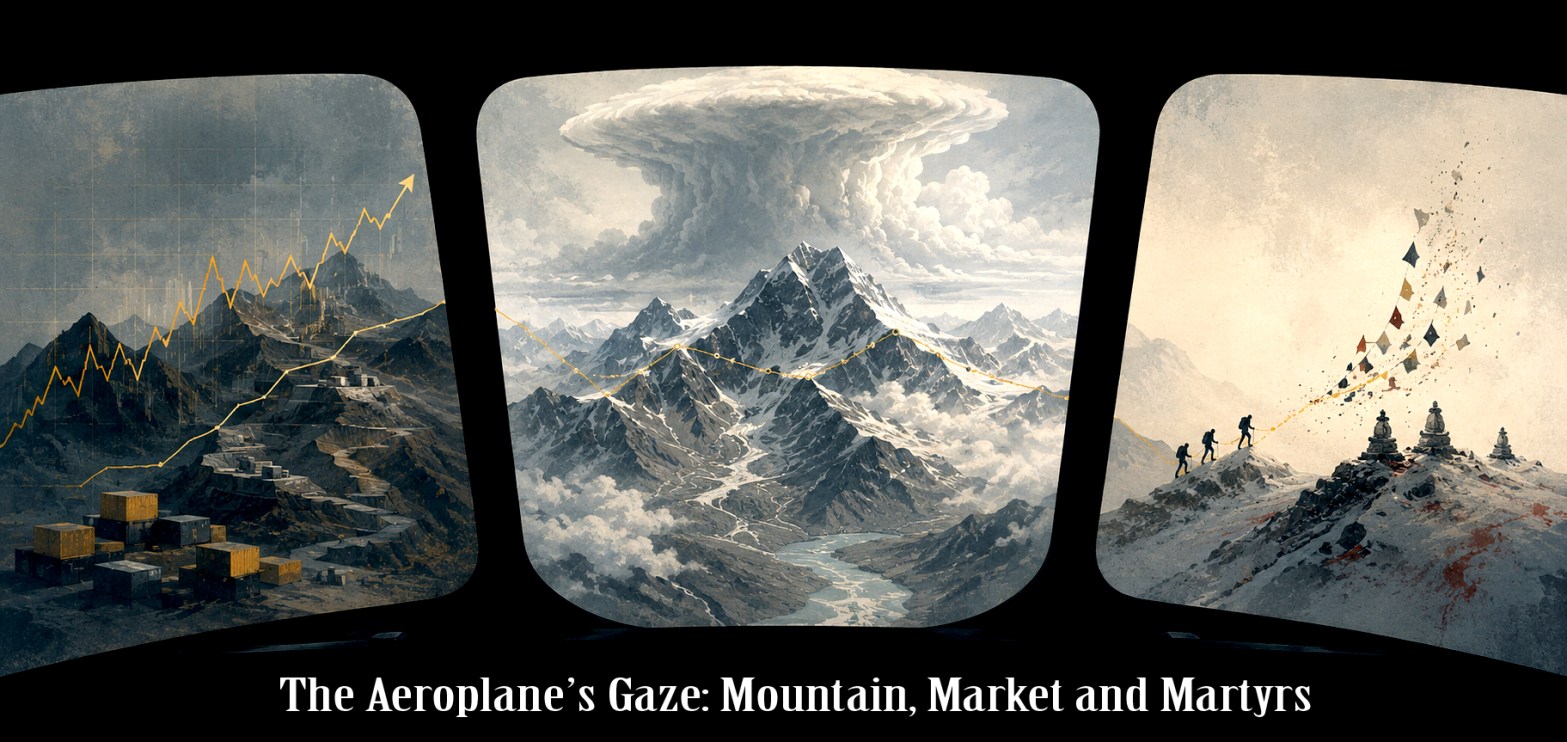
In this climate horror narrative with a positional paper disrupting the narrative flow, the author weaves personal flights over a rapidly thawing Himalaya with a critique of the “Three Ms”—Mountaineering, Market, and Martyrs—to expose how post-1990 commercialization has transformed high-altitude climbing into a neoliberal experience economy that commodifies risk, normalizes preventable deaths, and externalizes massive ecological waste onto fragile ecosystems. Drawing on observed glacial retreat, shrinking snowlines, data from Everest expeditions (e.g., 2019’s 877 summits and 11 deaths; 2025 permit hikes and ongoing congestion), the Chhanda Gayen case study, and corporate sponsorship spectacles, the analysis reveals how market logic—sunk-cost pressures, sponsorship demands for novelty, and regulatory filters—produces economic fatalism and “regulatory martyrdom” while generating symbolic capital from sacrifice and legacy trash (tens of tons of plastic, human waste, and gear). Framed by Tagorean imagery, Kalidasa’s metaphors, and Heideggerian reflections, the work culminates in a call to dismantle these structures, positioning the author’s embodied witness—flying through turbulent “intentioned” clouds—as a reversal from being-towards-death to death-towards-being, urging emancipation through corporeal awareness amid capitalism’s atmospheric and terrestrial violence.
The “Secular” State Paradox: the Erosion of Constitutional Secularism in Contemporary India
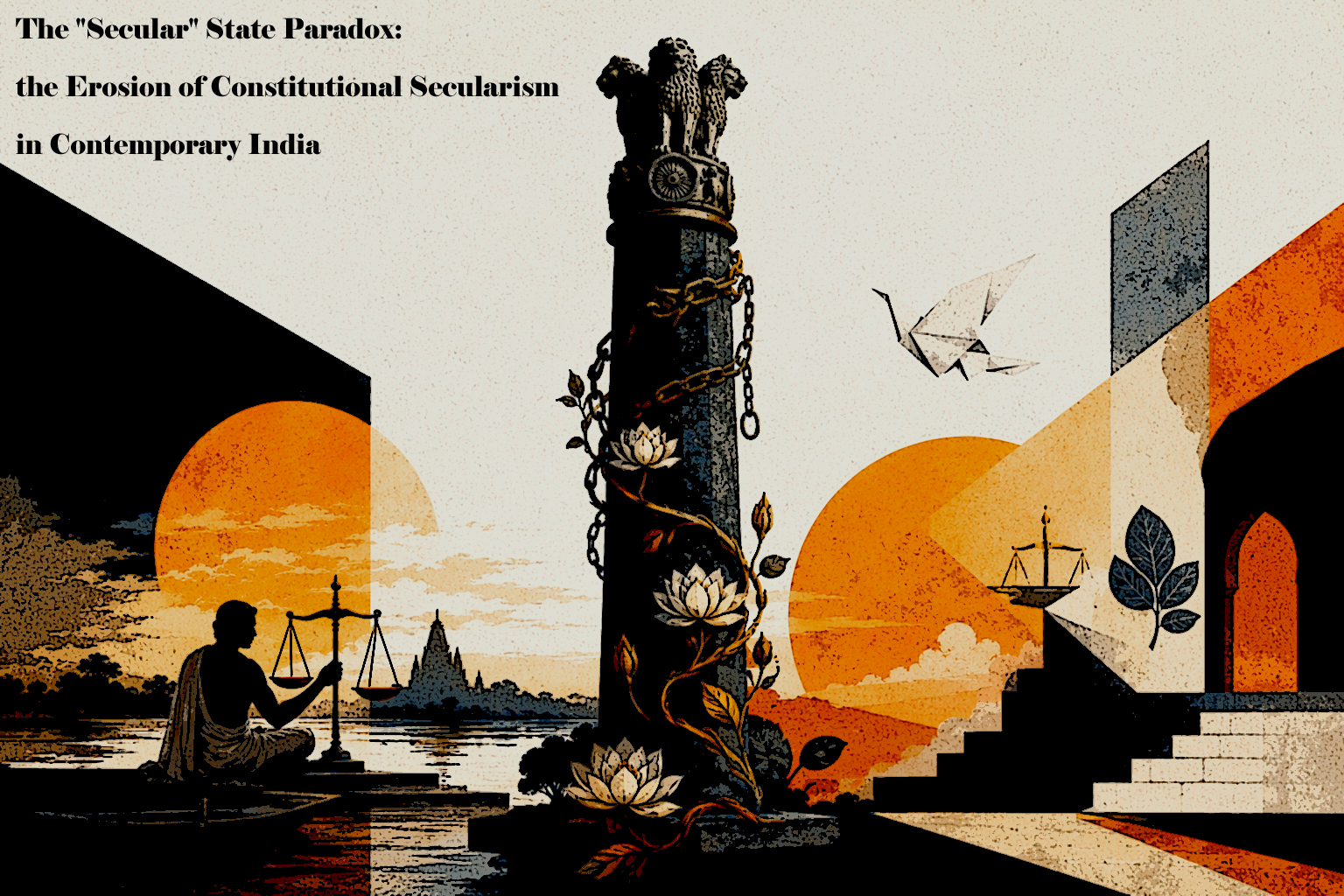
Since 2019, Prime Minister Narendra Modi has systematically blurred India’s constitutional separation between the state and religion—a doctrine central to India’s secular democracy since 1950. This article documents seven major constitutional violations spanning religious ceremony participation (Ram Mandir consecration, January 2024; Central Vista Parliament inauguration, May 2023), executive-judicial merger (Ganesha Puja at CJI DY Chandrachud’s residence, September 2024), selective state support for Hindu rituals over Muslim prayer practices (Red Road Yoga Day vs. namaz bans, June 2024), misappropriation of state security apparatus for personal religious acts (Z+ protection for sacred baths), documented abdication of constitutional duty during a national security crisis (Bear Grylls shoot during Pulwama attack, February 2019), and ecological destruction for religious symbolism (Yamuna “beautification” project). Each violation contradicts established constitutional convention (the Rajendra Prasad precedent of 1951), invokes specific legal provisions (Articles 14, 15(1), 25, 36, 44, 48-A, 50, 51-A(h), 60, 75), and collectively demonstrates how the “impunity loop”—where executive overreach faces no judicial reckoning—has eroded India’s foundational secular guarantee. The Central Vista Parliament consecration is particularly egregious: by permanently installing a religious symbol (the Sengol, representing divine-right monarchy) in the Speaker’s chair and framing Parliament as a Hindu “temple,” Modi has transformed the highest legislative chamber itself into a site of state-sponsored Hindu nationalism. Drawing from Supreme Court jurisprudence on basic features (Kesavananda Bharati), Article 32 remedies, separation of powers doctrine, and administrative law, this article argues that these violations constitute not individual transgressions but a systematic architecture of “selective secularism” that transforms Hindu nationalism into state policy while marginalizing minority rights. The article traces the “impunity loop” mechanism—how each violation normalizes the next through institutional passivity (judicial silence), doctrinal innovation (the “24/7 duty” doctrine that abolishes answerability), and intellectual capture (reframing Hindu nationalist practices as “secular culture” while suppressing minority religious expression). The absence of Supreme Court intervention despite clear constitutional grounds, combined with parliament’s majority-government control and investigative agency capture, has created conditions where constitutional limits have become advisory. The article concludes that India’s secular Constitution remains intact on paper while its practice converges toward Hindu nationalist theocracy, raising urgent questions about whether institutional actors can recover their constitutional commitment before the basic feature of secularism is irreversibly eroded.

