
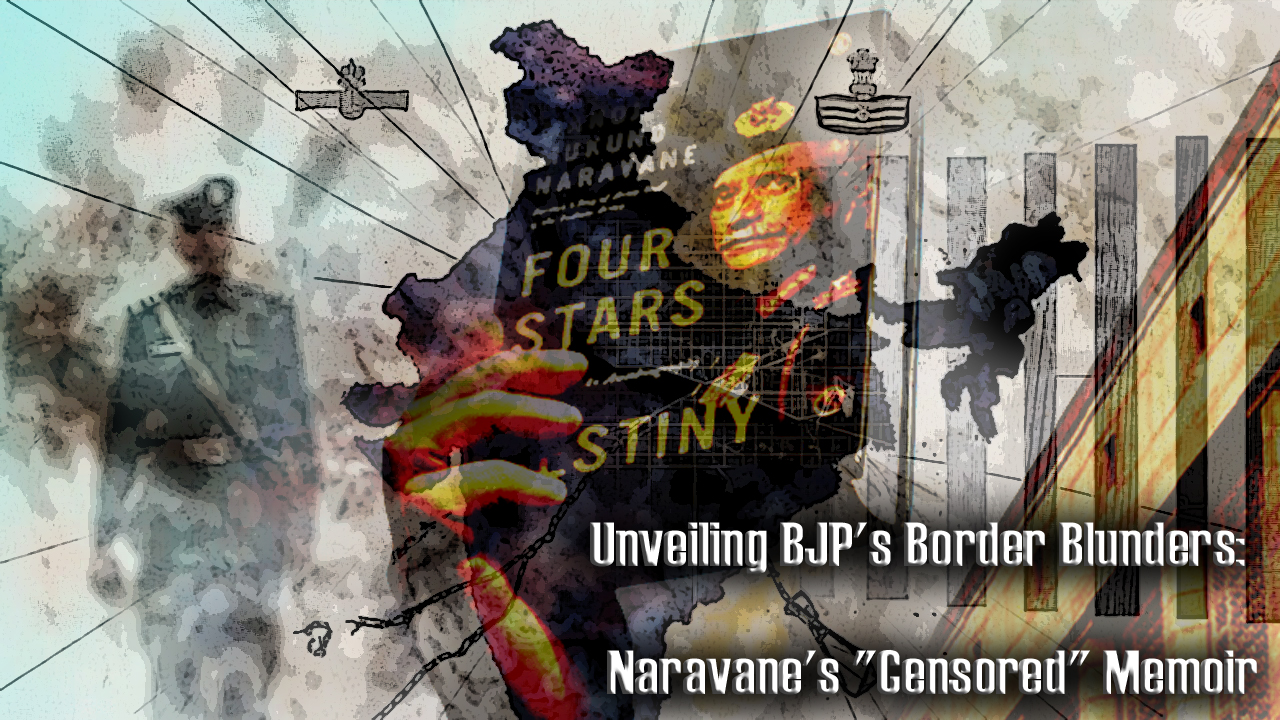
The review examines the “unpublished” (?) book Four Stars of Destiny: An Autobiography by General M.M. Naravane (retd.), former Chief of the Indian Army (2019–2022), in comparative dialogue with three major critical interventions on contemporary Indian state power: the BBC documentary India: The Modi Question, Rakesh Sharma’s Final Solution (2003), and Rana Ayyub’s Gujarat Files: Anatomy of a Cover-Up. While differing in form—military memoir, investigative journalism, and documentary cinema—all four works converge in unsettling dominant state narratives through documented, insider or evidentiary accounts of crisis, violence, and political accountability. The review argues that the prolonged suppression of Naravane’s memoir through bureaucratic delay constitutes a form of de facto censorship analogous to the formal banning, blocking, or marginalization faced by the other works. Read together, these texts reveal a patterned architecture of control in contemporary India, where power manages inconvenient truths not primarily through overt prohibition, but via procedural stalling, digital blocking, market denial, and epistemic delegitimization. The review situates this pattern within broader debates on civil–military relations, communal violence, and the politics of memory, suggesting that the real threat posed by these works lies in their capacity to reinsert ambiguity, failure, and hesitation into an official narrative built on certainty and spectacle.
Standard Chartered and Piramal Group: Regulatory Arbitrage, Insolvency Regimes and Risk Transfer
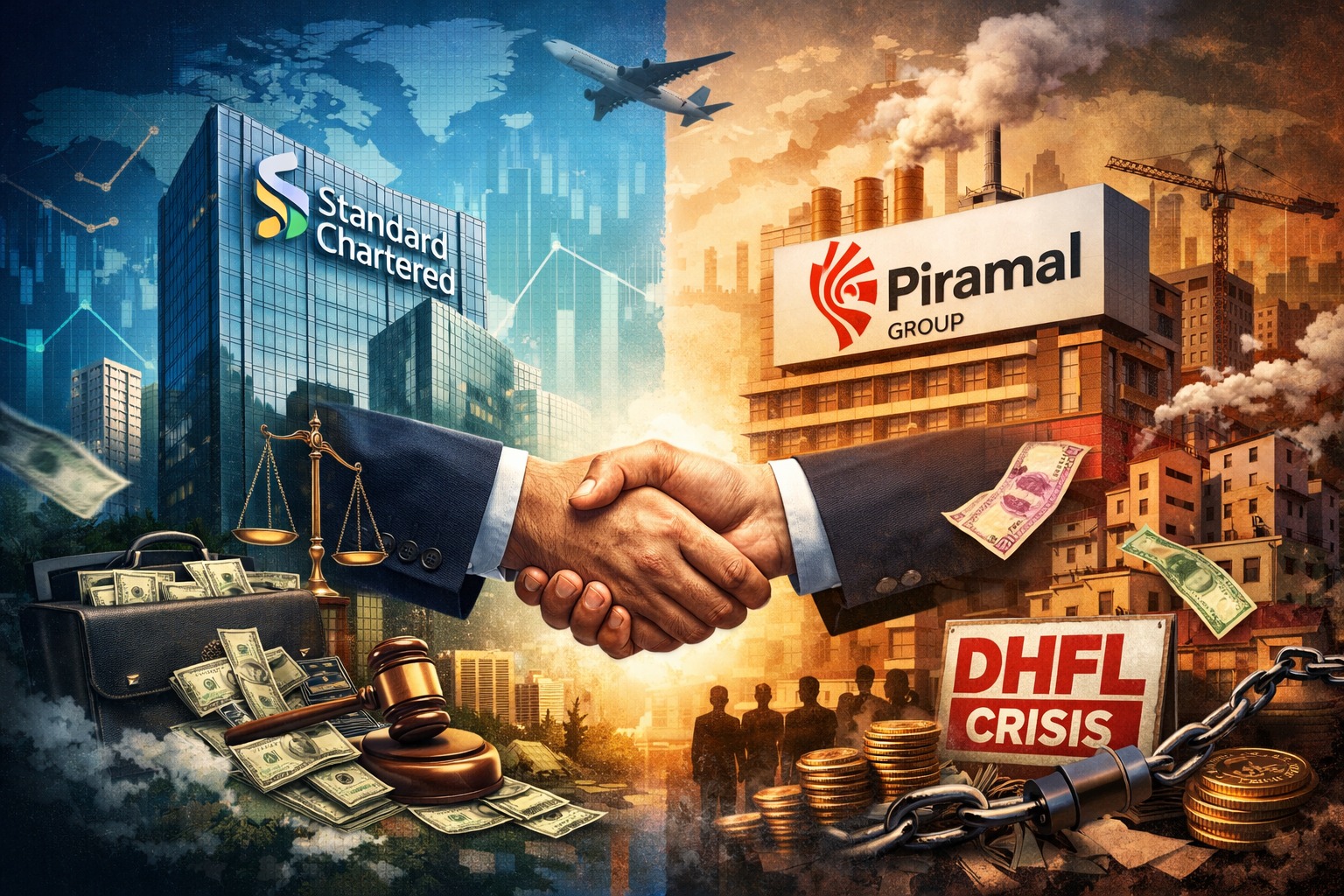
This article examines the structural relationship between global banking institutions and large emerging-market conglomerates through a dual case analysis of Standard Chartered Bank and the Piramal Group between 2012 and 2026. Drawing on regulatory enforcement actions, insolvency proceedings, capital-market transactions, and litigation outcomes, the paper argues that recurrent compliance failures in global banking and aggressive corporate restructuring in emerging markets are not independent phenomena but mutually reinforcing processes. The analysis demonstrates how persistent anti-money laundering lapses, sanctions violations, and settlement-driven regulation in global banks coexist with—and indirectly enable—high-leverage expansion, legal insulation, and accountability dilution within domestic conglomerates. By situating the Standard Chartered–Piramal relationship within the broader context of regulatory arbitrage, insolvency-enabled legal finality, and transnational risk transfer, the article shows how contemporary financial law increasingly prioritizes resolution, liquidity, and market confidence over distributive justice and creditor accountability. The findings contribute to critical debates on global financial governance by revealing how legality itself has become a primary instrument for organizing, rather than constraining, financial risk.
Pollute, Pay, and Profit: Post-Facto Penalties and the Crisis of Environmental Governance in India
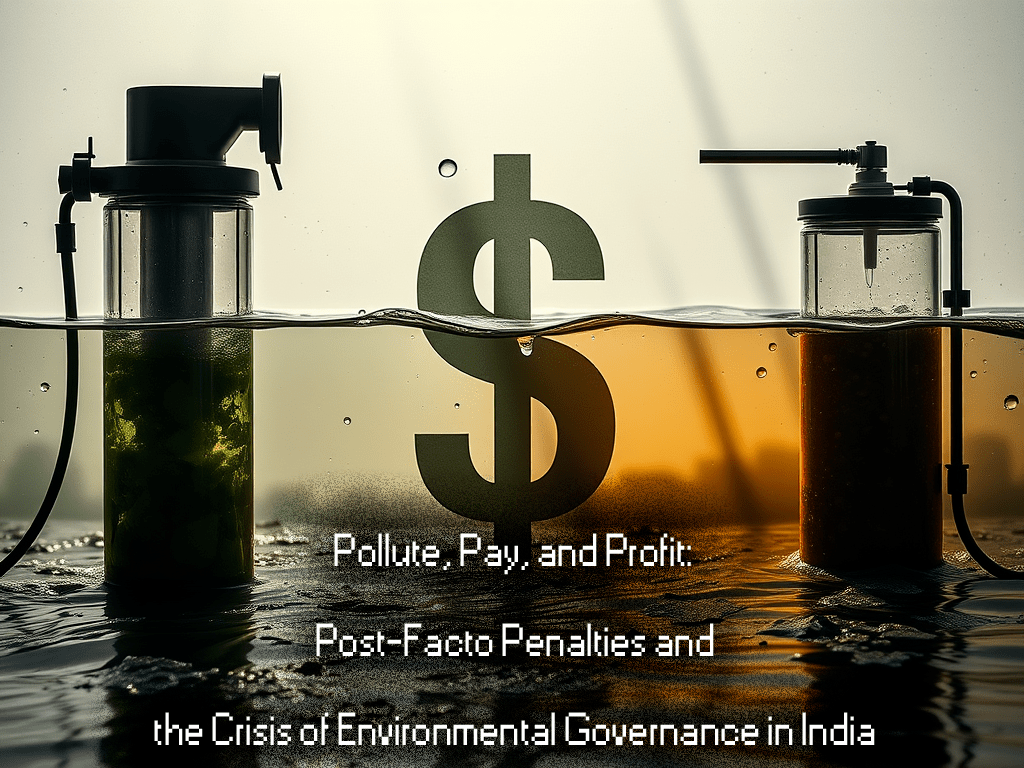
India’s environmental legal framework relies heavily on post-facto penalties—fines, compensation, and retrospective clearances—that fail to deter ecological crimes and often enable corporate violators to commodify the very resources they degrade in the first place. This article critiques the systemic flaws in post-facto approaches through case studies of Piramal Sarvajal (a CSR water purification venture following groundwater pollution in Digwal, Telangana) and Reliance’s Campa Cola revival under Isha Ambani Piramal (a beverage expansion exacerbating water scarcity). Linked by dynastic ties and philanthro-capitalist logic, these ventures illustrate how polluters repackage harm as opportunity, turning natural components like water into “Any Time Money” while evading true accountability. Drawing further on Jairam Ramesh’s 2026 Supreme Court challenge to ex post facto clearances and international calls for ecocide criminalization, the analysis condemns reactive penalties as counterproductive, violating precautionary principles and fostering moral hazard. It advocates for stricter preventive measures, criminal recognition of ecocide, and a shift toward ecocentric justice to protect ecosystems and human rights.
Blooded Waters, Dirty Hands: An Elegy for Puṇyodaka

This text is an elegy for puṇyodaka—not as a lost ritual substance, but as a shattered moral condition. Moving across Kalidasa’s Meghadūta, the Vana Parva’s Yaksha-prashna, biblical plague, Macbeth’s indelible blood, and Sartre’s Dirty Hands, it traces how water—river, sea, confluence—has been converted into spectacle, alibi, and instrument of power. Empirical poisonings (heavy metals, fecal coliforms, ecological collapse) coexist with choreographed immersions, artificial ghats, and submarine devotions, revealing a regime of simulation where sanctity is performed while rivers rot and silences are enforced. The work argues that contemporary governmentality no longer seeks purity but stages it, laundering violence through ritual, nationalism, and necessity. Against Hoederer’s calculus and Macbeth’s despair, the Yaksha’s ancient answer—manomalatyāga, the renunciation of inner stain—returns as an indictment: when minds remain polluted by greed, vanity, and commanded quiet, no river can cleanse. Puṇyodaka vanishes not because water fails, but because power poisons meaning itself. What remains is refusal: the withdrawal of consent from any politics that needs blood to function, spectacle to survive, and dirty hands to rule.
Water, Water Everywhere, Nor Any Drop to Drink? An Essay on Hydro-Politics

This paper examines the enduring paradox of Earth’s vast water resources contrasted with the severe scarcity of safe, drinkable freshwater, encapsulated in Samuel Taylor Coleridge’s line from “The Rime of the Ancient Mariner”: “Water, water everywhere, but not a drop to drink.” Drawing on foundational hydrological data and recent 2026 UN assessments declaring an era of “global water bankruptcy”—marked by irreversible depletion, pollution, and over-allocation of water systems—the study analyzes the mismatch between total water volume (primarily saline oceans) and accessible potable supplies. It investigates key research questions: the drivers of drinkable water scarcity (natural inaccessibility compounded by human-induced over-extraction, climate change, and contamination) and the primary anthropogenic sources of pollution (groundwater overuse without recharge, industrialization and acid rain, military activities, domestic and urban waste mismanagement, maritime pollution, sea mining, vanishing glaciers, agriculture, mining, deforestation, pharmaceuticals, and more). The analysis critiques “green capitalist” interventions—such as bottled water, alcoholic beverages, RO purifiers, desalination, privatization, virtual water trade, and green tech manufacturing—as often exacerbating waste through resource-intensive processes and greenwashing. Through India-focused case studies of Piramal Sarvajal (as compensatory CSR amid corporate pollution) and Reliance’s Campa Cola revival (as “Ambani-Cola capitalism” embodying Derrida’s pharmakon of thirst commodification), the paper highlights how profit-driven models mask structural harms while perpetuating dependency. It concludes with the looming threat of “water wars” amid surging conflicts and projections of widespread displacement, advocating systemic shifts toward community-led regeneration (e.g., Rajendra Singh’s johad-based river rejuvenation), equitable governance, transboundary cooperation, and de-commodification of water as a shared commons to avert irreversible crises.
From Immunity to Impunity: India’s Predatory Insolvency Regime, Electoral Autocracy, and DHFL Scam
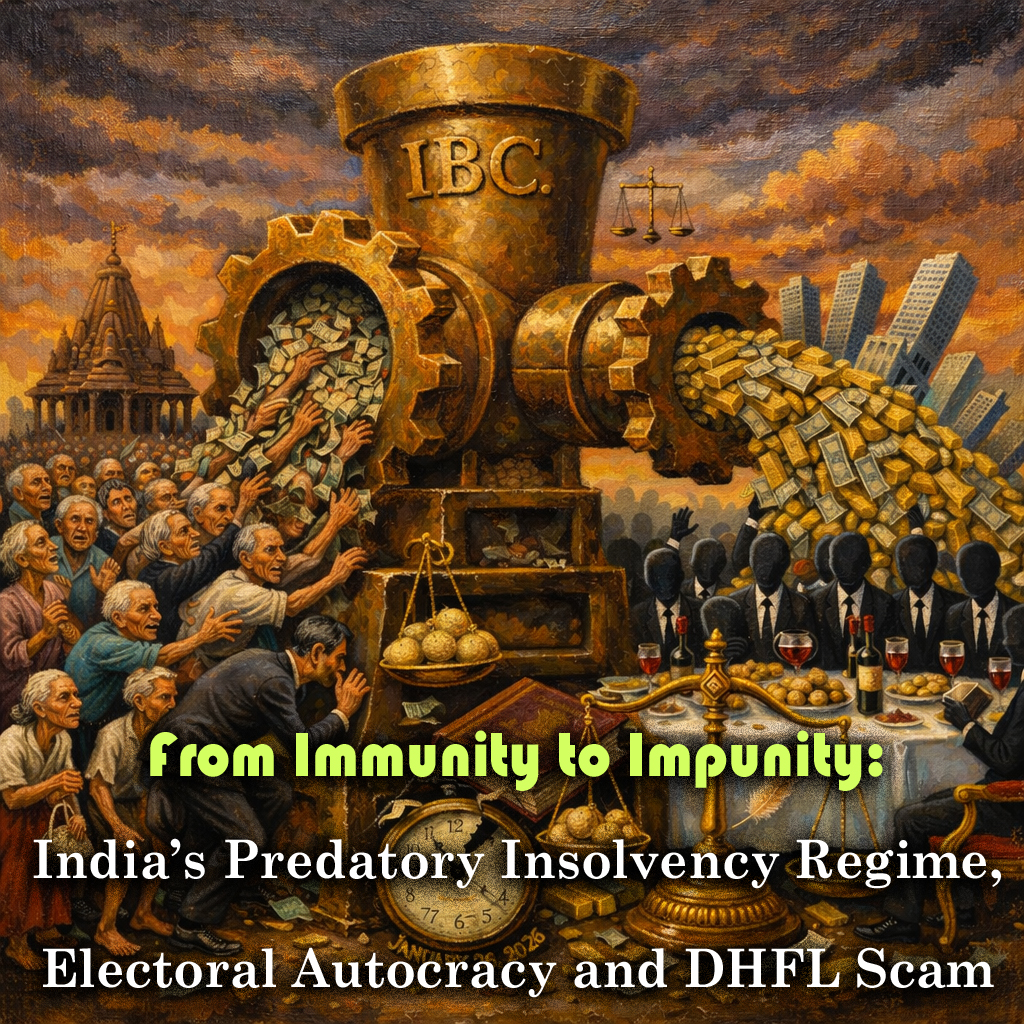
This article critically examines the Insolvency and Bankruptcy Code (IBC), 2016, arguing that it has evolved into a structurally predatory regime enabling the systematic transfer of public, depositor, and taxpayer-backed wealth to politically connected private entities. Through the lens of the DHFL resolution, it analyzes key judicial rulings—including the Delhi High Court’s holding that Insolvency Professionals are not “public servants” under the Prevention of Corruption Act, 1988, and the Supreme Court’s 2025 affirmation of the Piramal plan—revealing chronic delays, 67–68% average haircuts, fraud laundering via Section 32A, and unchecked Committee of Creditors (CoC) dominance. Situating DHFL within India’s declining Corruption Perceptions Index (96th/180, score 38/100 in 2024), the study highlights premature occupation by Ajay Piramal, enabled by his secondary kinship to Mukesh Ambani and BJP-linked patronage. It concludes that incremental amendments are insufficient and advocates complete repeal in favour of a transparent, constitutionally compliant framework prioritizing public interest, restitution, and accountability under Articles 14 and 21.
অঘোষিত জরুরি অবস্থার (দুঃ-)সময়ে না-রাষ্ট্রের বি-কল্প-না (Imagining No-State Alternities Amidst the Horrors of Undeclared Emergency)

এখানে সময়ের প্রয়োজনে, না-রাষ্ট্রের আশায়, অঘোষিত জরুরি অবস্থার মধ্যে দুটো লেখা সংকলিত করা হলো। বলা বাহুল্য, দুটো লেখাই বর্তমান ভারতবর্ষের রাজনৈতিক পরিস্থিতি আর দুরাশা নিয়ে সুরাশা করা হয়েছে। ভাজপার আইটি সেল মিথ্যে প্রোপাগাণ্ডা করে। উৎপল দত্ত উল্টে বলতেন, “আমি প্রোপাগান্ডিস্ট”। আমরা তাঁকে অনুসরণ করেই আরেকটু বাড়িয়ে বলছিঃ আমরা কাউন্টার-প্রোপাগান্ডিস্ট। ধরে নিন এই গোটাটাই একখানা রাজনৈতিক ইস্তেহারমাত্র, যেখানে ভেন্ন ধাঁচের আকাদেমিয়া সেঁধিয়ে আছে।Here, compelled by the urgency of the moment and sustained by the hope of a no-state imagination, two pieces have been brought together amid an undeclared emergency. Needless to say, both writings engage with the present political condition of India and attempt to wrest hope out of despair. The BJP’s IT cell manufactures false propaganda. Utpal Dutt, by contrast, would turn the charge on its head and declare, “I am a propagandist.” Following his lead—and pushing it a step further—we say: we are counter-propagandists. Consider this entire exercise as nothing more (and nothing less) than a political manifesto, into which a distinctly non-mainstream strand of academia has quietly seeped in.
Manifesto for Scrapping the Ill-Conceived Insolvency and Bankruptcy Code (IBC) 2016
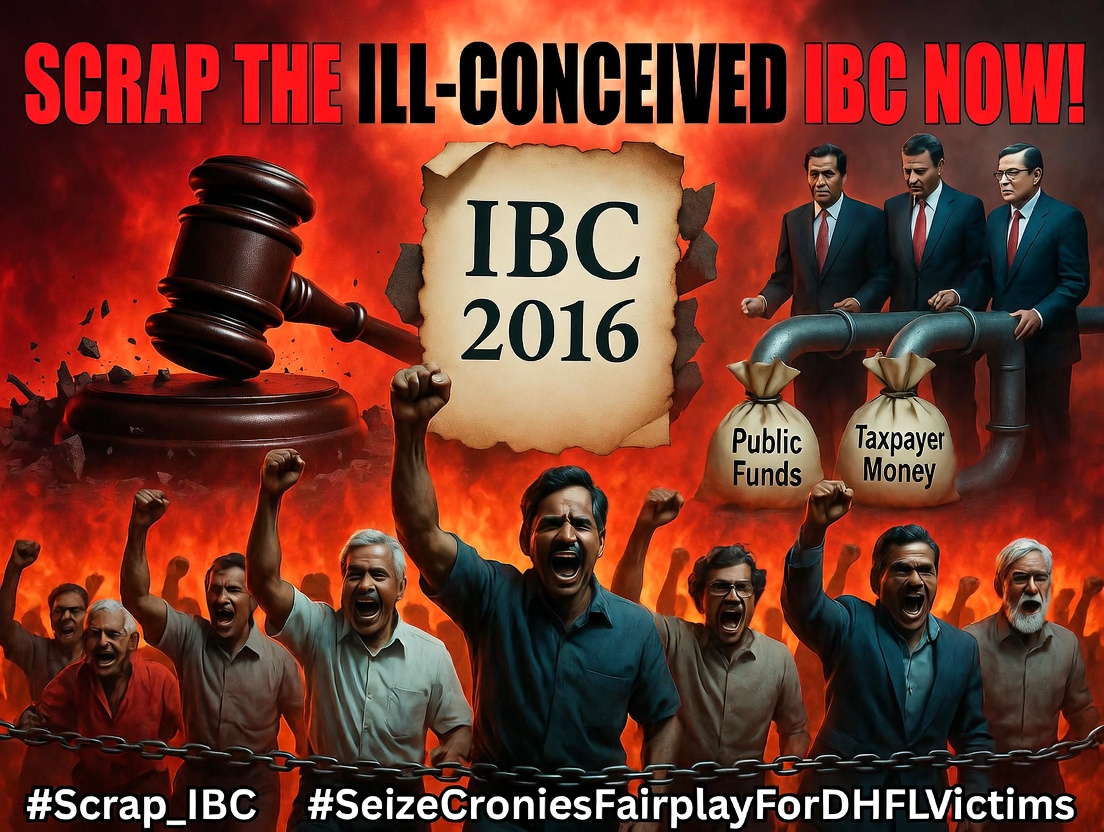
This manifesto advances a sustained, evidence-based critique of India’s Insolvency and Bankruptcy Code (IBC), 2016, arguing that the regime has evolved into a structurally predatory legal apparatus that facilitates large-scale transfer of public, depositor, and taxpayer-backed wealth into private corporate hands under the guise of “efficient insolvency.” Drawing on IBBI data up to 2025, landmark cases such as DHFL, Bhushan Power & Steel, Videocon, and Aircel, and recent Supreme Court jurisprudence, the analysis demonstrates how the IBC has systematically failed its own statutory promises of time-bound resolution, value maximization, equitable treatment, fraud recovery, and economic revival. Instead, prolonged delays, extreme haircuts averaging 67–68%, marginalization of retail depositors and public-interest claims, laundering of fraud through Section 32A immunity, and near-absolute deference to creditor “commercial wisdom” have produced a regime marked by judicial ritualism, moral hazard, and deep constitutional infirmities under Articles 14 and 21. The DHFL resolution is presented as a “laboratory case” exposing the IBC’s core pathologies—where a solvent, fraud-tainted institution was transferred at a steep discount, avoidance recoveries worth tens of thousands of crores were privatized, and lakhs of small savers were effectively dispossessed. Situating the IBC within a broader political economy of crony capitalism and opaque political funding, the manifesto rejects incremental reform as inadequate and calls for the complete scrapping of the Code in favor of a transparent, people-centric insolvency framework grounded in accountability, restitution, constitutional justice, and public interest.
The Student as Examiner: Decoding the Manufactured Illusion of Piramal Group’s “Shining” Credit Ratings
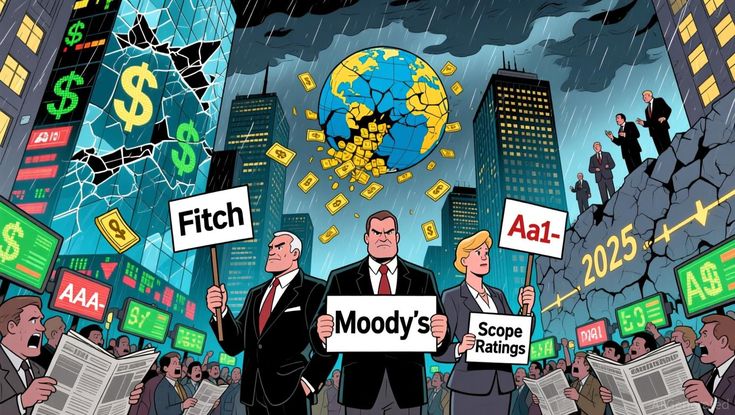
Credit rating agencies (CRAs) in India occupy a paradoxical position: their ratings shape investor behaviour, influence borrowing costs, and determine market access for corporations, yet they operate within a regulatory and commercial architecture that structurally disincentivizes critical scrutiny and accountability. The issuer-pays model — wherein the rated entity pays the rater — creates endogenous conflicts of interest that privilege quantifiable metrics like capital adequacy and liquidity while marginalizing qualitative governance and forensic risks. This article argues that under such a regime, investment-grade ratings (including the recent CRISIL AA+/Stable assigned to Piramal Finance in early 2026) function less as independent credit assessments and more as manufactured assurances that legitimize capital flows for well-connected conglomerates. Drawing on legal, financial, and political economy frameworks, this piece situates India’s CRA ecosystem within a broader pattern of regulatory compliance without substantive responsibility, oligopolistic market concentration, and political-corporate crony interlocks. It contends that ratings resemble self-assessment with outsourced certification, transferring systemic risk downstream to retail investors, pension funds, and the public. The Piramal example is explored as a paradigmatic case in which ratings have obscured deep-seated governance vulnerabilities and deferred accountability, underlining the need for structural reforms in rating incentives, liability regimes, and public interest protections.
Chaosophy of Credit Ratings: Where’s the Accountability?
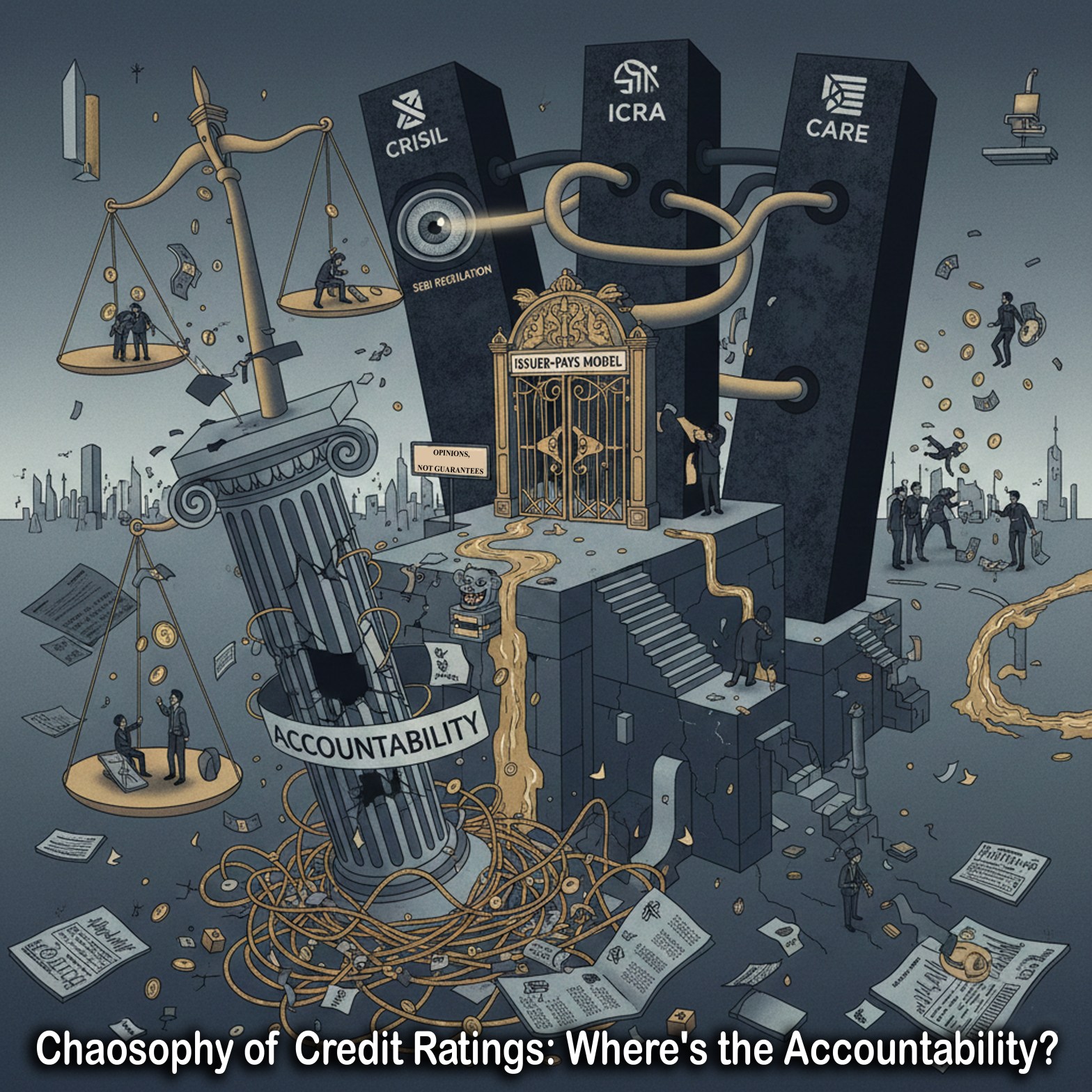
This article offers a comprehensive, non-polemical examination of the accountability architecture governing credit rating agencies (CRAs) in India, focusing on CRISIL, CARE Ratings, and ICRA under the SEBI (Credit Rating Agencies) Regulations, 1999 (as amended through 2026). Situating itself in continuity with earlier analyses of Piramal Finance and Piramal Pharma ratings, it maps what CRAs are legally mandated to do, how the issuer-pays model structures incentives, and why regulation centered on process rather than outcomes produces a persistent accountability gap. Drawing on verifiable rating actions, enforcement precedents, and the DHFL collapse as a paradigmatic failure, the article demonstrates how credit ratings—legally framed as professional opinions rather than conclusive, decisive guarantees—shape capital flows and investor behaviour without imposing commensurate liability on agencies when optimism bias, delayed downgrades, or convergence errors materialize. It further shows how an oligopolistic market structure, implicit ratings shopping, and political–corporate crony concentration during the BJP regime dilute reputational discipline, transferring risk downstream to retail and public investors. Incorporating recent regulatory reforms and critiques, including debates on revenue diversification, expanded mandates, and transparency norms, the article argues that legality and compliance have been mistaken for responsibility. In conclusion, it frames India’s credit rating regime as a system of regulation without substantive accountability, where structural design—not isolated misconduct—explains recurring credit failures, and where incremental reforms remain insufficient without a fundamental rethinking of incentives, liability, and public interest protection.
 Once in a Blue Moon Academia