
Posted on 10th March, 2026 (GMT 03:55 hrs)
Authored by Ecotopians of Alternity⤡
ABSTRACT
In a scathing indictment of 21st-century Indian philanthro-capitalism, billionaire Ajay Piramal’s empire exemplifies hegemonic subsumption of radical ecology: while Piramal Pharma faces verified allegations of chronic ecocide—groundwater poisoning in Digwal, Telangana (NGT ₹8.3 crore fine, net ₹3.2 crore paid as 0.09% of FY25 revenue; ongoing NGT case OA 1032/2024) and hydrochloric acid dumping in Dahej, Gujarat (GPCB closure, ₹1 crore fine, Supreme Court scrutiny in February 2026, swift interim resumption)—Piramal Realty markets ultra-luxury towers in Mumbai’s IPCC/CRZ high-risk flood zones (e.g., Piramal Mahalaxmi at ~3 m elevation) as “biophilic living” paradises with curated greenery, passive ventilation, and token sapling drives. The family’s own Worli sea-facing mansions (Gulita’s 50,000 sq ft diamond-glass palace) flaunt imported opulence with minimal genuine sustainability, embodying Lewis Mumford’s critique of architectural imperialism. Meanwhile, the Piramal School of Leadership’s Jaipur “walled garden” campus—shortlisted for the 2025 World Architecture Festival—parades biophilic design, passive cooling, and reduced concrete use while branding itself as the future “Piramal University” (a UGC violation) and indoctrinating 50,000–150,000 officials annually in appropriated radical terms like “regenerative agriculture” (Rodale/Shiva lineage), “One Water,” and “systems change” (Macy/Capra/Norberg-Hodge). Through Foucauldian selving, Piramal constitutes itself as “compassionate” and “regenerative” precisely by emptying anti-capitalist vocabularies. Backed by ₹85–88 crore in BJP electoral bonds (2019–2024), this discursive capture enables regulatory impunity amid slow violence on marginalized communities. The article calls for radical rupture: revenue-proportionate penalties, ecological restoration, de-subsumption of language, and militant reclamation by grassroots movements—exposing eco-extortionism where ecocide funds the performance of planetary salvation. Even the Department of Consumer Affairs’ February 2026 anti-greenwashing poster rings hollow when tycoons like Piramal and Adani greenwash unchecked.
I. Introduction
In the name of “compassionate leadership”, “conscious capitalism” and “regenerative futures,” billionaire Ajay Piramal and his empire are waging a war on India’s ecosystems while draping themselves in the stolen language (vocabule theft?!) of deep ecology. This is not merely a case of maintaining double standards. It is hegemonic subsumption at its most obscene: the ruling class devours the vocabulary of resistance—regenerative agriculture, biophilic living, systems change, water security—and weaponizes it to neutralize critique, secure regulatory impunity, and expand profit. The result? Ecological apartheid where sacrifice zones like Digwal and Dahej poison the poor, superrich “biophilic” towers in Mumbai monetise the coming floods during the here-and-now climate crisis, and a so-called “Piramal University” trains government officials in the very rhetoric that should be used against the polluter. From a radical environmentalist standpoint, this is textbook eco-extortionism: pollute, pay pennies, resume, and brand yourself a saviour. Corporate psychology’s simulated messianic complex without substantial compensatory praxis?
II. The Poison: Verified Ecocide and Slow Violence
Start with Digwal, Telangana. Since the 1990s, Piramal Pharma’s API plant has operated unlined effluent pits and buried toxic waste directly into farmland and aquifers. Solvents, pharmaceutical residues, and heavy metals have turned groundwater into a “cesspool” unfit for drinking or irrigation. The Telangana State Pollution Control Board (TSPCB) shut the plant for 44 days in November 2018. In 2019, the National Green Tribunal (NGT) hit Piramal with ₹8.32–8.34 crore in “polluter pays” compensation. After bank guarantees and adjustments, the net amount paid was just ₹3.2 crore—0.09% of FY25 revenue. A fresh NGT case (OA 1032/2024) filed in December 2024 accuses ongoing discharge. Local communities suffer documented spikes in kidney failure, respiratory disease, cancers, and dermatological disorders—classic example of slow violence (Nixon). Piramal’s CSR response? Advertised “state-of-the-art effluent treatment systems”, Water ATMs and medical kiosks sold back to the very villagers whose wells and lands it poisoned.
Digwal’s Defiance: Resisting Big Pharma VIEW HERE ⤡ @Fridays For Future International Newsletter
La rébellion de Digwal : résister aux géants pharmaceutiques VIEW HERE ⤡ @Fridays For Future International Newsletter (French Edition)
Then Dahej, Gujarat, January 2026. A tanker (GJ-27-TG-6676) dumped spent hydrochloric acid straight into a Vayna village canal feeding the Narmada River—public drinking water for millions. On 3 February, the Gujarat Pollution Control Board (GPCB) ordered emergency closure under the Water Act and slapped a ₹1 crore fine. Gujarat High Court refused a stay. On 9 February, the Supreme Court (CJI Surya Kant bench) refused interim relief, stating: “This is about alleged dumping of hazardous waste in the Narmada River… this is a source of water for the state and its people.” Yet by 13 February the plant was back running under “interim revocation.” Piramal claims “zero-liquid-discharge” compliance. The pattern is clear: fine-as-licensing-fee, not deterrent.
Meanwhile in Mumbai, Piramal Realty (led by son Anand Piramal) builds ultra-luxury towers—Piramal Mahalaxmi (49–66 storeys at 3–5 m elevation), Piramal Revanta, Piramal Vaikunth—right in IPCC/CRZ high-risk flood zones. These “biophilic living” projects sit where sea-level rise of 0.24–0.5 m by 2050 plus 35% more intense monsoons will routinely inundate ground floors and basements. The 2005 deluge (944 mm rain, ₹5,000 crore damage) was a preview. CRZ buffers were diluted from 100 m to 50 m to enable exactly this. The rich buy panoramic sea views today; tomorrow’s pumping, evacuation, and abandonment costs are socialized onto common taxpayers as well as the natural ecosystems that nourish us. This is not development. It is accumulation by dispossession—privatize the view, externalize the catastrophe.
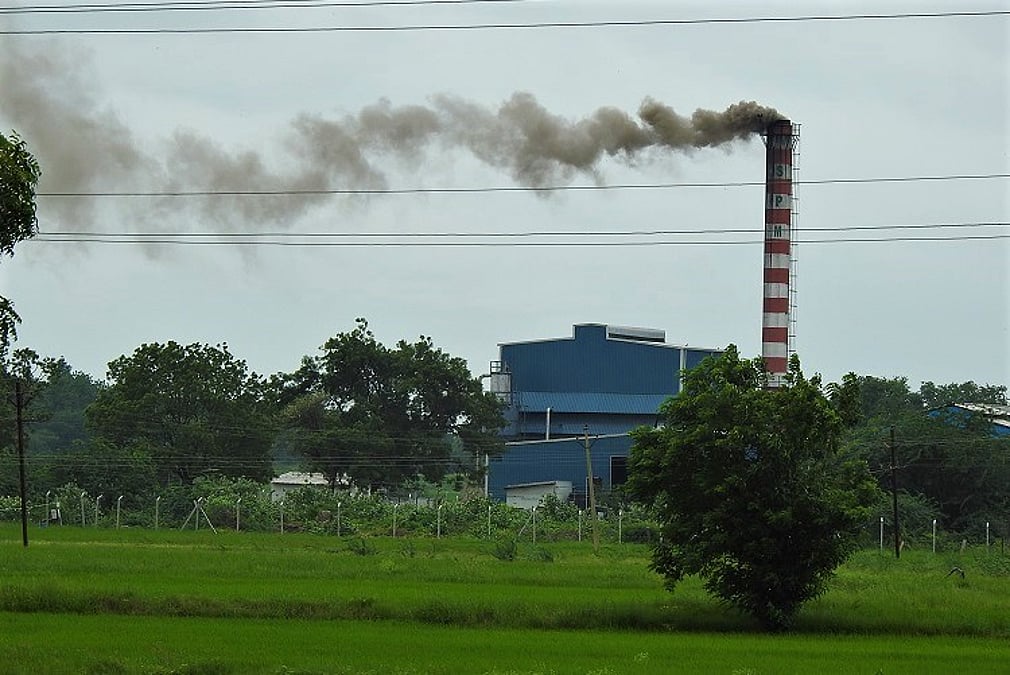
The Digwal Plant of Piramal Pharma
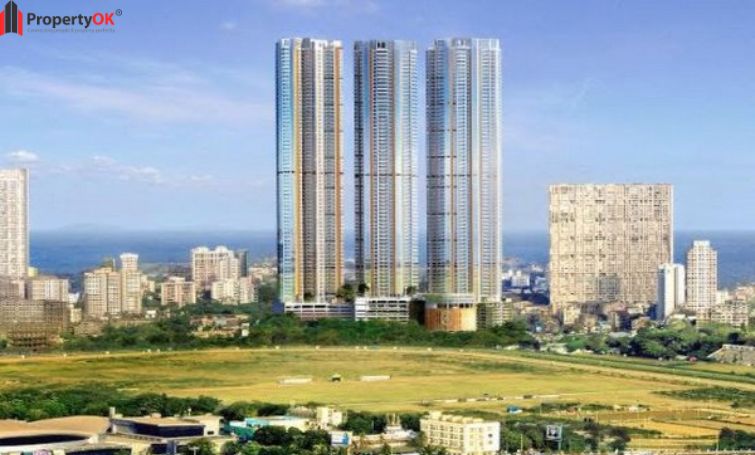
Piramal Realty Project Skyscrapers
Piramal Group entities poured ₹85+ crore into BJP electoral bonds (2019–2024). Swift post-fine restarts and expansions in favour of Mr. Piramal are no coincidence. One could as well connect the dots without much effort.
III. The Sugarcoated Pretense: Philanthro-Capitalist Greenwashing
While the poisons flow, the Piramal Foundation and Piramal Realty perform ecological “virtue” through what appears to be a philanthro-capitalist facade. This indeed appears to be a stark contradiction, a paradox or a co-habitation of conflicting realms, where the preached imageries are totally antithetical to the established material harms.
A. Piramal Realty’s Double Standards
Piramal Realty takes the deception to another level by marketing its flood-vulnerable luxury towers as embodiments of biophilic living and ecological harmony. Projects such as Piramal Mahalaxmi in Jacob Circle (South Mumbai, sitting at a precarious ~3 metres above sea level), Piramal Revanta in Mulund (~11 metres elevation), and Piramal Vaikunth in Thane are sold with seductive language of “nature-inspired harmony,” “biophilic design,” and “living in the lap of nature.”
The company claims to blend biophilic principles with passive strategies: abundant natural daylighting and cross-ventilation through expansive floor-to-ceiling glass, carefully curated greenery, open landscaped spaces (Vaikunth claims substantial open area), and direct sensory connection to “nature.” Mahalaxmi promotes nearly 2 acres of green space on its 4-acre footprint under a “Back to Nature – Space to Grow” campaign and boasts panoramic Arabian Sea views. Vaikunth hosts “Biophilia Chapter” community events — nature trails, sustainable gardening workshops, and token tree-planting drives (including one much-publicised planting of 100 saplings). Revanta positions itself next to the Sanjay Gandhi National Park as a “biophilic vision of Vana” (forest). Some promotions hint at passive cooling and green certifications such as IGBC Gold. The sales pitch is unmistakable: these are regenerative, wellness-oriented habitats that reconnect urban elites with the natural world.
This is not ecological design. It is executional greenwashing — the seductive deployment of nature-evoking imagery, greenery, and passive features to artificially enhance a brand’s eco-credentials while the fundamental placement in high-risk flood zones remains ecologically destructive and socially irresponsible. These towers will face routine inundation as seas rise 0.24–0.5 m by 2050 and monsoons intensify by 35%. The very “panoramic sea views” being monetised are a death sentence for the structures and the city’s poorer residents downstream. The token gardens and green podiums are not restoration — they are performative props designed to mask fundamentally anti-ecological siting decisions enabled by diluted Coastal Regulation Zone norms.
Furthermore, not only are we misled by such heavily advertised tactics, but consumers of Piramal Realty have also reportedly been deceived on multiple occasions through one-sided contractual agreements etc., as documented in the following source:
Compounding the cynicism is the dynastic greenwashing network. Through the 2018 marriage of Anand Piramal to Isha Ambani, the two billionaire families have formed a perfect closed loop of spectacle. As Piramal Realty erects luxury climate time-bombs along vulnerable coastlines, Nita Ambani’s Reliance Foundation announced in 2025 the creation of a 130-acre “Coastal Road Garden” — a glossy “green lung” with promenades, cycling tracks and planted trees on reclaimed coastal land. First, destroy mangroves and natural floodplains to enable elite infrastructure and real estate. Then, plant decorative gardens on the ruins and parade them as environmental leadership. This is how India’s superrich class greenwashes each other while Mumbai’s working masses are left to drown.
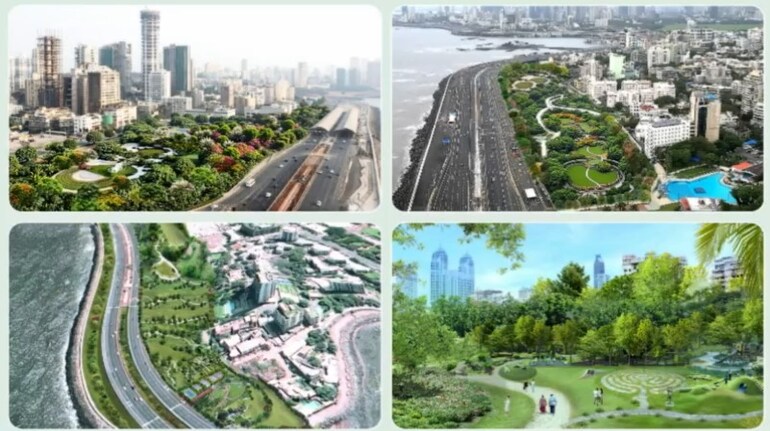
The so-called “Green Lungs” of Mumbai within the Ambani-Piramal Dynastic Continuum
The ultimate proof of this ecological double standard lies in the Piramal family’s own residences. Chief among them is Gulita (also referred to as Karuna Sindhu), the 50,000-square-foot, five-storey sea-facing mansion in Worli, Mumbai — a wedding gift from Ajay and Swati Piramal to Anand and Isha Ambani. Its signature diamond-themed glass-and-steel façade, engineered by the London firm Eckersley O’Callaghan using advanced 3D modelling, creates a glittering, reflective monument that maximizes unobstructed Arabian Sea views and floods opulent interiors with natural light. The compound features private lawns, open-air water bodies, swimming pools, multi-level basements for parking and services, temples, grand chandeliers, and landscaped terraces (including Swati Piramal’s celebrated “Chelsea Garden” of exotic flowering plants). Isolated media reports make passing nods to “energy-efficient glazing,” “intelligent climate control,” and rainwater harvesting as supposed sustainable features, but these amount to performative add-ons on what is fundamentally a palace of excess — with no documented IGBC certification, deep passive design, biophilic integration, or measurable reduction in its massive carbon and water footprint.
This is precisely the architecture that could be condemned as architectural imperialism following Edward Said. It could be viewed as the imposition of monumental structures that dominate both landscape and society. In The City in History and his broader critiques of the machine age, Lewis Mumford further exposed how such vertical, imported, power-displaying edifices (glass towers and private fortresses alike) sever any organic relationship with nature and community. They function not as habitats but as symbols of conquest: the ruling class’s technological subjugation of the coast, the skyline, and the commons. Gulita, perched on the Worli Sea Face in the exact IPCC/CRZ high-risk flood zone that Piramal Realty monetises elsewhere, embodies this imperial logic perfectly. While the family’s commercial projects and PSL campus parade “biophilic living” and passive cooling to the public, their personal citadel reveals the truth: the Piramals do not practise the regenerative future they sell — they merely stage it from behind imported glass walls.
The same imperial pattern repeats across family holdings. Ajay and Swati Piramal’s own nearby glass-domed residence in Worli continues the theme of coastal conquest dressed in token greenery. In Mumford’s radical environmentalist terms, these are not “green” homes but monuments to accumulation by dispossession — privatising the sea view today while socialising the coming climate catastrophe tomorrow. The billionaire class that poisons aquifers in Digwal, dumps acid into the Narmada system, and builds luxury towers in flood-prone zones shelters its own bloodline in sea-front opulence. True architecture, as Mumford insisted, must serve life and the bioregion; the Piramals’ palaces declare the opposite — that ecological rules are for the poor alone.
B. Biophilia as Corporate Alibi: The Piramal School of Leadership (PSL) Campus
Then comes the crown jewel of deception: the Piramal School of Leadership (PSL) flagship 32-acre campus outside Jaipur, with operations ramping up through 2025–2026. Designed by Studio Lotus, the campus is aggressively marketed as a pioneering example of biophilic, passive, and climate-responsive architecture. Conceived as a “walled garden,” the complex consists of interconnected learning pavilions and open spaces sheltered under a sweeping insulated super roof and enclosed by a perforated brick jaali skin. According to the architects, this skin filters glare, moderates heat gain, and promotes natural ventilation and cross breezes, enabling comfortable conditions even in Rajasthan’s extreme summer temperatures of up to 50°C with significantly reduced mechanical cooling.
The design centres around five elemental courtyards — described as “the unbuilt” — intended to foster reflection, serendipity, informal exchange, and a direct sensory connection to nature, embodying core biophilic principles. The project relies extensively on passive design strategies, including abundant natural daylighting, adaptive thermal comfort, and landscape integration. Construction methods are also highlighted for their sustainability: by using isolated footings and slab-on-grade systems with paper joints, the campus reportedly achieves a 25–30% reduction in ground-level concrete slabs and 35–40% smaller footings compared to conventional raft foundations. This approach additionally allows the 177-metre-long structure to adapt and step with the existing terrain, reducing site disturbance and enhancing seismic resilience.
The low-rise, non-hierarchical layout is promoted as democratic and human-scale, rejecting traditional bureaucratic hierarchies in public service training. The project has already received global recognition, having been shortlisted as a finalist in the 2025 World Architecture Festival in the Future Projects – Education category. As of March 2026, the campus itself faces no documented NGT cases, pollution violations, or significant local environmental protests.
Yet this green architectural showcase is fundamentally a vehicle for prestige laundering. The campus is routinely framed in promotional materials as the future site of “Piramal University” — a direct branding violation of UGC regulations, as it holds no official university status or degree-granting powers. We will examine the architectural claims and the broader contextual positioning of the PSL/Piramal ‘University’ in greater comprehensive detail in a subsequent article.
C. The Corporate Selving of Radical Terms: A Prelude
Under the PSL umbrella sit several dedicated centres that shamelessly appropriate and domesticate the language of radical and deep ecology, turning the vocabulary of resistance into tools of corporate and state legitimacy:
- The School of Climate & Sustainability (SoCS) drills bureaucrats in “regenerative agriculture,” “One Water” integrated watershed governance, and inter-ministerial convergence.
- The School of Education & Systems Change pushes “transformative leadership” and “changemaker” modules, and so on.
In its FY2025 sustainability report, Piramal proudly touts 210,803 KL of freshwater conserved, zero hazardous waste to landfill, and over 2,000 saplings planted — all framed as proof of its “regenerative” and “compassionate” credentials.
These terms were never neutral corporate slogans. They were forged as weapons against industrial capitalism by the very movements Piramal now mimics. “Regenerative agriculture” originated in the Rodale Institute and permaculture pioneers Bill Mollison and David Holmgren as an explicit rejection of chemical monocultures and corporate agro-chemical domination; Vandana Shiva radicalised it further as “soil democracy” and seed sovereignty. “Biophilic design” springs from E.O. Wilson’s biophilia hypothesis and was deepened at Schumacher College by Satish Kumar and Arne Næss’s deep ecology, which demanded biospherical egalitarianism and a spiritual reconnection with living systems rather than their commodification. “Systems change,” “changemaker,” and “One Water” echo Joanna Macy’s “Work That Reconnects,” Fritjof Capra’s holistic systems thinking, Helena Norberg-Hodge’s Local Futures systemic relocalisation, and Maude Barlow’s water-as-commons struggles — all rooted in anti-globalisation, degrowth, and defence of cultural and ecological sovereignty against extractive capital.
Piramal does not simply borrow — it inverts and empties. What began as anti-extractivist, post-growth frameworks are now repackaged as training modules for 50,000–150,000 government officials every year. Through this discursive capture, the corporation enacts a textbook Foucauldian process of selving: it actively constitutes itself as an ethical, compassionate, and “regenerative” subject precisely by speaking the language once used to expose and dismantle entities like itself. The result is ideological laundering on a monumental scale — the same state apparatus tasked with regulating pollution is instead indoctrinated in Piramal’s green rhetoric, ensuring regulatory reprieves while the group’s industrial operations continue their ecocidal work.
IV. Conclusion: The Need for Radical Ruptures
This is not contradiction. It is capitalism’s schizophrenia (Deleuze & Guattari): deterritorialise ecosystems through ecocide (Digwal aquifers, Narmada canals, Mumbai coast), then reterritorialise them symbolically as “regenerative” branding and elite enclaves. R.D. Laing’s framework of divided selves applies perfectly—the “compassionate changemaker” persona (PSL) protects the reported extractive monstrosities (Pharma and Realty). Is this not a case of equivocatory conduct, where Mr. Piramal could be potentially placed as an environmental fugitive based on the publicly available reports about Digwal, Dahej and Realty projects? The term “fugitive” is used because the pattern described in the reports suggests a structural evasion of ecological accountability. A fugitive, in this analytical sense, is not necessarily someone who has physically fled justice; rather, it refers to a figure whose actions generate documented harm while responsibility continually escapes institutional enforcement.
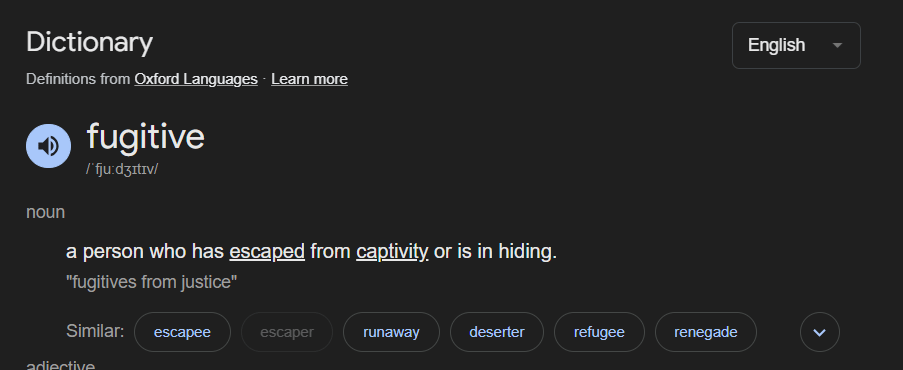
The consequences of the same are catastrophic:
- Hegemonic closure: Radical vocabulary is emptied. “Regenerative” becomes Big Pharma PR. By 2030, corporate sustainability claims will command near-zero trust.
- Two-tiered ecological apartheid: Biophilic ivory towers and 130-acre “green lungs” for the rich coexist with poisoned sacrifice zones for the poor. Climate migration will be blamed on “natural” disasters, never on the polluters who bought political cover.
- Slow violence normalized: Fines (0.09% revenue, ₹1 crore) are cheaper than compliance. CSR kiosks profit from the harm they cause.
Radical environmentalism demands more than exposure. Revenue-proportionate penalties (5–10% of turnover), mandatory full ecological restoration funded by escrow, independent community audits, moratoriums on repeat offenders, and de-subsumption of the language. Grassroots movements must reclaim “regenerative,” “biophilic,” and “systems change” through militant localization, degrowth, and commons governance—bypassing corporate academies entirely.
Ajay Piramal is not an outlier. He is the perfect embodiment of 21st-century Indian capital: poison the land, train the state in eco-rhetoric, build flood-proof towers for the 1%, and call it “Sewa Bhaav.” Until society names this subsumption for what it is—ecocide dressed as pro-planetary enlightenment—the toxic trails will only lengthen. The planet cannot afford another decade of this double-dealing. The language of regeneration belongs to those fighting for life, not those profiting from its destruction.
APPENDIX
A Segment on Greenwashing that Refuses to Compromise
Oh, bravo to the Department of Consumer Affairs, Government of India, for that sparkling February 18, 2026 poster campaign: “Don’t Fall for the Green Talk!” Complete with magnifying glasses, checkmarks, and a cheerful cartoon aunty in a saree warning us about vague, false, or unproven environmental claims. Truly inspiring stuff—right up there with #JagoGrahakJago classics.

Meanwhile, in the real world of favoured tycoons, the green talk flows freer than the Narmada after a certain tanker incident. Take Ajay Piramal: his pharma plants allegedly turn Digwal’s groundwater into a toxic soup (NGT fines, closures, kidney-failure spikes and all), while Dahej gets emergency shutdowns for hydrochloric acid dumps—yet the group happily brands its flood-zone Mumbai towers as “biophilic living” paradises and trains bureaucrats in “regenerative agriculture” at a fancy Jaipur “walled garden” campus. Pollute-pay-resume, then slap on some saplings and call it seva bhaav. Textbook “Don’t Fall for the Green Talk,” but apparently the National Consumer Helpline 1915 is too busy to notice when the offender has donated ₹85+ crore via electoral bonds to the BJP!
And let’s not forget Gautam Adani, the undisputed king of the genre: one hand builds massive solar farms and crows about being a global renewables leader, the other keeps expanding coal mines and power plants while experts call it “wilful disinformation” and “meaningless sustainability waffle” to prop up coal’s social licence. U.S. bribery indictments for solar contracts? Just a minor plot twist in the green narrative. The guidelines demand claims be “true, clear, and backed by facts”—Adani’s dual life of coal + clean energy is about as clear as Delhi smog.
It’s almost poetic: the same ministry preaching vigilance against misleading eco-claims runs a government that fast-tracks approvals, dilutes regulations, and lets these conglomerates greenwash their way to trillions in market cap. So next time you see that poster, just remember: the real warning isn’t for consumers—it’s for anyone silly enough to believe the rules apply equally when the tycoons are involved. Call 1915 if you’re misled… unless the misleading party built the highway you’re driving on. #JagoGrahakJago (but only selectively).
 Once in a Blue Moon Academia
1 Comment