Digwal’s Poison, Dahej’s Acid, Mumbai’s Climate Time-Bombs: Mr. Piramal’s Toxic Trails
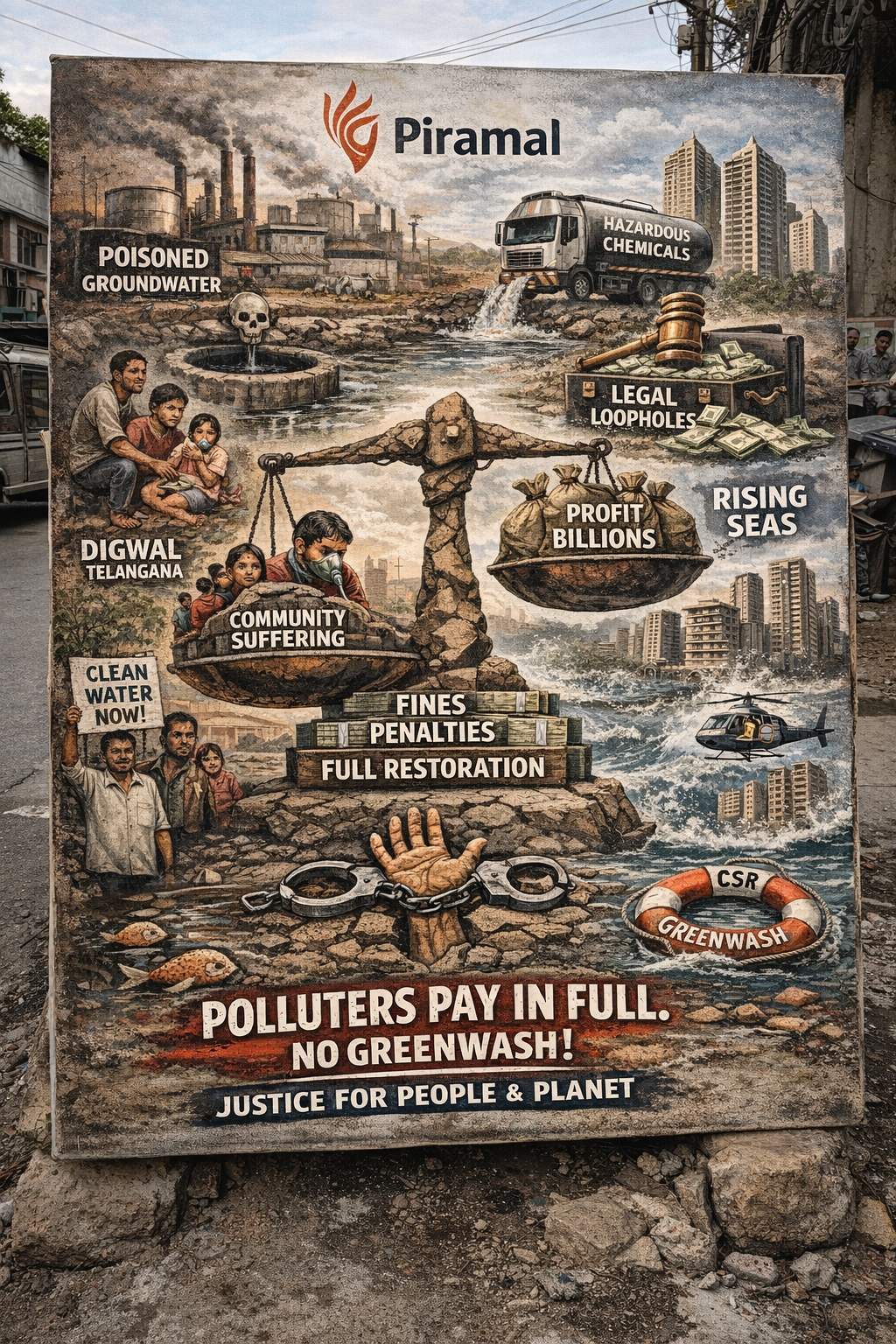
This essay argues that the Piramal Group’s pharmaceutical and real-estate operations exemplify a systemic model of accumulation by dispossession in contemporary capitalism, wherein ecological harm, public-health burdens, and climate vulnerability are externalized onto marginalized communities while profits are privatized and reputational risk is managed through regulatory reprieves, corporate restructuring, and CSR spectacle. Through the long-running groundwater contamination crisis at Digwal, the very recent February 2026 hazardous discharge episode at Dahej affecting the Narmada-linked canal system, and the development of ultra-luxury coastal real estate in flood-prone zones of Mumbai, the text demonstrates a recurring pattern: violation, brief enforcement theatre, rapid operational normalization, and uninterrupted high-margin expansion. It situates these cases within theoretical frameworks of slow violence, ecological surplus extraction, and philanthropic greenwashing, arguing that fines function as licensing fees rather than deterrents and that dynastic corporate networks convert environmental risk into both profit and spectacle. The essay concludes by demanding a materially enforced Polluter Pays regime—extending beyond monetary penalties to full ecological restoration, community restitution, structural limits on expansion, and legally binding accountability—insisting that environmental justice cannot be offset through philanthropy, CSR branding, or procedural compliance while the biosphere itself absorbs irreversible damage.
