
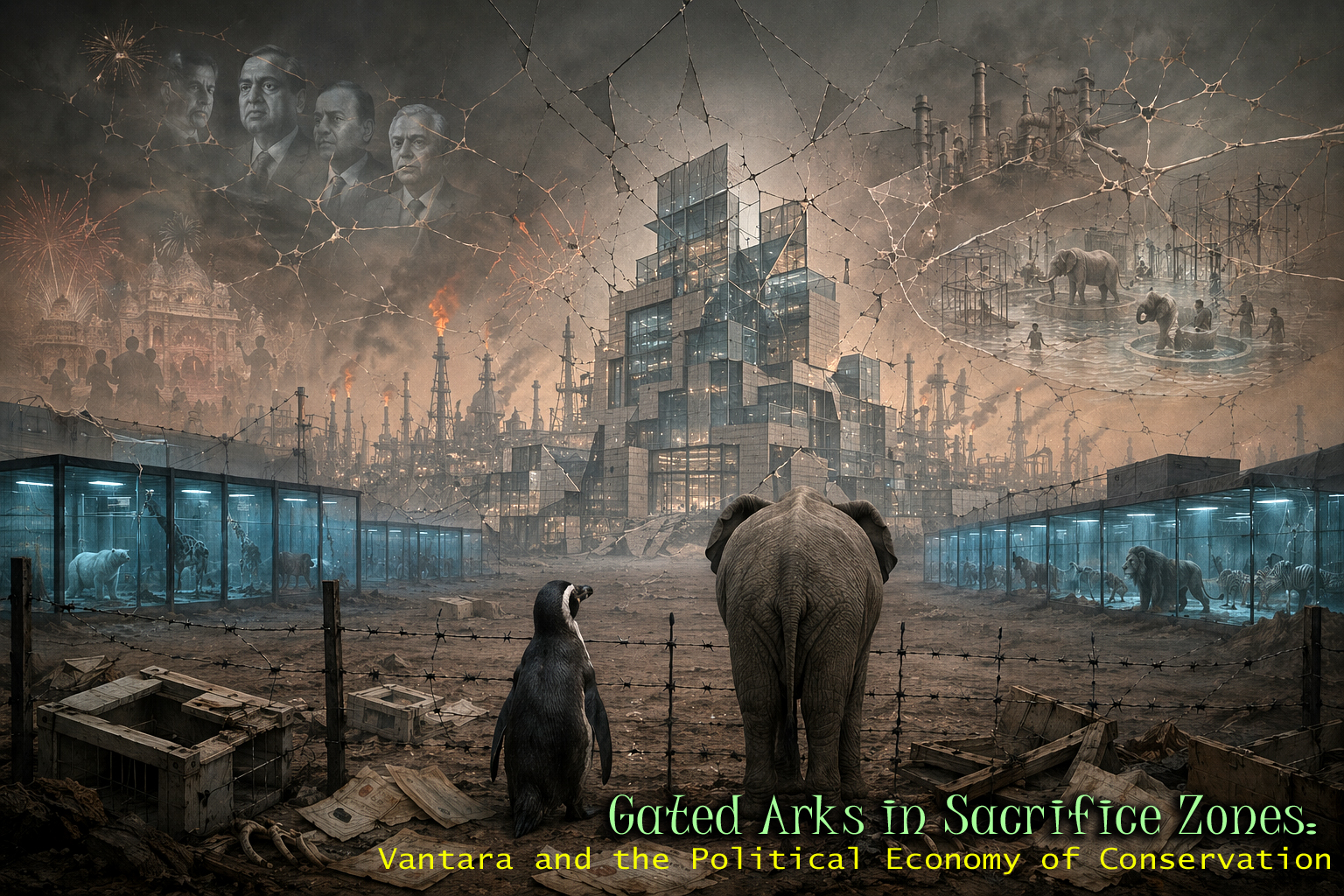
Vantara, the 3,500-acre private wildlife sanctuary run by the Reliance Foundation in Jamnagar and inaugurated by Prime Minister Narendra Modi on 4th March 2025, is promoted as the world’s largest rescue centre. Through a radical ecological-regenerative lens grounded in animal liberation ethics and multispecies justice, this analysis reveals it as a gated corporate biopolitical enclosure that converts ecological refugees—produced by Reliance’s polluting refinery and global extractivism—into spectacles for dynastic branding and moral capital. Integrating controversies over dubious sourcing, transport trauma, CITES due-diligence failures, media suppression, and climatic hypocrisy with a comparison of ex-situ Humboldt penguin facilities (Vantara and Byculla) against proven in-situ efforts in Peru, South Africa, and Argentina, the essay critiques how crony-dynastic capitalism, including the Ambani–Piramal nexus and Campa Cola operations, externalises ecological harm while staging compassion. It calls for abolishing commodified captivity and embracing decolonized, liberatory restoration that restores more-than-human autonomy in living ecosystems rather than managing bare life in fortified corporate arks.
Tag Archives: Environment
The Archaeology of Architecture in the Piramal Archipelago

This article examines the ecological contradictions embedded in contemporary corporate development through a critical analysis of four interconnected cases linked to the activities of the Piramal Group. Situated within the broader environmental context of Mumbai—one of the world’s most climate-vulnerable coastal megacities—the study explores how industrial production, urban real-estate expansion, and superrich architectural consumption intersect with fragile ecosystems and emerging climate risks. The first case investigates allegations of groundwater contamination linked to pharmaceutical manufacturing in Digwal village in Telangana, where proceedings before the National Green Tribunal raised concerns about impacts on aquifers and agricultural landscapes. The second examines controversy surrounding a chemical manufacturing facility in Dahej in Gujarat, where the Gujarat Pollution Control Board ordered a plant shutdown after allegations that hazardous industrial waste had been discharged into a canal connected to the Narmada River system. The analysis then turns to Mumbai’s coastal urban landscape, where luxury developments by Piramal Realty illustrate the commodification of waterfront environments marketed through narratives of sustainability and “biophilic living.” Finally, the study examines the sea-facing residence Gulita as a symbolic expression of wealth concentration along a climate-exposed coastline. Drawing on environmental reports, regulatory proceedings, and urban climate research, the article situates these cases within a broader framework of coastal capitalism and urban ecological transformation, arguing that corporate sustainability narratives often coexist with environmental risks displaced onto rural landscapes, industrial waterways, and vulnerable urban coastlines.
Piramal’s “Green” Smokescreen: Reports and Radical Reflections
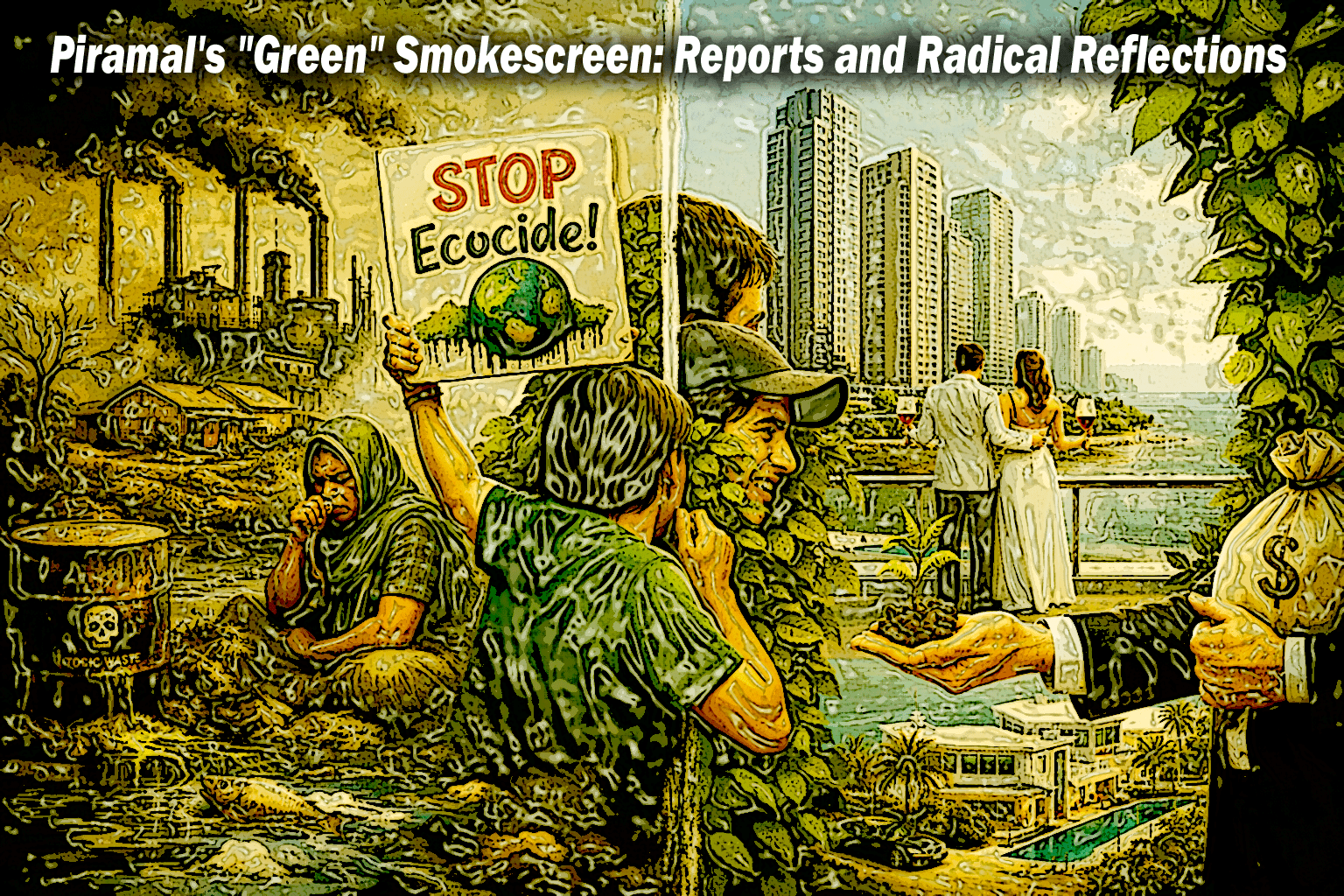
In a scathing indictment of 21st-century Indian philanthro-capitalism, billionaire Ajay Piramal’s empire exemplifies hegemonic subsumption of radical ecology: while Piramal Pharma faces verified allegations of chronic ecocide—groundwater poisoning in Digwal, Telangana (NGT ₹8.3 crore fine, net ₹3.2 crore paid as 0.09% of FY25 revenue; ongoing NGT case OA 1032/2024) and hydrochloric acid dumping in Dahej, Gujarat (GPCB closure, ₹1 crore fine, Supreme Court scrutiny in February 2026, swift interim resumption)—Piramal Realty markets ultra-luxury towers in Mumbai’s IPCC/CRZ high-risk flood zones (e.g., Piramal Mahalaxmi at ~3 m elevation) as “biophilic living” paradises with curated greenery, passive ventilation, and token sapling drives. The family’s own Worli sea-facing mansions (Gulita’s 50,000 sq ft diamond-glass palace) flaunt imported opulence with minimal genuine sustainability, embodying Lewis Mumford’s critique of architectural imperialism. Meanwhile, the Piramal School of Leadership’s Jaipur “walled garden” campus—shortlisted for the 2025 World Architecture Festival—parades biophilic design, passive cooling, and reduced concrete use while branding itself as the future “Piramal University” (a UGC violation) and indoctrinating 50,000–150,000 officials annually in appropriated radical terms like “regenerative agriculture” (Rodale/Shiva lineage), “One Water,” and “systems change” (Macy/Capra/Norberg-Hodge). Through Foucauldian selving, Piramal constitutes itself as “compassionate” and “regenerative” precisely by emptying anti-capitalist vocabularies. Backed by ₹85–88 crore in BJP electoral bonds (2019–2024), this discursive capture enables regulatory impunity amid slow violence on marginalized communities. The article calls for radical rupture: revenue-proportionate penalties, ecological restoration, de-subsumption of language, and militant reclamation by grassroots movements—exposing eco-extortionism where ecocide funds the performance of planetary salvation. Even the Department of Consumer Affairs’ February 2026 anti-greenwashing poster rings hollow when tycoons like Piramal and Adani greenwash unchecked.
Pollute, Pay, and Profit: Post-Facto Penalties and the Crisis of Environmental Governance in India
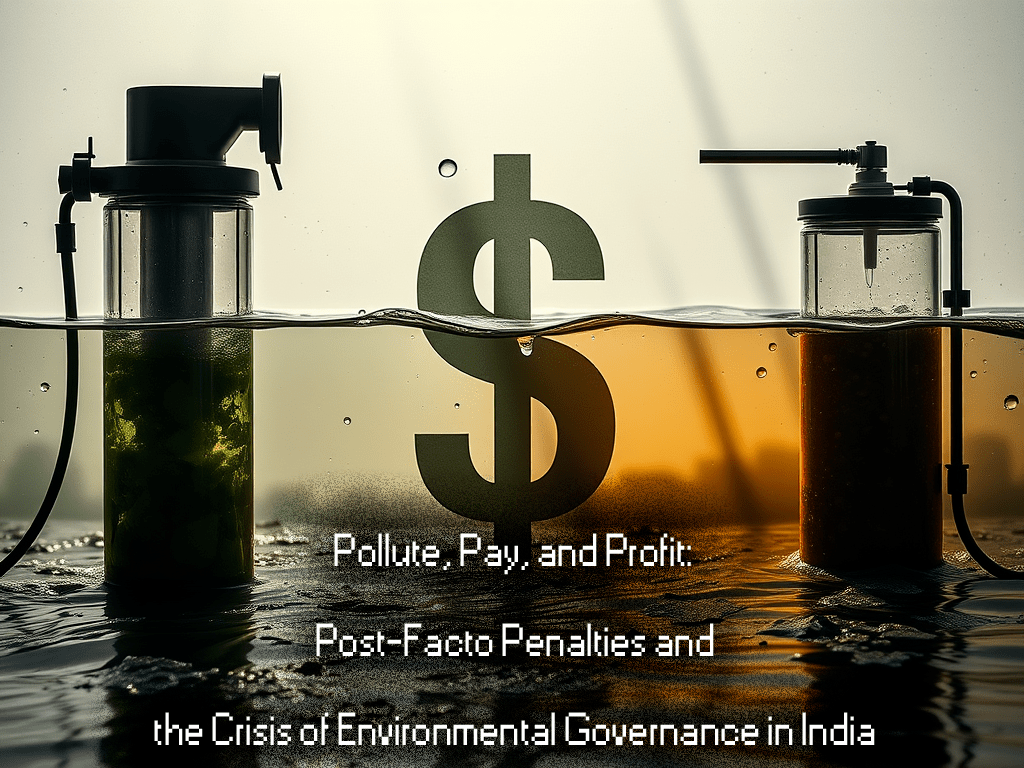
India’s environmental legal framework relies heavily on post-facto penalties—fines, compensation, and retrospective clearances—that fail to deter ecological crimes and often enable corporate violators to commodify the very resources they degrade in the first place. This article critiques the systemic flaws in post-facto approaches through case studies of Piramal Sarvajal (a CSR water purification venture following groundwater pollution in Digwal, Telangana) and Reliance’s Campa Cola revival under Isha Ambani Piramal (a beverage expansion exacerbating water scarcity). Linked by dynastic ties and philanthro-capitalist logic, these ventures illustrate how polluters repackage harm as opportunity, turning natural components like water into “Any Time Money” while evading true accountability. Drawing further on Jairam Ramesh’s 2026 Supreme Court challenge to ex post facto clearances and international calls for ecocide criminalization, the analysis condemns reactive penalties as counterproductive, violating precautionary principles and fostering moral hazard. It advocates for stricter preventive measures, criminal recognition of ecocide, and a shift toward ecocentric justice to protect ecosystems and human rights.
Water, Water Everywhere, Nor Any Drop to Drink? An Essay on Hydro-Politics

This paper examines the enduring paradox of Earth’s vast water resources contrasted with the severe scarcity of safe, drinkable freshwater, encapsulated in Samuel Taylor Coleridge’s line from “The Rime of the Ancient Mariner”: “Water, water everywhere, but not a drop to drink.” Drawing on foundational hydrological data and recent 2026 UN assessments declaring an era of “global water bankruptcy”—marked by irreversible depletion, pollution, and over-allocation of water systems—the study analyzes the mismatch between total water volume (primarily saline oceans) and accessible potable supplies. It investigates key research questions: the drivers of drinkable water scarcity (natural inaccessibility compounded by human-induced over-extraction, climate change, and contamination) and the primary anthropogenic sources of pollution (groundwater overuse without recharge, industrialization and acid rain, military activities, domestic and urban waste mismanagement, maritime pollution, sea mining, vanishing glaciers, agriculture, mining, deforestation, pharmaceuticals, and more). The analysis critiques “green capitalist” interventions—such as bottled water, alcoholic beverages, RO purifiers, desalination, privatization, virtual water trade, and green tech manufacturing—as often exacerbating waste through resource-intensive processes and greenwashing. Through India-focused case studies of Piramal Sarvajal (as compensatory CSR amid corporate pollution) and Reliance’s Campa Cola revival (as “Ambani-Cola capitalism” embodying Derrida’s pharmakon of thirst commodification), the paper highlights how profit-driven models mask structural harms while perpetuating dependency. It concludes with the looming threat of “water wars” amid surging conflicts and projections of widespread displacement, advocating systemic shifts toward community-led regeneration (e.g., Rajendra Singh’s johad-based river rejuvenation), equitable governance, transboundary cooperation, and de-commodification of water as a shared commons to avert irreversible crises.
Why Indian Political Parties Are Ecologically Indifferent

This article examines the deep-rooted ecological indifference of Indian political parties across the ideological spectrum. Despite unprecedented environmental degradation—from the destruction of forests in Hasdeo and Nicobar to toxic urban air and vanishing rivers—ecology remains absent from India’s political grammar. The essay argues that this neglect is not accidental but structural: born of a development myth that equates progress with extraction and nationalism with industrial expansion. In a corporatized democracy, parties serve capital before climate, leaving the earth unrepresented in the republic’s moral imagination.
Defending Dissent, Protecting Ladakh: OBMA Stands with Climate Activist Sonam Wangchuk

The Once in a Blue Moon Academia (OBMA) stands in unwavering solidarity with Sonam Wangchuk and the Ladakh Movement, recognizing their struggle as a fight for environmental justice, climate action, cultural autonomy, and democratic dissent. Highlighting Ladakh’s vulnerability as the “Third Pole” of the world, the statement critiques the abrogation of Article 370 and the selective, contradictory application of Article 371, exposing the central government’s sidelining of local governance and ecological concerns. OBMA condemns Wangchuk’s arbitrary NSA detention and the violent suppression of peaceful protests, emphasizing that the movement’s constitutional demands for statehood, Sixth Schedule inclusion, and ecological protection are lawful, ethical, and globally aligned. The statement affirms that safeguarding communities, ecological integrity, and the right to dissent are duties of conscience, wisdom, and citizenship.
Dynastic Capitalism and Ecological “Externalities”: The Ambani–Piramal Nexus in Post-Liberalization India

This essay investigates how the marital and corporate nexus between the Ambani and Piramal families consolidates dynastic power while enabling ecological, social, and ethical impunity in India’s neoliberal economy. Operating through the Mitakshara coparcenary system, this “nepo-capitalist complex” centralizes vast wealth across Reliance Industries, Piramal Group, and affiliated ventures, while systematically externalizing environmental degradation, resource depletion, and socio-economic costs onto marginalized communities. Through an integrated critique of Ambani’s Reliance’s pollution and cronyism, Campa Cola’s water-intensive operations, Piramal Pharma’s Digwal effluents, Piramal Realty’s climate-vulnerable coastal real estate, Russian oil dealings, Z+ state protection, and the contested Vantara wildlife project, the essay traces the nexus of dynastic wealth, environmental exploitation, and geopolitical opportunism. The Mitakshara mechanism emerges not as a cultural relic but as a structural tool that facilitates intergenerational wealth consolidation, shields elites from accountability, and perpetuates ecological and social extraction in twenty-first century India.
Shut Down Arms Factories to Stop Wars: Dismantling the Global War Profiteering Machine

The global arms industry—worth nearly $95 billion annually—is both a driver of human suffering and a silent engine of ecological collapse. Wars claim over 2,000 lives daily, displace millions, and shatter societies, while leaving behind poisoned aquifers, fragmented habitats, and toxic soils contaminated by unexploded ordnance and chemical residues. Arms manufacturers like Lockheed Martin and RTX thrive on this devastation, rewarded by soaring stock prices whenever conflict erupts, while shadowy brokers such as Viktor Bout and Aboubakar Hima profit from prolonging wars that ravage both communities and ecosystems. India exemplifies this global dilemma, channeling vast sums into defense while underfunding water, health, education, and environmental resilience. The campaign “Shut Down Arms Factories to Stop Wars” demands dismantling this war economy by halting weapons production, regulating brokers with ecological due diligence, mandating transparency of emissions and toxic legacies, and reallocating resources toward human well-being and planetary stewardship. Peace cannot be defined as the mere absence of war—it must mean fertile soils, clean water, healthy bodies, and thriving ecosystems within Earth’s limits. Yet even the green transition carries risks: critical mineral extraction for renewables, if pursued without justice, threatens to replicate the violence and exploitation of fossil fuel regimes. A just future requires confronting militarism, curbing extractivism, and investing in life over destruction. Only by linking disarmament with ecological restoration can humanity secure genuine peace within planetary boundaries.
Metrics of Denial: A Critical Reading of Indian Indices in the Age of Climate Capitalism

This study interrogates India’s position across major global indices—Environmental Performance Index (EPI), Nature Conservation Index (NCI), Climate Change Performance Index (CCPI), ESG fund performance, and climate displacement data—revealing deep contradictions between policy rhetoric and ecological realities. With India ranking near the bottom in EPI and NCI, and topping charts in climate displacement, the report juxtaposes these failures against the optimistic ranking in CCPI and the proliferation of ESG funds. Through a chaosophic lens, the study critiques the reductionism of market-led green capitalism and underscores the need to rethink ecological metrics beyond their statistical form. A comparative global–Indian framework highlights shared vulnerabilities and region-specific crises, especially around resource depletion and climate-induced migration, while resisting technocratic fixes and econometric illusions.
 Once in a Blue Moon Academia