

This paper-letter subversively critiques the drive for cultural homogenization in India, focusing specifically on the imposition of a singular dress code for Hindus as part of a broader Hindutva agenda. It reflects, through sarcastic and satirical tools, on the historical evolution of the Rashtriya Swayamsevak Sangh (RSS) uniform and juxtaposes it with the varied, regionally influenced dress practices of so-called “Hindus” (?) across the geo-political imagination of India. The letter raises concerns about the suppression of cultural heterogeneity and the imposition of a monolithic standard of dress under the guise of a given normativity of religious (equated with the national) unity. Using examples from recent political debates, such as the RSS’ shift from shorts to trousers and the hijab controversy, the authors advocate for a standardized dress code (by intentionally masking themselves as Hindutvavadins) that aligns with the so-called projection of “sanātana” values while rejecting purportedly the “foreign and Islamic” influences. The letter also explores how traditional Hindu dress has been influenced by colonial derivations and global fashion trends. It concludes by urging national leaders to establish a rigid, uniform dress code for Hindus, arguing that this would reinforce the ideological foundations of Hindutva while marginalizing alternative cultural expressions. This critical analysis addresses the dangers of cultural erasure and the paradoxical nature of enforcing uniformity in a society marked by deep-seated diversity.
Tag Archives: BJP
Mr. Kapil Sibal: Defending the Indefensible?

The article criticizes Kapil Sibal for defending controversial figures like Ajay Piramal in the DHFL scam and the West Bengal government in the R.G. Kar case. It questions Sibal’s ethical stance, given his multiple roles as a politician and lawyer, highlighting contradictions in his actions, which seem to favor the powerful over justice. The piece laments the perceived shift from his earlier values to opportunism, leaving DHFL victims and others disillusioned by his alignment with the rich and politically connected.
Heading Towards a Theocratic Judiciary?

The article criticizes India’s Chief Justice, D.Y. Chandrachud, for publicly participating in religious rituals with Prime Minister Narendra Modi, arguing that this compromises the separation between the judiciary and the executive. It raises concerns about the increasing influence of Hindu nationalism in the judiciary, questioning its impact on the country’s secular constitution. The author also points to selective judicial actions and calls for maintaining scientific temper and critical inquiry as per the constitutional mandate. The overall tone expresses frustration with the blending of theocratic regime
Requesting for raising the issue of financial abuse of DHFL victims by the BJP: A Letter to the Leader of the Opposition

PAINTING OF GANDHIJI IN THE ABOVE POSTER (ENTITLED “GANDHIPIN”): PROF. DEBRAJ GOSWAMI Posted on 7th July, 2024 (GMT 06: 59 hrs) “When I despair, I remember that all through history the way of truth and love have always won. There have been tyrants and murderers, and for a time, they can seem invincible, but in theContinue reading “Requesting for raising the issue of financial abuse of DHFL victims by the BJP: A Letter to the Leader of the Opposition”
Mr. Ajay Piramal and the DHFL Scam: OBMA Video Reports-II
The article discusses various allegations and controversies involving Ajay Piramal, including insider trading, environmental violations, and questionable acquisition practices in the DHFL case. It highlights his ability to obtain favorable legal outcomes, potential political connections with the BJP, and scrutiny over financial dealings. The piece suggests that Piramal’s influence and political support have shielded him from consequences.
Role of BJP in the DHFL Scam: OBMA Video Reports-I
The article explores the alleged involvement of the BJP in the DHFL scam, highlighting potential connections between Ajay Piramal and the party, including political donations and the Flashnet scam involving Piyush Goyal. It suggests a quid pro quo relationship where political donations were reciprocated with favors. The report also mentions accusations linking DHFL with terror funding via Dawood Ibrahim, late Iqbal Mirchi et al., and questions about transparency in financial dealings, particularly regarding donations to BJP through electoral bonds. The piece calls for a political critique of these issues.
Indian Stock Market Scam 2024 and the Futility of the Exit-Polls

Posted on 07/06/2024 (GMT 16:26 hrs) Compiled by the Partyless Society⤡ & Occupy Dalal Street⤡ “Underneath all reason lies delirium, drift. Everything is rational in capitalism, except capital or capitalism itself The stock market is certainly rational; one can understand it, study it, the capitalists know how to use it, and yet it is completely delirious, it’s mad.Continue reading “Indian Stock Market Scam 2024 and the Futility of the Exit-Polls”
Take Stern Measures against the BJP MPs With Legal Conflicts: An Appeal to the President of India

Posted on 07/06/2024 (GMT 13:23 hrs) Although there are too many complaints, FIRs and legal cases against the BJP’s malpractices during the Lok Sabha Elections, 2024, the Election Commission of India (ECI) along with the other vigilante agencies have turned a blind’s eye to all these crucial matters before a “new government” is formed. ThisContinue reading “Take Stern Measures against the BJP MPs With Legal Conflicts: An Appeal to the President of India”
Ecology, Economics and Elections: The Night Before…
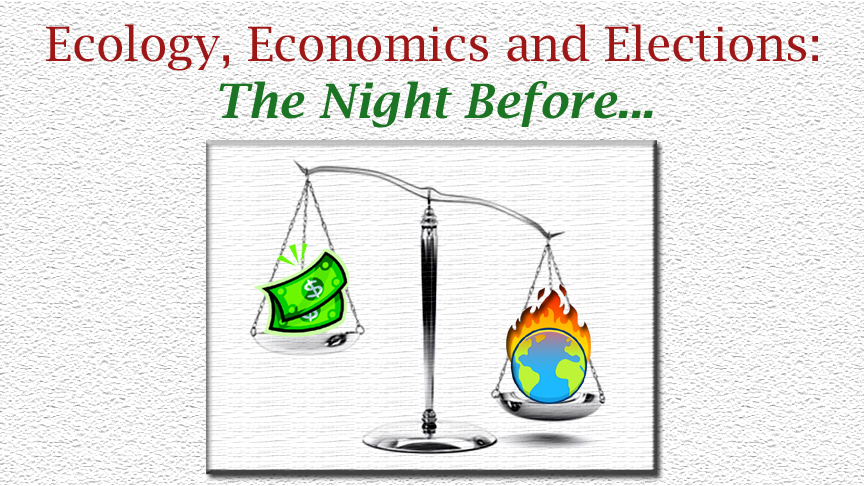
The article critiques the ecological and political consequences of development under the current Indian regime, especially around the 2024 elections. It highlights fatal heatstroke cases among election officials, linking them to climate change and post-vaccination vulnerabilities. Major projects like the UP pilgrimage road (involving massive deforestation), the Mumbai-Ahmedabad bullet train (destroying mangroves), and the Kashi corridor (erasing heritage for religious tourism) are cited as examples of state-driven environmental destruction. The authors warn of a drift toward electoral autocracy, prioritizing economic-political gains over ecological and democratic well-being.
Modiji’s Guarantee and the DHFL Victims: A Letter to PM Modi

Posted on 19/05/2024 (GMT 14:50 hrs) Sub: Modiji’s Guarantee and the DHFL Victims Dear Modiji, Hope that you are managing your stress well, given the grave conditions that confront your party at the moment. With your yogic corporeal, we are sure that you will be able to lead a balanced life after 4th June, 2024. Anyway, we,Continue reading “Modiji’s Guarantee and the DHFL Victims: A Letter to PM Modi”
 Once in a Blue Moon Academia