
The article reflects on the b r u t a l realities of gender-based v i o l e n c e and i-n-j-u-st-i-c-e, weaving together cultural, political, and artistic references. Through parodied and modified renditions of Rabindranath Tagore’s songs, the author critiques society’s handling of s e x u a l v I o l e n c e, specifically referencing cases like the h o r r I f I c c r i m e s against Nirbhaya, Asifa, Bilkis Banoo, Tiottama/Abhaya and so on…..The piece calls for non-violent civil disobedience movement against theocratic syndicate-dependent crony and monopoly capitalism and possible transformation(s), using powerful metaphors (displacement), metonyms (condensation) and imagery to convey the pain, rage, and resistance of survivors.
Category Archives: Art of Resistance
Following the dictum “Cultural revolution must precede political revolution”, we are striving to create the scope for an alternative cultural space, which can offer resistance to all forms of coercion, and can also serve as a medium for conducting non-violent, horizontal dialogical exchanges.
The Sceptic’s Spectre: Henry Derozio

The narrative “The Sceptic’s Spectre: Henry Derozio” provides a detailed examination of radical humanist and cosmopolitan thinker Henry Louis Vivian Derozio’s ideas through the lens of contemporaneity. It discusses his role as an uncompromising educator and poet, focusing on his advocacy for free thought, anti-establishment rationalism, and his challenge to orthodox Hindu beliefs. Derozio’s influence on his students, known as the Young Bengal group, and his progressive ideas, which contributed to the shaping of modern Indian intellectualism, are central themes with special reference to the recent degeneration of this argumentative spirit in the context of plutocratic, theocratic Saffron Fascism. The article also reflects on his literary contributions, particularly his poetry, which embodies his revolutionary spirit that decries all authoritarian structures in favour of the eternal spirit of liberational praxis.
Mouthshut, Why Are You Shutting The Mouths of DHFL Victims?

The article criticizes the review platform Mouthshut for allegedly suppressing the voices of victims of the DHFL (Dewan Housing Finance Corporation Limited) scam. It accuses Mouthshut of removing critical reviews and blocking user accounts(?), thus preventing the victims from sharing their experiences and seeking justice. The article highlights the frustration and helplessness of these individuals, who rely on platforms like Mouthshut to expose corporate malpractices and demand accountability.
Terminating Embryo, Extinguishing Sanātana Hindutva?

The paper-letter critically examines the Hindutva ideology’s stance on abortion, using satire and sarcasm to highlight the contradictions in its rigid, “pro-life” views. The authors argue that Hindutva selectively interprets Hindu scriptures to enforce anti-abortion and anti-women policies, undermining women’s autonomy and agency. Through references to ancient texts, the paper critiques the ideological imposition of Hindutva, showing how it manipulates religious doctrines to control women’s reproductive rights while exposing its broader patriarchal and theocratic agenda.
রাজা-রানী খান খান! (তাতেই কী হয় অবসান?)…

The article is a satirical and allegorical narrative that criticizes authoritarianism and the suppression of dissent. It tells the story of a queen who, frustrated by her subjects’ silence, administers a pill that makes everyone scream against authority. This leads to chaos, with the queen’s attempts to suppress or escape the situation backfiring. The story reflects on the futility of authoritarian control, the inevitability of resistance, and the dangers of unchecked power.
“This is what usually happens”: Rape Culture in West Bengal, India
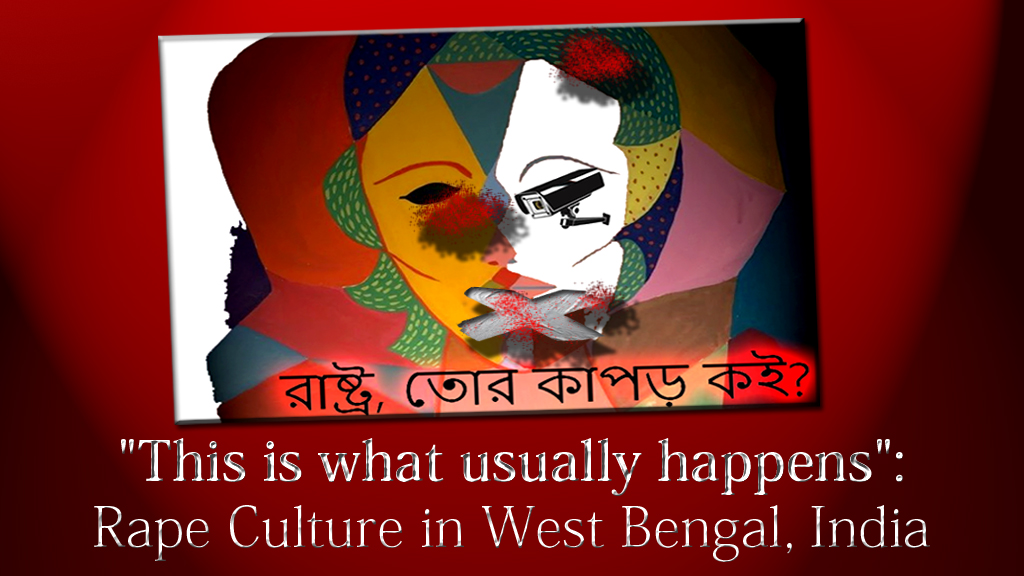
The article discusses the disturbing rape and murder of a female doctor in Kolkata and critiques the West Bengal government’s response, which allegedly involved tampering with evidence and suppressing dissent. The piece also explores broader issues of rape culture in India, highlighting how sexual violence is often normalized and weaponized politically. It criticizes both the current and previous governments in West Bengal for their handling of sexual violence and urges a radical approach to dismantling patriarchal systems.
For more details, you can read the full article here.
বাবাতন্ত্রের প্রতিনিধির আন্দোলিত ও নিষিদ্ধ হলফনামা

The article discusses the concept of “Babatantra”, focusing on a critique of patriarchal authority in the context of rape culture in India and the author’s first-personal self-reflexivity on their complicity in such systems. The author uses biblical references, particularly the story of Jesus and the adulterous woman, to explore themes of confession and gendered violence such as rape. The piece also touches on political activism and the infiltration of movements by installed harmful elements. The author emphasizes the importance of recognizing one’s own flaws through self-criticism and maintaining vigilance against internalized forms of dominance.
Post-Mortem of Parliamentary Democracy and What Is Still To be Done?

This article, published on June 8, 2024, conducts a critical examination of parliamentary democracy, with a likely focus on India’s post-2024 election landscape. It dissects systemic challenges, such as institutional erosion, political polarization, or governance inefficiencies, that undermine democratic processes. The analysis highlights key events or policies contributing to these issues. Proposing a path forward, the article outlines actionable reforms to strengthen democracy, including enhancing transparency, fostering inclusive dialogue, and reinforcing institutional checks. It underscores the urgency of collective action to revitalize parliamentary democracy’s efficacy and resilience.
In Defence of the Ladakh Movement: A Faint Voice of Solidarity During the Ominous Hour of Climate Emergency

The article defends the Ladakh movement as a crucial voice against environmental degradation and climate change, particularly in the face of the Himalayan region’s vulnerabilities. It highlights the importance of indigenous and local perspectives in climate activism, emphasizing Ladakh’s ecological sensitivity and the dangers posed by unchecked development. The piece also calls for solidarity with grassroots movements that prioritize sustainable and culturally sensitive practices, urging broader attention to the climate emergency’s impact on marginalized communities.
Singing in the Darkest Times: A Plea For Hope

Posted on 24/03/2024 (GMT 17:51 hrs) In the dark times, Will there also be singing? Yes, there will also be singing. About the dark times. Bertolt Brecht Dear All, I, an absurd man, am indebted to you all for supporting our cause through online non-violent civil disobedience movement against the crony oligarchy, especially those fewContinue reading “Singing in the Darkest Times: A Plea For Hope”
 Once in a Blue Moon Academia