
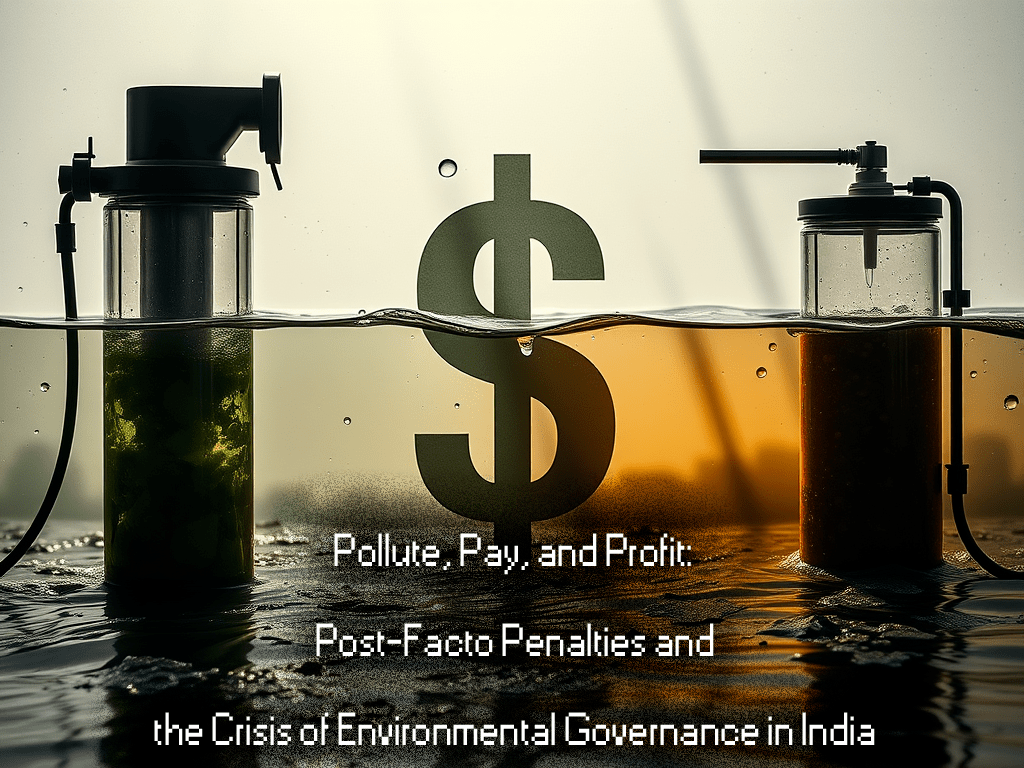
India’s environmental legal framework relies heavily on post-facto penalties—fines, compensation, and retrospective clearances—that fail to deter ecological crimes and often enable corporate violators to commodify the very resources they degrade in the first place. This article critiques the systemic flaws in post-facto approaches through case studies of Piramal Sarvajal (a CSR water purification venture following groundwater pollution in Digwal, Telangana) and Reliance’s Campa Cola revival under Isha Ambani Piramal (a beverage expansion exacerbating water scarcity). Linked by dynastic ties and philanthro-capitalist logic, these ventures illustrate how polluters repackage harm as opportunity, turning natural components like water into “Any Time Money” while evading true accountability. Drawing further on Jairam Ramesh’s 2026 Supreme Court challenge to ex post facto clearances and international calls for ecocide criminalization, the analysis condemns reactive penalties as counterproductive, violating precautionary principles and fostering moral hazard. It advocates for stricter preventive measures, criminal recognition of ecocide, and a shift toward ecocentric justice to protect ecosystems and human rights.
Category Archives: Activities
Our current activities concentrate on the case of Dewan Housing Finance Corporation Limited (DHFL), India. While exploring and investigating this particular case, we have found that India’s crony ruling party, gangsters, banksters as well as religious gurus and institutions are involved in the same. Therefore, to break such collusion, we have decided to deploy an “all out attack” on the existing paradigm of neoliberal market economy as well as market fundamentalism. ***DISCLAIMER: We have collected all the data from available sources on the internet as given on the official portals of media houses, websites and institutions and organizations. We are not first-hand reporters and hence, we are not liable for any inadvertent error or value-loaded statements made on those portals. All propositions have to be viewed as descriptive assertions on the given point of concern.***
Water, Water Everywhere, Nor Any Drop to Drink? An Essay on Hydro-Politics

This paper examines the enduring paradox of Earth’s vast water resources contrasted with the severe scarcity of safe, drinkable freshwater, encapsulated in Samuel Taylor Coleridge’s line from “The Rime of the Ancient Mariner”: “Water, water everywhere, but not a drop to drink.” Drawing on foundational hydrological data and recent 2026 UN assessments declaring an era of “global water bankruptcy”—marked by irreversible depletion, pollution, and over-allocation of water systems—the study analyzes the mismatch between total water volume (primarily saline oceans) and accessible potable supplies. It investigates key research questions: the drivers of drinkable water scarcity (natural inaccessibility compounded by human-induced over-extraction, climate change, and contamination) and the primary anthropogenic sources of pollution (groundwater overuse without recharge, industrialization and acid rain, military activities, domestic and urban waste mismanagement, maritime pollution, sea mining, vanishing glaciers, agriculture, mining, deforestation, pharmaceuticals, and more). The analysis critiques “green capitalist” interventions—such as bottled water, alcoholic beverages, RO purifiers, desalination, privatization, virtual water trade, and green tech manufacturing—as often exacerbating waste through resource-intensive processes and greenwashing. Through India-focused case studies of Piramal Sarvajal (as compensatory CSR amid corporate pollution) and Reliance’s Campa Cola revival (as “Ambani-Cola capitalism” embodying Derrida’s pharmakon of thirst commodification), the paper highlights how profit-driven models mask structural harms while perpetuating dependency. It concludes with the looming threat of “water wars” amid surging conflicts and projections of widespread displacement, advocating systemic shifts toward community-led regeneration (e.g., Rajendra Singh’s johad-based river rejuvenation), equitable governance, transboundary cooperation, and de-commodification of water as a shared commons to avert irreversible crises.
From Immunity to Impunity: India’s Predatory Insolvency Regime, Electoral Autocracy, and DHFL Scam
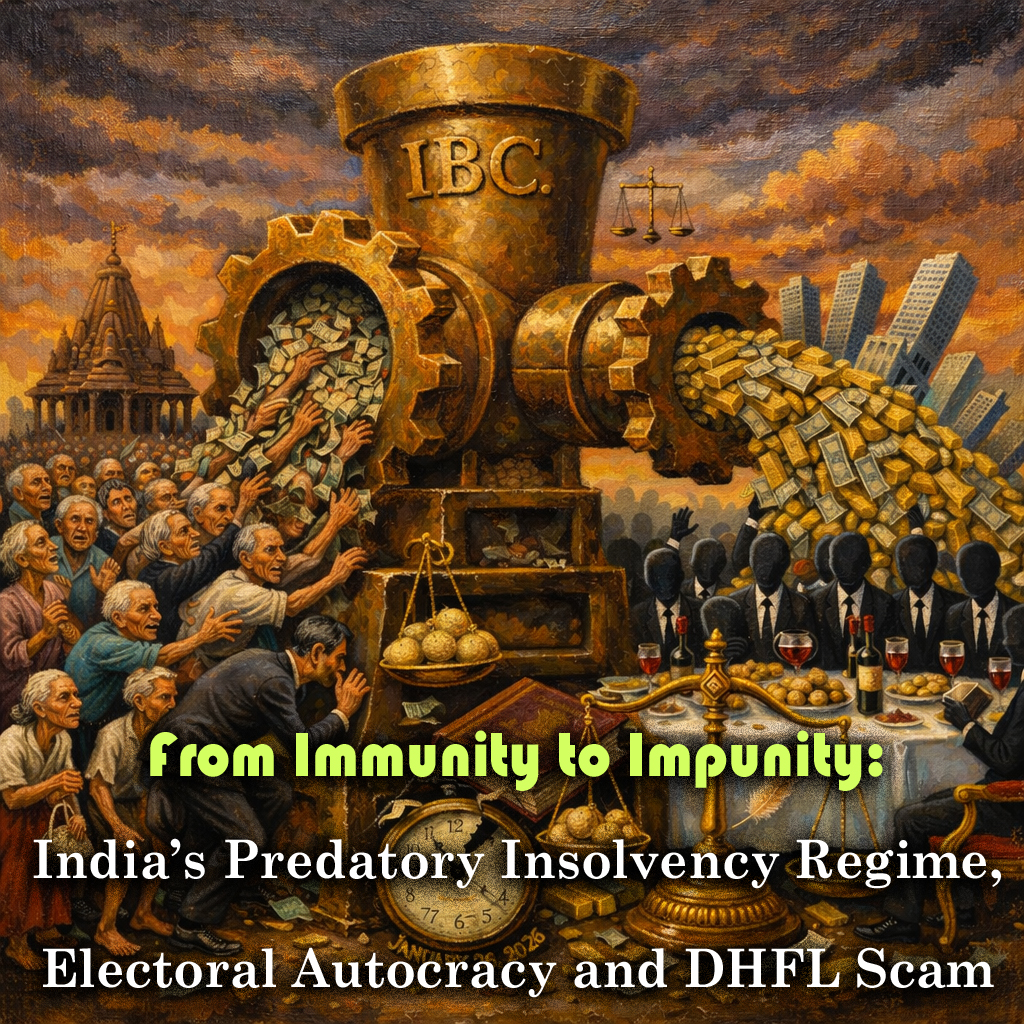
This article critically examines the Insolvency and Bankruptcy Code (IBC), 2016, arguing that it has evolved into a structurally predatory regime enabling the systematic transfer of public, depositor, and taxpayer-backed wealth to politically connected private entities. Through the lens of the DHFL resolution, it analyzes key judicial rulings—including the Delhi High Court’s holding that Insolvency Professionals are not “public servants” under the Prevention of Corruption Act, 1988, and the Supreme Court’s 2025 affirmation of the Piramal plan—revealing chronic delays, 67–68% average haircuts, fraud laundering via Section 32A, and unchecked Committee of Creditors (CoC) dominance. Situating DHFL within India’s declining Corruption Perceptions Index (96th/180, score 38/100 in 2024), the study highlights premature occupation by Ajay Piramal, enabled by his secondary kinship to Mukesh Ambani and BJP-linked patronage. It concludes that incremental amendments are insufficient and advocates complete repeal in favour of a transparent, constitutionally compliant framework prioritizing public interest, restitution, and accountability under Articles 14 and 21.
Manifesto for Scrapping the Ill-Conceived Insolvency and Bankruptcy Code (IBC) 2016
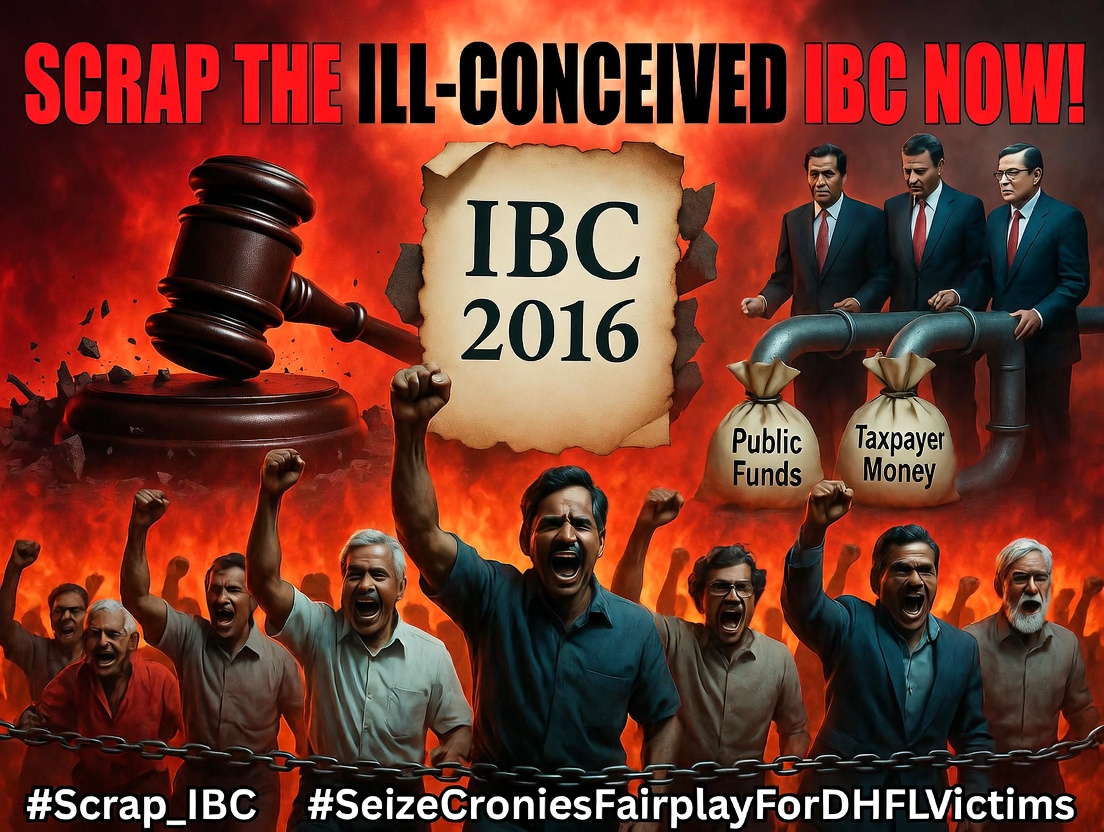
This manifesto advances a sustained, evidence-based critique of India’s Insolvency and Bankruptcy Code (IBC), 2016, arguing that the regime has evolved into a structurally predatory legal apparatus that facilitates large-scale transfer of public, depositor, and taxpayer-backed wealth into private corporate hands under the guise of “efficient insolvency.” Drawing on IBBI data up to 2025, landmark cases such as DHFL, Bhushan Power & Steel, Videocon, and Aircel, and recent Supreme Court jurisprudence, the analysis demonstrates how the IBC has systematically failed its own statutory promises of time-bound resolution, value maximization, equitable treatment, fraud recovery, and economic revival. Instead, prolonged delays, extreme haircuts averaging 67–68%, marginalization of retail depositors and public-interest claims, laundering of fraud through Section 32A immunity, and near-absolute deference to creditor “commercial wisdom” have produced a regime marked by judicial ritualism, moral hazard, and deep constitutional infirmities under Articles 14 and 21. The DHFL resolution is presented as a “laboratory case” exposing the IBC’s core pathologies—where a solvent, fraud-tainted institution was transferred at a steep discount, avoidance recoveries worth tens of thousands of crores were privatized, and lakhs of small savers were effectively dispossessed. Situating the IBC within a broader political economy of crony capitalism and opaque political funding, the manifesto rejects incremental reform as inadequate and calls for the complete scrapping of the Code in favor of a transparent, people-centric insolvency framework grounded in accountability, restitution, constitutional justice, and public interest.
The Student as Examiner: Decoding the Manufactured Illusion of Piramal Group’s “Shining” Credit Ratings
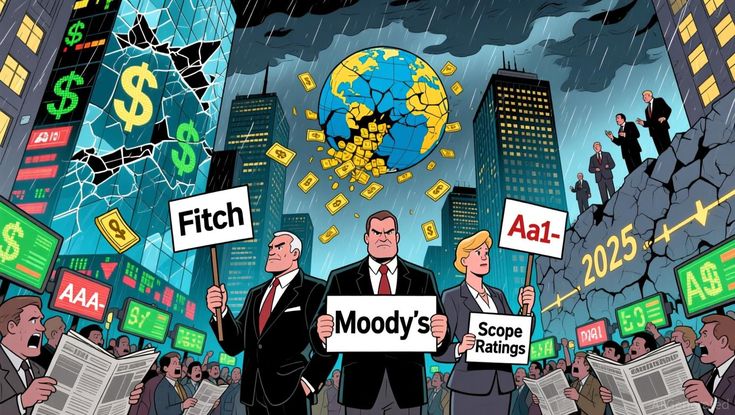
Credit rating agencies (CRAs) in India occupy a paradoxical position: their ratings shape investor behaviour, influence borrowing costs, and determine market access for corporations, yet they operate within a regulatory and commercial architecture that structurally disincentivizes critical scrutiny and accountability. The issuer-pays model — wherein the rated entity pays the rater — creates endogenous conflicts of interest that privilege quantifiable metrics like capital adequacy and liquidity while marginalizing qualitative governance and forensic risks. This article argues that under such a regime, investment-grade ratings (including the recent CRISIL AA+/Stable assigned to Piramal Finance in early 2026) function less as independent credit assessments and more as manufactured assurances that legitimize capital flows for well-connected conglomerates. Drawing on legal, financial, and political economy frameworks, this piece situates India’s CRA ecosystem within a broader pattern of regulatory compliance without substantive responsibility, oligopolistic market concentration, and political-corporate crony interlocks. It contends that ratings resemble self-assessment with outsourced certification, transferring systemic risk downstream to retail investors, pension funds, and the public. The Piramal example is explored as a paradigmatic case in which ratings have obscured deep-seated governance vulnerabilities and deferred accountability, underlining the need for structural reforms in rating incentives, liability regimes, and public interest protections.
Chaosophy of Credit Ratings: Where’s the Accountability?
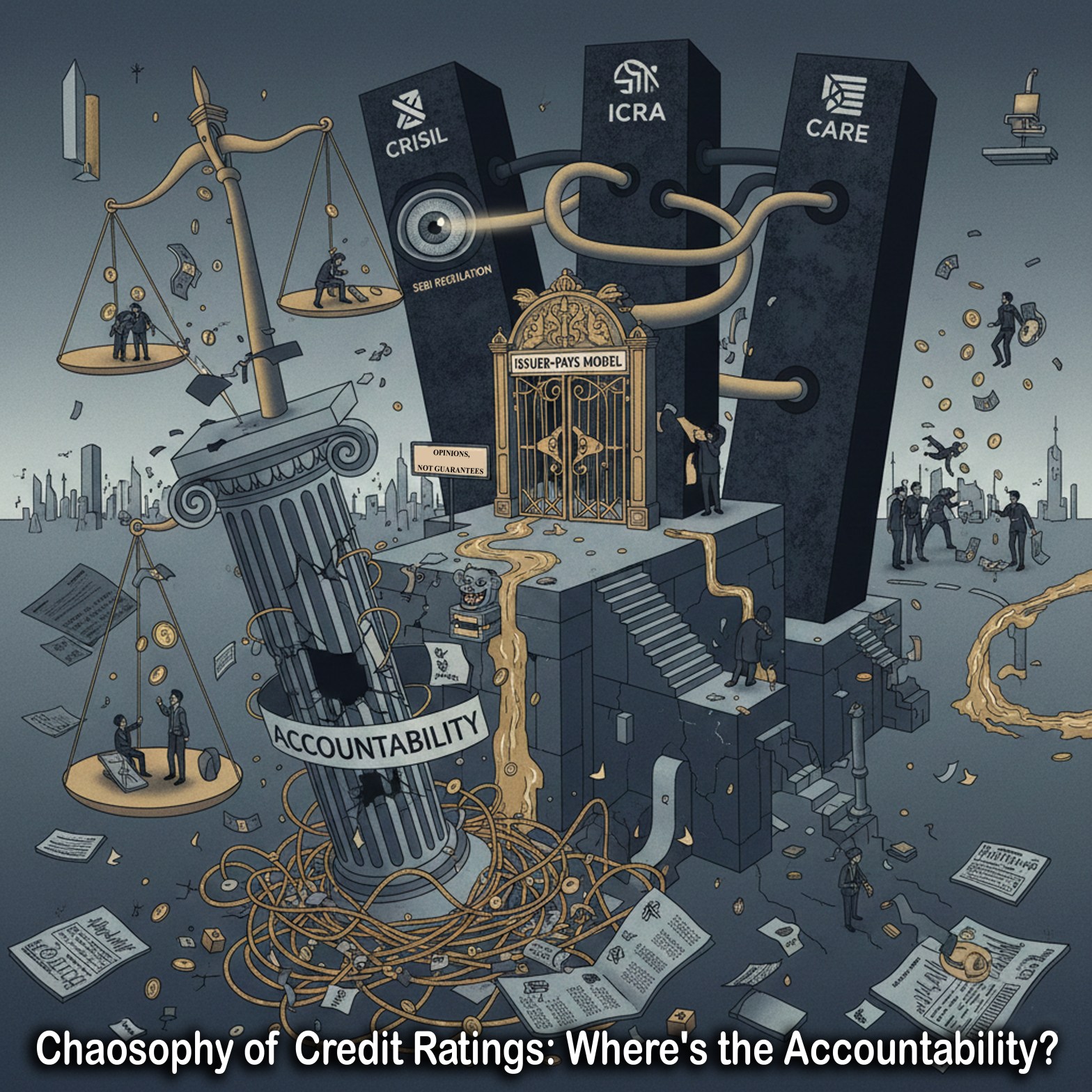
This article offers a comprehensive, non-polemical examination of the accountability architecture governing credit rating agencies (CRAs) in India, focusing on CRISIL, CARE Ratings, and ICRA under the SEBI (Credit Rating Agencies) Regulations, 1999 (as amended through 2026). Situating itself in continuity with earlier analyses of Piramal Finance and Piramal Pharma ratings, it maps what CRAs are legally mandated to do, how the issuer-pays model structures incentives, and why regulation centered on process rather than outcomes produces a persistent accountability gap. Drawing on verifiable rating actions, enforcement precedents, and the DHFL collapse as a paradigmatic failure, the article demonstrates how credit ratings—legally framed as professional opinions rather than conclusive, decisive guarantees—shape capital flows and investor behaviour without imposing commensurate liability on agencies when optimism bias, delayed downgrades, or convergence errors materialize. It further shows how an oligopolistic market structure, implicit ratings shopping, and political–corporate crony concentration during the BJP regime dilute reputational discipline, transferring risk downstream to retail and public investors. Incorporating recent regulatory reforms and critiques, including debates on revenue diversification, expanded mandates, and transparency norms, the article argues that legality and compliance have been mistaken for responsibility. In conclusion, it frames India’s credit rating regime as a system of regulation without substantive accountability, where structural design—not isolated misconduct—explains recurring credit failures, and where incremental reforms remain insufficient without a fundamental rethinking of incentives, liability, and public interest protection.
From Issuer Pays to Polluter Pays: Unearthing Piramal Pharma’s Credit Ratings
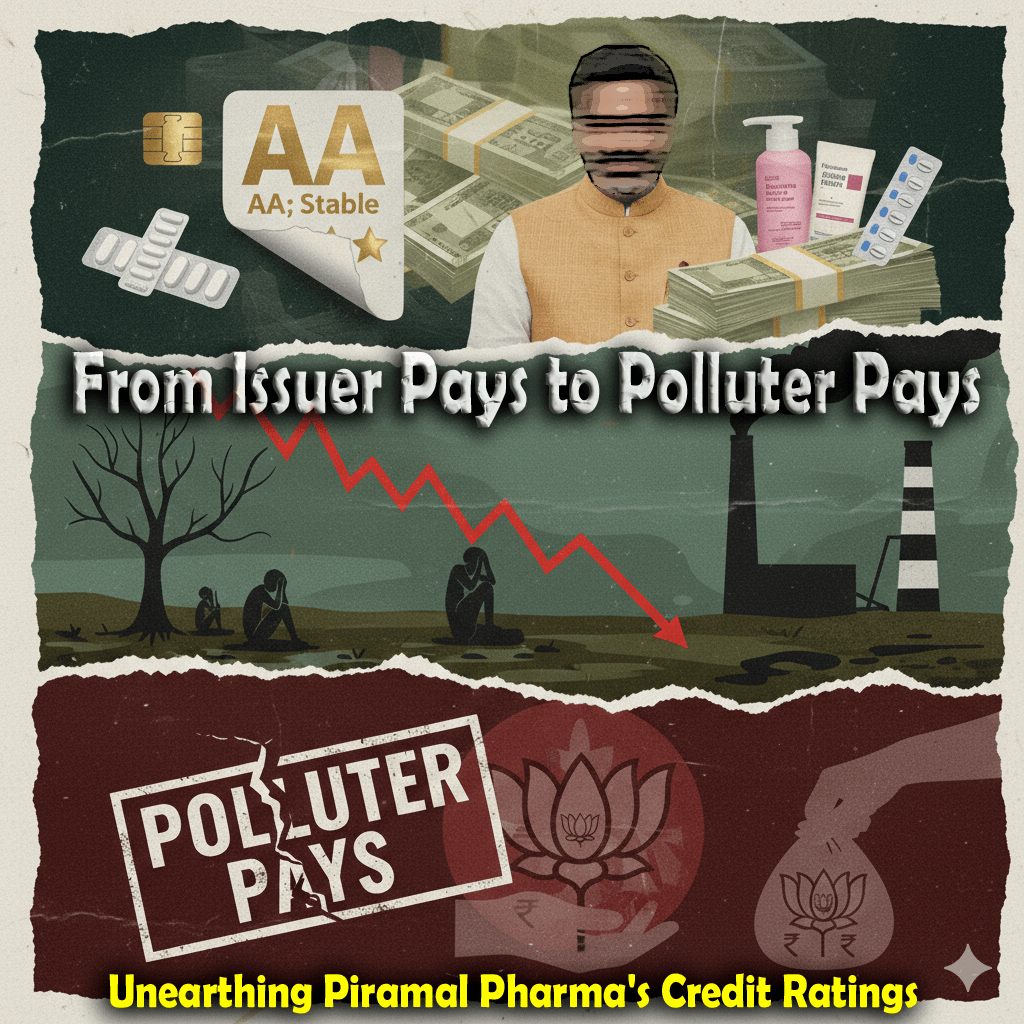
Piramal Pharma Limited (PPL), demerged from Piramal Enterprises in 2022, enjoys high investment-grade credit ratings (e.g., CARE AA; Stable upgraded July 2025) under the issuer-pays model, which critics claim manufactures trust to enable cheap borrowing despite severe financial strain—Q2 FY26 revenue down ~9% to ₹2,044 crore, EBITDA crashed 44%, net loss ₹99 crore, high leverage (~3x net debt-to-EBITDA), weak interest coverage, and share price falling ~19% from ₹204 (July 2025) to ~₹166 (mid-January 2026). This rating resilience contrasts sharply with the alleged “Digwal massacre” at its Telangana plant: repeated effluent dumping (comprehensively reported by 2018) contaminating water/soil, devastating farmland, and linked to spikes in kidney failures, respiratory issues, and cancers among villagers; despite NGT’s ₹8.3 crore polluter-pays fine (2019), TSPCB closure orders, and weak enforcement, SEBI deemed events non-material post-demerger, reportedly shielded by Ajay Piramal’s substantial BJP donations and crony ties. Echoing the Piramal Finance rating controversy, PPL’s playbook—restructurings to quarantine liabilities, OTC pivot to mask industrial risks, and paid-for “stable” ratings—externalizes financial, environmental, and human costs onto investors and poisoned communities, highlighting the urgent need to dismantle the ratings oligopoly and opaque political funding that sustain such systemic expropriation.
OBMA Statement on Neo-Imperialist Violence: Iran, Venezuela, Palestine
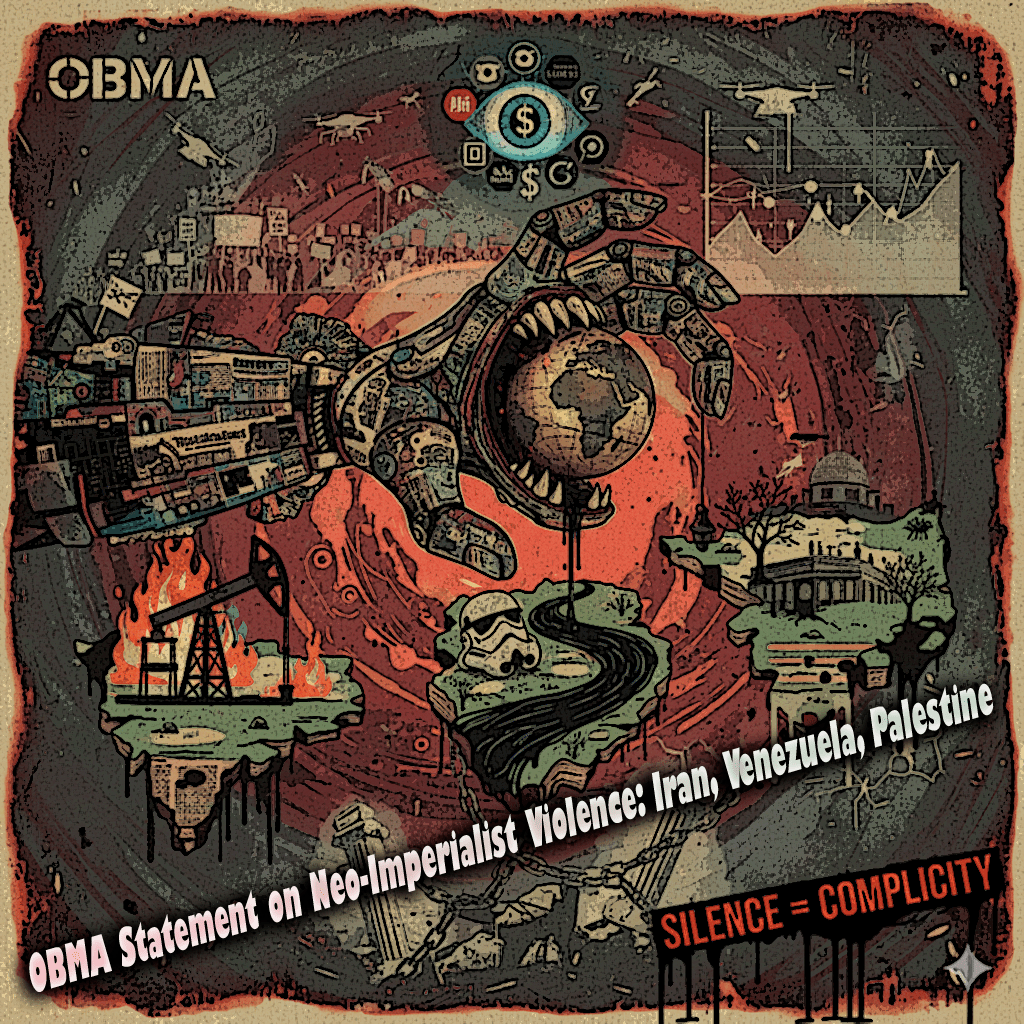
This statement asserts OBMA’s condemnation of neo-imperialist violence in Iran, Venezuela, and occupied Palestine, framing these crises as interconnected expressions of cannibalistic capitalism. It exposes how state repression, militarization, sanctions, and fossil-fuel geopolitics enable genocide, ecocide, and resource plunder. Rejecting technocratic and reformist fixes, OBMA affirms planetary justice, anti-imperialist solidarity, and life-centred transformation through collective struggle and ecological ethics.
One Rupee, Piramal Finance, and the Ruins of DHFL: A Letter to Mr. Ajay Piramal
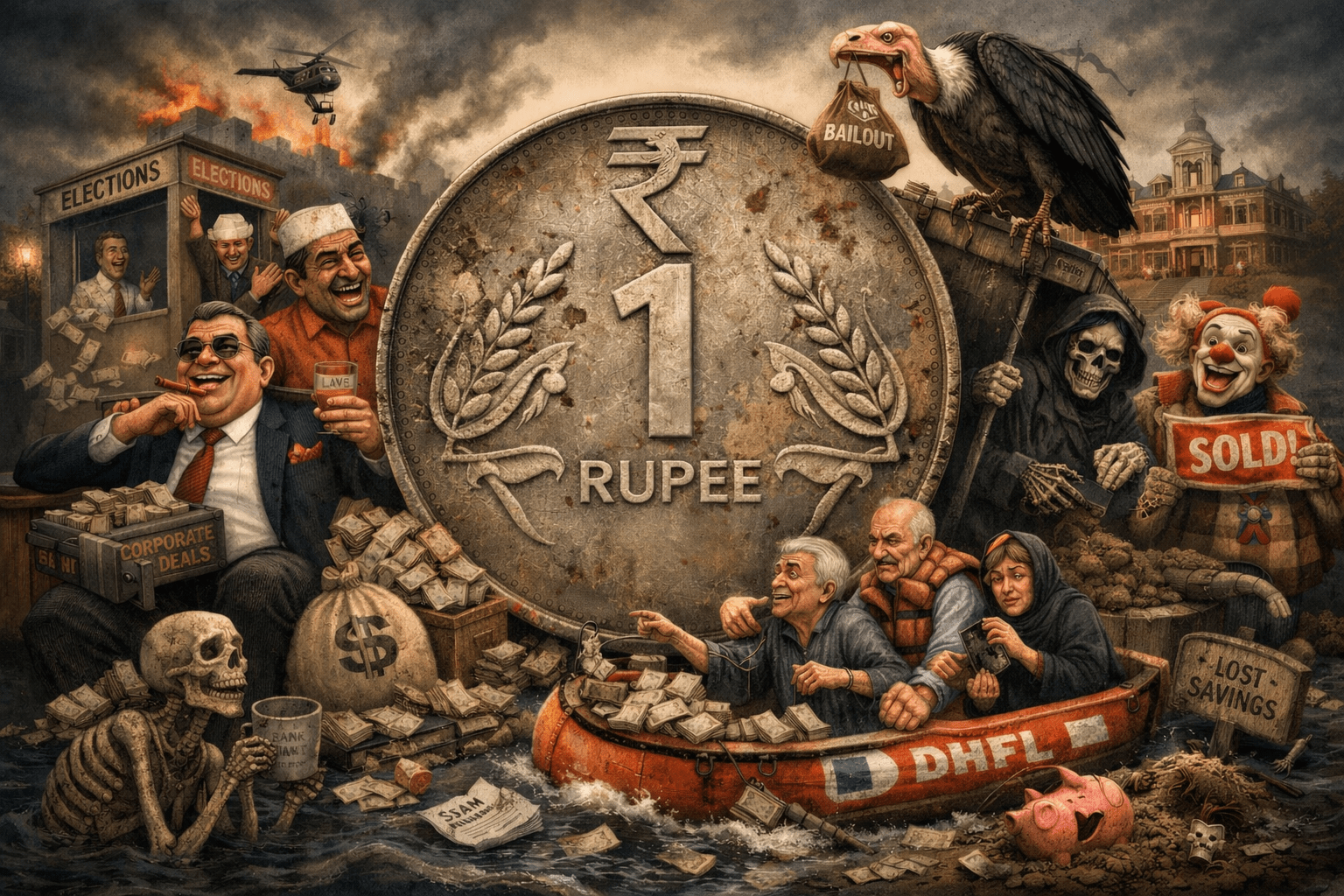
This open letter to Ajay Piramal interrogates the moral dissonance between Piramal Finance’s “Neeyat” advertising campaign, which celebrates honesty through the return of a single rupee, and the lived reality of DHFL depositors whose life savings were erased through a deeply contested insolvency process. By juxtaposing corporate virtue-signalling with the transfer of nearly ₹45,000 crore of DHFL assets for ₹1, the text argues that legality has been deployed to eclipse legitimacy, and branding to obscure accountability. Situating the DHFL resolution within a wider system of crony capitalism, opaque political financing, captured institutions, and manufactured consent, the letter frames the episode as part of a broader legitimation crisis in BJP-ruled India, where ethics are subordinated to power and proximity. At its core, the piece demands that “conscious capitalism” be measured not by advertisements or philanthropy, but by what is returned to those who trusted, funded, and were dispossessed.
Who Pays, Who Bribes, Who Flees, Who Profits: BJP’s Swelling Coffers Amid Exploding External Debt

Posted on 6th January, 2026 (GMT 06:26 hrs) ABSTRACT India’s neoliberal delusion stands exposed in this searing critique: As the ruling Bharatiya Janata Party (BJP) amasses an astronomical financial empire—ballooning from modest pre-2014 assets to ₹7,113 crore in cash/bank balances and over ₹10,107 crore in election war chests by late 2025, propelled by ₹6,088 croreContinue reading “Who Pays, Who Bribes, Who Flees, Who Profits: BJP’s Swelling Coffers Amid Exploding External Debt”
 Once in a Blue Moon Academia