
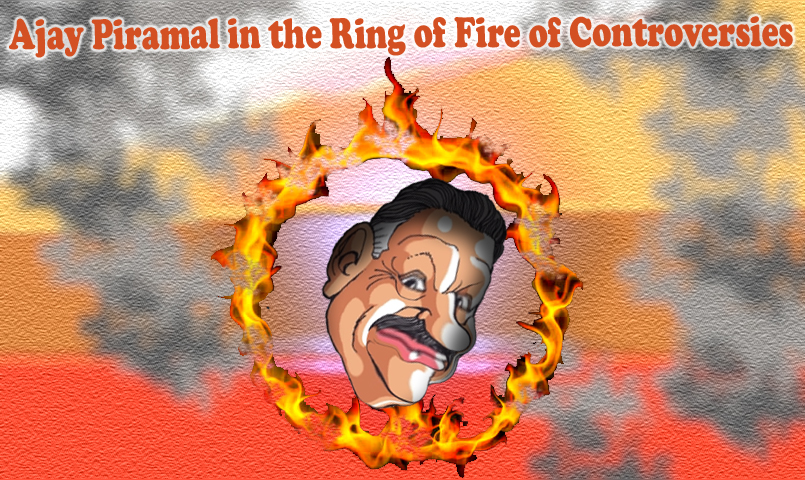
This article presents a critical survey of the many controversies encircling Ajay Piramal, framing him as a polarising business-magnate whose corporate manoeuvres are frequently contested and legally fraught. Against a backdrop of alleged insider-trading, environmental violations (notably in Digwal, Telangana), the contentious acquisition of Dewan Housing Finance Corporation Limited (DHFL) via the insolvency process, large electoral-bond donations to the ruling Bharatiya Janata Party (BJP), and the use of defamation and contempt litigation against critics, the piece argues that Piramal’s business success is anchored in regulatory capture, political patronage, and legal privilege. It argues that, by deploying legal tactics such as “blanket stay orders,” leveraging judicial delays and restructuring strategies (mergers/demergers) and aligning with ruling party dynamics, Piramal navigates a “ring of fire” of regulatory, social‐ and investor-based controversies while avoiding significant accountability. The article highlights how the financial losses of depositors and NCD investors in the DHFL resolution process, the alleged environmental harms, and the suppression of dissent through legal intimidation (SLAPP-type suits) are symptomatic of a broader state–capital nexus in which ordinary stakeholders—and democratic accountability—are systematically disadvantaged. It emphasises that although many of these controversies remain sub-judice, the weight of circumstantial evidence suggests a pattern of elite protection, structural impunity and capture of institutional mechanisms.
Category Archives: Activities
Our current activities concentrate on the case of Dewan Housing Finance Corporation Limited (DHFL), India. While exploring and investigating this particular case, we have found that India’s crony ruling party, gangsters, banksters as well as religious gurus and institutions are involved in the same. Therefore, to break such collusion, we have decided to deploy an “all out attack” on the existing paradigm of neoliberal market economy as well as market fundamentalism. ***DISCLAIMER: We have collected all the data from available sources on the internet as given on the official portals of media houses, websites and institutions and organizations. We are not first-hand reporters and hence, we are not liable for any inadvertent error or value-loaded statements made on those portals. All propositions have to be viewed as descriptive assertions on the given point of concern.***
Incommensurability Amidst PMLA and IBC in the Context of the DHFL Scam
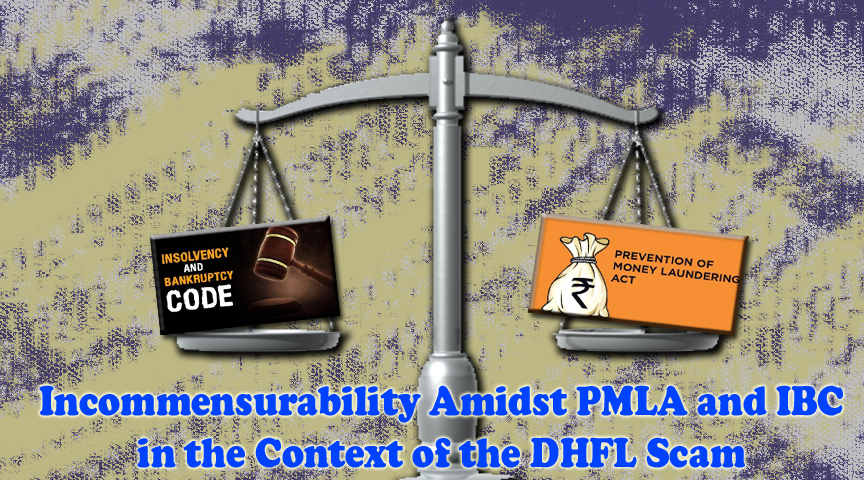
Posted on 06/04/2024 (GMT 10: 50 hrs) While searching through the intricacies and further implications of the DHFL Scam, we have come across a Linkedin article by CA (Dr.) Bishwadev Dash, which shows the incommensurabilities of having the IBC as well as PMLA at the same time: Conflict between IBC and PMLA VIEW HERE ⤡Continue reading “Incommensurability Amidst PMLA and IBC in the Context of the DHFL Scam”
Sell-ebration of Turncoats: The BJP’s Laundry of Deceit
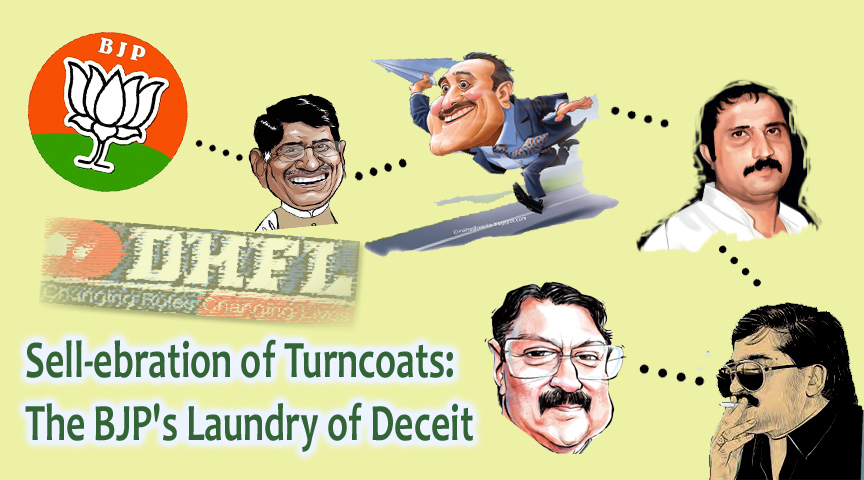
The Collusion Among the Business Tycoons, BJP and the “Underworld” Posted on 30/03/2024 (GMT 17:05 hrs) Updated on 06/04/2024 (GMT 11:04 hrs) After the revelation of the Flashnet Scam⤡, where, in 2018, Mr. Ajay Piramal bought BJP Union Minister Mr. Piyush Goyal’s company at 1000 times its face-value (In percentage terms, the premium was nearlyContinue reading “Sell-ebration of Turncoats: The BJP’s Laundry of Deceit”
In Defence of the Ladakh Movement: A Faint Voice of Solidarity During the Ominous Hour of Climate Emergency

The article defends the Ladakh movement as a crucial voice against environmental degradation and climate change, particularly in the face of the Himalayan region’s vulnerabilities. It highlights the importance of indigenous and local perspectives in climate activism, emphasizing Ladakh’s ecological sensitivity and the dangers posed by unchecked development. The piece also calls for solidarity with grassroots movements that prioritize sustainable and culturally sensitive practices, urging broader attention to the climate emergency’s impact on marginalized communities.
A Sympathetic Note to the CBE Paramavaiṣṇava Ajay Piramal

The authors address Ajay Piramal in a seemingly supportive tone, while deploying layered irony to critique his entanglement in political, legal and ethical controversies. They highlight his large electoral-bond donation (₹85 crore) to the Bharatiya Janata Party (BJP) and connect it to his business-state nexus, posing the question of whether such “political charity” is altruistic or effectively bribery. They raise allegations of insider trading (noted by the Securities and Exchange Board of India and the Securities Appellate Tribunal), environmental damage at the Digwal plant in Telangana, consumer mis-promises by his real-estate arm, and, most significantly, his role in the resolution of Dewan Housing Finance Corporation Limited (DHFL) where the authors argue small depositors and NCD holders were sidelined while his group allegedly benefitted. The tone shifts between a personal “sympathetic” appeal (invoking his spiritual associations) and a sharper critique (emphasising legal stays, defamation suits, and the “victims’” discontent). Ultimately the piece situates Piramal as a case-study of how entrepreneurial philanthropy, political proximity and regulatory capture can converge to undermine accountability and social justice.
Singing in the Darkest Times: A Plea For Hope

Posted on 24/03/2024 (GMT 17:51 hrs) In the dark times, Will there also be singing? Yes, there will also be singing. About the dark times. Bertolt Brecht Dear All, I, an absurd man, am indebted to you all for supporting our cause through online non-violent civil disobedience movement against the crony oligarchy, especially those fewContinue reading “Singing in the Darkest Times: A Plea For Hope”
Should the DHFL Victims Boycott the Upcoming Elections?
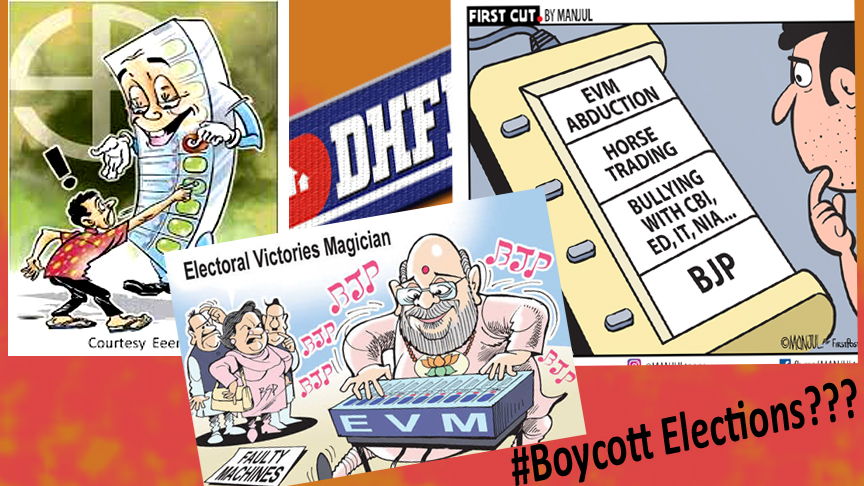
Authored By Partyless Society ⤡ Posted on 23/03/2024 (GMT 16:48 hrs) “…ratification would mean a system in which there are two positions presented to me, the voter. I go into the polling booth and I push one or another button, depending on which of those positions I want. That’s a very limited form of democracy. AContinue reading “Should the DHFL Victims Boycott the Upcoming Elections?”
Why Did the Wadhawan Brothers Cut A Sorry Figure To Satisfy the BJP’s Itching Palms?
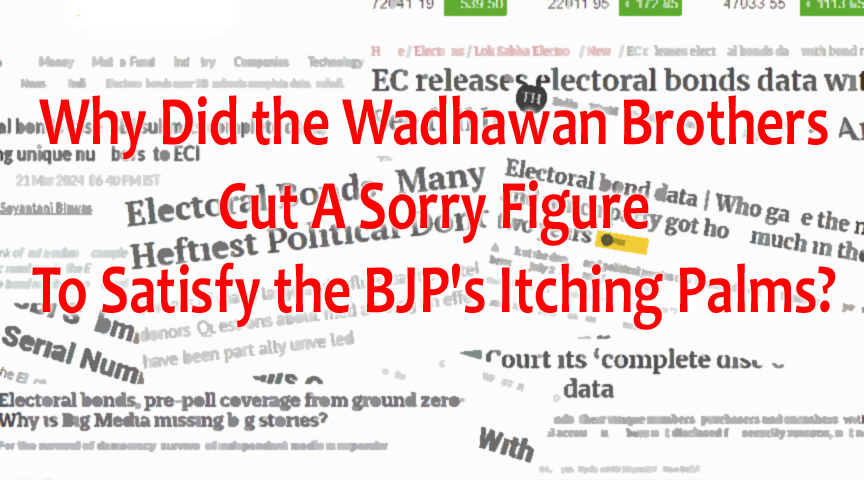
Posted on 21/03/2024 (GMT 17:30 hrs) Updated on 16/09/2025 (GMT 10:05 hrs) Authored By Partyless Society ⤡ Abstract The article investigates why the Wadhawan Brothers—formerly owners of Dewan Housing Finance Limited (DHFL)—have been conspicuously absent from the list of Electoral Bond donors, in spite of previous allegations that they had donated to the BJP throughContinue reading “Why Did the Wadhawan Brothers Cut A Sorry Figure To Satisfy the BJP’s Itching Palms?”
Ajay Piramal’s Contributions to the Electoral Bonds
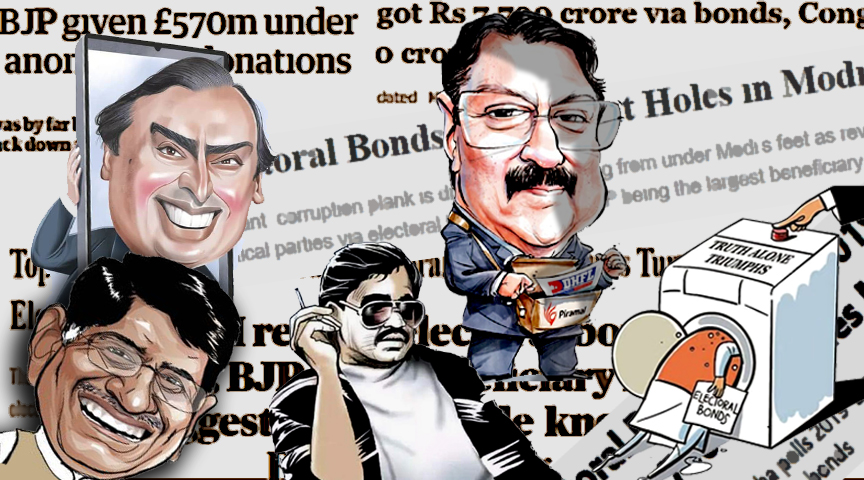
This article examines Ajay Piramal’s contributions to electoral bonds, highlighting his role as a prominent Indian industrialist and philanthropist in the context of political funding in India. It explores the significance of electoral bonds as a mechanism for transparent political donations and analyzes Piramal’s involvement through his conglomerate, the Piramal Group. The piece delves into the broader implications of corporate contributions to electoral bonds, discussing their impact on democratic processes, governance, and transparency. By focusing on Piramal’s financial engagements, the article underscores the intersection of business, philanthropy, and political influence, raising critical questions about the evolving dynamics of electoral funding in India.
Babri Masjid to Ram Mandir: Modi as PM vs Modi as citizen (?)- An RTI to the PMO, India

The article discusses an RTI (Right to Information) query filed with India’s Prime Minister’s Office (PMO) regarding whether Narendra Modi participated in the Ram Mandir’s Bhumi Pujan and inauguration in his personal or official capacity. The PMO’s response stated that the Prime Minister is always on duty, indicating he attended as the PM, which raises concerns about the violation of India’s secular Constitution. The article critiques Modi’s actions and highlights the broader political implications, calling for resistance to the perceived rise of a Hindu Rashtra.
 Once in a Blue Moon Academia