
Posted on 13/02/2024 (GMT 15:30 hrs) Updated on 14th October, 2024 (GMT 16:36 hrs) At a time when India is ruled by crony oligarchy with the predominance of two-three business tycoons at the forefront of framing all public policies, taking all judicial decisions and a situation of mass censorship, the Right To Information Act (2005)Continue reading “RTIs filed by Once in a Blue Moon Academia (OBMA)”
The Apex Court of India: RTI Activism on the DHFL Scam

Posted on 10/02/2024 (GMT 08: 55 hrs) Updated on 07/03/2024 (GMT 16:30 hrs) I. With regard to the case of the DHFL scam, some of the OBMA members cum DHFL victims sent mass appeals through snail mail/speed post to the Hon’ble Chief Justice of India, Supreme Court of India, on 16/11/2023. Before these physical appealsContinue reading “The Apex Court of India: RTI Activism on the DHFL Scam”
Money Laundering by the Ruling Party of India: An Open Epistle to the Financial Action Task Force (FATF)
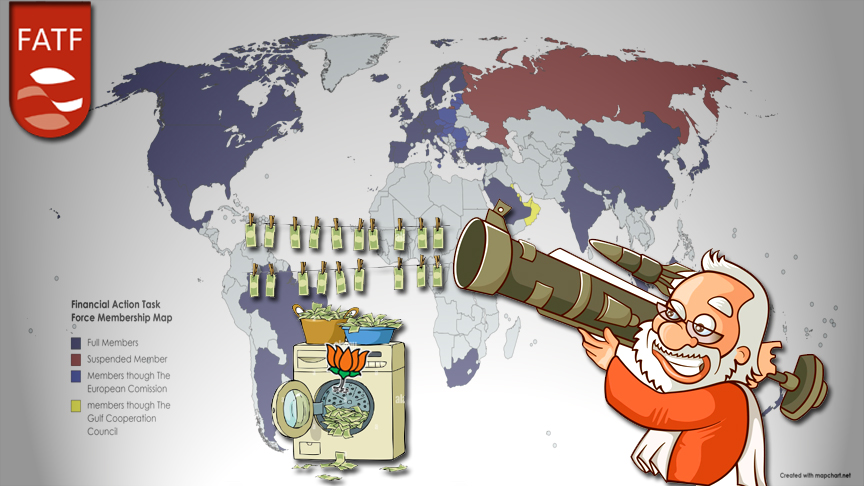
Posted on 09/02/2024 (GMT 13:04 hrs) Updated on 10/02/2024 (GMT 07:56 hrs) To Ms. Violaine Clerc, The Executive Secretary, Financial Action Task Force (FATF) Sub: Informing Atrocities Made by the Government of India (GOI) Dear Ms. Clerc, We are perplexed to view that there is no mention of the nation-state “India” in either your liste noire orContinue reading “Money Laundering by the Ruling Party of India: An Open Epistle to the Financial Action Task Force (FATF)”
The Legitimation Crises of the Indian Judiciary: A Failing State of Affairs?

The article critiques the Indian judiciary, arguing it faces a legitimation crisis. It highlights issues like political influence, favoritism, and a lack of impartiality. Examples include post-retirement jobs for judges linked to the ruling party, delays in resolving crucial cases like the DHFL scam, and concerns over the judiciary’s independence. The piece questions whether the judiciary has upheld its constitutional duties and reflects on Chief Justice DY Chandrachud’s tenure.
Of All the Superrich Wilful Defaulters, Why the Wadhawans alone?
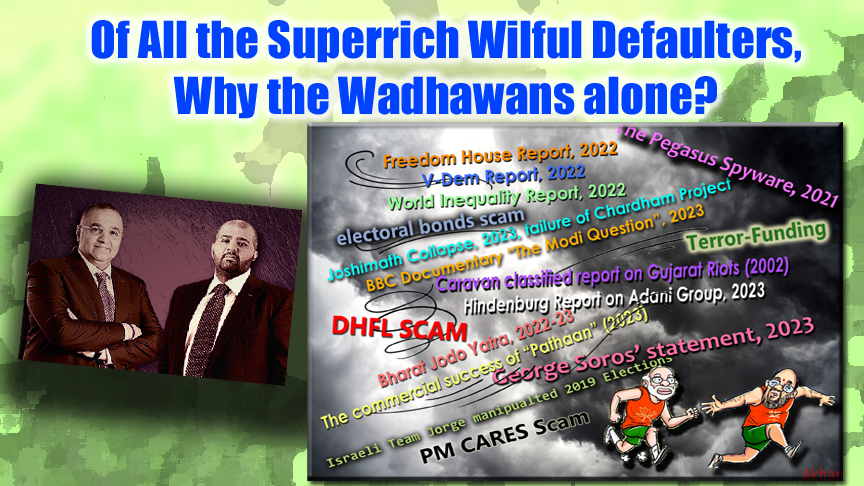
Posted on 30/01/2024 (GMT o9:15 hrs) It all started when Mr. Ajay Piramal suddenly declared in the beginnings of January 2019: “Be prepared for one or two major shocks in the NBFC sector”. THE CHRONOLOGY OF THE DHFL SCAM VIEW HERE ⤡ Just one day after that, on 29th January, 2019, Cobrapost announced its findingsContinue reading “Of All the Superrich Wilful Defaulters, Why the Wadhawans alone?”
Values of Indian Constitution Endangered: Heading Towards Hindu Rastra?

The article “Values of Indian Constitution Endangered: Heading Towards Hindu Rashtra?” from Once in a Blue Moon Academia expresses concern over actions by Prime Minister Narendra Modi that may conflict with India’s constitutional principle of secularism. It highlights Modi’s frequent visits to Hindu temples and participation in religious rituals, suggesting these actions promote Hinduism over other religions, which contradicts the constitutional mandate of equal respect for all faiths. The article also references Modi’s association with the Rashtriya Swayamsevak Sangh (RSS) and critiques his adherence to its ideologies, implying a potential threat to India’s secular framework. This perspective aligns with concerns raised in other sources. For instance, an article from Le Monde discusses the blurring lines between the executive branch and secularism in India, citing Modi’s participation in Hindu rituals alongside judiciary members as indicative of this trend. Additionally, Vice President Jagdeep Dhankhar’s remarks equating constitutional values with Sanatana Dharma and criticizing religious conversions as contrary to national values further illustrate the intertwining of religion and state affairs. Collectively, these actions and statements suggest a shift towards integrating Hindu religious principles into the functions of the state, raising concerns about the preservation of India’s secular constitutional values.
The Case of DHFL Scam: Who Will Bell the Cat?

Posted on 26/01/2024 (GMT 08:45 hrs) After consummating the tiresome tasks of scrutinizing, surveying, data-mining, filing numerous RTIs, viralizing petitions-posters-reels-live videos-making docu movies, writing in both e-mail and snail mail all the gatekeepers of legal justice, it is found that the DHFL FD and NCD holders are in a safe place. However, the point is,Continue reading “The Case of DHFL Scam: Who Will Bell the Cat?”
The Weapon of Syncretism: Lest We Forget…
Posted on 22/01/2024 (GMT 18:00 hrs) “The weapon of criticism cannot, of course, replace criticism of the weapon, material force must be overthrown by material force; but theory also becomes a material force as soon as it has gripped the masses.” “The weapon of criticism”, in the case of the present dreary Indian context, isContinue reading “The Weapon of Syncretism: Lest We Forget…”
An Incessant Struggle for Being a Homogenized, Pasteurized, Essentialist and Standardized Akhanḍa Hindu Rāṣṭra: Bharatiya Janata Party

The paper titled “An Incessant Struggle for Being a Homogenized, Pasteurized, Essentialist and Standardized Akhanḍa Hindu Rāṣṭra: Bharatiya Janata Party” examines the Bharatiya Janata Party’s (BJP) efforts to establish a unified Hindu identity within India. It focuses on the contentious Ram Temple issue, highlighting the differing narratives between the BJP and Hindu saints. The authors argue that the term “Hindutva” encompasses a diverse range of beliefs, which complicates the BJP’s attempts to homogenize Hindu identity. The paper also critiques the influence of neoliberal economic policies in India, suggesting that since the early 1990s, successive governments, including the BJP, have adhered to models dictated by international financial institutions like the World Bank, International Monetary Fund, and World Trade Organization. This adherence has led to increased conflicts and a regime of totalitarian control, necessitating suppression of dissent and perpetuating violence. In summary, the paper contends that the BJP’s pursuit of a standardized Hindu nation is challenged by the inherent diversity within Hinduism and is further complicated by the socio-economic impacts of neoliberal policies.
In Defence of Doubting Everything: A Letter to the Chief Justice of India

Posted on 16/01/2024 (GMT 07:40 hrs) Updated on 21st October, 2024 (GMT 08:42 hrs) ABSTRACT The letter titled “In Defence of Doubting Everything” addresses the Chief Justice of India, focusing on the importance of questioning and critical thinking, particularly in light of secularism and the rise of theocratic extremism in India. Drawing inspiration from bothContinue reading “In Defence of Doubting Everything: A Letter to the Chief Justice of India”
 Once in a Blue Moon Academia