
The article explores the alleged involvement of the BJP in the DHFL scam, highlighting potential connections between Ajay Piramal and the party, including political donations and the Flashnet scam involving Piyush Goyal. It suggests a quid pro quo relationship where political donations were reciprocated with favors. The report also mentions accusations linking DHFL with terror funding via Dawood Ibrahim, late Iqbal Mirchi et al., and questions about transparency in financial dealings, particularly regarding donations to BJP through electoral bonds. The piece calls for a political critique of these issues.
Scrap Ill-conceived Insolvency and Bankruptcy Code (IBC), 2016!

The article advocates for the scrapping of the Insolvency and Bankruptcy Code (IBC) 2016, arguing it is flawed and detrimental to the Indian economy. Key points include:
Ineffectiveness in Recovery: The IBC has failed to effectively recover bad debts, with a low recovery rate that falls short of expectations.
Erosion of Value: The resolution process under IBC often leads to significant value erosion of the assets involved, harming creditors.
Lengthy and Costly Process: The IBC process is criticized for being time-consuming and expensive, burdening businesses and the judiciary.
Negative Impact on Credit Flow: The IBC has disrupted the credit flow to the economy, as banks become more risk-averse due to the possibility of lengthy insolvency proceedings.
Encouragement of Crony Capitalism: The code has allegedly facilitated the takeover of valuable assets by a few entities at low prices, leading to concerns about crony capitalism.
The article concludes that the IBC should be scrapped in favor of a more effective and equitable system for resolving insolvency and bankruptcy issues.
#Scrap_IBC,
#Seize_Cronies_Fairplay_for_DHFL_Victims,
#DHFL_Scam,
#Penalize_RSubramaniakumar_CharuDesai_from_DHFL_COC #Scrap_RBI_appointed_COC_for_DHFL,
#Resign_RBI_GOV_Shaktikanta,
#RBI_Appointed_CoC_for_DHFL_ReturnYourFees,
#alleged_dawood_mirchi_rkw_dhfl_bjp_collusion,
#Financial_Abuse_By_RBI_CoC_AjayPiramal,
#Flashnet_Scam,
#Down_With_Saffron_Fascism,
#art_of_resistance_against_autocracy,
#ajay_piramal_alleged_insider_trader,
#Dear_Piramal_I_Wanna_be_Defamator,
#Ajay_Piramal_The_Environment_Terrorist,
#Occupy_Internet_to_Occupy_Cronies,
#Dear_Ajay_Piramal_I_wanna_be_arrested,
Immediately Resolve the DHFL Scam Victims’ Demands! A Letter to Mr. Piyush Goyal, the friend of Mr. Ajay Piramal

The authors address the attention of Piyush Goyal, Minister of Commerce & Industry in the Indian government, urging immediate redress for the victims of the Dewan Housing Finance Corporation Limited (DHFL) scam. They contend that the appointment of Ajay Piramal – a significant donor to the ruling Bharatiya Janata Party (BJP) through electoral bonds – as the party favoured acquirer in the DHFL resolution exemplifies crony-capitalism and signals a grave institutional failure. The letter highlights evolving legal irregularities in the resolution process, including unresolved cases and contradictory public claims regarding ownership of DHFL, pointing to the broader erosion of regulatory and democratic accountability under a dominant majoritarian regime. Through a tone of moral insistence and democratic urgency, the authors, writing on behalf of FD (fixed deposit) and NCD (non-convertible debenture) holders, demand prompt governmental intervention to halt further injustice against middle-class investors. They frame the DHFL saga as symptomatic of a deeper crisis of state–capital nexus, demanding that the minister respond to these citizen-victims and reinforce the rule of law.
Post-Mortem of Parliamentary Democracy and What Is Still To be Done?

This article, published on June 8, 2024, conducts a critical examination of parliamentary democracy, with a likely focus on India’s post-2024 election landscape. It dissects systemic challenges, such as institutional erosion, political polarization, or governance inefficiencies, that undermine democratic processes. The analysis highlights key events or policies contributing to these issues. Proposing a path forward, the article outlines actionable reforms to strengthen democracy, including enhancing transparency, fostering inclusive dialogue, and reinforcing institutional checks. It underscores the urgency of collective action to revitalize parliamentary democracy’s efficacy and resilience.
Indian Stock Market Scam 2024 and the Futility of the Exit-Polls

Posted on 07/06/2024 (GMT 16:26 hrs) Compiled by the Partyless Society⤡ & Occupy Dalal Street⤡ “Underneath all reason lies delirium, drift. Everything is rational in capitalism, except capital or capitalism itself The stock market is certainly rational; one can understand it, study it, the capitalists know how to use it, and yet it is completely delirious, it’s mad.Continue reading “Indian Stock Market Scam 2024 and the Futility of the Exit-Polls”
Take Stern Measures against the BJP MPs With Legal Conflicts: An Appeal to the President of India

Posted on 07/06/2024 (GMT 13:23 hrs) Although there are too many complaints, FIRs and legal cases against the BJP’s malpractices during the Lok Sabha Elections, 2024, the Election Commission of India (ECI) along with the other vigilante agencies have turned a blind’s eye to all these crucial matters before a “new government” is formed. ThisContinue reading “Take Stern Measures against the BJP MPs With Legal Conflicts: An Appeal to the President of India”
Ecology, Economics and Elections: The Night Before…
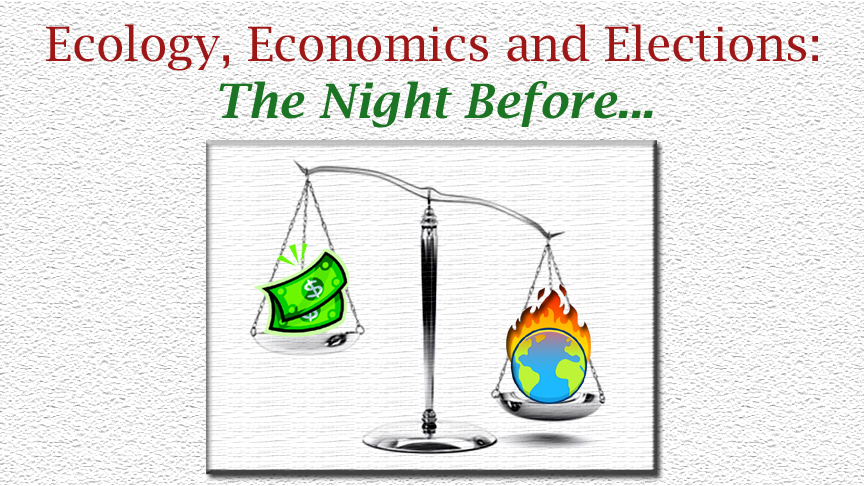
The article critiques the ecological and political consequences of development under the current Indian regime, especially around the 2024 elections. It highlights fatal heatstroke cases among election officials, linking them to climate change and post-vaccination vulnerabilities. Major projects like the UP pilgrimage road (involving massive deforestation), the Mumbai-Ahmedabad bullet train (destroying mangroves), and the Kashi corridor (erasing heritage for religious tourism) are cited as examples of state-driven environmental destruction. The authors warn of a drift toward electoral autocracy, prioritizing economic-political gains over ecological and democratic well-being.
Disqualify PM Modi for his Anti-Constitutional Activities: An Open Letter to the President of India
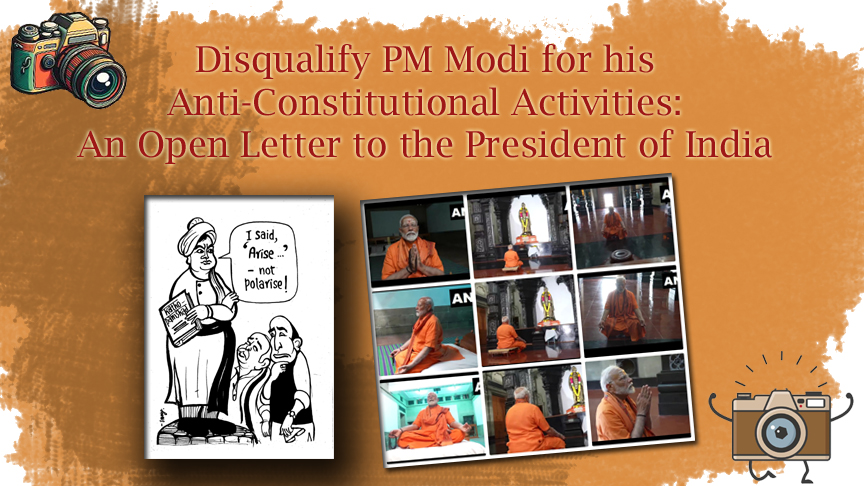
Posted on 31/05/2024 (GMT 19:18 hrs) To The Hon’ble President, The Republic of India Sub: Disqualify PM Modi for his anti-Constitutional activities Dear Madam, With reference to our RTI dated 28.01.2024 to the Prime Minister’s Office (PMO) just after the heinous inauguration of the Ram Temple in Ayodhya on the demolished, vandalized ruins of theContinue reading “Disqualify PM Modi for his Anti-Constitutional Activities: An Open Letter to the President of India”
Indian General Election 2024: A Farce?!
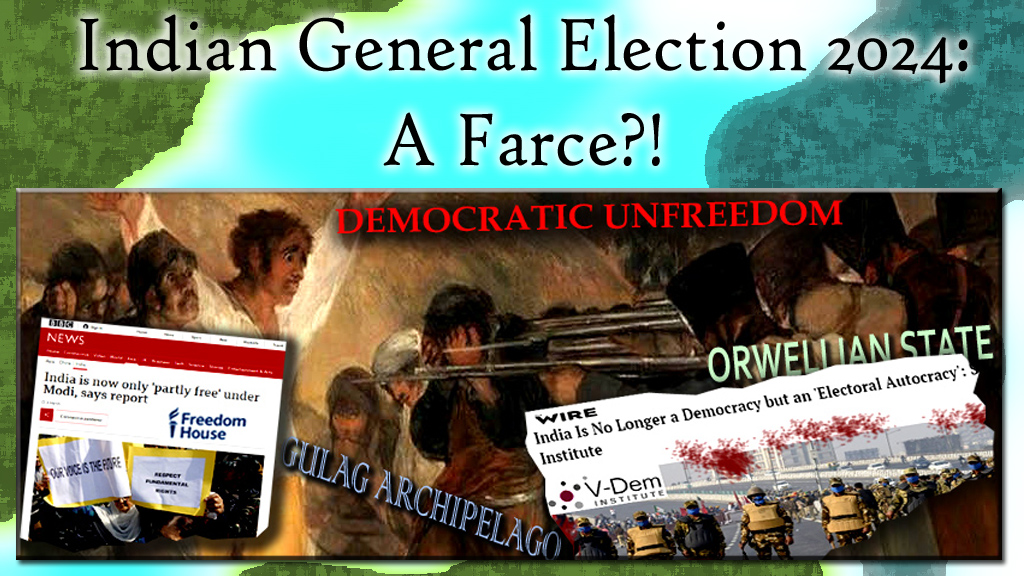
Posted on 23/05/2024 (GMT 12:28 hrs) Updated on 28/05/2024 (GMT 17:58 hrs) An Overview: The following collage deals with the present scenario of Indian politics, with the ongoing General Election (2024), which suffers from the legitimation crisis (Habermas) due to various facts of manipulation, encroachment and atrocities. The post also talks about the role ofContinue reading “Indian General Election 2024: A Farce?!”
Modiji’s Guarantee and the DHFL Victims: A Letter to PM Modi

Posted on 19/05/2024 (GMT 14:50 hrs) Sub: Modiji’s Guarantee and the DHFL Victims Dear Modiji, Hope that you are managing your stress well, given the grave conditions that confront your party at the moment. With your yogic corporeal, we are sure that you will be able to lead a balanced life after 4th June, 2024. Anyway, we,Continue reading “Modiji’s Guarantee and the DHFL Victims: A Letter to PM Modi”

