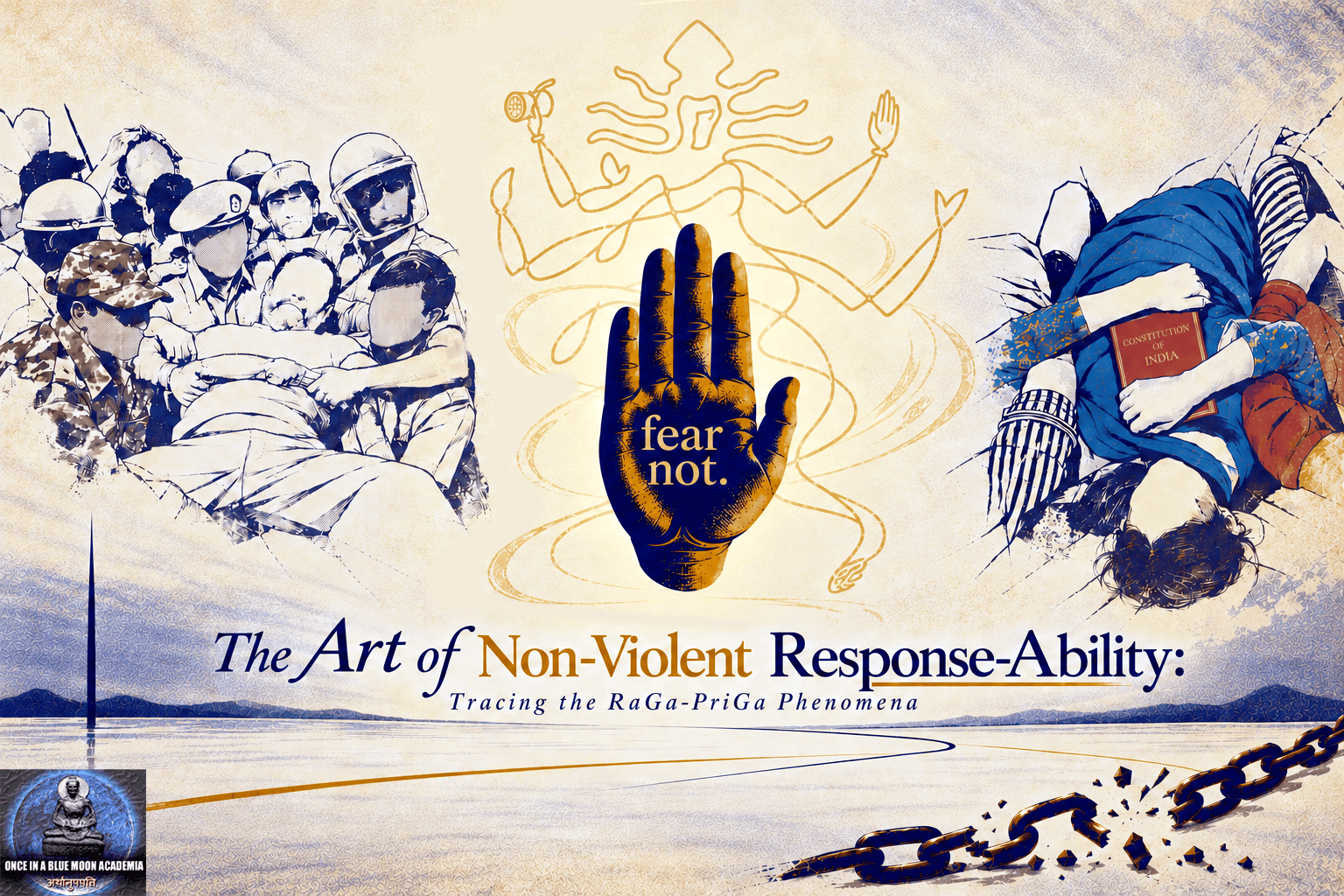
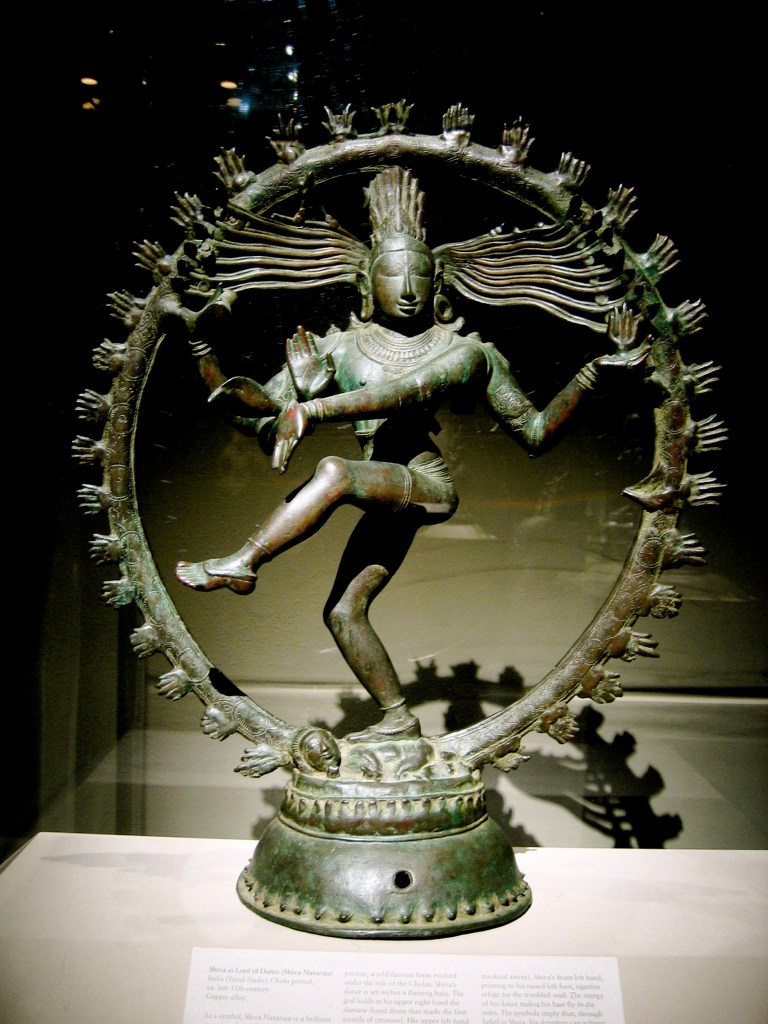
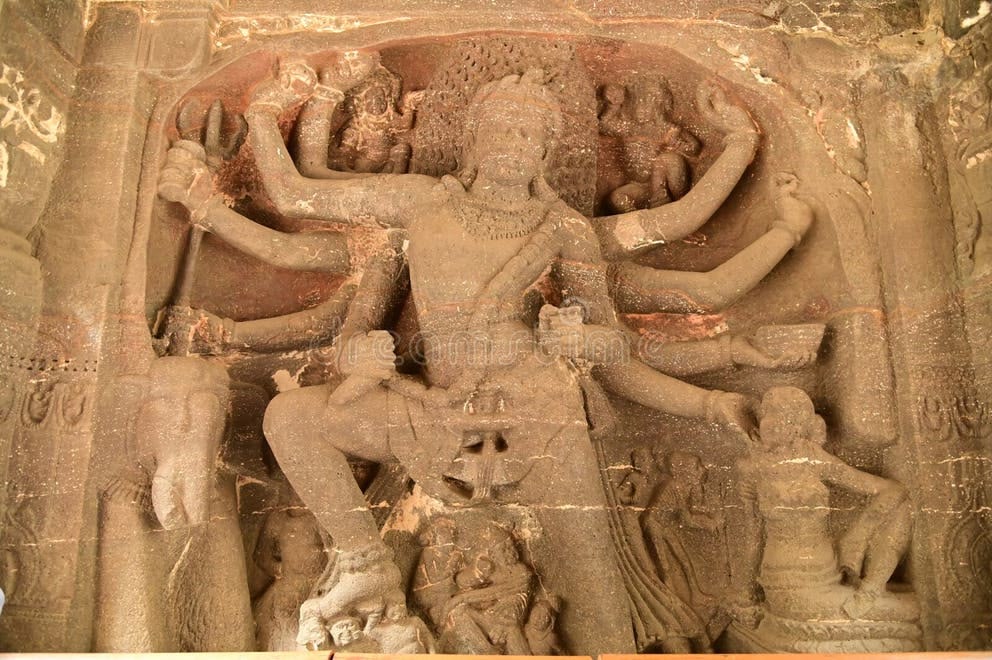
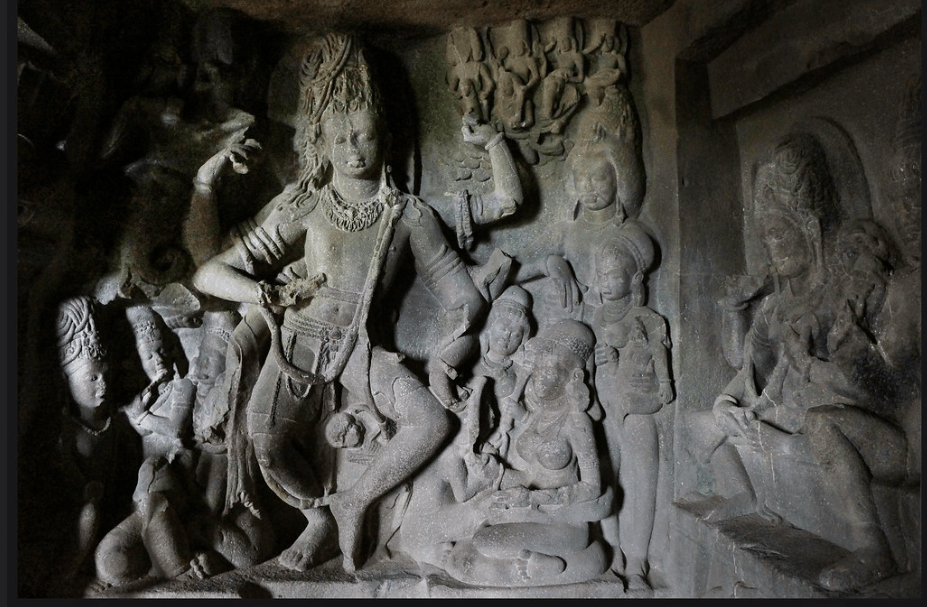
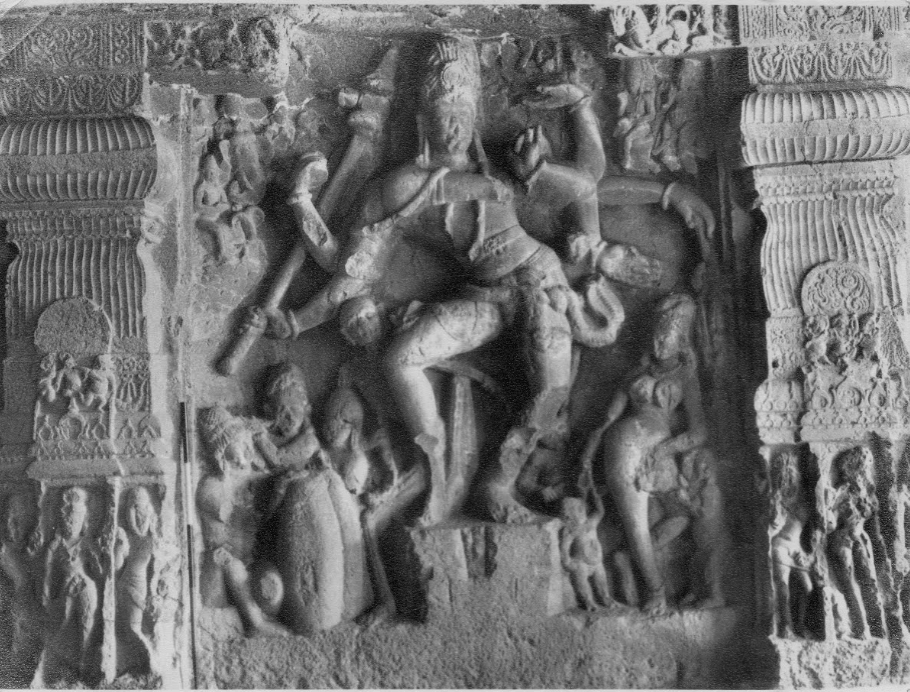
The Art of Non-Violent Response-Ability: Tracing the RaGa-PriGa Phenomena
Posted on 25th October, 2026 (GMT…)
There is a difference between answering for oneself and being able to answer what arrives. The first still keeps a self that stands slightly apart, ready to explain or defend. The second is already in the meeting. The hand is already open before the question is finished. The body is already receiving the force before the decision to return it can form.
Response-ability names that earlier capacity — the trained readiness to stay in the relation without turning the incoming pressure into a blow of one’s own.
This essay looks at one public record of that capacity. It follows two siblings who have spent a decade refusing to meet the organised production of hatred with more hatred, refusing to meet the baton with the counter-baton, refusing to meet the manufactured image with another image of their own. The Vipassanā sitting that does not flinch, the Aikido turn that does not strike, the jiu-jitsu grip that maintains contact without converting the hold into symmetrical force, the long walk that does not stop, the open hand that says fear not, the dossier that makes the hidden hold visible — these are not separate techniques. They are successive ways of remaining answerable under orchestrated pressure.
The article does not ask whether the persons are pure. It asks whether the disposition they have repeatedly described and repeatedly enacted can be seen, in the record, as a coherent art of non-violent response. That is what the title claims. That is what the sections that follow try to show.
Dedicated to
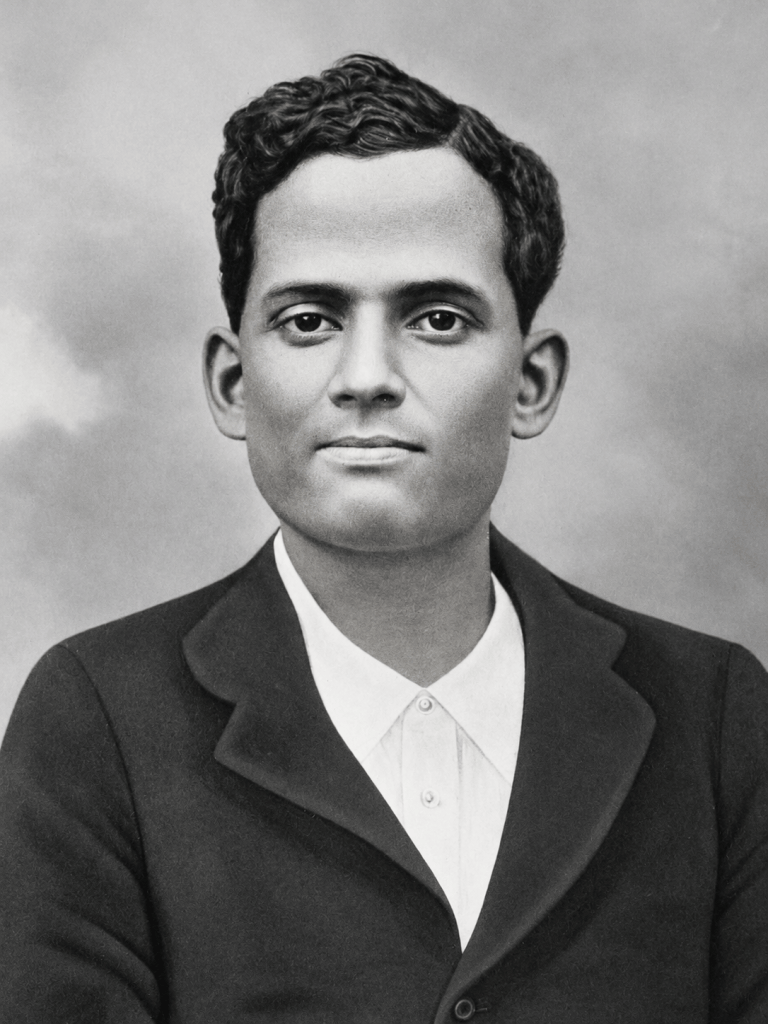
Jatindra Nath Das (1904—1929)
Fearless SatyāgrahīRevolutionary
He attained martyrdom on 13 September 1929 after sixty-three days of hunger strike in Lahore Central Jail, protesting the conditions of political prisoners under the repressive colonial structures. This essay is an ode to the struggle unleashed by India’s anti-imperialist revolutionaries — a struggle in which the RSS–Sangh did not ever participate, and against which it positioned itself as an internal counter-force by crafting an anti-freedom movement altogether. The techniques of non-violent war documented in these pages belongs to the same courageous, perseverent lineage of disciplined refusal.
This is definitely our second freedom struggle.
To Reclaim Democracy.
To Reclaim Socialism and Secularism.
To Reclaim the Values of the Indian Constitution.
সর্ব খর্বতারে দহে তব ক্রোধদাহ—
হে ভৈরব, শক্তি দাও, ভক্ত-পানে চাহো ॥
দূর করো মহারুদ্র যাহা মুগ্ধ, যাহা ক্ষুদ্র—
মৃত্যুরে করিবে তুচ্ছ প্রাণের উৎসাহ ॥
দুঃখের মন্থনবেগে উঠিবে অমৃত,
শঙ্কা হতে রক্ষা পাবে যারা মৃত্যুভীত।
তব দীপ্ত রৌদ্র তেজে নির্ঝরিয়া গলিবে যে
প্রস্তরশৃঙ্খলোন্মুক্ত ত্যাগের প্রবাহ ॥
Let the fire of Thy wrath consume
all that is petty and base—
O Bhairava, grant us strength;
turn Thy gaze upon Thy devotees.
O Great Rudra, drive away all that beguiles,
all that diminishes the soul—
Let the courage of life rise so high that death itself becomes insignificant.
From the churning force of suffering,
immortality’s nectar shall arise;
Those who fear death shall find refuge,
delivered from their dread.
In the blazing splendour of Thy fierce, radiant power,
Let the torrent of renunciation surge forth,
breaking free from its chains of stone.
— Rabindranath Tagore, written on hearing of Jatindra Nath Das’s martyrdom while rehearsing his play Tapati
Epigraph A Sequence from Enter the Dragon (1973)
Lee: Teacher?
Shaolin Abbot: I see your talents have gone beyond the mere physical level. Your skills are now at the point of spiritual insight. I have several questions. What is the highest technique you hope to achieve?
Lee:To have no technique.
Shaolin Abbot: Very good. What are your thoughts when facing an opponent?
Lee:There is no opponent.
Shaolin Abbot: And why is that?
Lee:Because the word “I” does not exist.
Shaolin Abbot: So, continue…
Lee:A good fight should be like a small play, but played seriously. A good martial artist does not become tense, but ready. Not thinking, yet not dreaming. Ready for whatever may come. When the opponent expands, I contract. When he contracts, I expand. And when there is an opportunity, I do not hit. It hits all by itself.
Shaolin Abbot: Now, you must remember: the enemy has only images and illusions behind which he hides his true motives. Destroy the image and you will break the enemy… Tell me now the Shaolin Commandment number 13.
Lee:A martial artist has to take responsibility for himself and accept the consequences of his own doing.
Shaolin Abbot: …it is now for you to reclaim our lost honor.
Lee: Yes, I understand.
— Bruce Lee and the Shaolin Abbot,
Enter the Dragon (Dir. Robert Clouse, 1973)
Within the RaGa-PriGa phenomena,
the disposition named above becomes an everyday political praxis.
Disclaimer. OBMA supports no existing political party or faction in India or abroad. It stands for partyless, radical ecological democracy. This essay does not endorse any Indian opposition party or its leadership. It examines, on their own terms, the methods, approaches, and strategies that have emerged from one current of oppositional praxis. Any claim by the BJP IT cell, or by any other instrument of the BJP–RSS dispensation, that OBMA is “funded” by the opposition, or specifically by the Indian National Congress, is false. OBMA has been entirely self-funded (on principle) since it was founded in 2021. It has never accepted corporate or political party money of any kind, from any source, and it will not. The analysis is not contingent on party funding, party membership, or electoral calculation. It is an examination of lived praxis and resistance, so that it informs our struggle against the establishment.
ABSTRACT
This essay examines the RaGa–PriGa collective-oppositional praxis as a disciplined form of non-violent militancy against the BJP–RSS project of crony Brahmanical Hindutva. Drawing on Vipassanā (Goenka lineage), Aikido and Brazilian jiu-jitsu, Tagorean and Gandhian satyagraha, and Ambedkarite constitutional argument, it reads the decade 2015–2026 as the public application of a single grammar: the refusal to return force, the exposure of concealed holds, and the constructive rebuilding of an alternative order. The method is tracked from private discipline to embodied resistance (Hathras, Sitapur, Delhi 2026), organisational logistics (yatras), forensic disclosure (vote chori, ecological chori), and iconographic counter-politics (Naṭarāja against the sovereign Rāma). The argument is not confessional. It claims only that the record shows a sustained, non-reactive praxis whose strategic aim is the dissolution of manufactured legitimacy rather than the seizure of power for revenge.
0. Prefatory Note: Naming, Method, and Frame
Naming. The two principal figures are referred to throughout by acronym — RaGa for the Leader of the Opposition in the Lok Sabha, and PriGa for his sister, the Congress general secretary and MP. The device is deliberate and non-negotiable. It refuses to treat either as a celebrity, as a party leader whose personality is the object of analysis, or as the bearer of any heroic or messianic claim. Each name is used strictly as a container of interconnected domains: a meditative inheritance, a martial training, a satyagrahic method, and a constitutional argument. The focus remains on collective praxis. Individual personality, hero-worship, and messianic framing are excluded.
The frame, held throughout. This is committed accountability and public advocacy scholarship. It treats India’s BJP–RSS dispensation as a crony, fascist project: an authoritarian, religious-extremist formation organised around the capture of institutions, the systematic monetisation of hatred, the concentration of economic power in a narrow circle of allies, and the state’s monopoly on structural violence against opponents and the excluded. The decade of praxis documented here is read as a disciplined, non-violent war against that formation. The description is not decorative. It is earned by the record — agency capture and lawfare, electoral engineering, mass dispossession of land and forest, the industrial production of nafrat, and the routine deployment of police and administrative force against non-violent assembly. A reader who rejects the label will still find the account of the method intelligible. The method does not depend on the name of the adversary. It depends on the pattern the record shows.
Logic of the sequence. Part One sets the name and the frame through the semantics of the political field. Part Two examines the inheritance — the detailed personal practice of both siblings, Vipassanā and the martial arts — because here the personal is the political. Part Three draws out the philosophy the practice implies, including the non-violent militancy defined against the manufactured image and the Gītā–jūjutsu reading that carries the same yielding grammar into scripture and parliamentary speech. Part Four shows it enunciated and embodied across a decade of agitation: the body under the baton and in the cell, the logistics of the yatras, the open press conference as counter-spectacle, the organisational form, and the forensic dossiers against vote chori and the nisarga taskara. Part Five widens to the structural battle, names the adversary through the itemised record, and gathers the field into a collective leadership beyond revenge.
· Part One ·
The Name and the Frame
1. The Name: rāga (melodic form) Beyond rāga (craving)
Begin with the name, because in the political field this essay examines it is already an argument. RaGa is also rāga (राग). The word is not a private spiritual ornament or a convenient branding device. In the decade under study it has been pressed into public service by both the figure who bears it and the opponents who contest him. For a reader who does not already know the term, a brief orientation is required. From the root √rañj — “to colour, to dye, to be stirred to passion” — rāga carries two historically dense senses that the political record itself keeps in play.
In the classical music of North and South India, rāga names a melodic framework: a precise grammar of permitted notes, characteristic phrases, and ascending and descending movements within which improvisation becomes free. A rāga is not raw feeling poured out. It is feeling disciplined into form. The performer is free only because the scale is exacting; the grammar does not suppress intensity, it makes intensity playable. Tagore, in “The Religion of an Artist,” names the same relation when he writes of rhythm bound by harmony: the freedom of the line exists only because it is held inside a governing order.
In Buddhist and yogic psychology, the same root names the first of the three poisons — rāga–dveṣa–moha (craving, aversion, delusion) — whose extinction is liberation. Here colour becomes clinging, and the stirring of passion becomes the attachment that binds. Vairāgya, dispassion, is rāga negated: the capacity to feel without being dyed through by what one feels. The two senses are not accidental homonyms. They are divergent developments of a single verbal root that names both the act of colouring and the risk that colour becomes possession. The musical rāga keeps the colour inside the scale; the psychological rāga is the colour that escapes the scale and turns into possession — and, when the clinging hardens, into rage. The English “rage” is not a false friend here. It is the political form the unbound rāga takes when it is organised as aversion and directed outward. The praxis examined here attempts the first while refusing the second: it retains the colour and the intensity, and it refuses both the clinging that would turn them into possession and the rage that would turn them into the destruction of the other.
In the field the essay documents, the second sense has been monopolised by the BJP–RSS dispensation. Aversion (dveṣa) has been organised as nafrat and monetised as electoral fuel, while lobha and moha — greed and the delusion that sustains it — have been institutionalised in the astronomical growth of the party’s declared assets and the concentration of economic power among its preferred crony conglomerates like Adani, Ambani and Piramal. The regime’s composition depends on the continuous production of enemies and the continuous accumulation of resources. Against that economy, RaGa has repeatedly refused to compete on the ground the adversary has chosen. After the first Bharat Jodo Yatra he stated the refusal directly: “Our opponents have a monopoly on anger, fear and hatred — arenas where we cannot and should not compete.” The claim is not that feeling is absent. It is that intensity can be retained and tuned without being converted into either the craving to possess the state or the rage to destroy the opponent. That is the political content of rāga beyond rāga in this context: passion played past attachment, colour without clinging.
The name contains its own overcoming. The figure who bears it is therefore already marked by the tension the word carries: the capacity to feel, and the demand to feel without clinging. Hold the two senses together and the pun becomes a politics. A musical rāga is not the absence of passion; it is passion submitted to an exacting scale so that improvisation can remain free. Satyagraha works by the same rule. Emotional force is not extinguished; it is retained and tuned inside a strict ethical grammar. The Shaolin Abbot’s correction to his pupil in the temple scene of Enter the Dragon — “emotional content … not anger” — is the identical instruction delivered in a different idiom. The feeling must be present, and it must be tuned. What the essay studies is therefore a rāga beyond rāga: passion played past attachment, colour without clinging, commitment drained of both the craving-to-possess and the rage-to-destroy. The political actor does not refuse intensity. He refuses the two forms of intensity that turn politics into either possession or destruction.
This double structure is not optional for the argument. One rāga would collapse the claim into either pure aestheticism (feeling as form alone) or pure renunciation (the extinction of feeling). The doubled form keeps both registers alive and in productive tension. It allows the essay to track a praxis that retains the colour, the commitment, and the emotional force of rāga while subtracting the clinging that would turn that force into either the desire to possess the state or the desire to destroy the opponent. The musical sense supplies the discipline of form; the psychological sense supplies the danger of attachment. The praxis examined in the sections that follow attempts to keep the first while subtracting the second. That is what “beyond” means here: not the cancellation of rāga, but its performance past the point at which colour becomes clinging and intensity becomes either possession or destruction. In the concrete political field of the last decade — agency capture, lawfare, electoral engineering, the monetisation of hatred — that subtraction is the method. It is what the refusal to compete on the ground of nafrat looks like when it is sustained rather than merely declared.
For a reader who does not come to the term with its double life already in mind, the distinction is supplied by the political record itself. The musical rāga is the grammar that makes intensity playable; the ethical rāga is the craving that binds. The name “RaGa” already contains both. The political claim is that the praxis under study performs the second sense of the word upon the first inside a field organised by the continuous production of enemies. RaGa has repeatedly stated the positive content of that performance. He has said that “our politics must be rooted in listening, love, and genuine connection,” that the Yatra opened “a shop of love in the market of hatred,” and that “those who fear do not love, and those who love do not fear.” The refusal of nafrat is not merely negative; it is the sustained insistence on non-violence, affection, and peace as the operative grammar of political action. The rest of the essay is the demonstration of whether, and how, that performance has been carried out.
The sections that follow track how this doubled rāga is trained, enunciated, and enacted. Part Two examines the inheritance — Vipassanā and the martial arts — as complementary technologies of non-reaction. Part Three draws out the philosophy the practice implies. Part Four shows it embodied in a decade of agitation. Part Five widens to the structural battle. The name is the argument. Everything else is the attempt to show whether, and how, the praxis has performed it.
· Part Two ·
The Inheritance:
Personal Practice as Political Ground
2. RaGa’s Vipassanā Practice
RaGa is a self-avowed practitioner of Vipassanā in the S. N. Goenka lineage. The technique is a Theravāda insight practice organised around close, non-reactive self-observation, ethical discipline, and direct experiential insight (paññā) into impermanence. His repeated engagement with these silent residential retreats has been treated by the BJP–RSS apparatus and its media as political absence, personal unseriousness, and evidence of unreliability. The reading is not a misunderstanding. It is a deliberate conversion of a discipline of non-reaction into a liability: the refusal to turn the practice into spectacle is registered as a failure to perform, and the capacity to withdraw without explanation is registered as vacancy.
The pattern exposes the opponent’s own grammar and its industrial scale. A politics organised around continuous presence and continuous reaction has no category for a withdrawal that is not flight and a silence that is not emptiness. The mockery does not refute the practice; it documents the epistemic frame that cannot see it. That frame is not spontaneous. It is the product of a sustained perception-management operation in which crores are spent to manufacture and maintain a persona of continuous visibility and continuous decisiveness for the Modi–Shah dispensation. Against that investment, a practice that refuses spectacle and declines to convert silence into content is not merely unintelligible. It is a structural threat to the economy of image on which the regime depends. The ridicule is therefore not commentary. It is the defence of a manufactured presence against a withdrawal that cannot be priced or controlled.
2.1 The Lineage
The tradition RaGa follows was carried back into India from Burma. S. N. Goenka, born in Myanmar to an Indian merchant family, learned the technique from Sayagyi U Ba Khin and brought it to India in 1969, later establishing the flagship centre Dhamma Giri at Igatpuri, Maharashtra. The return was not a simple repatriation. The technique had been preserved outside the subcontinent in a lineage that had already been marginal to the dominant religious and political formations of both colonial and early independent India. Its re-entry therefore arrived without the institutional weight of either the colonial university or the post-independence state apparatus. It entered as a practice of attention rather than as a doctrine of identity, and it established itself through residential courses and lay instruction rather than through temples, political patronage, or academic departments. The fact that the reservoir was Burma is not incidental to this character. It marks the technique as one that had already travelled, been held at a distance from the centres of Indian political and religious authority, and returned in a form that did not require those centres for its transmission. The practice RaGa has claimed is therefore not an inheritance internal to the contemporary Indian political field. It is an inheritance that entered that field from a site of preservation that had remained outside it.
2.2 The 2015 Sabbatical
The most conspicuous episode came in early 2015, on the eve of the Budget Session of Parliament, when RaGa took a leave of absence of roughly fifty-six to fifty-seven days. Where he went was never officially disclosed. Congress figures described it as a period of “introspection.” Press speculation ranged across Europe, Thailand, Cambodia, and Myanmar; the most persistent account held that he had undertaken a Vipassanā retreat, plausibly in Burma given the lineage above. Precision matters. The Vipassanā explanation is widely reported and internally coherent, but it was never confirmed on the record. The party’s deliberate vagueness is itself part of the story, and this essay does not upgrade it to fact.
What the episode produced was a sustained effort by the BJP–RSS apparatus to convert an unexplained absence into evidence of unreliability. “Missing” posters appeared in Delhi. The withdrawal was treated as a failure of presence at the precise moment when parliamentary presence was expected. The pattern is instructive, and it is also revealing of what the withdrawal refused. An act of non-reactive withdrawal — the refusal to account for the time, the refusal to convert the absence into a political narrative or a spectacle of return — was registered exclusively as vacancy. No alternative category was available within the opponent’s grammar: not discipline, not silence, not the possibility that the time was being used for a practice that does not require public explanation.
The episode is the first clear instance in the public record of a recurring operation: the conversion, by the BJP–RSS apparatus and its media, of non-reactive withdrawal into political absence. It is also the first clear instance of a capacity that would later reappear under greater pressure: the ability to leave the field of continuous reaction without supplying the explanation the field demanded. The essay leaves the location unconfirmed because the location is not the point. The point is the reading that was applied, and the fact that the withdrawal did not adjust itself to that reading.
2.3 The 2022 ED Interrogation
Vipassanā resurfaced in June 2022, when RaGa was questioned by the Enforcement Directorate in the National Herald matter across five sittings totalling upwards of fifty hours, including continuous stretches of ten to eleven hours of near-motionless sitting. He is reported to have credited his meditative training for his physical endurance, telling officials, in substance, that a practitioner accustomed to sitting for six to eight hours at a stretch finds such conditions bearable. He later quipped to party workers that the real source of his stamina was the solidarity of millions of Congress workers — a remark that redirects the credit outward rather than retracting the earlier claim. The episode is the hinge between the cushion and the cell. The discipline trained in silence is tested, without preparation or spectacle, under the apparatus of the state. What had been cultivated as private capacity is pressed into service as public endurance, and the record shows no conversion of that pressure into reactive grievance or theatrical collapse. The same non-reactive grammar that allows the body to remain seated while sensation arises is here applied to an institutional hold that was designed to produce fatigue and, with it, a usable political image. The hold did not produce the image. The defence is not that RaGa is uniquely virtuous. It is that a capacity trained in non-reaction was available under pressure, and that the apparatus failed to extract from it the spectacle of collapse or grievance it required. The endurance is not proof of innocence in the legal sense. It is evidence that the non-reactive disposition was already operative when the state applied force designed to break it.
2.4 Everyday Integration
The practice is not confined to isolated retreats. It extends into a broader ascetic sensibility that shapes ordinary political time. Reports of party gatherings run on Jain-influenced regimens — pre-dawn rising, the last meal before sunset, the avoidance of root vegetables — and of meditative habits among members of his inner circle do not prove continuous formal Vipassanā practice. They do show that the non-reactive disposition organised by the practice is not being sealed off from daily political life. These everyday arrangements matter because they supply the intermediate texture between the formal course and the public field. They indicate that the grammar of non-reaction is being allowed to organise ordinary political time, rather than remaining a private resource activated only under exceptional pressure. Without that continuity, later endurance under institutional force can be read as an isolated performance. With it, the endurance appears as the public face of a disposition already at work in the texture of the day.
2.5 What a Vipassanā Course Involves
The Goenka-tradition course unfolds over a strict ten-day residential period, progressing through the classical threefold training of sīla → samādhi → paññā:
Stage
Pāli term
Focus and practice
Ethical foundation
Sīla
The five precepts plus “noble silence” — no speech, gesture, or eye contact — sustained through Day 10, temporary celibacy, and abstention from intoxicants, reading, and writing, to quiet the outer mind.
Concentration
Ānāpāna
Sustained attention to the natural breath at the rim of the nostrils, cultivating one-pointed concentration (samādhi) over roughly the first three days.
Insight
Vipassanā
From Day 4, systematic head-to-toe scanning of bodily sensation — heat, cold, pressure, pain — observed equanimously and without reaction, training the mind in the direct apprehension of impermanence (anicca).
The course typically closes with mettā-bhāvanā (loving-kindness meditation) on the final day, as noble silence is lifted. The detail is not incidental. The practice that trains non-reaction toward one’s own sensations ends by directing goodwill outward. That sequence becomes politically legible when the essay turns to the politics of mohabbat. The same movement — from equanimous observation to non-possessive regard — is what the public record later shows being scaled from the cushion to the road.
2.6 Attadīpa: the Instruction Beneath the Practice
The philosophical root of the disposition is the Buddha’s last instruction to Ānanda in the Mahāparinibbāna Sutta — the teaching the tradition calls attadīpa:
“Dwell as islands — as lamps — unto yourselves, with the Dhamma as your island, seeking no other refuge.” (Dīpa/dvīpa carries both senses: island, a dry standpoint amid the flood, and lamp, a light to see by.)
It is radical self-reliance of exactly the kind Vipassanā trains: no priest, no external authority, no saviour — only disciplined attention and the Dhamma. And it sits in productive tension with anattā: the self made into a lamp is not a fortress-ego but a process of witnessing — one becomes a light precisely by ceasing to grasp at being a fixed “I.” The Buddha’s last instruction holds both senses in a single word: attadīpā viharatha attasaraṇā — be an island unto yourselves, be a lamp unto yourselves. Dīpa and dvīpa are not separate. The lamp that lights the path is also the island that does not depend on another shore.
In Kim Ki-duk’s Spring, Summer, Fall, Winter… and Spring, the floating monastery on the lake makes the same double image literal: the solitary island is the place of practice, and the lamp that is carried across the seasons is the only light that remains when the external world is withdrawn. RaGa has stated the point directly: he does not believe in the concept of self. The formulation is not a rhetorical flourish. It is the public enunciation of the same non-self that the practice trains. This is the ground of the “null self” his detractors mistake for vacancy: a self-as-witness, hard to intimidate because it defends no fixed image, hard to co-opt because it takes no external refuge. The statement and the practice name the same refusal — the lamp that is also the island, the witness that does not require another’s light in order to remain.
However, a doctrine of self-illumination alone might risk a naïve luminism — the comforting picture of a self that simply shines by its own light and is thereby never wrong. Rabindranath Tagore supplies the necessary rupture. In the song “Akarane Akale Mor” (Pūjā 233), the pilgrim is asked how he will find the path in the dark and answers that he will walk by his own lamp, held in his own hand. Then comes the turn:
“…the higher the lamp burns by its own fierce light, the more that light obstructs the eye.”
The self-held flame, blazing with its own tej (ego-ardour), spreads māyā and half-blinds the eye it was meant to serve. What if I am dazzled by my own light? This is the humility that keeps attadīpa from curdling into self-righteousness — a trained distrust of one’s own glare, including the glare of one’s own conviction. Hold the two together — be your own lamp; do not be blinded by it — and you have the Buddhist-Tagorean grammar on which the entire praxis stands. The disciplined self is not self-certain; it lowers the flame so the road can be seen.
The Tagorean caution is relevant at this stage of the essay because the Vipassanā material has already shown RaGa treating prolonged non-reactive sitting as a source of political endurance. The 2022 ED episode is presented as the moment when a discipline trained in silence is tested under state pressure. That framing carries a risk of self-certification: the practitioner can begin to read his own capacity to remain unmoved as evidence that he is already free of the reactive poisons.
Tagore’s line interrupts exactly that reading. The same self that has made itself into a lamp (attadīpa) through disciplined observation can still be dazzled by the light of its own equanimity. The non-reactive stance cultivated on the cushion can itself become a form of tej — an ego-ardour that half-blinds the practitioner to whatever residual craving or self-image remains inside the practice. The caution is not external to the discipline; it is the discipline turned back upon its own success. The 2015 sabbatical is left deliberately unconfirmed; the essay refuses to upgrade the widely reported Vipassanā explanation into fact. That refusal is already an instance of the caution. It keeps the account from being dazzled by the most flattering available interpretation of the withdrawal.
Vipassanā trains the capacity to observe sensation without reaction. Tagore asks whether that capacity can observe itself without being blinded by the glow of its own non-reaction. The grammar the essay is assembling at this point requires both: the self as its own lamp, and the trained distrust of the light that lamp produces. Without the second, the first collapses into self-certainty. With it, the practice remains capable of seeing the road rather than its own glare.
3. RaGa’s martial inheritance: Aikido, jiu-jitsu, and the Gentle Art
If Vipassanā supplies the mental training in non-reactivity, the martial practice supplies the physical counterpart. The two are presented by RaGa himself as complementary disciplines in a single disposition: absorb force rather than return it, redirect aggression rather than meet it head-on. The synthesis is his own. The relevance to political praxis is not metaphorical. Both train the capacity to receive incoming force without converting it into symmetrical counter-force. In a political field organised by continuous reaction, that capacity is operational. It is the trained refusal to supply the image the adversary requires.
3.1 The Practitioner’s Self-description
On National Sports Day, 29 August 2024, RaGa described a practice that began as a way to stay fit during the Bharat Jodo Nyay Yatra and became a campsite activity with local young martial artists. The aim, he said, was to introduce them to the “Gentle Art” — “a harmonious blend of meditation, jiu-jitsu, Aikido, and non-violent conflict resolution.” He promised a “Bharat Dojo Yatra.” On his own account he holds a black belt in Aikido and a blue belt in jiu-jitsu. The fusion is therefore not an external imposition; it is the practitioner’s self-description. The campsite sessions already treat the martial practice as continuous with political work rather than as a private athletic supplement.
3.2 Aikido: the Yielding Art
Aikido, founded by Morihei Ueshiba in the early twentieth century, is explicitly defensive. It seeks to neutralise an attack without injuring the attacker by blending with the incoming motion (irimi and tenkan — entering and turning), unbalancing rather than striking, and resolving the encounter through joint controls and throws. Ueshiba framed it in ethical and spiritual terms: a discipline for reconciling conflict rather than winning it. Its ideal mental state is mushin, “mind without mind” — response without the interposition of a reactor. The technique is relevant to political praxis because it trains the body to receive force without generating the counter-force that would confirm the attacker’s frame. In a field where the adversary’s method is continuous provocation, the refusal to supply the expected reaction is itself a political act.
RaGa’s engagement with it is documented. His Aikido coach, Sensei Paritos Kar, stated in 2017 that they had trained together since 2009, that RaGa tested for and received his black belt in 2013 before a visiting Japanese master, and that he spent ten days at the Japan headquarters. Kar further described the practice as having made RaGa less reactive under personal attack. The public record of the practice begins later, through demonstration rather than competition.
3.3 Jiu-jitsu and the Brazilian inheritance
The jiu-jitsu element adds the ground game: leverage, the hold, control of a larger opponent without a strike. “Gentle Art” is the traditional Japanese name for jūjutsu. Brazilian jiu-jitsu (BJJ), developed in the early twentieth century from Japanese roots, emphasises the same principle — a smaller person defeating a stronger one through leverage, timing, and positional control rather than force. The political relevance is precise. BJJ trains the capacity to remain connected under pressure, to use the opponent’s momentum, and to end the encounter by control rather than by striking. When RaGa later uses the language of “grip” and “choke” on the floor of the House, he is carrying this technical vocabulary into parliamentary speech.
RaGa’s Aikido coach stated in 2017 that RaGa had also trained in Brazilian jiu-jitsu in London (and in sword fighting). In the 2024 campsite sessions the practice is presented as jiu-jitsu, conducted with a black-belt jiu-jitsu trainer (Arun Sharma). Later organisational work has continued to use the form: reports from 2026 describe BJJ elements in Congress training camps, where RaGa has used the art to illustrate leverage, timing, and the need for partners to stay connected under pressure. The Brazilian lineage is therefore part of the reported inheritance and is being applied, in public, to organisational instruction.
3.4 Public Praxis: Kochi, Pachmarhi, and Organisational camps
The training becomes politically legible through demonstration. At St Teresa’s College, Kochi, on 22 March 2021, RaGa seated a student in a low Aikido stance and invited others to push her. They could not. He drew the lesson that a sound stance cannot be moved by external pressure, and that “women are much more powerful than men” once they understand where their power comes from. The martial principle is converted directly into a politics of rootedness: the capacity to receive force without being displaced is treated as a model for political standing.
In November 2025, at Pachmarhi, he conducted a roughly thirty-minute session for seventy-one Madhya Pradesh district presidents. He paired the instruction “you need to master the art” with the requirement that “no matter how wrong or bad someone may be, you have to respond with love.” Reports from the same camp describe him demonstrating grip and ground connection, and treating physical discipline (including push-ups for lateness) as organisational technique. Ahimsa is drilled, literally, as a method for cadres. In 2026 training camps in Kurukshetra and Nashik he again demonstrated jiu-jitsu techniques to district presidents, instructing them to stay tactically engaged, keep rolling rather than be pinned, and exhaust the opponent through sustained connection rather than force. The instruction is consistent: recognise the grip, do not convert it into counter-force, remain connected until the position opens or becomes unsustainable for the opponent.
3.5 The Shared Grammar
What links the martial practice to the Vipassanā is not athletic proficiency but a shared technology of non-reaction. Vipassanā trains the mind to register sensation — heat, pressure, pain — without the subsequent movement of craving or aversion that would turn sensation into action. Aikido and jiu-jitsu train the body to receive incoming force without the counter-contraction that would convert the opponent’s momentum into a strike. In both cases the primary skill is the subtraction of the reactive layer. The practitioner does not eliminate sensation or force; the practitioner declines to obey the immediate impulse those stimuli produce.
Read charitably, this is a coherent philosophy of political conduct. The refusal to mirror the aggression directed at oneself is not passivity. It is the trained capacity to let the force arrive, to remain in contact with it, and to decline the conversion of that force into symmetrical violence or symmetrical hatred. Read sceptically, the same record is also a durable form of image-management: a defensive political posture translated into the flattering language of chosen spiritual discipline. Both readings remain available because the public evidence supports the consistency of the practice while remaining silent on the private quality of the intention. The essay keeps the tension because collapsing it would require either hagiography or dismissal, neither of which the record justifies.
The black-belt Aikido, the blue-belt jiu-jitsu, the “Gentle Art,” the Kochi demonstration, the Pachmarhi session with district presidents, the organisational camps, and the coach’s 2017 statement on Brazilian jiu-jitsu training in London are all on the public record. The argument does not rest on an untestable claim about inner motive. It rests on the observable application of the same non-reactive grammar under political pressure: the body that does not return the force it receives, and the speech that does not return the hatred it is offered. Whether that refusal is discipline or curation is left open. That the refusal is consistent across the cushion, the mat, and the political field is what the record shows, and it is the consistency that makes the grammar available for analysis as political praxis rather than as private spirituality.
4. PriGa’s Buddhist Inheritance
The inheritance is not RaGa’s alone.
It runs through the sibling pair, and the division of labour between them is instructive. PriGa is, by multiple reports, a long-standing Vipassanā practitioner of roughly a decade’s standing. An Outlook profile from 2009 described her as a Vipassanā practitioner of eleven years who had undertaken many courses, including the advanced, intensive Satipaṭṭhāna courses in the Goenka tradition — the rigorous sittings built directly on the Satipaṭṭhāna Sutta — and who had also sat a retreat in the Zen lineage of Thich Nhat Hanh. Beyond practice, she holds a graduate qualification in Buddhist Studies. Her 2024 election affidavit lists a Post Graduate Diploma in Buddhist Studies from the University of Sunderland, completed in 2010. Earlier reports had described the qualification as a master’s; the affidavit states a postgraduate diploma. This essay records the robust core — a graduate-level credential in Buddhist Studies — and notes the variation in how it has been described.
If RaGa is the practitioner who sits and brings the method onto the political field, PriGa is the one who has also studied the doctrine formally. The pair holds together the two wings any living tradition requires: paṭipatti (practice) and pariyatti (textual learning). It is a mistake to read either’s Buddhism as branding. Between them they instantiate a transmitted inheritance — discipline on one side, study on the other. The point is not confessional. Neither is asking India to become Buddhist. It is formative. The Buddhist psychology of non-reaction is the grammar in which both were trained, and that grammar remains legible in how each acts when pressure is applied.
PriGa’s public enunciations carry the same grammar in plain political dress. Welcoming the Bharat Jodo Yatra into Uttar Pradesh, she framed her brother as one who walks “wearing the shield of truth,” unafraid of the state’s might — satya and abhaya turned into a political image. She added that the big industrialists “could not buy my brother and will never be able to.” The scholar of the texts translates doctrine into organising language. More on the equanimity under detention and the organisational application of the same grammar appears in the later record of the body on the line and the fields of praxis.
The inheritance is therefore not ornamental, and it is not secondary. It supplies a shared disposition in which one sibling trains the non-reactive capacity through sustained sitting and public demonstration, and the other trains it through formal study, advanced courses, and the capacity to translate that study into political speech. Both make the grammar operative in political conduct. PriGa is not the supporting figure in a story centred on RaGa. She is the other half of the transmitted inheritance. The concrete episodes in which that inheritance becomes visible under pressure — the broom at Sitapur, the women-centred mobilisation in Uttar Pradesh, the Constitution held on the Delhi road — are examined in the sections that follow.
· Part Three ·
The Philosophy of Non-Reactive Resistance
5. The Art of Non-violent Warfare
5.1 Militancy Without Violence
The practices examined in the preceding sections — Vipassanā’s trained non-reaction to sensation, Aikido’s and jiu-jitsu’s trained reception of force without recoil — are not private disciplines held apart from political life. They supply the temperamental and technical grammar of a specific form of political action. “Non-violent militancy” sounds like a contradiction only to those who treat militancy as synonymous with violence. Militancy is intensity of commitment and willingness to confront an opponent on the ground he occupies. Violence is one possible means of confrontation. Satyagraha severs the two.
5.2 Shridharani and the Strategic Inversion
Krishnalal Shridharani, who walked in the Dandi March, was imprisoned during the movement, and later analysed the method in War Without Violence (1939), named the form exactly. The book is a systematic study of satyagraha as strategy rather than as spiritual exhortation. It treats non-violent direct action as a disciplined campaign that seeks not to injure the opponent but to expose him, absorb the violence he offers, and convert or isolate him. The text travelled. It became a practical manual for the American civil rights movement; Bayard Rustin described it as “our gospel, our bible.” Martin Luther King Jr. studied it during the Montgomery bus boycott. Its strategic aim inverts the classical logic of Sun Tzu. It does not seek to destroy the enemy’s army or capacity for force. It seeks to dissolve his legitimacy — to make the hidden grip visible so that the watching public completes the throw. The violence the opponent deploys becomes, under this method, evidence against him rather than a reason for symmetrical reply. In the Indian field of the last decade, that inversion is not abstract. It is the difference between meeting agency capture, lawfare, and street force with counter-force, and converting those same instruments into public evidence of the regime that deploys them.
5.3 Three Features
Three features distinguish this art, and each is already legible in the material assembled earlier. First, it is beyond revenge. The Nehru-Gandhi family’s private history is saturated with political murder — a grandmother and a father both assassinated. The renunciation of vendetta is therefore not a rhetorical preference but a biographical fact. The choice of mohabbat over badla is made against the strongest possible pull toward its opposite. Second, it is non-reactive. Vipassanā trains the capacity to observe the arising of aversion (dveṣa) without obeying it. Aikido and jiu-jitsu train the body to receive incoming force without recoiling against it or converting it into a counter-strike. Third, it is reconstructive as well as obstructive. It does not only resist the order it opposes; it attempts to build the order it wants. War without violence is, finally, a pedagogy. It teaches a watching nation what power is trying to hide by refusing to hide in return. The pedagogy is not secondary. In a field organised by the continuous manufacture of enemies and the continuous concealment of the grip, the refusal to return violence is also the refusal to assist in the concealment.
The sections that follow trace this art from the film that dramatises its internal logic, through the scripture it reclaims, to the body, the organisation, and the dossier that enact it. The earlier sections established the personal disciplines of non-reaction. This section names the political form those disciplines make available.
6. “Don’t think — feel”: Enter the Dragon, no-self, and non-doing
6.1 The Temple Scene as Catechism
The epigraph is not decoration. It is a compressed catechism of the disposition the preceding sections have been describing, and the praxis inhabits it. Pressed by his teacher, the pupil names the highest technique as “to have no technique.” Facing an opponent he reports “there is no opponent.” Asked why, he gives the load-bearing line: the word “I” does not exist. What follows is action without an agent: “I do not hit. It hits all by itself.” The teacher’s correction when the pupil intellectualises — “Don’t think — feel” — names the enemy as discursive mind itself. The closing figure, the finger pointing at the moon, warns against mistaking the pointer for the thing indicated. The sequence is not mystical ornament. It is a precise description of trained response once the reactive layer has been subtracted.
6.2 The Descent into anattā and wu wei
The answers descend, rung by rung, into anattā and emerge as wu wei:
The pupil’s descent
The doctrine named
technique → no technique
relinquishing acquired form
opponent → no opponent
dissolving the dualism of self and other
“I” → no “I”
anattā, non-self
thinking → not thinking
suspension of vikalpa, discursive proliferation
intention → spontaneous action
wu wei, actionless action
action → “it” acts
the agent subtracted; response without a reactor
The lineage is historically real. The finger-and-moon figure belongs to the Laṅkāvatāra and Śūraṅgama sūtra traditions and appears in Zen teaching, including Dōgen, as a warning against mistaking doctrine or method for realisation. Bruce Lee’s own notebooks contain the same instruction in slightly different wording: feeling exists in the present when not interrupted and dissected by ideas and concepts. The distrust of vikalpa (conceptual proliferation) as an obstruction to direct seeing is the same distrust that, in the Vipassanā idiom already examined, becomes the instruction to observe sensation bare, without the overlay of craving or aversion. RaGa’s two disciplines both subtract the reactive layer. The meditation registers sensation without moving toward or away from it. The Aikido and jiu-jitsu receive force without converting it into counter-force. In each case the enemy is the interposition of grasping thought between stimulus and response — the same enemy the Abbot names. The film is discussed here because it supplies the most compact public statement of the non-reactive grammar the earlier sections have been assembling from practice and self-description.
6.3 Destroy the Image: the Accountability Method
One line in the scene runs outward rather than inward, and it organises everything that follows. The enemy hides behind images and illusions; destroy the image and you break the enemy. In the film’s climax the antagonist multiplies himself in a hall of mirrors. Victory requires refusing to fight the reflections and shattering them until the real man is reached. The method is not metaphorical decoration. It is the operational logic of evidence-led exposure: break the manufactured image(s) — the “clean chit,” the “development” spectacle, the “free and fair” tableau — to reach the will-to-hide behind it. The same subtraction of the reactive layer that allows the practitioner to receive force without returning it also allows him to refuse the opponent’s images rather than contest them on their own terms. In a regime whose legitimacy depends on the continuous production of images that conceal the grip, the refusal to fight the reflections is itself the strategic act. The body under the baton, the organisation under lawfare, and the dossier in the open press conference are the same operation under three descriptions.
6.4 The Finger and the Moon: A Caution
The warning cuts in both directions, and the essay states it against its own subject as well as against his opponents. For admirers, the demonstrations, the yatras, and the disclosures risk becoming the finger mistaken for the moon — the visible performance of non-attachment standing in for the substance it claims to indicate. For opponents, fixation on the manufactured image guarantees they never see the argument the image was meant to obscure. The “Pappu” caricature is not an organic public perception. It is a product of sustained perception management by the BJP–RSS apparatus, into which crores have been poured to manufacture and maintain the image of vacancy, unreliability, and unseriousness. The fixation on that image is therefore not a failure of attention; it is the intended outcome of the investment. The Tagorean caution introduced earlier returns here as the same check: the self that has made itself into a lamp must also remain capable of distrusting the light it generates, including the light of its own anti-hatred. The film is discussed at this point because it names, in a single scene, both the method the praxis employs and the risk the praxis must continually guard against. Without the subtraction of the reactive layer, the exposure of the image collapses into another form of reaction. With it, the exposure can remain a method rather than a mirror.
7. Jūyutsavaḥ and Jiu-Jutsu: Grip, Choke and Tap
7.1 The Gītā opening and the yielding art
The non-reactive disciplines described earlier — Vipassanā’s equanimous observation and the martial arts’ yielding reception of force — are not only personal techniques. They supply a vocabulary that can be carried onto the political field and into the reading of scripture. The Bhagavad Gītā opens not with a god but with a battlefield roll-call:
dharmakṣetre kurukṣetre samavetā yuyutsavaḥ
“assembled, desiring to fight, on the field of dharma.”
Two words carry the weight. Samavetā (sam + √i) means come together, assembled — the coalition, the gathering that precedes battle. Yuyutsavaḥ is the desiderative of √yudh: not “fighting,” but desiring to fight. Heard against the Japanese, the second word opens a pun: yuyutsu / jūjutsu — jū (柔, yielding, soft) + jutsu (術, art). The pun is the argument. RaGa stands, like Arjuna, samavetā yuyutsavaḥ — an assembled opposition desiring to fight — on a dharmakṣetra that is now the floor of the House as well as the streets, including “de-notified” protest sites. The technique he brings is jū, the yielding art that turns the stronger opponent’s momentum into the instrument of his own throw.
The Gītā opens in viśāda — Arjuna’s collapse into despondency on the field. The first chapter is the yoga of despair: the warrior who sees the cost of the fight and refuses to proceed. Kṛṣṇa’s counsel does not cancel that despondency by commanding unreflective violence. It answers it with a discipline of action that retains the fight while subtracting attachment to its fruit (niṣkāma karma) and hatred from its motive (anāsakti). The yuyutsu is not extinguished; it is tempered into jūjutsu. This is rāga beyond rāga once more: intensity retained, attachment and rage subtracted. The same subtraction is named inside the text itself.
In Bhagavad Gītā 2.62 Sañjaya reports the chain Kṛṣṇa has just set before Arjuna: saṅgāt sañjāyate kāmaḥ kāmāt krodho ’bhijāyate — from attachment desire is born, from desire anger arises. Desire and anger are not the fuel of the fight; they are the sequence that turns the fight into self-destruction. The yielding art interrupts the sequence. There is a sharper reversal in the reading. The Gītā and Kurukṣetra are terrain the Sangh Parivar claims as the scriptural property of a martial, Brahmanical Hinduism. To read the opening through jū — the assembled army instructed in non-attachment rather than annihilation — is to reclaim the text from the hard reading and return it to the yielding one. We discuss the verse here because the martial practice already examined supplies the technical means by which the scriptural claim is made operative: the desiring-to-fight is not abandoned, but it is no longer permitted to run on the fuel of hatred.
7.2 Tagore’s “Sankocher Bihwalata” (The Bewilderment of Hesitation)
The figure has a documented Bengali history. Japanese jūjutsu and judo entered Santiniketan through Tagore’s initiative. Shinzo Takagaki, a Kodokan-trained instructor, arrived in 1929–30 at Tagore’s invitation and taught for roughly two years. Tagore composed a song for the public exhibitions of the art. The original composition, dated 1930, is “Sankocher Bihwalata”:
সঙ্কোচের বিহ্বলতা নিজেরে অপমান। সঙ্কটের কল্পনাতে হোয়ো না ম্রিয়মাণ। মুক্ত করো ভয়, আপনা-মাঝে শক্তি ধরো, নিজেরে করো জয়। দুর্বলেরে রক্ষা করো, দুর্জনেরে হানো, নিজেরে দীন নিঃসহায় যেন কভু না জানো। মুক্ত করো ভয়, নিজের ‘পরে করিতে ভর না রেখো সংশয়। ধর্ম যবে শঙ্খরবে করিবে আহ্বান নীরব হয়ে নম্র হয়ে পণ করিয়ো প্রাণ। মুক্ত করো ভয়, দুরূহ কাজে নিজেরি দিয়ো কঠিন পরিচয়॥
“The bewilderment of hesitation is an insult to oneself. Do not wither in the imagination of crisis. Free yourself from fear; hold the strength within your own self and conquer yourself. Protect the weak, strike the wicked, but never know yourself as poor and helpless. Free yourself from fear; do not keep doubt in your reliance on yourself. When dharma calls with the sound of the conch, silently and humbly pledge your life. Free yourself from fear; in difficult work give your own hard proof.”
The song was later incorporated into the dance-drama Chitrāṅgadā (1936) with only the first word changed from sankoch (hesitation) to santrās (terror). Both formulations are operative in the present field. The BJP–RSS dispensation manufactures santrās — terror — as a political instrument: the terror of the agency, the terror of the baton, the terror of the managed majority, the terror of the manufactured image that names the opponent as already defeated or already absent. The intended product of that terror is sankoch: hesitation, the withering of the self before the crisis has even been met, the collapse into the imagination of one’s own weakness. Tagore’s original line names the ethical refusal of that product. Hesitation before the crisis is itself a form of self-insult. The instruction is to free the self from fear before the opponent is met, and to hold the strength within rather than to wait for an external guarantee.
In the RaGa–PriGa praxis the same instruction is legible. The refusal to convert detention, lawfare, or continuous provocation into reactive grievance is not passivity. It is the refusal to accept the sankoch that the manufactured santrās is designed to produce. The capacity trained in Vipassanā and in the yielding arts is the practical means by which the self is held against the pressure that is designed to produce hesitation or collapse. Tagore’s song, in both its original and revised forms, names the ethical requirement: do not wither in the imagination of crisis; do not let the terror manufactured by the adversary become the hesitation of the self. The disciplines supply the technique by which that requirement is met under actual pressure.
7.3 ‘Grip, Choke and Tap’ in Parliament and Organisation
In the February 2026 Budget session of the Lok Sabha, RaGa opened his critique with the sequence itself. Responding to a prior exchange with Parliamentary Affairs Minister Kiren Rijiju about fitness, he stated that he practised jujutsu and then named the progression: “In martial arts, the sequence is grip, choke and tap.” He continued: “This grip also exists in politics. But in politics, the grip, choke and tap remain hidden.” The formulation is precise. The first grip establishes positional control. The second grip or the choke converts that control into a finish. The tap is the opponent’s acknowledgement that resistance has become unsustainable. RaGa’s claim is that the same sequence operates in the political realm, but the grips and the choke are mostly invisible to the average person; one must look carefully to see where they are applied.
The analogy is not decorative. It is the method of “destroy the image” rendered in sporting idiom: make the hidden grip visible. Brazilian jiu-jitsu, the form in which RaGa holds a blue belt, supplies the specific technical language. BJJ is built on leverage and positional control. A grip is not a strike; it is the acquisition of a point of contact from which the opponent’s mobility can be reduced. A choke is not a blow; it is the progressive restriction of blood or air that ends the encounter without a strike. The tap is the formal recognition that the position has become decisive. When RaGa uses the three-step sequence on the floor of the House, he is carrying that inheritance into parliamentary speech. In the same sequence of remarks he charged that the trade deal risked turning India into “a data colony,” arguing that Indian data is the country’s most valuable asset in the contest between the United States and China and that the government had surrendered control over digital trade rules, data localisation, and related provisions. The grips, on this reading, are external and internal: China on one side of the border, the United States on the other, and the manufactured image that sustains the Prime Minister’s position.
The same principle appears in organisational settings. In January 2026 at a closed-door training camp in Kurukshetra he demonstrated jiu-jitsu techniques to district presidents of Haryana and Uttarakhand, instructing them that when the opponent tries to pin them they should stay tactically engaged, keep rolling, and exhaust the opponent through sustained connection rather than force. In September 2026 at a Nashik training camp for Maharashtra district presidents he again demonstrated jujutsu and related techniques while speaking of mental and physical resilience. Reports describe him catching a colleague’s wrist in an internal meeting to illustrate the same point: do not shift attention to the first grip; maintain connection and wait for the opening. The instruction is consistent with the parliamentary sequence. The grip is recognised. The choke is not met with counter-force. The practitioner remains engaged until the position either opens or becomes unsustainable for the opponent.
On 29 July 2024, during the Lok Sabha debate on the Union Budget, RaGa named the structure that had already been running through the preceding sections. He compared the Budget and the political order that produced it to the Mahābhārata’s cakravyūha (also called padmavyūha), the multi-layered battle formation in which Abhimanyu was trapped and killed. He noted that the formation is lotus-shaped, that the Prime Minister wears the lotus on his chest, and that a 21st-century version of the same encirclement had been laid around the country. He identified three forces at its centre: monopoly capital (the concentration of wealth in a handful of hands), the agencies (CBI, ED, Income Tax), and the political executive. He named six figures at the core — Narendra Modi, Amit Shah, Mohan Bhagwat, Ajit Doval, Gautam Adani and Mukesh Ambani — before the Speaker required some names to be withdrawn. The Budget, he said, did not weaken this formation; it strengthened it. The country’s “halwa” was being distributed by roughly twenty officers with no Dalit, Adivasi or backward-class presence in the photograph. Youth, farmers, MSMEs, Agniveers and the majority of the population were inside the formation; the INDIA bloc would break it with a caste census and a legal guarantee of MSP. Two days later he posted that “2 in 1” had not liked the speech and that an ED raid was being planned; he offered the agency chai and biscuits. The speech is the parliamentary naming of the same hidden grip that the jiu-jitsu sequence later makes explicit and that the vote-chori and Nisarga-taskara dossiers later document. It is not metaphor decoration. It is the first public description, inside the House, of the encirclement the rest of the praxis is organised to expose and exit.
7.4 The Sequence as Method
The sequence is therefore not metaphor-decoration. In Brazilian jiu-jitsu the technical progression is grip, choke, and tap. The first grip establishes a point of contact that reduces the opponent’s mobility. The choke converts that positional control into a progressive restriction that ends the encounter without a strike. The tap is the opponent’s formal acknowledgement that continued resistance has become unsustainable. RaGa carries this three-step language from the mat into Parliament and into organisational training. On the floor of the House he names the same progression in political terms: the grips and the choke exist, but they remain hidden; the average person cannot see where they are applied. In training camps he demonstrates the physical techniques and instructs cadres to stay connected under pressure, keep rolling rather than be pinned, and exhaust the opponent through sustained contact rather than force.
The claim is not that the technique guarantees political victory. It is that the same non-reactive grammar — establish contact, maintain connection under pressure, make the hidden hold visible, and refuse to convert the hold into symmetrical force — is being applied, in public, to the structural contest. The tap, if it comes, is the opponent’s recognition that the concealed grip has been named. Tagore’s original song supplies the ethical counterpart: do not wither in the imagination of crisis; free yourself from fear before the opponent is met. In the RaGa–PriGa praxis the two registers meet. The disciplines train the capacity to remain connected without converting pressure into reactive force. The parliamentary and organisational use of the sequence makes the hidden grip public. The song names the requirement that the self not collapse into the hesitation that the manufactured terror is designed to produce.
· Part Four ·
Enunciation and the Fields of Praxis
8. Reflection in Action and Enunciation
The disciplines examined earlier — RaGa’s Vipassanā of the cushion and Aikido of the mat, and PriGa’s long-standing Vipassanā practice together with her formal training in Buddhist Studies — would remain biographical were they not legible in speech and conduct. They are. The non-violence both enunciate is not the tactical restraint of a single campaign; it is the cultivated non-reactivity of the practitioner, scaled to the political field. What distinguishes this section from a catalogue of quotations is the claim that the same disposition governs the slogan, the gesture, the detention and the dossier — that a single trained refusal of dveṣa (aversion) runs through the praxis of both siblings.
8.1 Ahimsa as Trained Disposition
The clearest public crystallisation is the historic Bharat Jodo Yatra’s (more on this Yatra to follow soon!) central antithesis: nafrat ke bazaar mein mohabbat ki dukaan — in the market of hatred, a shop of love. The phrase is not occasional; it is a sustained thesis repeated across venues and years. In Alwar in December 2022, answering BJP leaders who asked why he was walking, RaGa said he had come to open a shop of love in their market of hatred, and that he did not hate them. At the Delhi border the same month he argued that RSS–BJP policy was designed to manufacture fear and convert it into hatred, and that the Yatra carried no nafrat. In January 2024 he repeated that the Sangh’s ideology had spread hatred between communities, which was why a shop of love had been opened in that market. The formulation reappears at the Bharat Summit in 2025, where he distilled the Yatra’s two lessons: that the opponent holds a monopoly on anger, fear and hatred — arenas in which one cannot and should not compete — and that politics must be rooted in listening and love.
Read against the Vipassanā material, this is dveṣa observed rather than obeyed. The practice trains the capacity to register the arising of aversion without acting on it; the public speech treats the opponent’s nafrat as a market that can be answered only by a different good, never by a larger quantity of the same commodity. Mettā, which closes the ten-day course, is here scaled from the final day of silence to the national road.
The disposition has an earlier, more startling embodiment. In July 2018, at the close of his speech on the no-confidence motion, RaGa crossed the floor of the Lok Sabha and embraced the Prime Minister — the gesture the press at once named “jādū kī jhappī” (the magic hug) — before returning to his seat and winking. He also said, in substance, that he had no hatred for the Prime Minister in his heart. Mocked at the time as a gaffe, the act reads, in the grammar of this essay, as the purest early statement of the method: the adversary’s hostility met not with counter-hostility but with an embrace that disarms by refusing the expected collision. It is jū on the floor of the House — the same move, years before the “grip” and “choke” analogy would name it. The flying kiss blown to BJP workers who heckled his convoy during the Bharat Jodo Nyay Yatra belongs to the same repertoire: aggression returned as its opposite.
8.2 The Failure of Ridicule
RaGa has repeatedly described a politics that requires the curtailment of one’s own reactions. In one recorded formulation he states that true politics is the ability to feel what other people are feeling, and that this requires curtailing greed, anger and one’s own fear. He has spoken of the need to “erase” himself — to empty his own voice in the presence of the farmer or the worker — so that the other’s condition can be heard without the distortion of the listener’s ego. The most concentrated statement came at Mhow in November 2022. There he said that although he was fighting Narendra Modi and the RSS he harboured no hatred for them; that his grandmother had taken thirty-two bullets and his father had been killed by a bomb; that he had, through these, lost his fear; and that “those who fear do not love, and those who love do not fear.” He returned to the same ground at the Bharat Jodo Yatra’s finale, recalling the telephone calls that told him of the assassinations. The renunciation of revenge is therefore not rhetorical but biographical.
These statements treat the self as process rather than fortress. Fearlessness is defined as the absence of a fixed image that must be defended. The opposition’s standing mockery of this as vacancy — “empty,” “incoherent,” the “Pappu” caricature — is a category error. The caricature is the product of a sustained perception-management apparatus into which large resources have been directed. It reads a disciplined emptying of the reactive self as a mere absence of content because it assumes political seriousness consists in the continuous occupation of a stable ego-position that can be struck. When that position is declined, the blow registers the absence as emptiness rather than as method.
The same emptying is visible in the body.
On 21 July 2026, during the INDIA bloc sit-in outside the Prime Minister’s residence at 7 Lok Kalyan Marg over police action against students protesting the NEET issue, RaGa lay flat on the road as officers moved to clear the site. Reports describe him remaining on the ground, resisting initial attempts to lift him, and being dragged before he was finally carried into a police vehicle; he sustained a nosebleed in the process. The body is not stiffened into a counter-force; it is condensed downward, offering no upright purchase for the hands that would pull it away. The refusal is physical: the self that presents no fixed image also presents no rigid surface against which force can gain leverage. The hold finds a form that will not stand to be gripped.
8.3 No Point to Grip: Intimidation and the Self Without Image
The same refusal operates tactically. The anattā-trained self offers no fixed point against which force can purchase leverage; attacks aimed at a stable ego-target land instead on reflections — on the caricature the attacker has himself manufactured. This is the Aikido principle in rhetorical form: no rigid point of resistance. It accounts for a persistent feature of the record — a very large volume of aggression is directed at RaGa, and a substantial portion of it fails to connect, because it strikes at a self he has declined to occupy in the terms the attack requires.
The state’s preferred instrument is not the baton but the agency, and the same non-resistant endurance is applied to lawfare. The National Herald proceedings, initiated on a private complaint and pursued through the Enforcement Directorate, produced more than fifty hours of interrogation across five sittings in June 2022, with continuous stretches of ten to eleven hours; when officers asked the secret of his endurance he told them it was Vipassanā. The process later included attachment of properties, a chargesheet declined cognisance by a Delhi court on the ground that it rested on a private complaint rather than an FIR, and a fresh FIR by Delhi Police’s Economic Offences Wing. In March 2023 a Surat court convicted him of criminal defamation over a 2019 “Modi surname” remark and imposed the maximum two-year sentence — the exact threshold that triggers automatic disqualification. He was disqualified within twenty-four hours and vacated his official residence without public drama, while the Congress mounted a satyagraha at Rajghat, with PriGa and senior leaders joining, that converted the punishment into a tableau of persecution. The Supreme Court stayed the conviction in August 2023 and he was reinstated.
Multiple other criminal defamation cases — over the “chowkidar chor hai” remark, comments on Savarkar, and remarks on Amit Shah — have been filed by BJP workers and office-bearers rather than by the individuals named, and several have been stayed by the Supreme Court. FIRs arising from street protests, including those registered after the October 2026 Delhi demonstrations, have followed the same form. After the Akashvani Bhawan sit-in RaGa stated that 45 FIRs had already been lodged against him and that his target was 100. “Every FIR against me is a medal,” he said. “Har FIR mere seene par ek medal hai.”
The pattern is consistent: the process is engaged, the hold is not resisted in the moment, and the disproportion is left to become visible over time. The instrument of intimidation is received and reinscribed as an honour. The hold finds nothing to grip. The volume of cases documents the adversary’s method; the response documents the trained capacity not to supply the image that method requires.
8.4 Rachanātmaka — the Constructive Wing
The post-Yatra register is reconstructive, reaching deliberately for M. K. Gandhi’s rachanātmaka kāryakram, the Constructive Programme. For Gandhi, satyagraha had two wings — the obstructive (civil disobedience, non-cooperation) and the constructive (the patient building of the society one wants) — and a resistance that is only obstructive burns out. The Constructive Programme, set out in the 1941 pamphlet of that name and later expanded, listed concrete items of social reconstruction: communal unity, removal of untouchability, khadi and village industries, basic education, sanitation, the emancipation of women, and the organisation of peasants, labourers and tribals. It was the positive work of building poorna swaraj (complete independence) from below, without which political independence would remain incomplete.
In a note written days before his assassination, Gandhi proposed that the Congress, having achieved political independence as a “propaganda vehicle and parliamentary machine,” had outlived that form and should flower into a Lok Sevak Sangh — a society of service workers rooted in the villages. The proposal was not the simple abolition of the organisation. It was its conversion into an instrument of the Constructive Programme. RaGa’s rhetoric of a rachanātmaka Congress and a rachanātmaka Bhārat — the jodo (joining) set against the Sangh’s todo (breaking) — belongs to this lineage. It treats the constructive wing as the sustained work of enabling expression against an order that seeks to close it.
On 13 August 2026, addressing the Rachnatmak Congress National Convention at Mavlankar Hall, Constitution Club, New Delhi, RaGa framed the contest directly as one between “order” and “expression.” “There are some people who give orders and others want to express,” he said. “Their order is disturbing our expression and our expression is disturbing their order.” He illustrated the claim with students at Jantar Mantar who wished only to voice their pain and with a mother whose daughter had been raped and killed and who still sought to be heard; both, he argued, were told that their expression would disturb the order. The ruling establishment’s political philosophy, he continued, was to impose an order that benefits a narrow set of interests; the opposing task was to let India express itself and break that order.
The same axis appears earlier, and more sharply, in a post he shared on 26 February 2026. There he wrote that the world’s largest democracy was being pushed in a direction where dissent is labelled treason and “asking questions is called a conspiracy.” Peaceful protest, he said, had been turned into the biggest crime; raising one’s voice against those in power through constitutional means almost guaranteed batons, lawsuits and jail. “Asking questions is not democracy’s weakness but its strength.” The formulation is not ornamental. It names the condition under which the constructive wing must operate: a regime that treats the demand for accountability itself as disruption. The leader who repeatedly turns to students and young audiences — as at Chennai in October 2026 — is not merely soliciting applause; he is modelling the expression the order seeks to close. The constructive programme is therefore not a later addendum. It is the sustained refusal to accept that the only available politics is the one the adversary has already ordered.
The same refusal appears in the form of the intervention itself. On 9 December 2024, during the winter session, INDIA-bloc MPs led by RaGa staged a short satirical action outside the Makar Dwar of Parliament. Several MPs wore masks of the Prime Minister and of Gautam Adani. RaGa conducted a mock interview. Asked about their relationship, the masked figures answered that they did everything together and had a long-standing relationship. Asked why Parliament was stalled, they blamed the absence of the Home Minister. RaGa later posted a photograph of the scene with the caption “This is a special and long-standing relationship.” The performance lasted only as long as the cameras remained. It did not seek to hold the ground or convert the audience into a managed crowd. It sought only to make the charge of concealment itself the object of the performance, so that the government’s refusal to discuss the Adani matter in the House would be answered by an image of the relationship being spoken in public, outside the House, by the figures who refused to speak it inside.
On 31 July 2026 the form was repeated with a different target. Outside the same Makar Dwar, INDIA-bloc MPs staged a short nukkad natak titled “Chanda Chori.” Independent MP Pappu Yadav appeared in saffron robes as a temple priest collecting offerings for the Ram Temple. RaGa and other opposition MPs acted as devotees placing money into collection boxes. The skit ended with Yadav running off with the boxes while the others chased him. The performance coincided with demands for accountability over alleged irregularities in temple donations and with the continuing call for the Home Minister’s presence in the House. The BJP responded with the charge that the skit had hurt Hindu religious sentiments; police complaints followed.
Both agit-prop actions are deliberate and limited. Neither is a rally. Each is a brief, scripted performance that treats an allegation the government will not allow inside the House as material that can still be staged, for a few minutes, where the cameras are, and then left. The satire does not claim to win the argument. It claims only that the charge of concealment can be made visible as an image before the state’s response — the complaint of hurt sentiment, the charge of “comedy,” the refusal to engage the substance — becomes the longer text. The performance is incomplete by design. That incompleteness is the discipline. The body of the skit is offered; the image of the theft is produced; the force that answers it is left to complete the indictment.
8.5 The Constitution as the Held Object
One thread binds the enunciation to the body, and it is the physical book. On taking the oath as a member of the eighteenth Lok Sabha on 25 June 2024, RaGa held a copy of the Constitution in his hand and ended the affirmation with “Jai Hind, Jai Samvidhan.” Through the 2024 campaigns the red-covered pocket edition (Eastern Book Company) became the single most repeated object of his politics — raised at rally after rally, from Gadwal in Telangana to Amravati and Nandurbar in Maharashtra. The BJP answered with the charge that the book was a prop (the “red book” jibe), that its pages were blank, and, in one circulated claim, that it was the Chinese Constitution. RaGa’s retort was direct: the Prime Minister “feels the copy I carry is blank because he has never read it.” At Amravati and elsewhere he stated that the Constitution is the country’s DNA and the soul of India, containing the principles of Ambedkar, Gandhi, Phule and Birsa Munda; the BJP–RSS, he said, treats it as a blank book.
The opposition’s coordinated “We, the People” framing forced the ruling party onto the terrain of the document itself. The point for Part Four is that the Constitution is not merely invoked; it is held, and it is made into a portable public object that travels with the body into the field. It appears at oath-taking, at campaign rallies, at press conferences on vote chori, and in the hands of the one who has already been disqualified and reinstated. The red book is the secular dīpa: a public lamp, an external-yet-shared refuge that answers the charge of a merely private, self-illuminating conviction. It is also the object that can be carried into the moment of pressure without being converted into a personal grievance. When the body is offered to the road or the hold, the Constitution remains the one thing that is still raised. That is the weapon.
9. The Field of Praxis I — the Body on the Line
Theory remains idle until it is legible in the body under sustained pressure. What follows is a record of ahimsa as embodied technique: the trained capacity to absorb state force and convert it, by refusing to return it, into the image that indicts the striker. The instances span six years and both siblings; read together they form a single, consistent grammar.
9.1 Hathras, 1 October 2020
After the gang-rape and death of a nineteen-year-old Dalit woman in Hathras — whose body the Uttar Pradesh police cremated at night, without the family’s consent — RaGa and PriGa set out toward the village. Their convoy was stopped on the Yamuna Expressway; they continued on foot. Officers restrained RaGa — video shows one gripping, and RaGa in turn holding, a policeman’s collar in the scuffle — and he fell to the road. He is reported to have told the police to “hit me.” Both were detained under Section 188 and a case was later registered against them. The Congress alleged a baton charge. The photograph of a Leader of the Opposition on the tarmac, palms on the ground, is jū in its purest political form: he did not strike back, and the image of the state applying force to an unarmed, non-resisting man did the work — “it hits all by itself.”
9.2 Sitapur, October 2021 — and the Broom, Repeated
After the Lakhimpur Kheri killings — where a Union minister’s son’s vehicle ran over protesting farmers — PriGa was intercepted and held for roughly sixty hours at a PAC guest house in Sitapur without formal charge. She refused to leave, began a hunger strike, and — in the detail that became the image of the episode — picked up a broom and swept the room in which she was held, converting captivity into seva (service). The sequel sharpens the act into argument. After the Chief Minister mocked the sweeping, PriGa repeated it, picking up the broom again in a Dalit (Valmiki) colony in Lucknow and declaring that the gesture was no humiliation: “he humiliated not me but the women, the Dalits and the sanitation workers” for whom the broom is a daily instrument and a symbol of self-respect. The jailer’s jibe is absorbed and turned: the degraded act is re-dignified and handed back as a banner.
9.3 Delhi, October 2026 — the Road and the Barricade
The most concentrated public instance of the method arrived over two successive days in Delhi. On 6 October 2026, INDIA-bloc MPs left Parliament and moved toward the Election Commission to protest vote chori and the Special Intensive Revision of electoral rolls. Police sealed the route with multi-layered barricades on Sansad Marg. RaGa climbed the barricade near the NITI Aayog office and waved the Tricolour from the top. The group then entered the Akashvani Bhawan compound and sat for more than eight hours. Roughly two hundred and fifty people were later detained and released. FIRs were registered for unauthorised entry. RaGa answered that a hundred FIRs were his target and that every FIR against him was a medal.
The following day, 7 October, the same bloc set out for Jantar Mantar. Police stopped their buses roughly one hundred metres short, citing the absence of permission. At the roundabout near the Shangri-La hotel, PriGa and other women MPs lay flat on the asphalt. She held a copy of the Constitution against her body with both hands. Women police personnel moved in, pushed her down, and began to lift the group. She later stated that officers had scratched her across the arms and back and thrown them to the ground. She refused to stand. RaGa remained beside her. As officers moved to remove her he is reported to have said, “This is my sister.” Both were carried into separate buses and detained — the third detention in two days. From inside the bus RaGa repeated that Gyanesh Kumar was not a legitimate Chief Election Commissioner and that the protest would continue until he resigned. Delhi Police later registered a fresh FIR against both for assault and obstruction.
The sequence is literal and continuous with the earlier record. The body is placed on the road and does not rise. The Constitution is held in the hand that is being pulled. The photograph records an unarmed MP lying on the tarmac with the book while police remove her. The FIR that follows names the same act as obstruction. Continuity with Hathras and Sitapur is physical: the non-resisting body again returns the force applied to it rather than converting the force into counter-force. The book that names the theft of the vote is the object that cannot be dropped while the force is applied. The barricade climbed the previous day and the body that remains on the asphalt the next day are the same technique under two descriptions — the refusal to accept the route the state has closed, and the refusal to abandon the book that records what the closed route conceals. When the force is applied, the image is produced by the state’s own action. The method does not require the body to strike. It requires only that the body not rise and that the book not be dropped.
9.4 Empathy as Labour
The inverse of absorbing violence is absorbing another’s work, and here RaGa has built a sustained repertoire. In September 2023 he met railway porters at Anand Vihar station, wore the red shirt and numbered badge they gave him, and carried a suitcase on his head while listening to their conditions. In August 2024 he filmed himself riding in the cab of a gig-economy driver to surface the precarity of platform work. He has shared a long-haul truck ride to hear the drivers’ “mann ki baat,” worn an auto-rickshaw driver’s uniform and shared a meal in Delhi, and sat with carpenters in Kirti Nagar, with mechanics, masons and delivery riders, in each case doing the job before asking about it.
The repertoire extends to the fields and to the living who have been administratively erased. In July 2023 he stopped his convoy in Sonipat, drove a tractor, planted paddy with farmers, shared a meal on a string cot, and later attended the wedding of one of the farmer’s daughters. During the Voter Adhikar Yatra in August 2025 he entered the marshy fox-nut fields of Katihar and stood in the water with the workers while they explained the process and the wage. On 13 August 2025, days before the same yatra, he hosted seven voters from Raghopur at his residence for tea. The Election Commission’s Special Intensive Revision had listed them as dead. He posted the video with the line that he had never before had the chance to take tea with “dead people,” and thanked the Commission for the unique experience. The gesture does not restore their names. It places the living body of the deleted voter in the same room as the leader who will later name the deletion.
Fascist sycophants call it theatre. The martial reading is more precise, and the political reading is sharper still. In Aikido one learns a technique by taking ukemi — by receiving it in one’s own body rather than issuing it from outside. RaGa’s empathy-labour is political ukemi: knowledge of a life acquired by briefly bearing its weight. It is the opposite of a rule issued from a distant podium, and the opposite of a politics that speaks of the poor without ever standing where they stand. The constructive wing is rendered in miniature — the leader who serves before he speaks, and who acquires the right to speak only by first taking the weight. The gesture does not claim to solve the condition. It claims only that the condition must first be received in the body of the one who will later name it. That is the difference between representation and contact.
10. The Field of Praxis II — Organising, Yatra, Mass Connect
Non-violent war is won not by gestures but by logistics — the patient machinery of moving bodies, holding discipline, and connecting with millions face to face. Here the Gandhian padayatra is revived at industrial scale, and the sibling division of labour is clearest.
10.1 The Yatra as Satyagraha-machine
The Bharat Jodo Yatra (7 September 2022 – 30 January 2023) walked from Kanyakumari to Srinagar — contemporary reports place the distance at roughly 3,570 km across about 150 days. Its backbone was deliberately ascetic and communal: some 230 core padyatris slept in about sixty shipping containers mounted on trucks, rising before dawn — the retreat regimen of the earlier sections converted into a marching order. The sequel, the Bharat Jodo Nyay Yatra (2024), ran Manipur to Mumbai and incorporated campsite martial-arts practice with local youth — the “Dojo Yatra” that folds the jū directly into the organising. The form is continuous with the Salt March: the body offered to the road as argument.
Chhatron ki Goonj (Echo of Students), launched in Kota on 17 June 2026 and scaled through Dehradun, Prayagraj, Pune (women-only), Indore, and Chennai, converts the Yatra’s walking pedagogy into a stationary but repeated format of direct student interaction. The Congress Working Committee later authorised expansion toward 800 towns. In each session RaGa stands and takes questions on paper leaks, recruitment scams, hostel conditions, and the absence of fair opportunity—precisely the terrain on which the regime’s “development” image is most vulnerable. The form is continuous with the earlier praxis: no screened monologue, no handler’s buffer, the self answering under scrutiny (attadīpa in public). The BJP’s rapid counter-labelling of the campaign as “Jhooth ki Goonj” and the administrative friction that repeatedly delayed venues only underline the method’s force: a politics whose technique is sustained listening and exposure of institutional opacity cannot be absorbed into the adversary’s preferred register of un-questioned spectacle. In the essay’s terms it is rachanātmaka organising at the scale of a generation.
10.2 The Press Conferences and Presentations as Counter-spectacle
If the regime’s method is the image — the choreographed event, the monologue that takes no questions, the zero press conferences by the Prime Minister — RaGa’s counter is the question taken. He has built a sustained record of standing and answering, returning to the open format each time new material on the concealed mechanism becomes available. The practice is not occasional; it is serial.
On 1 March 2023, as a visiting fellow at the Judge Business School, Cambridge, he delivered a lecture titled “Learning to Listen in the 21st Century.” He argued that the migration of manufacturing to China required fresh thinking about production under democratic rather than coercive systems, linked the Bharat Jodo Yatra to prejudice, unemployment and inequality, and stated that Indian democracy was under attack through institutional capture, surveillance — “I had Pegasus on my phone” — and the constraining of Parliament, press and judiciary. The setting was academic; the claim was that the same disciplines of attention trained elsewhere were being applied to the listening the political field itself had ceased to perform.
On 5 November 2025 he held the “H-Files” press conference at the AICC headquarters. He presented a data-led case on Haryana’s 2024 Assembly rolls, alleging approximately 25.4 lakh fake, duplicate or manipulated entries, a single photograph recurring across booths, and bulk registrations, under an “Operation Sarkar Chori.” He stated that while Congress had lost the election by 22,779 votes, some 25 lakh votes had been stolen, that one in eight votes polled were fake, and that five methods had been used. The presentation was filmed and released; the method was to place the official claim of a clean process beside the internal discrepancies the process itself had generated.
On 24 September 2026, following an Indian Express report that Election Commissioners Sukhbir Singh Sandhu and Vivek Joshi had formally raised objections at least fourteen times over ten months to steps taken by the poll panel — including issues related to Form 6 for new voters, additions and deletions from electoral rolls, and the centralisation of voter-database systems — RaGa held a press conference at Indira Bhawan. He stated that there was “a hundred per cent agreement in the Opposition on vote chori,” that “even people in BJP are also saying it,” and that the Election Commission had “lost control of the voter list.” He added that the credibility of the list was gone, that the Commission itself was saying internally that control had been lost, and that Gyanesh Kumar should “turn approver” because it would be in the country’s interest. He claimed “hundred per cent certainty that all Indian elections, 2024 Lok Sabha and Vidhan Sabha polls, were all rigged,” and stated that there would be consequences and that the Opposition would not allow the BJP and the Chief Election Commissioner to destroy elections. The press conference converted an internal institutional dissent, previously contained, into a public claim that the institution had lost the capacity to certify its own process.
On 12 October 2026 he held a special press conference at Indira Bhawan. On 14 October 2026 he briefed the media again on the SIR controversy, the Chief Election Commissioner, and the detention of CJP leaders after the Jantar Mantar protest. In each case the format remained the same: the speaker stood, the material was placed on the table or the screen, and questions were taken. The succession is the point. Each presentation returns to the same concealed mechanism — the electoral roll, the Special Intensive Revision, the claim of a clean process — with whatever additional evidence has become available since the last sitting. Against a Prime Minister who has held no open press conference in office, the open presentation functions as attadīpa in public: the self answering for itself under scrutiny, without a handler’s refuge, and refusing to treat the official image as the final word.
10.3 PriGa’s Organisational Signatures
PriGa’s contribution is distinct and older than the yatras. Her 2019 debut in electoral politics took the form of a Ganga boat yatra from Prayagraj through the river districts to Varanasi. The journey was not a roadshow transferred to water; it was a deliberate occupation of the river that runs through the Prime Minister’s own constituency. She travelled by boat, stopped at ghats, met groups on the banks, and carried the campaign onto the water itself. The set-piece made the constituency’s geography into the medium: the river that the ruling party treated as a stage was turned into a route the campaign could move along without requesting permission to enter the closed ground.
In the 2022 Uttar Pradesh Assembly campaign she led a women-centred mobilisation under the slogan Ladki Hoon, Lad Sakti Hoon (“I am a girl, I can fight”), reserving forty per cent of Congress candidatures for women — 155 women candidates fielded — and pledging forty per cent of government jobs. The electoral result was slight, yet the intervention forced rival parties onto the terrain of women’s representation, which was its strategic point. The reservation was not a later concession; it was the organising premise. By fixing the proportion in advance, the campaign made the question of women’s candidature unavoidable for every other party that wished to contest the same seats.
Her method pairs these dramatic set-pieces with sustained presence in places power treats as peripheral. After the Lakhimpur Kheri killings she was intercepted and held for roughly sixty hours at a PAC guest house in Sitapur without formal charge. She refused to leave, began a hunger strike, and picked up a broom to sweep the room in which she was held, converting captivity into seva. When the Chief Minister later mocked the sweeping, she repeated it in a Dalit (Valmiki) colony in Lucknow, declaring that the gesture was no humiliation: “he humiliated not me but the women, the Dalits and the sanitation workers” for whom the broom is a daily instrument and a symbol of self-respect. The jailer’s jibe was absorbed and turned; the degraded act was re-dignified and handed back as a banner. The Deewar riff she has turned against her critics belongs to the same repertoire: a line of popular cinema reclaimed and redirected rather than answered on the terms the critic had set.
These gestures sit inside a longer pattern of showing up at the Dalit hamlet, the farmer’s doorstep, and the detained woman’s cause. In Hathras in October 2020 she walked with RaGa toward the village after the gang-rape and night cremation of a nineteen-year-old Dalit woman; both were stopped and detained. Later visits to families affected by communal violence, meetings with women detained during protests, and repeated stops in peripheral localities follow the same refusal to treat the excluded as a later audience that will be addressed once the main stage is secured. The organisational signature is the decision that the peripheral site is the primary one.
The set-piece and the presence are not separate. The boat on the Ganga, the forty-per-cent reservation, the broom in the guest house and again in the colony, the Deewar line, the Constitution held while lying on the Delhi road — each compresses a longer practice of appearing where the state has already decided that no one of consequence will appear. Where RaGa supplies the yatra’s length — the kilometres walked, the containers mounted, the distance from Kanyakumari to Srinagar — PriGa supplies its depth into the constituencies the longer march can only pass through. The excluded are not an afterthought of the mobilisation; they are the ground on which the mobilisation is first tested.
11. The Field of Praxis III — Evidence-led Insurgency: the Two Thefts
The sharpest instrument of a “destroy the image” politics is evidence. The late praxis has become a forensic insurgency against two concealed thefts, prosecuted in one constitutional grammar. Both are forms of chori against the same sovereign; both are hidden by the same spectacle of clean process and development. The method is identical in each case: make the hidden mechanism visible rather than contest the official narrative on its own terms.
11.1 Vote Chori: the Stolen Voices
The Voter Adhikar Yatra ran for sixteen days from Sasaram to Patna, beginning 17 August 2025, with Tejashwi Yadav and the INDIA bloc. It was organised to expose the Election Commission’s Special Intensive Revision (SIR) of Bihar’s rolls, from which the Opposition charged that roughly sixty-five lakh voters — disproportionately the poor — had been deleted. The yatra itself was the first public form of the claim: the deletions were not an administrative residual but a patterned removal of the demos’s voice.
The same method was applied to Haryana’s 2024 rolls in the 5 November 2025 “H-Files” presentation.
The same charge was renewed in later sittings. On 24 September 2026, following an Indian Express report that two Election Commissioners had formally objected at least fourteen times over ten months to steps on Form 6, additions and deletions, and the centralisation of voter data, RaGa held a press conference at Indira Bhawan. He stated that there was “a hundred per cent agreement in the Opposition on vote chori,” that the Election Commission had “lost control of the voter list,” that its internal credibility was gone, and that Gyanesh Kumar should “turn approver.” He claimed “hundred per cent certainty that all Indian elections, 2024 Lok Sabha and Vidhan Sabha polls, were all rigged.” On 14 October 2026 he briefed the media again on the SIR controversy and the Chief Election Commissioner. The method in each case is the same as the parliamentary use of “grip” and “choke”: name the concealed hold rather than accept the image of a free and fair process. The framing is the hinge. Vote chori is the theft of “rights, employment, education — and the Constitution itself.”
11.2 Nisarga taskara: the Stolen Ground
The second theft is ecological — what RaGa has named ecological chori, the theft of the commons of land, forest and water. OBMA extends the same grammar under the term Nisarga taskara. Taskara is not merely “thief.” It is tat-kara — the agent of tat, that which refuses naming. The extraction proceeds under a name that is never officially spoken: the Great Nicobar project is presented as defence and development while the commercial township, hotel and casino component remains unnamed; RaGa has named the interest that stands behind it: crony Adani, BJP’s friend. The same tat that refuses to be named in the dossier is the tit-for-tat of tat tvam asi — the “that” of the brahmavihāra, the undivided ground that cannot be possessed without ceasing to be what it is. Semantic substitution performs the same office as procedural opacity in the electoral roll: Adivasi names the original owner of jal, jungle, zamīn; vanvasi reduces the same people to mere forest-dwellers whose dispossession is thereby licensed. Both the roll and the forest are forms of sovereign ground. Both are taken by the same refusal to name the taker.
He has tied the dilution of the Forest Rights Act and the diversion of forest land for mining and infrastructure to the same constitutional frame as the electoral charge. Hasdeo Aranya, handed toward corporate extraction, and Niyamgiri before it, are treated as instances of the same pattern. “When tribals’ resources are handed over,” he has said, “it is an attack on the Constitution.” Both the electoral roll and the forest commons are forms of sovereign ground. The “ease of snatching” forest land under the Forest Conservation Rules 2022 is the administrative counterpart of the SIR deletions: a procedure that presents itself as order while it removes the demos from its own terrain.
The same grammar is applied to Great Nicobar. In September 2025 RaGa wrote to the Tribal Affairs Minister urging examination of alleged Forest Rights Act violations in the clearances granted for the ₹72,000-crore mega-infrastructure project. He noted the Tribal Council’s charge that the Andaman and Nicobar administration had falsely certified that FRA processes were completed before forest clearance was granted, and that Nicobarese and Shompen communities had not been properly consulted. In March 2026 he met a delegation of tribal leaders from Great Nicobar who opposed the project. After listening, he stated that their frustration was “not just about a ‘project’” but about “people, their identity, and their right to live with dignity on their own land.” He reported that they had told him more than 800 families, including Particularly Vulnerable Tribal Groups, stood to lose their land, and that when he asked who would benefit they answered “plainly” that billionaires such as Adani and Ambani would take control of ports, infrastructure and resources while the original inhabitants were left to struggle. He assured them he would raise the issue in Parliament and visit the islands.
In late April 2026 he visited Great Nicobar, stood at Indira Point, walked under trees he described as “older than memory,” and sat with both Adivasi communities and settlers. In statements and a video released around World Environment Day he called the project “one of the biggest scams and gravest crimes against this country’s natural and tribal heritage in our lifetime.” He rejected the official description of it as a defence or transshipment-port project, stating that what was actually occurring was the felling of more than 1.5 crore trees, the erasure of coral reefs from official maps, the displacement of soldiers and tribals, and the clearance of 160 square kilometres of rainforest “so one businessman can build hotels and casinos on India’s most irreplaceable ecological land.” He termed it “destruction dressed in development’s language” and “ecological theft.” The Aravalli range has been placed in the same frame in his public interventions against mining and forest diversion that treat protected commons as available for extraction under the language of development. In each case the claim is identical: the procedure that presents itself as order is the means by which ownership is obscured and the ground is removed.
Both the electoral roll and the forest commons — whether in Hasdeo, Nicobar or the Aravallis — are treated as forms of sovereign ground. Semantic substitution and procedural opacity perform the same office, obscuring ownership while the extraction proceeds.
The two thefts are one epistemic operation applied to two domains. Vote chori steals the demos’s voice; Nisarga taskara steals the demos’s ground. Both are prosecuted by the same nexus; both are hidden by the same spectacle of “development” and “clean process.” To expose either is to perform the same act: make the hidden grip visible, break the image, reach the motive. The jiu-jitsu vocabulary of the Parliament floor, the “destroy the image” instruction of the temple scene, the broom in the Sitapur cell, the Constitution held on the Delhi road, the barricade climbed in October 2026, and the dossier of the press conference are one method under many descriptions.
Non-violence here is an epistemology. Satyāgraha, truth-force, is a way of knowing and showing what power conceals rather than a mere restraint on the means of contestation. The earlier disciplines supply the capacity to sustain the work without being provoked into the violence the regime prefers or dazzled by the light of one’s own exposure. The dossiers and the embodied refusals are the public form of that capacity. Across six years, two siblings, and every register from the embrace to the broom to the held book, the praxis has been one disciplined, non-violent, reconstructive war — a rāga that refuses the note of nafrat.
· Part Five ·
The Structural Battle: Buddhist Gandhian Satyagraha vs. Brahmanical Hindutva’s Structural Violence
12. The Recurring Antagonism: Ambedkar’s Frame and its Limits
The practices examined earlier widen into a single structural claim. The contest between RaGa-Priga and the RSS-BJP is a modern recurrence of the antagonism B. R. Ambedkar named in Revolution and Counter-Revolution in Ancient India. Ambedkar read the rise of Buddhism under the Mauryas as a genuine social and political revolution: the repudiation of Vedic authority and excessive ritualism, the admission of Śūdras into the saṅgha, the rejection of animal sacrifice, and the opening of knowledge and salvation beyond the twice-born. He read the Shunga reaction under Pushyamitra — the reassertion of varṇa, the performance of the aśvamedha, and the codification of hierarchical law in the Manusmṛti — as a counter-revolution. In his formulation the history of India is a history of mortal conflict between Buddhism and Brahmanism.
The present maps onto this at one specific level. Hindutva’s architecture — Savarkar’s Essentials of Hindutva and Golwalkar’s Bunch of Thoughts — privileges a Vedic-Brahmanical core and absorbs Buddhism as a mere “sect,” the Buddha treated as an avatāra rather than as the originator of a caste-critical order. Golwalkar characterises Buddhism’s challenge to varṇa as a degeneration requiring restoration. The Ambedkarite revival makes Buddhism the vehicle of that critique. The RSS–Sangh–BJP formation is not an ordinary electoral rival. It is the contemporary carrier of the counter-revolutionary pole: hierarchical, caste-preserving, and organised to treat any egalitarian opening as a degeneration to be corrected. It is basically Brahmanical Hindutva.
RaGa’s recent grammar is squarely Ambedkarite and explicitly political. The demand for a nationwide caste census, the slogan jitni ābādī, utnā haq, and the repeated framing of the contest as “Manuvād versus the Constitution” are public arguments about the distribution of power, representation, and resources. The Congress manifesto for 2024 promised a caste census. RaGa has cited Bihar’s caste survey figures and the under-representation of OBCs among central government secretaries. In 2026 he and Mallikarjun Kharge wrote to the Prime Minister urging that the 2027 Census use a fixed caste list rather than open-ended questions, warning that the latter would fragment communities and obscure the true size of OBC, Dalit, and Adivasi populations. The demand is continuous with the earlier chori grammar: both the electoral roll and the caste distribution are forms of sovereign ground that can be obscured by procedural design. What is being contested is not private belief but the public architecture of power.
The same architecture is being refused, on a different register, by the post-Rohith Vemula turn to Navayana. On 17 January 2016 the University of Hyderabad student Rohith Vemula was found dead after months of institutional erasure — suspension, hostel eviction, scholarship withdrawal — an act his family and the wider Ambedkarite movement named institutional murder. Three months later, on Ambedkar Jayanti, his mother Radhika and brother Raja took dīkṣā in Mumbai. The conversion was not private consolation. It was a public exit from the order that had reduced him to a number. Census data around the same years recorded Buddhism as the fastest-growing religion among Scheduled Castes. The pattern is not new. It reiterates the Buddha’s own refusal of the ritualistic, agnihotra-dependent Brahminism of his age — the animal sacrifice, the priestly monopoly, the claim that birth and offering decide worth. Ambedkar’s 1956 mass conversion at Nagpur simply made the same refusal collective and modern. The caste-census demand and the Navayana turn are therefore not separate gestures. Both contest the same hierarchical ground. Both insist that the public distribution of power cannot be left to a ritual order that has already decided who counts.
This essay does not claim that RaGa or PriGa are Buddhists, or that they must be placed inside a confessional box. Neither is asking India to become Buddhist. What they wield is a Buddhist-Gandhian lineage — the trained non-reaction of Vipassanā, the yielding reception of force in Aikido and jiu-jitsu, the satyagrahic refusal of dveṣa, and the abhaya mudra — directed against the Manuvādī project of the RSS–Sangh–BJP. The lineage is formative and strategic, not confessional. It supplies the manner of the contest, not a religious identity. The point is not to convert the subject into a devotee. It is to show that the method they bring to the field is trained in that lineage and is being used against a formation that treats hierarchy as organic order.
In 2017–19 RaGa was staged as a janeū-dhārī Śiva devotee, a self-described Dattātreya-gotra Kashmiri Brahmin, temple-hopping through Gujarat. When a temple register controversy arose at Somnath, the Congress publicly stated that he was a “janeu-dhari Hindu.” Any argument placing him cleanly on a confessional “Buddhist” side must account for this. The honest resolution drops the confessional claim. He is a syncretic-secular figure who has, recently and strategically, mobilised an Ambedkarite-constitutional pole against a Manuvādī Brahmanical Hindutva. On this reading the janeū phase dates a measurable shift, from soft-Hindutva-adjacent temple politics (2017–19) to explicit anti-Manuvād constitutionalism (2023–26). That trajectory is itself the finding. The adversary’s attempt to fix him inside a single religious identity is met by a politics that refuses the enclosure.
The same refusal of a single confessional enclosure is visible on the floor of the House. On 1 July 2024, in his first speech as Leader of the Opposition, RaGa held up images of Lord Śiva, Guru Nanak, and Jesus Christ, and referred to the Buddha, Mahavira, and the Quran. He argued that every tradition he displayed teaches courage and non-violence, and that the Congress hand is the abhaya mudra. The Speaker objected to the display. The gesture was not a claim that the Opposition is all religions at once. It was a refusal to let the adversary monopolise the language of any one of them. The point was public and adversarial: the BJP–RSS does not own the register of fearlessness, and the attempt to convert every religious image into a proprietary weapon of nafrat can be interrupted on the floor itself.
“Buddhism” in itself is a contested property. Hindutva appropriates the Buddha as an avatāra; Nehruvian nationalism placed the dharma-cakra on the flag and the Ashokan lion capital on the seal. The “eternal return” is a recurrence of a structural antagonism, not a literal repetition. The Ambedkar–Kosambi–Thapar historiography is itself contested. The thesis is deployed as a powerful interpretive tradition extended, not as settled fact. None of these cautions dissolves the structural claim. They mark its limits so that the claim can be used without collapsing into mythology.
The disciplines of Parts Two and Three are not the content of the antagonism but its ethos. Vipassanā trains the capacity to observe aversion without obeying it. Aikido and Brazilian jiu-jitsu train the body to receive force without converting it into counter-force. Satyagraha supplies the organisational form of that non-reaction. The abhaya mudra — the open palm, the gesture of fearlessness — is the public condensation of the same disposition. During the Bharat Jodo Yatra RaGa told young people daro mat (“don’t be afraid”). In his first speech as Leader of the Opposition in July 2024 he linked the Congress hand symbol to the abhaya mudra, stating darao mat, daro mat (“don’t scare, don’t be scared”) and describing it as the next step in the evolution of facing the truth, fearlessness, and ahimsa. In October 2026 he repeated daro mat while calling for a march to the Supreme Court against what he termed vote chori and the SIR process. The same grammar that allows the body to absorb a push at Hathras without striking back, and that allows the mind to sit through fifty hours of ED questioning without reactive collapse, is here projected outward as a public instruction. The structural battle is fought on the terrain of caste and Constitution. The Buddhist-Gandhian inheritance supplies the manner: non-violence as trained non-reaction, mass mobilisation as the scaling of that disposition, and abhaya as the refusal to be governed by the fear the adversary manufactures. Against a formation that industrialises dveṣa, the method is the disciplined refusal of the note on which that formation depends.
The Constitution is the thread that ties the essay together. It is the dīpa that is not merely one’s own ego-light but a public lamp. Vote chori attacks it. Nisarga taskara attacks it. Manuvād is its antithesis.
13. The Cosmic Dance: Naṭarāja, the Subaltern Śiva, and the Icon-War
If the Gītā shows RaGa reclaiming a scripture from its hard reading, the figure of Śiva shows him reclaiming an icon — and this is where his religious enunciation stops being PR and becomes a semiotic and epistemological argument. On 1 July 2024, in his first speech as Leader of the Opposition, he held up an image of Śiva and read its iconography aloud as a grammar of fearlessness: the snake at the throat as the facing-down of one’s own fear, the trident held behind the shoulder as the deliberate lowering of violence, and the open outward palm — the Abhaya Mudrā, “fear not” — as the principle to be spread to others, not merely held. Portions of the surrounding speech were expunged from the record; his reply — “truth cannot be expunged” — is itself the attadīpa stance. He had earlier walked the Kailāsa-Mānasarovar pilgrimage; but the pilgrimage is the private face of what the Abhaya Mudrā makes public.
The point is structural, not devotional. RaGa is not asking India to worship Śiva; he is reading a sign-system — and the sign he raises is precisely the one the Naṭarāja holds.
13.1 The Semiotics of the Naṭarāja: the Five Acts
Ananda K. Coomaraswamy’s classic reading (The Dance of Śiva, 1918) decodes the bronze Naṭarāja of the Choḷa tradition as a complete cosmology compressed into one body — the pañcakṛtya, the five simultaneous acts of the divine, each assigned to a limb:
Act
Icon element
Meaning
Sṛṣṭi — creation
Ḍamaru (drum), upper-right hand
Sound, the first vibration (nāda); the drumbeat that starts time.
Sthiti — maintenance
Abhaya Mudrā, lower-right hand
“Fear not” — protection. This is the hand RaGa held up.
Saṃhāra — destruction
Agni (flame), upper-left hand
Pralaya: the dissolution that clears the ground for renewal.
Tirobhāva — concealment
Right foot planted on Apasmāra
The demon of ignorance-as-forgetting, trodden down, not slain.
Anugraha — grace
Raised left foot; gajahasta pointing to it
Refuge and release (mokṣa); the lifted foot is the sanctuary.
The whole is ringed by the prabhāmaṇḍala, the circle of flame — the cosmos itself, the dancing-ground. Read semiotically, the Naṭarāja is an icon that holds creation and destruction in the same body at the same instant: the drum that begins and the fire that ends are the two upper hands of one dancer, and between them the lower-right hand says, to the terrified spectator of this simultaneity, do not be afraid. Coomaraswamy called it, with reason, among the clearest images any art has made of the activity of the divine. The four hands are not decorative. They are a single grammar of motion and stance:
The upper right hand holds the ḍamaru, the hourglass drum. Its beat is the first sound, the measure that brings the worlds into existence. Creation is not a separate act; it is the rhythm that makes form possible.
The upper left hand holds the agni, the flame of dissolution. What the drum calls into being, the fire returns to formlessness. Destruction is not an afterthought; it is the other face of the same measure.
The lower right hand is raised in abhaya-mudrā — the open palm that says darao mat, daro mat, fear not. This is the sthiti hand, the gesture of maintenance. It is the still point between the drum and the fire, the assurance that the spectator need not be destroyed by the simultaneity he is witnessing.
The lower left hand points downward in gaja-hasta, the elephant-trunk gesture, toward the raised left foot. The foot is planted on the dwarf Apasmāra — the demon of ignorance, the forgetting that makes the dance necessary. The pointing hand directs the eye to the act of standing upon what must be subdued.
The crucial datum: RaGa raised exactly the sthiti hand — the gesture of maintenance and fearlessness — and not the hand of fire. He reclaimed the protective moment of the dance from a politics that would prefer only its flame. The mudras do not offer a choice between creation and destruction. They hold both, and they place the open palm of fearlessness between them. That is the hand he chose.
13.2 The Dance that Generates Grammar: Pāṇini and the Śiva-sūtras
For a lexicographer the Naṭarāja offers something sharper than cosmology: a theory of the sign. Tradition holds that at the close of the tāṇḍava Śiva sounded his Ḍamaru fourteen times, and that from those fourteen beats issued the fourteen Maheśvara-sūtras — the phoneme-ordering on which Pāṇini’s entire Aṣṭādhyāyī is built. The Nandikeśvara Kāśikā records it:
“At the end of his dance, Naṭarāja, wishing to uplift the sages, sounded the drum nine-and-five times; and in that resonance lay the web of the Śiva-sūtras.”
Those fourteen strings — a i u ṇ … h a l — are not a hymn; they are the pratyāhāra ordering, the abbreviation-engine that lets Pāṇini name any class of sounds by a two-letter cipher (aṆ = a, i, u; aC = every vowel; haL = every consonant). The whole generative machinery of the most rigorous grammar ever written rests on an ordering the tradition attributes to the last beats of a dance. The semiotic claim is exact and astonishing: difference itself — the minimal distinction that makes a sign a sign — is figured as rhythm, the drum’s beat marking the first cut in the continuum of sound. Kashmir Śaivism would later name this pulse spanda, the vibration of consciousness, and build the Śiva Sūtras of Vasugupta on it. The dance is, literally in this tradition, the origin of structure.
Different Representations of Naṭarāja in Ellora Caves, Maharashtra, India
This is why RaGa’s Naṭarāja is not interchangeable with a devotional poster. The figure he invokes is, in its own mythology, the source of the sign-system itself — and a politics of destroy the image to reach the motive is at home with a god whose dance both generates the code and, in its fire, dissolves every fixed image (māyā) back into the formless. Śiva is also the ani-conic god, worshipped as the liṅga, the aniconic mark — the deity who, like the anattā-self, presents no fixed face to be captured.
13.3 Vaidika Rudra and the Subaltern Śiva: the Kirāta in the Forest
The structural pattern of the figure is outsider-hood, and this is where the icon turns political against Brahmanical Hindutva from the inside. The Vedic Rudra is not a comfortable Olympian; he is the howling god of the wilderness and the margins, propitiated in the Śatarudrīya to keep his arrows away — absorbed into the Vedic order but never domesticated by it, the constitutive outsider. That wildness surfaces most sharply in Bhāravi’s Kirātārjunīya (6th c.), where Śiva comes to test Arjuna not as a shining deva but disguised as a Kirāta — a tribal mountain-hunter, a forest-dweller — and fights him over a wild boar until Arjuna, humbled, recognises the god beneath the ādivāsī form. The theophany is the point: Śiva’s true face, in the poem, is the hunter of the forest, not the lord of the śrāuta altar.
When RaGa insists on ādivāsī against the Sangh’s vanavāsī — original owner of jal, jungle, zamīn against mere forest-squatter — he is, whether or not he knows the śloka, standing on the Kirāta ground: the god of the forest is not a trespasser in it; he is its sovereign, and chose it. The “subaltern Śiva” is thus the exact iconographic rebuke to a Hindutva that would confine the tribal to the margin while claiming his gods. The reliefs at Ellora — the dancing Śiva of the Kailāsa and the Daśāvatāra caves, the tāṇḍava carved as rock-cut motion — preserve this same untamed, boundary-crossing dancer in stone, as do the dancing-Śiva temples of Southeast Asia (Angkor, the Javanese and Khmer courts) that imported the figure along the same routes as the jūjutsu-world Tagore would later draw on.
13.4 Kramrisch: the Ascetic who Dances
Stella Kramrisch’s reading in The Presence of Śiva (1981) deepens the paradox rather than resolving it. Working from the Vedas and the Purāṇas, she presents Śiva as the Wild God whose being comprises and transcends every pair of opposites. He is the Great Yogi, motionless in meditation, and simultaneously the dancer whose motion is the universe; the god of the cremation ground and the fount of life; the androgyne (Ardhanārīśvara) in whom the division of gender is held without being cancelled. None of the pairs, nor the sum of his names, defines him. From the dawn of creation he stands as guardian of the absolute precisely because he is not contained by any settled order. Read into the politics, this is the figure who can stand at the edge of a captured order without being absorbed by it — the unmoved centre inside the turning dance. Stillness inside the motion is again the condition of the work: the capacity to remain the witness while the forms are cleared and rebuilt.
13.5 Tagore’s Rudra-pralaya and Bhairava’s krodha
13.5 Tagore’s Rudra-pralaya and Bhairava’s krodha
Tagore gives the destructive face its most disciplined political reading. Across his storm-songs and the pralaya motif the terrible Rudra is invoked not as annihilation for its own sake but as the fierce grace that shatters a complacent, rotten order so that the new may come. The storm (jhāṅjhā) is prayed for, not against. Bhairava’s krodha is creative, directed at falsehood and fear, never a free-floating hatred of persons.
The distinction is stated with particular force in the song written on 13 September 1929 at Santiniketan, on hearing of Jatindra Nath Das’s martyrdom while Tagore was rehearsing his play Tapati. Its opening lines already name the work:
Let the fire of Thy wrath consume all that is petty and base— O Bhairava, grant us strength; turn Thy gaze upon Thy devotees.
This is the Rudra-rūpa-bhāva in Tagore’s own register: the terrible form whose wrath burns what is petty and base, drives away what beguiles and diminishes, and releases the flow of renunciation from its stone chains. The Naṭarāja’s saṃhāra (the fire-hand) remains inseparable from his anugraha (the grace-foot). Destruction is in the service of release. Tagore’s rudra, like Kṛṣṇa’s jū, is tuned wrath — rāga beyond rāga once more — and it is the exact opposite of the sterile, self-feeding dveṣa (nafrat) the regime runs on. Creative destruction versus hatred-as-fuel: that is the difference between a pralaya that renews and a pogrom that merely consumes.
13.6 Śiva against Rāma: the Icon-war, and the Dance as Martial Art
Here the section pays its political debt. The BJP–RSS project has a preferred icon, and it is not Śiva. It is a particular Rāma — the martial, muscular, boundary-enforcing maryādā-puruṣottama recast as a conquering sovereign, the deity of the state and the temple-as-triumph, the “angry” Rāma of the agitation sticker. Semiotically, this Rāma is an icon of sovereignty and exclusion: the righteous king who draws the boundary, names the outsider, and conquers. RaGa’s Naṭarāja-Śiva is its structural inverse — an icon of dissolution and refuge: the dancer who erases boundaries (māyā burned in the ring of fire), the aniconic god who presents no face to conquer, the Kirāta who is the margin, the Nīlakaṇṭha who drinks the world’s poison to spare it, and above all the hand that says abhaya — fear not — where the other icon says obey.
The contrast is not sectarian point-scoring. It is a choice between two grammars of the sacred. One founds a majoritarian order on fear. The other dissolves fear in order to found a plural one. One installs a sovereign who must be obeyed. The other offers a presence that cannot be captured by any face, any boundary, or any regime. One multiplies enemies. The other consumes the illusion that produces them. The icon-war is therefore not about which god is preferred. It is about which order the preferred god is made to serve.
And the dance closes the loop to the disciplines already examined. The tāṇḍava is not only cosmology; it is codified motion. The 108 karaṇas of Bharata’s Nāṭyaśāstra — carved around the Chidambaram Naṭarāja shrine — are a body-grammar of poised, rotational, weight-shifting movement that is continuous with the martial. The same South-Indian matrix gives us Kalarippayaṭṭu, whose flows feed both temple-dance and combat, and the same figure travels the sea-routes into the dance-and-defence forms of Southeast Asia. The Naṭarāja’s dance is an art of war without violence — destruction and grace in a single poised motion — which is precisely the jū of RaGa’s Aikido and the anattā of the no-self fighter. The meditator, the martial artist, the dancer, and the satyāgrahī turn out to be four names for one disciplined body: still at the centre, dissolving the image at the edge, saying fear not with the raised hand while the fire burns the illusion down. Against an icon that demands submission, this is the icon that refuses to be fixed, and therefore cannot be used.
13.7 The Javanese Thread
The Southeast-Asian dance that reached Tagore through the karaṇas has a specific Bengali history, and it completes a convergence this essay has been circling. In 1927 Tagore voyaged through Java and Bali, and the journey reset his dance-experiments. In a letter to Pratimā Devī (17 September 1927) he marvelled that a Rāmāyaṇa performance distinguished Hanumān from Indrajit purely through different movement — not costume, not make-up, but the grammar of the dancing body itself. He carried home Javanese costumes and images, and they reshaped the Santiniketan experiments that matured into the nṛtya-nāṭya — Chitrāṅgadā (1936), Chaṇḍālikā (1938), Śyāmā (1939) — the same dance-dramas that gave us the jujutsu-song already examined.
The convergence is exact. The Santiniketan that in 1931 hosted the jūjutsu master Takagaki had, four years earlier, begun absorbing Javanese dance. Within a single half-decade Tagore imported two Eastern disciplines of the yielding body: the soft art of jū and the fluid, continuous, torso-led, weight-shifted motion of the Javanese dancer, whose aesthetic is defined by the absence of the sharp percussive break — collision refused at the level of movement itself. Both are rāga beyond rāga in the body: force made supple, the hard line dissolved into flow.
The carrier of the Javanese form into Tagorean dance was Santidev Ghosh (1910–99). Sent by Tagore while still a youth to Ceylon, Java and Bali to learn the music and dance of the neighbouring countries, and later travelling as the poet’s emissary through Ceylon, Burma, Java and Bali, he returned to write Java O Bālir Nṛtyagīt (The Music and Dance of Java and Bali), joined Visva-Bhāratī in 1930, and came to head the department of Rabindra music and dance at Saṅgīt Bhavana. He is the figure who inculcated the Javanese dance in Tagorean form.
Manjusri Chaki-Sircar and her daughter Ranjabati continued that thread through the Dancers’ Guild, which they founded in Kolkata in 1983. Their Navanṛtya is built on the torso-centred vocabulary — spinal centering, the figure-eight of the upper body, the continuous weight-shift — that is the signature of Javanese and wider Southeast-Asian dance. It is openly martial-inflected, drawing on Kalarippayaṭṭu’s āḍśha stance and other martial forms, and karaṇa-based. Its ethos remains Tagorean. In Tomari Matir Kanya (Daughter of Your Earth), their major reworking of Chaṇḍālikā, the body is placed at the centre of a protest against caste hierarchy and patriarchal exclusion; the dancing body itself becomes the site where the margin refuses the order that names it untouchable. That Chaki-Sircar learned Tagore from his writings and judged the Santiniketan performances parochial does not break the filiation; it sharpens it. She reclaimed the experimental, borrowing, un-frozen impulse of the Javanese form against the orthodoxy that had let it harden.
The Javanese thread is therefore not a closed Santiniketan inheritance. It is a living, heterodox continuation — force made supple, the hard line dissolved into flow — carried forward by practitioners who refused to let the borrowing freeze into orthodoxy. The same grammar reappears, on a different register, in the RaGa–PriGa praxis: the body that receives force without recoiling, that yields in order to redirect, and that refuses the fixed image the adversary is prepared to strike. The dancer, the martial artist, and the satyāgrahī remain four names for one disciplined body.
The Naṭarāja that has just been examined throughout this subsection is not an aesthetic preference. It is a political choice, and it names its opposite. The BJP–RSS project is Brahmanical Hindutva: a counter-revolutionary reassertion, against an egalitarian impulse, of a hierarchical order now dressed as ethnonationalism. Golwalkar’s Bunch of Thoughts treats the varṇa order as the organic structure of Hindu society and characterises Buddhism’s challenge to it as a degeneration requiring restoration. Savarkar’s writings locate the recovery of varṇa as national renewal after Buddhist expansion. The preferred icon of that project is not the dancer who dissolves boundaries. It is the sovereign who draws them.
What that project produces is the continuous unusability of the Naṭarāja itself. It requires a sacred that can be fixed, bounded, and obeyed. It requires a face that can be made to demand submission. It requires fear as the ground of order. Against that requirement the praxis holds to an icon that cannot be fixed, that presents no face to conquer, and that says abhaya where the other says obey. The structural battle is the refusal to let Brahmanical Hindutva reoccupy the sacred.
The same refusal is already a martial art. The Naṭarāja is not only an image; it is the classical source of an older Indian technique of resistance. The traditional form known as Nata took the finger, wrist, and joint-lock movements of the dance and turned them into methods of control and disarmament. Those methods travel. They meet the Japanese yielding arts — Aikido’s irimi and tenkan, the Gentle Art of jiu-jitsu, the blue-belt grammar of grip, choke, and tap — and become one discipline: receive the force, refuse to return it, maintain contact until the hidden hold is named. RaGa’s own account of the “Gentle Art” as a blend of meditation, Aikido, jiu-jitsu, and non-violent conflict resolution is the public form of that continuity. The dancer’s open palm is not decoration. It is the same hand that does not strike. The structural battle is therefore also a technical one: the art of resistance that keeps the sacred unfixed, the body unrecoiling, and the opponent’s grip visible.
15. Conclusion: Leadership beyond Revenge
Gather the field.
What the decade has made visible is not a set of private virtues. It is a trained capacity to remain in the relation without converting the force that arrives into a force that is returned. That is the response-ability the title names. Attadīpa is its first form: the Vipassanā-trained witness that can stay seated while sensation and aversion arise, without fleeing into reaction or into an external authority that would relieve it of the encounter. The Tagorean lamp is its necessary check — the practised distrust of one’s own light, so that the capacity to remain unmoved does not itself become a new form of glare. PriGa’s pariyatti and RaGa’s paṭipatti hold the two wings of a living inheritance: the texts that name the disposition, and the repeated sitting that makes the disposition available under pressure. Anattā and mushin remove the fixed image the adversary needs in order to strike; the blow lands on the caricature the attacker has already made. Jū — the Gītā’s yuyutsavaḥ read through the yielding art, through Tagore’s jujutsu-song, through the parliamentary naming of grips and chokes — supplies the redirection that keeps contact without converting the hold into symmetrical force. Satyagraha, obstructive and rachanātmaka, supplies the method that refuses both the return of violence and the abandonment of the alternative order. The body at Hathras and the broom at Sitapur show the method under the baton and in the cell. The two thefts — vote chori and Nisarga taskara — name what is being taken: the demos’s voice and the demos’s ground. Ambedkar’s Constitution remains the public lamp that is not private ego-light.
What unifies these is a leadership that does not aim at revenge. The family’s private history is saturated with political murder. The renunciation of badla is therefore not a slogan. It is made against the strongest biographical pull toward its opposite. The aim is not to seize the state in order to punish. It is to remain answerable to what the state has taken — to make the manufactured image break under the weight of the record, and to keep building the order that does not require the continuous production of enemies. The Bharat Jodo Yatra’s line — nafrat ke bazaar mein mohabbat ki dukaan — is the public statement of this refusal. At the Bharat Summit of 2025 the same claim was restated as two lessons: that the opponent holds the monopoly on anger, fear, and hatred, and that a politics that wishes to remain response-able must stay rooted in listening, love, and connection. Against a regime that runs on dveṣa, this is a rāga that will not sound the note of hatred. Intensity is retained. Attachment and the rage to destroy are subtracted. That is the political content of rāga beyond rāga.
The resistance that follows cannot be provoked into the violence it is baited toward, nor can it be blinded by the light of its own refusal. It absorbs the baton and lets the photograph do the work. It yields to the hold of lawfare and names the grip on the floor of the House. It walks the road and converts the retreat regimen into a marching order. It sits through fifty hours of interrogation and then redirects the credit outward. It keeps the lamp low enough to see. The abhaya mudra — daro mat, darao mat — is the public condensation of the same disposition: the instruction not to be governed by the fear the adversary manufactures, and not to manufacture fear in return.
“There is no opponent,” the pupil says, “because the word ‘I’ does not exist.” And yet there is a theft, a Constitution, and a road still warm underfoot. The no-self does not cancel the struggle. It clarifies it. It drains the struggle of the ego that would turn exposure into personal victory and of the hatred that would turn reconstruction into another form of capture. The method does not require the claim that either sibling is “the Buddhist pole.” It requires only that the disciplines they have described and enacted — the sitting that does not flinch, the turn that does not strike, the grip that maintains contact, the walk that does not stop, the open hand, the dossier — remain legible in the record. On that record the art of non-violent response-ability is not a private achievement. It is a public praxis, sustained under pressure, and available to be judged by the images and the documents it produces. When the opening comes, the claim is that it hits all by itself. The essay’s task has been to show the training by which that claim becomes answerable, and the field on which the answer is tested.
Regime Change – Now or Never!
In the autumn of 2026 that field included the explicit assertion of a constitutional right to regime change that does not wait for a calendar the voting machinery has already been used to rig. During the October protests against the Special Intensive Revision and Chief Election Commissioner Gyanesh Kumar, RaGa told the youth that the regime which had attacked the Constitution would be defeated, and that what had been done to India over the last decade would never be done again. PriGa named the arrangement a dictatorship. Congress president Mallikarjun Kharge demanded the dissolution of the Lok Sabha and the state assemblies on the ground that the elections themselves were illegal.
At a joint CJP–AISA press conference, senior advocate Prashant Bhushan stated that citizens possess a democratic right to seek a change of government. Abhijeet Dipke of the CJP distanced his own platform from the regime-change framing, confining the demand to the removal of the Chief Election Commissioner. The distinction is instructive. The RaGa–PriGa praxis does not rest on a single institutional vacancy. It treats the capture of the roll as structural, and therefore treats the right to protest, the right to reject a process that has already deleted the demos, the right to refuse a captured outcome, the right to recall those who hold office under it, and the refusal to wait until 2029 as the public form of the non-violent method.
If India’s democracy is to be reclaimed, these are not optional instruments. They are the constitutional means by which a demos that has been procedurally erased reasserts the power to withdraw consent. The no-self that does not flinch is also the no-self that refuses to wait for a machine that has been shown to delete the voice it is meant to count. The opening is not postponed. It is named now, as a constitutional claim.
That claim carries a burden the praxis does not evade. A government that comes after regime change inherits the external debt accumulated across the BJP-NDA years — a stock that rose from roughly $446 billion in 2014 to more than $760 billion by March 2026 — together with the climate crises already in motion, and the body of laws enacted in the same period without sustained discussion or dialogue. Among them are the amendments that expanded the Unlawful Activities (Prevention) Act, including the 2019 provision that allows the executive to designate individuals as terrorists, and the wider set of statutes whose passage bypassed the deliberative requirements of the Constitution. These cannot be left standing. They must be revoked or rewritten through the proper process of discussion, debate, and legislative scrutiny that their original enactment withheld.
Whoever becomes Prime Minister after that change will also inherit the structural fact of India’s poly-party system and its federal plural character. Legal conflicts among these parties, overlapping jurisdictions, and the constitutional distribution of powers are not obstacles to be overridden. They are the form of the republic. Front politics, if it is to remain consistent with the non-violent method that produced the opening, must therefore demand and practise (with caution) the decentralised, plural, inclusive idea of India — one that treats the multiplicity of parties, religions, languages, and regions as the ground of legitimacy rather than as a problem to be centralised away. The same scrutiny that opens the books on debt and on the laws made in the dark must keep the centre from reoccupying the powers the Constitution distributes. The opening does not end with the change of regime. It begins the harder work of undoing what the regime built without consent, and of governing without repeating its concentration of power.
The same non-reactive method that names the theft of the roll is the method that must now open the books on debt, on ecological damage, and on the laws that were made in the dark.
The opening does not end with the change of regime. It begins the harder work of undoing what the regime built without consent.