
Posted on 26th February, 2026 (GMT 01:05 hrs)
ABSTRACT
This diary, spanning February 21–23, 2026, offers a multifaceted critique of Krishnamurthy V. Subramanian’s book India@100: Envisioning Tomorrow’s Economic Powerhouse (2024). Through personal reflections, it dissects the bulk purchase controversy involving Union Bank of India, the book’s promotional events and political alignments, pricing anomalies, and core economic projections for a $55 trillion economy by 2047. Interwoven are broader analyses challenging GDP as a fetishized metric, exposing structural misrepresentations in India’s national accounts, rising external debt amid IMF concerns, unaddressed inequality and crony capitalism, and superficial treatment of climate crises. Contrasting Subramanian’s optimistic, growth-oriented “ethical capitalism” with Gandhian austerity and deep ecological alternatives, the entries highlight potential democratic backsliding (per Freedom House and V-Dem reports) and polycrisis risks. Ultimately, it questions whether India@100 serves as pro-BJP propaganda with social myopia, urging a nuanced separation of policy insights from ideological biases in an era of profound global inequalities.
I. Prologue
As February 2026 unfolds amid India’s evolving economic narrative—marked by revised GDP projections, persistent inequality debates, and geopolitical shifts—I find myself compelled to document this journey through India@100. Subramanian’s vision, published in 2024, promises a transformative $55 trillion economy by 2047, yet the surrounding controversies, from bulk purchases to IMF fallout, demand scrutiny. These entries are not a dismissal but a deliberate unpacking: blending factual details, critical counterpoints on GDP illusions, debt dynamics, and ecological oversights with personal skepticism. In a world grappling with polycrisis, where growth often masks suffering, this diary seeks unfiltered complexity—to engage ideas while questioning motives, biases, and the human cost of ambition. What emerges may redefine how we envision “progress” beyond metrics and narratives.
I.A. Diary Entry – Day I: February 21, 2026 GMT 15:59 hrs
The controversy surrounding the book , India@100 Envisioning Tomorrow’s Economic Powerhouse by Krishnamurthy V. Subramanian hit me harder than I expected when I first learned about it. As someone drawn to the book’s ambitious vision for India’s economic future, I wanted to approach it on its own merits—through data, arguments, and policy ideas—but this bulk purchase scandal keeps pulling me back to questions of motive, ethics, and institutional integrity. I don’t like how some overviews reduce the entire episode to a quick “pro-government propaganda” label; it feels reductive and dismissive of the fuller picture. So today, I’m laying out the details as clearly and comprehensively as I can, drawing from reports up to now (early 2026), to reflect honestly on what this means for how I read and engage with the book.
The core of the Bulk Purchase Controversy erupted in early May 2025, revolving around Union Bank of India—a public sector bank—acquiring nearly 200,000 copies of India@100 for around ₹7.25 crore. The books were ordered in 2024 (with the decision communicated to zonal heads in June-July, ahead of the book’s August 2024 publication by Rupa Publications), and the plan was to distribute them freely to bank staff, customers, local schools, colleges, libraries, and the bank’s 18 zonal/regional offices (roughly 10,525 copies per office). This was framed internally as part of promoting “economic awareness” and possibly tied to the bank’s centenary celebrations.
The “Bulk Purchase Controversy” surrounding the book India@100: Envisioning Tomorrow’s Economic Powerhouse by Krishnamurthy V. Subramanian erupted in early May 2025 and centers on allegations of financial impropriety, misuse of public funds, and procedural lapses in a large-scale acquisition by Union Bank of India (a public sector undertaking, or PSU, bank). While not officially classified as a “scam” in legal terms (no criminal charges have been reported as of February 2026), critics, including the opposition Congress party and bank employees’ unions, have framed it as such due to the questionable use of taxpayer-backed funds to promote what they call pro-government propaganda. Below, I’ll elaborate on the details, the alleged motives behind the government’s involvement, and why this incident is considered unprecedented, based on available reports and investigations up to now.
I.B. Details of the Controversy and Alleged “Scam”
The core issue revolves around Union Bank’s decision to procure nearly 200,000 copies of the book in 2024, shortly before or around its August 2024 publication by Rupa Publications. Specifics include:
- Order Breakdown: 189,450 paperback copies at ₹350 each and 10,422 hardcover copies at ₹597 each, totaling approximately ₹7.25 crore (about $870,000 USD at the time).
- Payment and Distribution Plan: The bank paid a 50% advance (around ₹3.625 crore) to the publisher upfront, with the remaining balance reportedly still unpaid as of May 2025. The books were intended for free distribution to bank staff, customers, local schools, colleges, libraries, and the bank’s 18 zonal/regional offices (about 10,525 copies per office) to ostensibly promote “economic awareness” or commemorate the bank’s centenary. Regional offices were instructed to cover any additional costs under miscellaneous expenditures.
- Procedural Lapses and Internal Fallout: The purchase bypassed standard procurement protocols, lacking initial board approval (though ratification was later sought). This led to the suspension of a senior general manager (reportedly Ms. Mishra) who authorized the order. In May 2025, the bank admitted to “certain lapses” in a regulatory filing to stock exchanges and initiated an internal probe. KPMG was appointed for a forensic review, which submitted findings by early May 2025, but no public details on outcomes or further actions (e.g., recoveries or charges) have emerged as of February 2026. The bank’s shares dropped over 6% amid the revelations.
- Broader Scrutiny and Link to Subramanian’s IMF Exit: The deal was cited as a key factor in the government’s decision to terminate Subramanian’s tenure as India’s Executive Director at the IMF on April 30, 2025—six months early—due to “alleged impropriety” in using his official position to promote the book. Reports suggest he may have pressured banks (including Union Bank and allegedly others) to buy copies, raising governance concerns. The All India Union Bank Employees Federation (AIUBEF) demanded a full probe and the removal of MD & CEO A. Manimekhalai for failing to ensure transparency. Congress spokesperson Supriya Shrinate alleged it was a blatant misuse of public deposits to fund “propaganda.”
- Status as of February 2026: The internal probe appears to have stalled or remained unresolved in public view, with no major updates since May 2025. No CBI inquiry or legal actions have been confirmed, though some reports speculated about potential escalation. The bank has stated the matter has “no material impact” on operations.
Critics argue this constitutes a “scam” because it involves potential self-dealing (boosting book sales for personal gain), violation of procurement norms, and diversion of public funds without clear justification—especially since the book praises post-2014 economic reforms under the Modi government. In publishing circles, the deal was described as “fantastical” due to its scale.
I.C. Motive of the Present Government (BJP-Led) to Buy Through a PSU Bank
The government’s alleged involvement (via Subramanian’s influence or direct pressure) is inferred from the book’s alignment with official narratives, but no direct evidence ties it explicitly to high-level directives. Key speculated motives include:
- Promoting Propaganda and Ideological Alignment: The book echoes the BJP government’s “Viksit Bharat @2047” vision for a developed India, emphasizing high GDP growth, ethical capitalism, and post-2014 reforms while critiquing earlier socialist policies. Critics claim the bulk buy was a way to disseminate this pro-government message widely using public institutions, effectively turning a PSU bank into a distribution arm for ideological content.
- Boosting Subramanian’s Profile and Sales: As a former CEA under Modi (2018–2021), Subramanian is seen as a loyalist. The deal could have been motivated by rewarding or supporting him, with allegations he leveraged his IMF role to push sales on banks. This ties into his early IMF recall, suggesting the government acted to contain fallout but may have initially tolerated or encouraged the promotion.
- Soft Power or Awareness Campaign: Defenders (including the bank) framed it as an “invaluable” resource for economic education, aligning with national goals like financial literacy. However, critics counter that this doesn’t justify the scale or use of public funds, especially amid economic pressures.
- Pressure Dynamics: Reports indicate “pressure from the author” on multiple banks, implying a top-down nudge from government circles to support aligned figures.
Overall, the motive appears tied to amplifying a favorable economic narrative ahead of key milestones like 2047, using PSU resources as a conduit—though this remains speculative without official admissions.
I.D. Why It’s Unprecedented
Bulk book purchases by corporations or governments aren’t unheard of (e.g., for employee training or gifting), but this case stands out for several reasons:
- Scale and Cost in a PSU Context: Spending ₹7.25 crore on a single title from public funds is exceptionally large and rare for a bank, especially without competitive bidding or clear ROI justification. Publishing experts called it “unusually large” and “fantastical.”
- Link to Political Figures and Propaganda Allegations: Unlike neutral educational buys, this involved a book by a former official praising the ruling regime, leading to claims of state-sponsored promotion—uncommon in independent PSU operations.
- Consequences and Scrutiny: It triggered an IMF-level diplomatic fallout, employee demands for CEO removal, and calls for CBI probes—escalations not typical for routine procurements.
- Historical Rarity: While governments have funded cultural or educational distributions, using a PSU bank for mass book buys tied to a specific political-economic vision lacks clear precedents in post-independence India, per reports.
As of February 2026, the matter seems to have quieted publicly—no major updates since May 2025, no confirmed criminal charges, and the bank has downplayed any “material impact” on operations. Still, critics frame it as a de facto “scam” involving self-dealing (inflating sales for personal/author gain), violation of norms, and diversion of taxpayer-backed funds for questionable ends—especially given the book’s favorable take on post-2014 reforms under the Modi government.
On the government’s (BJP-led) side, speculated motives include:
- Amplifying a pro-government narrative aligned with “Viksit Bharat @2047,” using PSU resources to spread ideological/economic messaging.
- Supporting a loyalist figure (Subramanian, former CEA 2018–2021) by boosting his profile and book sales, possibly through top-down nudges.
- Framing it innocently as financial literacy or educational outreach—though the unprecedented scale makes this defense feel thin to many.
Defenders point out that bulk purchases for distribution aren’t entirely novel (e.g., for training or gifting), and positive reviews exist: Outlets like The Geostrata and DeshVidesh praise it as a structured, data-driven roadmap with actionable recommendations. On Goodreads, it holds a strong average of around 4.5–4.53 stars (based on dozens of reviews), with readers describing it as visionary, inspiring, and grounded in evidence-based optimism from Subramanian’s expertise. Some acknowledge repetition of “right-wing narratives” (e.g., on India’s pre-colonial economic strength), but many see it as non-partisan analysis rather than spin.
Yet the scale here feels unprecedented: ₹7.25 crore from public funds on one title, pre-publication ordering, links to a high-profile official’s downfall—no clear historical parallel in post-independence India for a PSU bank acting as a mass distributor for a politically aligned economic vision.
Reflecting personally: This doesn’t make me dismiss the book’s content outright—Subramanian’s background as CEA gives him credibility on growth projections and policy—but it forces me to read with sharper skepticism about potential biases or incentives. Why such massive amplification through public institutions? Does it undermine the “evidence-based” claim if promotion involved ethical gray areas? I’m choosing to engage deeply, chapter by chapter, to separate the ideas from the controversy. Tomorrow, I’ll start with the book’s core arguments on India’s path to a $55 trillion economy by 2047.
This entry feels longer and messier than a tidy summary, but that’s the point—I want the unfiltered complexity as I build my own understanding.
I.E. February 21, 2026 GMT 16:13 hrs…
Continuing from the bulk purchase mess, I turned my attention today to the book’s launch and presentation events after its August 2024 publication by Rupa Publications. These feel like another layer in the story—less about financial impropriety and more about visibility, endorsement, and the blurring (or not) of lines between economic analysis, personal achievement, and political signaling. I don’t want to skim over them in a bullet-list way; the sequence and who was involved matter for understanding how the book was positioned in the public eye, especially given the later controversy.
The book had several launch and discussion events spread across India and the diaspora, which makes sense for a work aiming to inspire broad optimism about India’s trajectory to a $55 trillion economy by 2047. Key ones include:
- August 1, 2024 – Delhi/ASSOCHAM event: This stands out as one of the most prominent. Union Minister for Commerce and Industry Piyush Goyal (a senior BJP leader) served as chief guest and launched the book. Reports from PIB and Economic Times describe him engaging in conversation with Subramanian, praising India’s potential to become a developed nation by 2047, highlighting the book’s alignment with national goals like Viksit Bharat, and contrasting optimistic projections against more cautious ones from firms like EY or Goldman Sachs. Goyal emphasized India’s “ability, intent, talent, skill, and capability” to achieve this, framing the book as evidence of a designed, resilient growth story over the past decade. The event was tied to ASSOCHAM (The Associated Chambers of Commerce and Industry of India), giving it a strong business-community flavor.
- Indian School of Business (ISB), Hyderabad – August 12, 2024: The book was unveiled by Professor Madan Pillutla (Dean, ISB) and Sai D. Prasad (Chairman, CII Telangana State Council). Subramanian, who is (or was) a Professor of Finance at ISB (on leave during his IMF tenure), presented here in an academic/business setting. This felt more institutional and tied to his professional roots—less overtly political than the ASSOCHAM one, though CII involvement adds another layer of industry endorsement.
- Other notable mentions: There were events or talks at Krea University (August 9, 2024), Madras Management Association (around early August), and CII-related platforms (e.g., a Suresh Neotia Memorial Lecture in Kolkata on August 21, 2024, where the book was launched alongside discussions on India’s $55 trillion roadmap). These positioned it within think-tank, academic, and industry circles.
- Diaspora outreach: A significant one was in late October 2024 at the Consulate General of India in Chicago (October 29, 2024), co-hosted with the Global Indian Diaspora Foundation. Subramanian spoke on the book’s vision, gathering business leaders and diaspora members. The Consul General highlighted India’s economic strength and reaffirmed PM Modi’s Viksit Bharat goal by 2047. Similar events appear to have targeted global Indian communities, extending the book’s reach beyond domestic audiences.
Then there’s the personal/high-profile moment that lingers in my mind: Subramanian personally presented a copy of India@100 to Prime Minister Narendra Modi and discussed its ideas with him. This wasn’t framed as a formal “inauguration” or state event but as a private/privileged interaction, shared via the author’s Instagram post (something like: “It was such a privilege to present India@100 to Hon’ble PM @narendramodi Sir and share some thoughts about the book, especially cross-country experiences…”). The post captured a moment of direct endorsement—Modi receiving the book from its author, a former CEA under his government. You noted the “non-bio-logical: male” descriptor, which seems to reference Modi’s own 2024 interview remarks where he described himself as “non-biological” (sent by God for a purpose, beyond ordinary human limits). Whether Subramanian intended any echo there or it’s just coincidental phrasing in discussions around the book, it adds a layer of symbolic weight: the presentation ties the book’s optimistic, reform-aligned narrative directly to the PM’s persona and vision.
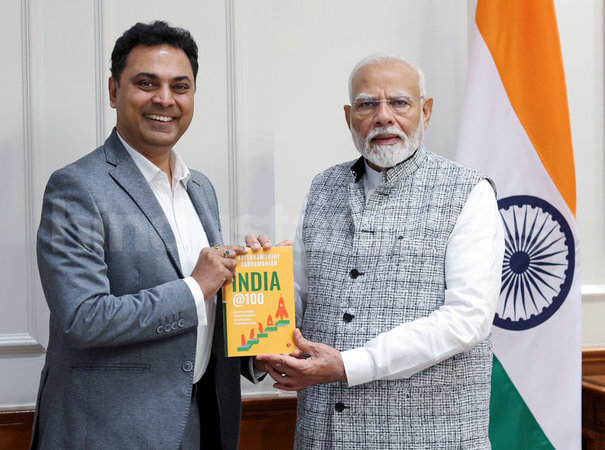
PM Modi being presented a copy of India@100 by author Krishnamurthy Subramanian
Reflecting on all this: These events aren’t unusual for a high-profile policy book by someone with Subramanian’s credentials (former CEA, current IMF Executive Director for India). Launches by ministers, deans, industry bodies, and diaspora consulates help amplify reach and credibility. Yet, in light of the bulk purchase controversy and his early IMF exit, they take on a different hue—did the high-level political visibility (Piyush Goyal as chief guest, personal handover to Modi) contribute to perceptions of state-backed promotion? Does it make the book’s “evidence-based optimism” feel more like an extension of the government’s narrative? Or is this simply how influential economic works get disseminated in India’s current ecosystem?
I’m not jumping to conclusions—it could be genuine enthusiasm for the ideas—but it does make me more alert to potential biases in the framing of pre-2014 vs. post-2014 policies, the emphasis on ethical capitalism, or the macro pillars (growth, inclusion, virtuous cycles). Tomorrow, I plan to dive into the book’s actual content: the four pillars, the growth math behind $55 trillion by 2047, and how Subramanian substantiates the “once-in-a-century opportunity.” The launches add context, not dismissal; they remind me to read critically, separating insightful analysis from promotional momentum.
This entry keeps growing because the pieces interconnect—the procurement issues, the launches, the endorsements. That’s why condensed versions frustrate me; they flatten the nuance. More tomorrow.
I.F. The Pricing Puzzle: February 21, 2026 GMT 17:48 hrs…
The book’s prices are throwing me off more than I anticipated. After digging into the controversy and the launches, I decided to actually buy a copy today—hardcover preferred, since I like the feel of a physical book for underlining policy points and jotting notes during my slow, chapter-by-chapter read. But the price variations across platforms have left me bewildered and a bit suspicious. Why such wild differences when the MRP (Maximum Retail Price) is clearly ₹995 for the hardcover? Is it just normal e-commerce discounting, or does the bulk purchase history and the book’s promotional push play into availability/stock/pricing weirdness?
Indian Online Marketplaces:
- Amazon India → The hardcover is showing as low as ₹417 (a steep ~58% off the MRP of ₹995), with “Add to Bag” options available in some views. Other listings hover around ₹400–₹613 (e.g., one at ₹400 with 60% off, another at ₹613.33 with 38% off). It mentions free or low-cost delivery (e.g., ₹50 or free on eligible orders), but stock seems to come and go—sometimes “out of stock” flashes. The Kindle edition is around ₹427.50 (digital list price noted as ₹773.12 in some places, but discounted). This seems the cheapest reliable option right now if you’re okay with Amazon’s ecosystem.
- Flipkart → Hardcover listings around ₹678 (32% off MRP), making it a solid mid-range choice. Some third-party seller variations pop up absurdly high (e.g., ₹4,568 for what might be mislabeled paperback or bundle errors), but sticking to official Flipkart-sold copies keeps it reasonable.
- Hindu eShop (from The Hindu group) → Hardcover at ₹795—closer to MRP but still discounted (~20% off).
- Ajay Online Stall → Around ₹796 for hardcover.
- BookPlanet → Showing ₹700 for hardcover in some spots, though one outlier listing dipped to ₹250–₹450 (possibly a glitch, used copy, or promo error—need to verify).
International Platforms (for comparison)
- Amazon UK → New hardcover around £23.39 (~₹2,500+ depending on exchange), with third-party sellers as low as £13.57 (~₹1,450). Kindle ~£12.30.
- eBay → Varies widely, often £33+ for new/used from international sellers.
- AbeBooks → Used copies potentially as low as £10.45 (~₹1,100), good for budget hunters okay with pre-owned.
Bulk/Student Pricing Note: Rupa Publications (the publisher) reportedly offered a “Student Edition” or bulk institutional pricing at a net ₹350 per copy (likely paperback, based on the Union Bank deal context where paperbacks were ₹350 each). This isn’t available for individual retail buyers—it’s geared toward schools, colleges, or large orders. No public retail “student discount” edition seems to exist on major sites, so don’t expect that for a single copy.
Why the bewilderment? Prices swing from ~₹400 (deep discount on Amazon) to near-MRP ₹995, with occasional absurd outliers from third parties. This is typical for Indian e-commerce—dynamic pricing1, flash sales, seller competition, stock levels, and sometimes algorithmic adjustments—but the book’s history (that massive PSU bulk buy of ~2 lakh copies at discounted rates) might have flooded supply chains or influenced publisher/distributor strategies. Deep discounts could be clearing inventory, or platforms competing aggressively. Either way, it feels inconsistent for a relatively new (2024) non-fiction title.
This pricing chaos adds another layer to my reading: Is the book’s wide “reach” (via discounts, bulk, promotions) genuine demand or manufactured? Doesn’t change the content, but it makes me even more determined to read it critically. Next entry: starting Chapter 1 on the macro pillars.
The pricing puzzle keeps deepening the more I look—it’s not just random discounts; it’s a patchwork of offers that makes choosing where to buy feel like a mini economic decision itself. To organize my thoughts (and hopefully make the bewilderment clearer), I’ve compiled the current purchasing options into a table based on the latest available listings from major distributors and platforms. Prices are approximate as of today (they fluctuate with stock, promotions, sellers, and time—always verify live before buying). I’ve focused on hardcover (primary format for most physical buyers) and included the Kindle/eBook where relevant. MRP remains ₹995 for hardcover across the board.
| Merchant | Price (₹) | Format | Notes / Purchasing Options |
|---|---|---|---|
| Bookplanet.in | ₹250 | Hardcover | Deepest discount spotted—possibly a flash sale, clearance, or limited stock. Free shipping often above ₹250; check for genuine new copy. Good for budget buyers. |
| Amazon.in | ₹400 – ₹498 | Hardcover | Frequently the lowest reliable price (~₹400 at times, up to ₹498 or ₹613 in some listings). Prime eligible, fast delivery (often 1-2 days). Stock can go in/out quickly. |
| Amazon.in | ₹427.50 – ₹613 | eBook (Kindle) | Digital version; around ₹427.50 (discounted from list ~₹773). Instant access, no shipping. Great if you prefer reading on device or want to start immediately. |
| Flipkart | ₹678 | Hardcover | Solid mid-range option (~32% off MRP). Often includes bank offers or additional discounts. Free shipping on many orders; Flipkart Plus for faster delivery. |
| Oxford Bookstore | ₹796 (sale from ₹995) | Hardcover | 20% off regular price. Physical bookstore chain—option for in-store pickup or online order. Supports browsing/returns in person if nearby. |
| Other (e.g., Hindu eShop, Ajay Online Stall, etc.) | ₹795 – ₹796 | Hardcover | Closer to MRP but reliable. Good alternatives if Amazon/Flipkart stock is low. |
Why the Variation?
Standard e-commerce dynamics: algorithmic pricing, seller competition, inventory clearance (possibly influenced by earlier bulk buys flooding supply), and platform-specific deals. No red flags beyond “normal” market behaviour.
II. Diary Entry – Day 2: February 22, 2026, GMT 13:13 hrs…
I switched on my laptop this morning with a clear goal: not just to read India@100 passively but to engage with it rigorously—taking detailed notes, cross-referencing claims with current data, and building toward an academic-style review. The book feels even more pertinent now, two years post-publication (August 2024, with possible reprints in early 2025), as India’s economic narrative keeps evolving. Subramanian’s bold $55 trillion nominal GDP vision by 2047—aligning neatly with the government’s Viksit Bharat @2047 agenda—still sparks debate in policy circles, forums, and critiques. It’s optimistic, structured, and data-driven, but I want to test its assumptions against the latest realities.
PRO-BJP REVIEW BEGINS
1. Introduction
India@100: Envisioning Tomorrow’s Economic Powerhouse by Krishnamurthy V. Subramanian (often stylized as India@100) is a prominent and recent book aligning with the “India 100+” theme, focusing on India’s centennial independence in 2047. Published in 2024 by Rupa Publications, it presents an optimistic, data-driven vision for India to become a $55 trillion economy by that milestone year, potentially rivaling the world’s largest economies.
2. Author Background–An Ethnocentric Query
Krishnamurthy Subramanian served as Chief Economic Adviser to the Government of India (2018–2021) under Prime Minister Narendra Modi. He is currently an Executive Director at the International Monetary Fund (IMF) and brings expertise from academia (e.g., Indian School of Business) and policy-making. His experience informs the book’s grounded yet ambitious analysis.
3. Core Thesis and Key Projections
The book argues that India stands at a historic inflection point. From its ~$3–4 trillion economy in the early 2020s, sustained high growth could lead to four economic “doublings” by 2047, reaching $55 trillion (in nominal USD terms).
- Growth Path: Subramanian posits that 8% real annual GDP growth (combined with ~4–5% inflation and controlled rupee depreciation of ~0.45% per year) could achieve this, rather than an unrealistic 12.5% real growth. This leverages compounding effects and aligns with India’s post-reform trajectory.
- Historical Context: It builds on India’s 1990s liberalization, recent reforms, and demographic advantages (young population, rising middle class).
4. The Four Key Pillars
Subramanian structures much of the book around four interconnected pillars for sustainable progress:
- Macroeconomic Emphasis on Growth — Prioritizing policies that boost overall economic expansion, including fiscal discipline, investment, and productivity.
- Microeconomic Focus on Social and Economic Inclusion — Ensuring broad-based benefits through financial inclusion, job creation, education, healthcare, and a large middle class to drive consumption.
- Ethical Wealth Creation — Promoting responsible capitalism, entrepreneurship, and governance that aligns private incentives with national goals.
- Virtuous Cycle Triggered by Investment — Creating self-reinforcing loops where investments in infrastructure, technology, and human capital fuel further growth.
The book is organized into five sections across 27 chapters, starting with foundational analysis of India’s current position and opportunities/challenges, then diving into detailed policy recommendations on governance, technology, education, healthcare, and more.
5. Reception and Critiques
- Positive Views: Praised for its meticulous research, actionable insights, and inspirational tone. Reviews (e.g., from K.V. Kamath, former ICICI Bank head) highlight its optimism and practical vision. On Goodreads, it averages around 4.5 stars, with readers calling it a “visionary masterpiece.”
- Critical Perspectives: Some reviews (e.g., in The Hindu) note it as ambitious but potentially optimistic, questioning whether it fully addresses structural hurdles like inequality, job quality, or external risks. It aligns with the government’s “Viksit Bharat @2047” vision but has been seen as not going far enough on certain reforms.
If one is interested in India’s long-term economic trajectory, it’s a compelling read—optimistic yet rooted in policy details. For visuals, here’s a look at the book cover and related imagery:
(Note: Image searches for the book cover and India economic growth visuals would enhance this; based on typical results, one shows the hardcover edition, another illustrates India’s projected growth trajectory or landmarks symbolizing progress.)

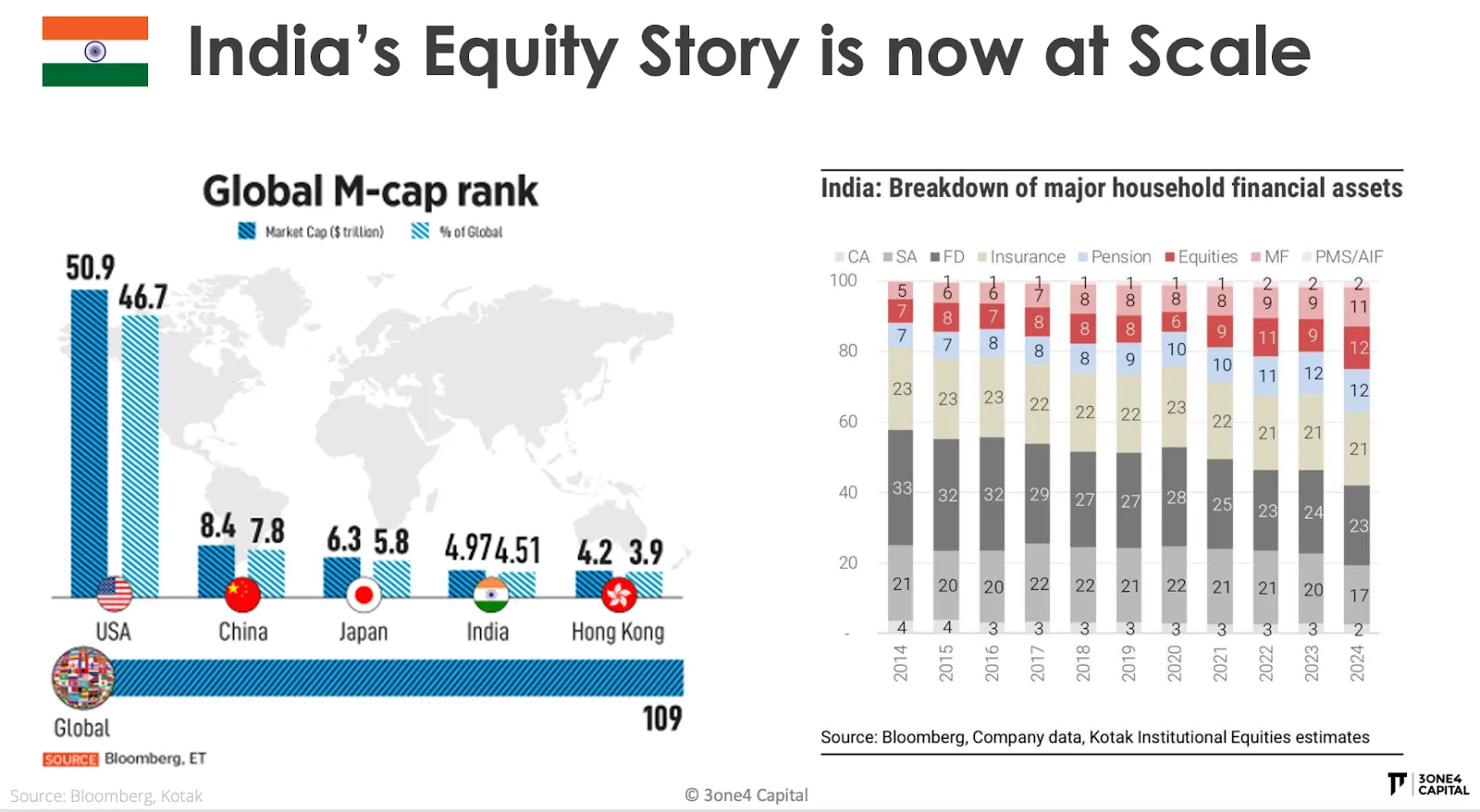
These include the striking cover (rocket/staircase motif symbolizing ascent), event shots from launches/talks (e.g., Krea University), and charts on India’s growth trajectory/market cap rise that echo Subramanian’s projections.
6. Chapter-by-Chapter Breakdown
Based on available details from reviews and summaries, India@100 is structured into five sections comprising 27 chapters. The book begins with foundational economic analysis, moves into the four pillars (macroeconomic growth emphasis, microeconomic inclusion, ethical wealth creation, and investment-driven virtuous cycles), and concludes with policy recommendations for key sectors like education and healthcare. While a complete exhaustive list of all 27 chapter titles isn’t publicly detailed in previews or summaries, here’s a synthesized breakdown drawing from key excerpts and structural descriptions:
Section 1: Foundations and Opportunities (Introductory chapters, ~Chapters 1–5)
This section sets the stage by analyzing India’s current economic position, historical growth post-1991 liberalization, and the potential for $55 trillion GDP by 2047.
- Chapter 1: Tomorrow’s Economic Powerhouse – India@100’s Economic Landscape – Explores India’s centennial opportunity, demographic dividend, and global positioning.
- Chapter 2: Unleashing Economic Potential – Projecting Future Growth Rates – Details the case for sustained 8% real GDP growth, low rupee depreciation (~0.45% annually), and compounding effects through four “doublings” of the economy.
- Subsequent chapters in this section cover challenges like the middle-income trap, productivity trends (e.g., TFP growth ~2.5% post-2014), and external risks such as geoeconomic fragmentation.
Section 2: The Four Pillars Framework (~Chapters 6–15)
The core of the book, diving into Subramanian’s four interconnected pillars with data-driven policy insights.
- Chapters on Macroeconomic Emphasis on Growth: Fiscal discipline, investment-led policies, and avoiding growth pitfalls.
- Chapters on Microeconomic Focus on Inclusion: Building a large middle class through financial access, job creation, and social programs.
- Chapters on Ethical Wealth Creation: Responsible capitalism, entrepreneurship, and aligning incentives with national goals.
- Chapters on Virtuous Cycle Triggered by Investment: Infrastructure, technology adoption, and human capital as self-reinforcing drivers.
Section 3: Governance and Institutional Reforms (~Chapters 16–19)
Focuses on enabling environments, including regulatory simplification, digital public infrastructure, and innovation ecosystems.
Section 4: Education for Prosperity (~Chapters 20–23)
Dedicated to human capital development, emphasizing skill-building, vocational training, and leveraging India’s young workforce to fuel growth.
Section 5: Healthcare and Sustainable Development (~Chapters 24–27)
Concludes with health reforms, inclusive policies, and long-term sustainability to ensure broad-based benefits, tying back to the inclusion pillar.
The structure emphasizes actionable reforms, with each section blending theory, data, and examples. If you have access to the book or a PDF, a full TOC might be available there; otherwise, this captures the high-level flow from public sources.
7. Comparisons to Updated IMF and World Bank Projections
Subramanian’s vision of a $55 trillion economy by 2047 assumes ~8% real annual GDP growth, moderate inflation (4–5%), and controlled rupee depreciation, leading to India rivaling the world’s largest economies. As of February 2026, this remains ambitious compared to multilateral forecasts, which are more conservative due to global headwinds like tariffs, fragmentation, and AI disruptions.
- IMF Projections: Near-term growth is robust but moderates—6.6% real GDP in FY2025/26 and 6.2% in FY2026/27, with nominal GDP around $4.1–4.5 trillion by end-2026. For 2047, the IMF implies India needs ~8% sustained growth to hit high-income status, aligning with Subramanian but noting risks like U.S. tariffs (50% assumed in baseline) could shave 0.5–1% off growth. Long-term, India’s contribution to global GDP growth is projected at ~19–20% through 2030 (PPP terms), up from 17% in 2024. However, without accelerated reforms, IMF sees per capita income at ~$4,346 by 2030, far short of the book’s trajectory.
- World Bank Projections: To achieve high-income status (~$20,000+ GNI per capita) by 2047, India requires 7.8% average annual growth over 22 years, increasing investment to 40% of GDP, labor participation to >65%, and productivity acceleration. Near-term: 6.5% in 2026, with scenarios showing business-as-usual yielding only upper-middle-income by 2047 (~$27–30 trillion total GDP in some alternatives). The WB emphasizes inclusive growth across states, differing from the book’s optimism by highlighting structural hurdles like job quality and female participation (target 50% by 2047).
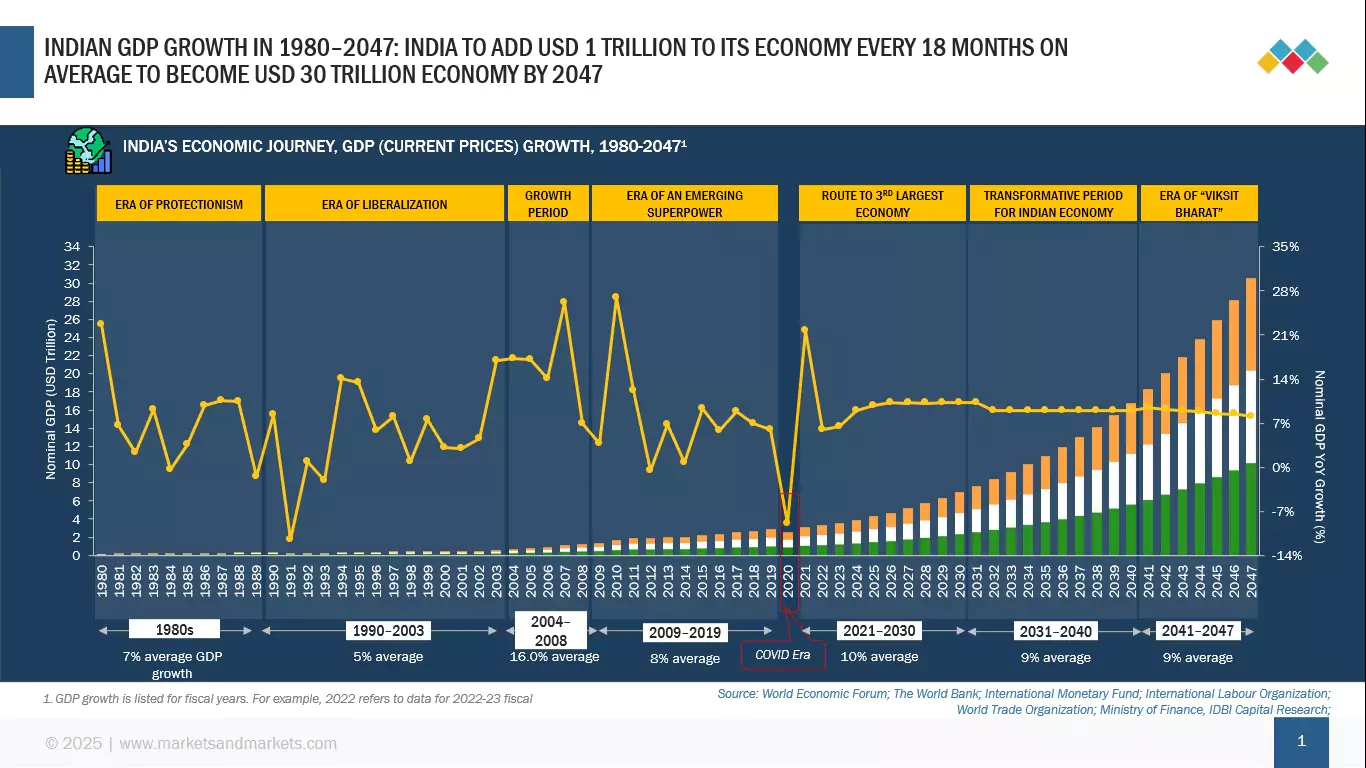
Overall, both institutions support the book’s pillars but project 6–7% baseline growth, suggesting Subramanian’s $55T requires “bold reforms” beyond current trends—e.g., faster AI adoption and trade deals to close the gap.
Here’s a visual comparison of India’s GDP trajectory projections:

8. Focus on Specific Pillars: Inclusion and Technology in Current Trends (2026)
Subramanian’s pillars emphasize microeconomic inclusion (broad-based benefits via jobs, education, health, and middle-class expansion) and integrate technology within the investment virtuous cycle (e.g., digital infrastructure fueling productivity). As of February 2026, these align with emerging trends, amplified by AI, digital transformation, and policy shifts.
- Inclusion Pillar in 2026 Trends: India’s growth is increasingly “resilient” with domestic demand at 7.5–7.9% consumption rise, driven by low inflation (1.8% average), tax relief, and rural normalization. Youth (demographic dividend) and women (labor participation up to 35.6%, targeting 50%) are key, with programs like National AI Program focusing on social impact, upskilling, and inclusive AI for healthcare/education. Challenges persist: Job quality and inequality require deeper MSME support and eldercare, aligning with the book’s call for a “large middle class.”
- Technology in Virtuous Cycle Pillar: 2026 marks AI as a “flywheel” for productivity, with India hosting the AI Impact Summit emphasizing inclusion, governance, and infrastructure. Trends include GPU-rich clusters, data governance, and sectors like fintech/healthcare adopting AI for 26% workforce exposure (14% complementary jobs). Budget 2026 boosts semiconductors, data centers, and green tech, creating a cycle of investment and growth. This supports Subramanian’s vision but adds urgency for “small AI” in SMEs and public services to avoid displacement.
The book’s strength lies in its structured roadmap—the four pillars (macro growth focus, micro inclusion, ethical wealth creation, virtuous cycles)—and evidence-based framing from Subramanian’s CEA/IMF experience. It convincingly argues India can avoid the middle-income trap through high TFP growth (~2.5%+), job-creating inclusion, and responsible entrepreneurship. Reviews (e.g., DeshVidesh, The Geostrata) praise this as visionary yet realistic, with Goodreads still ~4.5 stars for its actionable insights.
NOW, LET THE COUNTERPOINTS BEGIN…

III. Diary Entry – Day 3: February 23, 2026
Today marks a shift in my approach to India@100. So far, I’ve achieved solid descriptive adequacy—mapping out the book’s vision, pillars, and alignment with current data (India’s ~$4.5T nominal GDP in 2025–26 estimates, 7.4% real growth projection for FY25/26, the new base-year revisions improving accuracy). Subramanian’s $55 trillion nominal GDP target by 2047—via sustained ~8% real growth, ~5% inflation, and compounding (doubling roughly every 9 years under the rule of 72)—feels compelling on paper. The optimism stems from post-2014 reforms (formalization, digital infrastructure, productivity gains), demographic advantages, and a virtuous cycle of investment. Yet, as I noted yesterday, the real test is probing deeper: counterpoints, risks, and empirical gaps. This is where passive admiration turns into critical scrutiny for my eventual academic review.
III.A. The GDP Illusion: Fetish, Facade, and False Progress
In mainstream economic and policy discourse, Gross Domestic Product (GDP) occupies an almost unassailable position as the primary indicator of national success, development, and global standing. Governments, corporations, and international institutions routinely celebrate headline GDP figures — climbing ranks, higher percentages, “growth rates” — as proof of prosperity and validation of policy frameworks. But GDP is an aggregate of transactions, not an index of well-being. It counts flows of money without interrogating their ethical, distributive, ecological, or social dimensions. This reduction — equating size with value, and output with progress — is the core of the GDP illusion. (a)GDP as Fetishized Metric The critique central to the OBMA essays is that GDP operates less as a measure and more as an ideological language. It frames economic life in terms that favor capital accumulation and political legitimacy, while erasing conflict, loss, and distributional harm. Celebrating GDP growth as “progress” masks the fact that:
- Vast swathes of the population remain in multidimensional poverty even as aggregate output rises.
- Inequality widens, with a tiny elite capturing disproportionate wealth as measured beyond GDP.
- Social determinants of well-being — health, education, care work, ecological resilience — are either invisible to GDP or treated as externalities.
In this sense, GDP becomes a fetishized metric: an abstract number that absorbs symbolic authority, obscuring the real conditions it claims to represent.
III.B. The Mirage of Growth and Structural Suffering
GDP growth does not inherently reduce suffering or enhance human dignity. The narrative of GDP ascendancy — “India as the fourth-largest economy” or “resilient growth rates” — serves political economies that prioritize capital flows and elite consolidation over the substantive well-being of citizens. This is evident in several structural disjunctions:
- Persistent inequality: Growth may enlarge the economy while the share of income and assets captured by the top 1 % skyrockets.
- Stagnating social investment: Public provision of health and education often remains below international benchmarks even as GDP expands.
- Ecological degradation: Environmental costs are omitted from GDP calculus, despite their profound impacts on community resilience and livelihoods.
In other words, GDP growth becomes a mirage — a shimmering measure that signals success at the macro level even as micro realities reveal persistent suffering and structural deprivation.
III.C. India’s Macroeconomic Indicators, GDP Misreporting, and the Architecture of Debt
In official economic discourse, India increasingly frames itself as a rising global power on the strength of its GDP size, with multiple authoritative estimates projecting it as the world’s fourth-largest economy in 2025. According to the International Monetary Fund’s April 2025 World Economic Outlook, India’s nominal GDP is estimated at approximately $4.19 trillion in 2025, just ahead of Japan’s roughly $4.18–4.19 trillion, thereby moving India up from fifth place in 2024 to fourth place globally behind only the United States, China, and Germany. Government and policy institutions such as NITI Aayog have cited these figures to underscore India’s purported economic emergence, noting that India’s per capita income has roughly doubled over the past decade alongside this ascent in global rankings. While these rankings attract attention in public discourse and policy narratives, headline GDP size figures do not (at all) fully account for underlying structural, measurement, and distributional complexities in the economy as part of the bigger picture of neoliberal capital-relations.
III.D. IMF Concerns About India’s National Accounts
India’s national accounts—GDP and GVA—received a C-grade from the IMF (retained in its 2025 Article IV consultation and Data Adequacy Assessment), signaling significant statistical weaknesses that somewhat hamper surveillance. Key concerns include:
- GDP calculation methodology: Reliance on proxying the unorganized sector from organized sector trends.
- Base year (2011–12): Potentially outdated and misaligned with structural shifts.
- GDP deflator: Current reliance on the Wholesale Price Index (WPI) ignores services (the largest sector), producing overestimated real growth.
- Seasonal adjustments: Limited and insufficient, causing quarterly misrepresentation.
- Production vs. expenditure discrepancy: Growing gaps (0.5–1% pre-demonetization to 2–5% post-pandemic) reflect systemic measurement errors.
IMF stress tests and consultations (2024–2025) underline structural vulnerabilities despite moderate debt-to-GDP ratios (~18.9%) and strong reserves (around $693–696 billion as of late 2025, per RBI data). These include sensitivity to interest-rate shocks, rupee depreciation, climate-related fiscal burdens, and latent off-balance-sheet risks.
III.E. GDP Calculation and Structural Misrepresentation
a) Presenting Perspective-1
- Overstated growth: Official GDP figures (~8.2% for Q2) may be 48% higher than reality; adjusted estimates suggest 4–5% growth.
- Unorganized sector (~45% of GDP, ~30% of non-agriculture GDP) is poorly captured:
- Trade (neighborhood stores), textiles, and leather goods are declining.
- Post-demonetization, GST, NBFC crises, and pandemic shocks disproportionately affected this sector.
- Benchmarking “bad years” against “good years” inflates growth.
- Quarterly GDP estimates rely heavily on organized sector proxies; lack of independent high-frequency data introduces systemic errors.
- CPI concerns: Current baskets poorly reflect consumption patterns of low-income households; GST-driven price declines mainly benefit the organized sector.
b) Presenting Perspective-2
- Proxies are necessary due to data limitations; direct, frequent surveys are expensive.
- GDP series revisions aim to incorporate more frequent and direct surveys, improving unorganized sector representation.
For a more detailed analysis, view the following: 6.3. Year-on-Year vs. Quarter-on-Quarter Growth Distortions India reports GDP growth YoY, unlike most large economies (U.S., Brazil, China) that report QoQ growth:
- YoY reporting masks current momentum.
- Example: Government Q3 YoY growth = 0.4%; JP Morgan QoQ calculation = 5.7%.
- FY2021–22 budget projections of 11% YoY growth implied ~1% average QoQ growth, concealing actual quarter-to-quarter deceleration.
Implications:
- Pre-pandemic structural weaknesses—financial sector non-performing loans, sluggish exports—persist.
- Manufacturing has recovered; services sector, employing a majority of women, remains weak, generating unemployment and widening gender disparities.
- Fiscal measures (e.g., 0.2% GDP infrastructure spending) and privatization do not address these imbalances.
Conclusion: YoY reporting creates a false sense of economic recovery, while QoQ data would better inform policy interventions.
Production vs. Expenditure and Deflator Issues
- Production-expenditure gap: Inaccuracies in unorganized sector data affect both sides, complicating choice of “controlling total.”
- GDP deflator error: Using WPI rather than service-inclusive indices overstates real GDP growth; double deflation is not performed.
- Seasonal adjustment: Partial adjustments cause Q4 overstatements and Q1 understatements, though this is secondary to structural measurement flaws.
III.F. Debt as a Constitutive Feature of Contemporary Capitalism
Debt in India is not neutral; it structures contemporary capitalism and enforces distributional hierarchies:
- External debt boom: From ~$409 billion in 2013 to $747.2 billion by June 2025 (RBI data; slight decline to ~$746 billion by September 2025).
- Debt orchestrates who accrues wealth and who bears costs, embedding discipline on states, constraining democratic policymaking, and privileging corporate expansion.
a) Why the “Debt Is Sustainable” Argument Falls Short
- Apologists cite moderate debt-to-GDP (~18.9%), high reserves, and long-term maturities (~82%).
- Sustainability must also consider shock resilience, social legitimacy, equitable burden-sharing, and long-term viability.
- Vulnerabilities: rupee depreciation (4–5% in 2025), global rate hikes, capital flight, and creditor influence on policy tilt toward investor interests.
- Debt reallocates resources from multitudes to magnates, present to posterity, commons to corporations.
b) IMF Stress Tests and Vulnerabilities
- IMF Article IV consultations highlight nuanced risks despite moderate headline debt metrics:
- Interest-rate shocks elevate corporate ECB costs and public exposure.
- Rupee depreciation inflates foreign-currency obligations.
- Growth deceleration (e.g., 5–6% plausible) reduces revenue, accelerating debt accumulation.
- Climate imperatives (adaptation, mitigation) necessitate trillions in borrowing, structurally inflating liabilities.
- Hidden liabilities (utilities, SOE guarantees) can abruptly emerge on public balance sheets.
- Private external debt often converts to public exposure during crises.
- Strengths: rupee-denominated sovereign debt, reserves (~93% external coverage).
- Per-capita external debt: ~$510–515, highlighting systemic strain exceeding demographic growth.
Debt enforces compliance, embeds anticipatory restraint, diffuses risks downward, and constrains democratic policymaking without overt coercion, epitomizing contemporary capitalism’s operational logic.
c) Key Takeaways
- GDP overestimation: Post-demonetization, GST, and pandemic impacts disproportionately hit the unorganized sector, skewing growth figures upward.
- CPI underrepresentation: Price indices fail to capture consumption realities of the poor.
- QoQ vs. YoY distortion: Current reporting masks slowing momentum and structural weaknesses.
- Debt as governance: External debt enforces systemic asymmetries, privileging capital while constraining public autonomy.
- IMF validation: External assessments confirm measurement flaws and highlight vulnerability despite stable ratios.
- Government reforms: Efforts are underway to revise GDP, CPI, and unorganized sector metrics, but structural challenges remain significant.
Overall, India’s macroeconomic picture combines statistical misrepresentation, structural fragility, and debt-mediated governance, revealing a complex interplay between reported growth, real economic conditions, and the systemic imperatives of contemporary capitalism.
III.G. Debt, Distribution, and the Political Economy of Growth
The critique of GDP intersects with a broader analysis of debt and financialization. External debt — rising sharply in contemporary political-economic contexts — is often narrated as a sign of “integration” and “confidence.” But when debt increases without corresponding human development, it signals structural fragility rather than genuine prosperity. Under neoliberal policy regimes, debt and GDP become linked in a way that:
- Legitimizes credit-driven growth while socializing risk onto the public and future generations.
- Masks the fact that GDP statistics can be inflated by external commercial borrowings and methodological choices that understate informal sector realities.
- Obscures the political economy driving growth — where fiscal priorities are shaped by corporate interests and crony networks rather than broad-based welfare outcomes.
Thus, GDP becomes a political device as much as an economic statistic — legitimizing policies that deepen inequality and precarity while providing rhetorical cover for state and corporate elites. (d) Alternatives to GDP Fetishism Both essays reject GDP centricity not in favour of nihilistic anti-economics, but toward plural metrics of progress that incorporate justice, ecology, and dignity:
- Doughnut Economics — embedding human needs within ecological boundaries.
- Common Good Balance Sheets — measuring social and environmental contributions beyond monetary output.
- Localization and degrowth — shifting from quantity to quality of life.
These frameworks challenge the reduction of human experience to monetary aggregates and instead orient development toward communal flourishing rather than market metrics. The “GDP illusion” is a systemic effect of neoliberal political economy: an arresting headline number that distracts from structural suffering, social inequality, and ecological degradation. Recognizing GDP’s limits — and resisting its dominance as the sole indicator of progress — is essential to reframing development in terms that are ethical, distributed, and sustainably human.
III.H. Increasing Debt
The book addresses debt indirectly through its macroeconomic pillar and growth strategy, but not as a major crisis or in direct response to IMF warnings on India’s debt exceeding 100% of GDP (alerts from late 2023, which Subramanian — as India’s then-IMF Executive Director — publicly refuted or contextualized).
- Subramanian argues that high sustained growth (8%+ real GDP) naturally improves debt sustainability by lowering the debt-to-GDP ratio via the denominator effect (growth outpacing interest burdens), even without aggressive fiscal consolidation.
- He emphasizes fiscal prudence, public investment-led growth, and avoiding “debt traps” (e.g., using debt for productive investments rather than revenue expenditure or “freebies”).
- The book promotes growth as the primary tool for debt management, aligning with his earlier Economic Survey views that growth leads to debt sustainability (not vice versa).
- It does not prominently feature or endorse recent IMF cautions (e.g., 2023 warnings on vulnerabilities); instead, it presents an optimistic view where India’s debt risks remain manageable due to demographics, reforms, and compounding growth.
Overall, debt is framed positively as solvable through the book’s four pillars (especially macro growth and virtuous investment cycles), rather than a looming alert requiring austerity. This reflects Subramanian’s policy stance, including his IMF role where he challenged overly pessimistic debt assessments for high-growth emerging economies.
III. I. Coverage of Critical Indices, Democratic Assessments, and Structural Challenges in the Book
Does this book mention 1. Low/Negative scores in different indices 2. Freedom house & V-dem reports?
No, the book does not mention low or negative scores in various global indices—whether in press freedom, corruption perceptions, human development, or in a critical light on wealth inequality, income inequality, or crony capitalism—nor does it reference Freedom House reports or V-Dem (Varieties of Democracy) reports.
India’s recent rankings in these areas include:
- Wealth inequality: According to the World Inequality Report 2026, the top 10% hold around 65% of total wealth and the top 1% hold about 40%—among the highest concentrations globally, with wealth distribution described as the most unequal in the world.
- Income inequality: The same report shows the top 10% capturing 58% of national income while the bottom 50% receive only 15%, levels that remain among the world’s highest (with pre-tax income Gini estimates around 61–62 in independent analyses).
- Crony capitalism: India ranked 10th on The Economist’s 2023 Crony-Capitalism Index (the latest available), with wealth in crony-capitalist sectors rising from 5% to nearly 8% of GDP over the prior decade.
From extensive reviews, summaries, author discussions, event transcripts, and available excerpts (including partial table of contents from the official site and promotional materials), the book’s focus remains squarely on economic optimism, growth projections (8% real GDP growth toward a $55 trillion economy by 2047), and the four pillars: macro growth, inclusion, ethical wealth creation, and virtuous investment cycles. It covers governance reforms, institutional improvements, and positive aspects of policy changes post-2014 (e.g., digital infrastructure, formalization, productivity gains), but frames these strictly as enablers of economic progress rather than addressing democratic backsliding, international downgrades, or structural critiques on inequality and cronyism.
There are no documented references in reviews (e.g., The Hindu critique notes it “does not go far enough” on structural issues but highlights ambition, not democracy or inequality indices), Goodreads summaries, Amazon descriptions, publisher blurbs, or author interviews (e.g., CGDev events, NewsX discussions) to Freedom House (which downgraded India to “Partly Free” in recent years), V-Dem (classifying India as an “electoral autocracy” since around 2018), high inequality metrics from the World Inequality Lab, or India’s position on crony-capitalism rankings. The content emphasizes upward trends in areas like the Global Innovation Index (where India has risen), select economic freedom elements tied to reforms, or governance via investment and inclusion, without engaging critically with downgrades from organizations like Freedom House, V-Dem, or the stark inequality and cronyism indicators above.
This aligns fully with the book’s overall tone as a policy-oriented, forward-looking roadmap tied to India’s “Viksit Bharat @2047” vision—prioritizing economic achievements and reforms over geopolitical, democratic, or distributional critiques. Subramanian, in his public commentary and prior roles (e.g., Economic Surveys), has occasionally defended India’s trajectory against pessimistic external assessments, but the book itself avoids diving into these specific reports or negative index scores. These topics are not covered.
III.J. Does This Book Talk About Climate Crises?
Yes, the book India@100: Envisioning Tomorrow’s Economic Powerhouse by Krishnamurthy V. Subramanian (published 2024) does discuss climate change, particularly in the context of the inclusion pillar and ethical wealth creation. It critiques global “climate asymmetries” — arguing that developed nations bear historical responsibility for most greenhouse gas emissions (over 90% cumulatively), while developing countries like India face disproportionate burdens despite lower per-capita emissions.
- Key points include calls for equitable climate policies that respect India’s developmental needs (e.g., not hindering growth through overly restrictive targets).
- It touches on climate justice, sustainable practices (e.g., renewable energy investment, energy efficiency, and sustainable agriculture), and balancing economic progress with environmental protection.
- There’s a specific chapter or section (e.g., referenced as “Chapter 14: The Unfair Climate Divide”) highlighting the unfair divide between wealthy nations’ actions and developing economies’ burdens.
- In related discussions (e.g., events tied to the book), Subramanian notes India’s progress toward Paris Agreement goals and net-zero ambitions while emphasizing that high growth can coexist with lower pollution through technology and policy.
The treatment is not a deep dive into worst-case climate scenarios or crises as existential threats (unlike some environmental books), but integrates sustainability as part of ethical, inclusive growth to avoid derailing the $55 trillion path.
The book India@100: Envisioning Tomorrow’s Economic Powerhouse by Krishnamurthy V. Subramanian addresses the apparent contradictions between technology-driven industrialization (as key drivers of economic growth) and climate crises (including broader ecological concerns) by framing them not as irreconcilable opposites, but as opportunities for balanced, ethical progress. It integrates these themes primarily through its “ethical wealth creation” pillar—one of the four core pillars (alongside macroeconomic growth, microeconomic inclusion, and investment-led virtuous cycles)—while emphasizing sustainability as essential to long-term economic viability. The approach is optimistic, policy-oriented, and rooted in India’s context as a developing economy, arguing that high growth (targeting 8% real GDP annually) can coexist with environmental responsibility through targeted reforms, innovation, and global equity.
a) Key Handling of the Contradictions
Subramanian acknowledges the tensions—rapid industrialization and technology adoption could exacerbate emissions and resource strain, potentially worsening climate crises and ecological degradation—but posits that these can be resolved via “ethical” frameworks that prioritize sustainability without derailing India’s $55 trillion economy goal by 2047. The book critiques global “climate asymmetries” or the “unfair climate divide,” where developed nations (responsible for over 90% of historical GHG emissions) impose mitigation burdens on emerging economies like India, which face disproportionate climate impacts despite low per-capita emissions. This sets up a justice-oriented lens: India should pursue industrialization and tech-led growth, but on equitable terms that allow developmental space.
- Technology and Industrialization as Enablers of Sustainability: The book promotes technology not as a climate antagonist, but as a tool for “green” industrialization. For instance, it advocates investing in renewable energy, energy efficiency, digital infrastructure, and sustainable agriculture to create a “virtuous cycle” where tech-driven productivity boosts economic growth while reducing ecological footprints. Subramanian highlights how reforms in manufacturing and industry (e.g., faster transformation to high-value sectors with “sunset clauses” on subsidies) can avoid the middle-income trap, but must incorporate environmental protections like circular economy models and reduced reliance on fossil fuels. He draws on examples like India’s progress toward Paris Agreement goals, suggesting that AI, digital public goods, and innovation ecosystems can decouple economic expansion from emissions—e.g., by optimizing resource use in industry.
- Economy vs. Ecology: Balancing Through Ethical Wealth Creation: Ecology is woven into the ethical pillar, where growth is deemed “responsible capitalism” that aligns private incentives with societal and environmental goals. The book argues for shifting to renewables and sustainable practices to mitigate climate risks, while rejecting overly restrictive global targets that could hinder India’s industrialization. It emphasizes that ethical wealth creation involves “balancing economic development with environmental protection and social responsibility,” promoting a net-zero trajectory through mixed energy strategies (renewables alongside some fossil utilization during transition). Critiques of this approach note that while ambitious, it may not fully resolve structural hurdles like pollution from rapid urbanization or industrial expansion, potentially underplaying short-term ecological trade-offs.
A dedicated section, such as Chapter 14 (“The Unfair Climate Divide”), delves into these dynamics, highlighting how wealthy nations’ historical actions burden developing ones, and calls for policies that enable India to industrialize sustainably—e.g., via international climate finance and tech transfers. Overall, the handling is proactive: contradictions are opportunities for “win-win” reforms, with technology and industrialization reframed as ecological allies through ethical governance, rather than zero-sum conflicts.
Thus, it seems that he is promoting Green Capitalism (ESG, carbon markets, pollution markets, etc.) instead of deep ecological concerns Gandhian economics of austerity, decentralized local resource based economy?
Yes, Krishnamurthy V. Subramanian promotes a form of responsible (?), tolerant(?) growth-oriented green capitalism—often described in reviews and summaries as “ethical wealth creation”—that incorporates modern sustainability elements (such as renewable energy investment, energy efficiency, sustainable agriculture, and equitable climate policies) rather than embracing deep ecological critiques, Gandhian austerity, or a fundamentally decentralized, local-resource-based economy.
b) Core Framing in the Book
The book’s vision centers on achieving $55 trillion nominal GDP by 2047 through sustained high growth (~8% real annually), driven by the four pillars:
- Macroeconomic emphasis on growth
- Microeconomic inclusion (building a large middle class, jobs, etc.)
- Ethical wealth creation (the pillar most relevant here)
- Virtuous investment cycles (infrastructure, technology, human capital)
Under “ethical wealth creation,” Subramanian argues for aligning economic incentives with social and environmental responsibility. This includes:
- Balancing rapid industrialization and technology adoption with environmental protection (e.g., shifting to renewables, promoting circular practices, and reducing pollution through efficiency).
- Advocating climate justice — critiquing “unfair climate divides” where developed nations (historical high emitters) impose burdens on developing ones like India, while allowing space for India’s growth needs.
- Promoting sustainable development via investments in green tech, energy transitions (mix of renewables and transitional fossil use), and equitable policies.
This resembles green capitalism or ESG-aligned thinking: growth-first, with market-based, tech-driven, and policy-enabled sustainability measures to “decouple” expansion from ecological harm. It assumes that productivity gains, innovation, and responsible corporate behavior can resolve tensions without fundamentally slowing or restructuring the economy.
c) Absence of Gandhian or Deep Ecological Alternatives
There is no evidence in reviews, excerpts, author discussions, or summaries that the book engages with:
- Gandhian economics (e.g., voluntary simplicity, austerity, “small is beautiful,” or limiting wants to achieve ecological harmony).
- Decentralized, local-resource-based economies (e.g., village-centric self-reliance, swadeshi at a grassroots level, or prioritizing localized production/consumption over large-scale industrialization/global integration).
- Deep ecology principles (e.g., intrinsic value of nature, radical limits to growth, or critiquing anthropocentric development as inherently destructive).
Instead:
- The book critiques past socialist-era policies (e.g., those associated with Nehru/Indira Gandhi) for hindering growth, favoring post-2014 reforms, formalization, digital infrastructure, and high-value industrialization.
- Sustainability is framed pragmatically: as compatible with (and supportive of) ambitious growth, not as a reason for austerity or de-growth.
- References to self-reliance appear in the context of Atmanirbhar Bharat (modern policy for domestic manufacturing/tech capabilities), not Gandhian village economies.
- In related talks (e.g., 2025 events), Subramanian discusses India’s Paris Agreement progress and net-zero ambitions positively, emphasizing renewables investment alongside growth, without invoking austerity.
d) Why This Approach?
Subramanian’s background (former Chief Economic Adviser, IMF Executive Director, academic in finance) leans toward mainstream, evidence-based macro/micro economics. The book aligns with Viksit Bharat @2047 goals: rapid scaling to high-income status via compounding growth, inclusion, and ethical/responsible practices—rather than alternative paradigms like Gandhian frugality or eco-centric localization, which could conflict with the 8%+ growth target.
Critics (e.g., in The Hindu review) note the vision as ambitious but potentially underplaying deeper structural/ecological trade-offs, while supporters praise its optimism and realism. It thus leans toward reformed capitalism with green elements over radical ecological or austerity-based alternatives.
Comparisons between India@100: Envisioning Tomorrow’s Economic Powerhouse by Krishnamurthy V. Subramanian and Gandhian-inspired economic writings (e.g., E.F. Schumacher’s Small Is Beautiful or modern eco-thinkers) reveal stark contrasts in philosophy, priorities, and prescriptions.
Subramanian’s book is firmly rooted in mainstream, high-growth capitalism with ethical and sustainable tweaks—aiming for rapid scaling to a $55 trillion economy by 2047 through compounding 8%+ real GDP growth, industrialization, technology adoption, private investment, and market-oriented reforms. It draws inspiration from successful modern examples like post-war Japan, China’s modernization, and Germany’s social market economy, while critiquing India’s socialist-era policies (e.g., under Nehru and Indira Gandhi) for stifling entrepreneurship and growth.
In contrast, Gandhian-inspired economics—exemplified by Mahatma Gandhi’s emphasis on village self-reliance (swadeshi and gram swaraj), voluntary simplicity, limiting wants, and moral/spiritual dimensions of economy—and E.F. Schumacher’s 1973 classic Small Is Beautiful: Economics as if People Mattered advocate for decentralized, human-scale, low-impact systems. Schumacher, deeply influenced by Gandhi, promoted “Buddhist economics,” appropriate technology, small enterprises, local production/consumption cycles, and rejection of endless material growth as ecologically destructive and spiritually hollow. Modern eco-thinkers (e.g., those in degrowth movements, Vandana Shiva’s critiques of industrial agriculture, or proponents of steady-state economics) extend this to radical limits on growth, prioritizing ecological restoration, equity, and sufficiency over GDP maximization.
e) Key Points of Comparison
- View on Economic Growth:
- Subramanian: Growth is the primary engine for prosperity, poverty reduction, inclusion, and debt sustainability. High, sustained growth (via compounding “doublings”) is celebrated as essential; ethical wealth creation ensures it’s responsible but not curtailed.
- Gandhian/Schumacher: Endless quantitative growth is problematic—it leads to resource depletion, inequality, alienation, and environmental crises. Schumacher famously argued “small is beautiful” to counter gigantism; focus on qualitative well-being, sufficiency, and harmony with nature rather than accumulation.
- Scale and Decentralization:
- Subramanian: Favors large-scale industrialization, urbanization, global integration, and centralized reforms (e.g., privatization, digital infrastructure, high-value manufacturing). Decentralization appears in calls for shifting decision-making to local bodies/panchayats for responsiveness, but it’s instrumental to efficiency and growth—not a core principle of self-reliant villages.
- Gandhian/Schumacher: Radical decentralization is foundational—economies should center on villages/small communities using local resources, appropriate (often low-tech) tools, and self-sufficiency to avoid dependency and ecological harm.
- Technology and Industrialization:
- Subramanian: Technology and industry are virtuous drivers—creating jobs, productivity, and green transitions (e.g., renewables investment) within a capitalist framework.
- Gandhian/Schumacher: Technology must be “appropriate” (human-centered, non-exploitative); large-scale industrialization often dehumanizes and pollutes. Schumacher warned against “giantism” in tech and production.
- Sustainability and Ecology:
- Subramanian: Addresses sustainability pragmatically (e.g., climate justice, renewables, ethical practices) as compatible with high growth—framed as “win-win” without de-growth.
- Gandhian/Schumacher: Deep ecological concerns demand austerity, reduced consumption, and systemic limits to growth. Material austerity (voluntary simplicity) is virtuous; modern eco-thinkers often advocate degrowth or post-growth models to stay within planetary boundaries.
- Social and Ethical Dimensions:
- Subramanian: Ethics mean responsible capitalism—aligning incentives for inclusion and sustainability while unleashing entrepreneurship.
- Gandhian/Schumacher: Ethics are spiritual/moral—economy serves human dignity, non-violence (ahimsa), and trusteeship (wealth as stewardship, not ownership). Austerity and sharing are central.
No direct references or engagements appear in India@100 (or related discussions) with Gandhi’s economic ideas, Schumacher, “small is beautiful,” austerity as a virtue, or degrowth. The book critiques socialist centralization but embraces modern pro-business reforms over Gandhian localization. It aligns more with contemporary “green growth” or “responsible capitalism” than radical eco-alternatives.
In essence, Subramanian’s vision is optimistic, scale-ambitious, and reformist within capitalism, while Gandhian-inspired thought is critically anti-materialist, localized, and sufficiency-oriented. They represent divergent paths for India’s future: one chasing global economic superpower status, the other seeking harmonious, modest living rooted in indigenous wisdom.
The book’s superficial lip-service treatment of climate crises exemplifies a broader pattern of evasion and ideological selectivity. While it gestures toward “climate justice” and “unfair divides,” this serves primarily as a defensive shield against Northern-imposed constraints on India’s growth trajectory, rather than a genuine reckoning with planetary boundaries or the existential urgency of tipping points (e.g., collapsing monsoon systems, Himalayan glacier melt accelerating water insecurity for hundreds of millions, or accelerating heatwaves rendering vast regions unviable for labor). The framing reduces climate to a geopolitical bargaining chip—India must grow first, pollute permissibly, then “green” via market mechanisms—while ignoring how relentless 8%+ compounding growth entrenches fossil dependencies, accelerates biodiversity loss, and locks in high-emission infrastructure for decades. This is textbook greenwashing: renewables are invoked as add-ons to sustain business-as-usual expansion, not as part of a systemic shift away from endless accumulation. The refusal to engage Gandhian or Schumacherian critiques—voluntary limits, sufficiency, localized resilience—reveals an anthropocentric hubris that subordinates ecology to GDP fetishism, rendering the book’s “ethical wealth creation” little more than sanitized neoliberalism dressed in ESG rhetoric.
In an era profoundly defined by anthropogenic polycrisis—the simultaneous, mutually amplifying entanglement of multiple systemic crises (climate heating, biodiversity collapse, widening inequality, geopolitical instability, pandemics, resource depletion, and ecological overshoot)—notions of conventional “growth” and “development” have been rendered largely meaningless, if not actively counterproductive. As scholars and institutions (from the Cascade Institute to the UNEP and World Economic Forum) increasingly recognize, polycrisis is no mere coincidence of isolated problems but a cascading, runaway failure across interconnected Earth and human systems, where shocks in one domain (e.g., extreme weather disrupting agriculture) reverberate to exacerbate others (e.g., food insecurity fueling migration and conflict), producing harms far greater than the sum of parts. In this context, pursuing endless quantitative expansion—measured by GDP doublings, trillion-dollar targets, and perpetual compounding—becomes a dangerous delusion: it deepens the very entanglements driving polycrisis, accelerating planetary boundary transgressions while offering no pathway to genuine human flourishing or systemic resilience. “Development” as endless material accumulation loses legitimacy when it locks societies into maladaptive trajectories—fossil-fueled infrastructure, speculative finance, and resource-intensive urbanization—that amplify Anthropocene traps rather than escape them. True progress demands a fundamental reorientation toward sufficiency, regeneration, and relational harmony with nature and each other. This necessitates a return to the profound insights of Gandhi and Schumacher: voluntary simplicity to curb insatiable wants, decentralized self-reliance to foster community-scale resilience, appropriate technology that serves human dignity without gigantism, and an economy of permanence grounded in non-violence, trusteeship, and ecological prudence. Only by embracing such limits and sufficiency can humanity hope to navigate polycrisis toward equitable, regenerative futures—rather than compounding the traps that threaten civilizational collapse.
IV. Is India@100 Pro-BJP Propaganda with Deep Social Myopia? An Assessment of Political Alignment and Ideological Blind Spots
The book does align closely with the economic vision promoted by the Bharatiya Janata Party (BJP)-led government under Prime Minister Narendra Modi, particularly the “Viksit Bharat @2047” agenda for a developed India by its independence centenary. Subramanian, who served as Chief Economic Adviser from 2018–2021 during Modi’s tenure and later as India’s Executive Director at the IMF until his early termination in 2025, draws heavily on post-2014 reforms (e.g., formalization, digital infrastructure, and productivity gains) while critiquing pre-2014 socialist-era policies associated with leaders like Jawaharlal Nehru and Indira Gandhi. This has led some critics to view it as overly optimistic and potentially biased toward the ruling party’s narrative.
IV.A. Pro-BJP Propaganda
- Alignments with BJP Policies: The book’s core thesis—sustained 8% real GDP growth to reach a $55 trillion economy by 2047—mirrors government projections and emphasizes ethical capitalism, inclusion, and investment cycles as enablers. Positive reviews from figures like K.V. Kamath (former ICICI head and a reviewer in The Times of India) praise its vision as inspirational, and Subramanian has discussed it in pro-government-aligned forums like NewsX. The opposition Congress party has explicitly labeled it “blatant propaganda,” pointing to its defense of Modi’s economic policies (e.g., the debated “V-shaped recovery” during COVID) and alleging misuse of public funds for promotion.
- Bulk Purchase Controversy: In 2025, Union Bank of India (a public sector bank) bought around 2 lakh copies for ~₹7.25 crore, intended for distribution to staff and possibly clients, which sparked an internal probe into procurement lapses and led to scrutiny from the opposition. This was cited as a factor in Subramanian’s early IMF exit, with sources alleging “impropriety” in using his position for book promotion. Critics argue this reflects state-backed amplification of a pro-government message.
- Counterpoints: Not all see it as outright propaganda. Reviews in outlets like The Geostrata and DeshVidesh describe it as a structured, data-driven roadmap with actionable policy recommendations, not mere political spin. Goodreads averages ~4.5 stars, with readers calling it visionary, though some note its repetition of “right-wing narratives” on India’s pre-colonial economic dominance. Subramanian frames it as evidence-based optimism drawn from his expertise, not partisanship.
Whether it qualifies as “propaganda” depends on perspective: It promotes a narrative favorable to the BJP’s economic record, and the bulk purchase adds fuel to those claims, but it’s presented as an independent economic analysis with cross-country comparisons.
IV.B. Deep Social Myopia
Focus and Omissions:
The book prioritizes macroeconomic growth, ethical wealth creation, and inclusion through jobs, education, and a rising middle class, arguing these will naturally address poverty and inequality. However, critics like The Hindu point out it doesn’t delve deeply into structural hurdles such as persistent inequality, job quality, or external risks, and may set a low bar for praising central reforms. It avoids discussing negative global indices (e.g., on democracy, press freedom, or human development) or broader social issues like caste, gender disparities beyond inclusion pillars, or democratic backsliding—focusing instead on economic uplift as the panacea.
V. Epilogue
By February 23, 2026 (GMT 10:10 hrs), these reflections on India@100 crystallize a profound tension: Subramanian’s roadmap, while data-driven and reform-focused, glosses over entrenched inequalities, democratic erosions, and ecological imperatives that could derail India’s ascent. The bulk controversy underscores ethical lapses in promotion, while critiques of GDP fetishism, soaring debt, and unaddressed indices (e.g., crony capitalism, Freedom House downgrades) reveal a narrative favoring elite accumulation over equitable, sustainable paths. Embracing Gandhian austerity or degrowth alternatives might avert polycrisis, yet the book’s green capitalism offers mere palliatives. As India navigates 2047 ambitions, these entries urge policymakers and citizens to prioritize dignity, ecology, and inclusion—lest “economic powerhouse” become a hollow triumph amid widening divides. The diary ends, but the interrogation endures.
Endnotes
- Flex Fare: From “Black Market” to Policy
There was a time when selling tickets at inflated prices was called black marketing. It was condemned as unethical profiteering — exploiting urgency, scarcity, and human vulnerability for private gain. The state criminalized it. Society morally denounced it.
Today, the same logic operates under a different name: Flex Fare.
Under flex pricing, fares automatically rise with demand — festivals, emergencies, peak seasons, last-minute bookings. What was once an illicit act of arbitrarily increasing prices during high demand is now algorithmically sanctioned and institutionally defended as “dynamic pricing.” The language has changed; the structure has not.
The moral inversion is striking.
Earlier, the individual middleman was blamed for exploiting scarcity. Now, scarcity itself is monetized through formal policy. The extraction of surplus is no longer informal and punishable — it is systematized, digitized, and legitimized. The state, instead of regulating speculative price hikes, often participates in or endorses them — especially in sectors like railways, aviation, and public utilities.
The shift reveals something deeper about contemporary political economy:
Scarcity is no longer a social problem to be managed.
It is an opportunity to be capitalized upon.
Public infrastructure is treated as a revenue-maximizing asset.
Demand becomes a trigger for price escalation rather than service expansion.
In this arrangement, the state does not merely regulate markets — it behaves like a corporate actor within them. The boundary between public welfare and profit logic blurs. What was once called “black market” becomes “flexibility,” “optimization,” “market efficiency.”
The transformation is linguistic as much as structural.
Profiteering becomes pricing strategy.
Exploitation becomes revenue rationalization.
And inequality becomes “market response.”
Flex fare thus exemplifies a broader pattern: practices once morally condemned are reintroduced through policy frameworks when aligned with state-corporate interests. Legitimacy is conferred not by ethical reconsideration, but by institutional authority.
The question is not whether dynamic pricing is economically efficient. The question is: when essential services adopt the logic of speculative markets, what happens to the idea of public good?
What was once punished as black marketing now appears as fiscal prudence.
The market did not change.
The permission structure did. ↩︎
Mouthshut.com Reviews of India@100 Book
India@100 7.25 Crore Crore Burden??
Propaganda Masquerading as Vision
UBI’s 7.25 Crore India@100 Misadventure
Select Bibliography
Chancel, L., Gómez-Carrera, R., Moshrif, R., & Piketty, T. (Eds.). (2025). World Inequality Report 2026. World Inequality Lab. https://wir2026.wid.world/
Freedom House. (2025). Freedom in the World 2025: India. https://freedomhouse.org/country/india/freedom-world/2025
International Monetary Fund. (2026). World Economic Outlook Update, January 2026: Global Economy: Steady amid Divergent Forces. https://www.imf.org/en/Publications/WEO/Issues/2026/01/19/world-economic-outlook-update-january-2026
Reserve Bank of India. (2025). India’s International Investment Position (IIP), September 2025. https://www.rbi.org.in/Scripts/BS_PressReleaseDisplay.aspx?prid=59658
Subramanian, K. V. (2024). India@100: Envisioning Tomorrow’s Economic Powerhouse. Rupa Publications.
The Economist. (2023). The 2023 crony-capitalism index. https://www.economist.com/international/2023/05/02/the-2023-crony-capitalism-index
V-Dem Institute. (2026). Democracy Report 2026. University of Gothenburg. https://www.v-dem.net/publications/democracy-reports/
World Bank. (2026). Global Economic Prospects, January 2026. https://www.worldbank.org/en/publication/global-economic-prospects
(Note: Additional sources could include primary documents from PIB on book launches and regulatory filings from Union Bank of India on the controversy, cited fully in an expanded work.)
 Once in a Blue Moon Academia
This was not justified expenditure for a public sector bank funded by taxpayer deposits. Even if framed as CSR-like financial literacy promotion, the scale (nearly 200,000 copies at ₹350–597 each) is extraordinarily large for a niche economic book—especially one authored by a high-profile ex-government official whose views align closely with the ruling party’s narrative. Ordering pre-publication and paying a massive advance without proper approvals smells of favoritism or pressure (reports suggest possible leveraging of connections, though no proven criminal intent).
It reflects broader issues in PSU governance: lax oversight on “miscellaneous” spending, potential ideological alignment influencing decisions, and weak accountability until media/employee pushback forces action. The fact that the remaining balance was reportedly unpaid months later and the probe findings stayed internal/low-profile suggests damage control rather than full transparency.
That said, it doesn’t rise to the level of a classic “scam” like embezzlement or fake loans—more a wasteful/irregular procurement with ethical gray areas. No CBI/ED case emerged (as of February 2026), and UBI framed it as non-material to operations. The linked blog post (a critical “diary of doubt”) goes further, portraying the book as propagandistic and the purchase as symptomatic of deeper issues like cronyism, inequality blindness, and over-fetishizing GDP growth—valid points for debate, but the purchase itself is more about bureaucratic overreach than conspiracy.
Overall, it’s a disappointing example of how public institutions can misuse resources on questionable “awareness” initiatives, eroding trust. Stronger procurement rules and independent audits for such spends would help prevent repeats.
LikeLiked by 5 people
Based on available reports and the context surrounding the Union Bank of India’s (UBI) bulk purchase of “India@100,” I do think there was likely significant pressure—though perhaps not explicitly “tremendous” or directly from the BJP as a party—but from figures closely aligned with the Modi government and its economic narrative. The author’s background as a former Chief Economic Adviser (2018–2021) under the BJP-led administration, combined with the book’s heavy emphasis on post-2014 reforms and the “Viksit Bharat @2047” vision, creates a strong implication of favoritism or influence to promote aligned propaganda using public sector resources. Subramanian himself is reported to have used his official IMF position to pressure institutions, including banks like UBI, into buying large quantities of the book, which contributed to his premature recall from the IMF in April 2025 due to “alleged impropriety.” This isn’t framed as direct BJP party coercion in most sources, but rather as leveraging government connections—evidenced by the book’s launch by Union Minister Piyush Goyal and reports of similar pressures on other banks. The scale of the purchase (nearly 200,000 copies for ₹7.25 crore, decided pre-publication without proper board approval) is unprecedented for a PSU bank and smacks of external influence overriding standard procurement norms. Opposition parties like Congress have explicitly called it a misuse of taxpayer funds for “pro-government propaganda,” with spokespersons alleging it funded ideological promotion. Employee unions and internal probes (including KPMG’s forensic review) highlight “wasteful expenditure” and procedural lapses, further suggesting the decision wasn’t purely internal or merit-based. That said, no concrete evidence has surfaced (as of February 2026) of high-level BJP directives; it’s more a case of ecosystem pressure from loyalists like Subramanian, amplified by the political alignment. In my view, this reflects broader issues in PSU governance where government proximity can lead to questionable decisions, eroding public trust. If it was truly for “economic awareness,” competitive bidding or smaller-scale distribution would have sufficed without the red flags.
LikeLiked by 6 people
Critically examining Union Bank of India’s (UBI) treatment of the Dewan Housing Finance Limited (DHFL) scam in relation to the broader facts discussed—such as its substantial loan write-offs, the controversial bulk purchase of the book India@100, and its handling of other non-performing assets (NPAs)—reveals potential inconsistencies in governance, selective enforcement, and susceptibility to political influences. UBI positioned itself as a proactive victim in the DHFL case by leading the consortium’s complaint, filing a First Information Report (FIR) in 2022, and pursuing recoveries through the Insolvency and Bankruptcy Code (IBC), resulting in significant legal actions against promoters Kapil and Dheeraj Wadhawan. However, this aggressive stance contrasts with UBI’s broader patterns of massive write-offs (e.g., ₹73,000–75,000 crore cumulatively from FY22 to September 2025), lenient haircuts in other high-profile NPAs, and questionable expenditures like the ₹7.25 crore book purchase, which suggest misplaced priorities, procedural lapses, and possible external pressures.
Selective Aggression in DHFL vs. Leniency in Other NPAs
UBI’s handling of DHFL exemplifies a rigorous pursuit of recovery in a fraud case, but it stands out as potentially politically motivated when compared to its treatment of other defaulters. In DHFL, UBI invoked Kapil Wadhawan’s personal guarantee for over ₹39,500 crore in 2019, filed for his insolvency under IBC Section 95 in 2020, and contributed to the National Company Law Tribunal (NCLT) declaring him bankrupt in 2025 over ₹4,546 crore owed specifically to UBI. The consortium (led by UBI) recovered approximately ₹38,000 crore through Piramal’s acquisition in the resolution process, representing a recovery rate of around 45% on the total ₹42,871 crore exposure, amid allegations of ₹34,000 crore siphoned off via shell companies and falsified accounts. This included ongoing Central Bureau of Investigation (CBI) and Enforcement Directorate (ED) probes, arrests, and asset attachments against the Wadhawan brothers.
In contrast, UBI’s approach to other high-profile NPAs often involves substantial write-offs with far higher haircuts, raising questions about consistency and favoritism. For instance, in Reliance Group entities (another fraud-declared case where UBI was involved), settlements resulted in extreme losses: Reliance Communications settled ₹47,251 crore claims for just ₹455.92 crore (a 99.08% haircut, with banks losing ~₹46,795 crore), and Reliance Infrastructure slashed debt from ₹3,831 crore to ₹475 crore (87.6% haircut). Similarly, UBI wrote off ₹26,027 crore in bad loans (over ₹100 crore each) from FY12 to FY20 alone, with poor disclosure on recoveries from big defaulters. While UBI pursues actions like SARFAESI auctions and IBC referrals across NPAs (e.g., Parabolic Drugs, Jaypee Healthcare), the recovery rates in non-DHFL cases are often lower (sector-wide IBC recovery ~37% in FY25), and massive write-offs persist without equivalent promoter bankruptcies or high-profile ED/CBI escalations. This disparity could stem from DHFL’s unique scale and alleged political entanglements, where the Wadhawans’ reported donations to the Bharatiya Janata Party (BJP) (₹27.5 crore via RKW Developers, linked to terror-funding probes involving Dawood Ibrahim-Iqbal Mirchi) may have triggered a vendetta, especially given claims of larger bribes to Congress and BJP leaders calling for strict action against them. Critically, if political connections influence enforcement, UBI’s role as a public sector bank (PSB) amplifies concerns of selective justice, where connected defaulters like Anil Ambani face softer resolutions compared to the Wadhawans.
Governance Lapses: Book Purchase Amid NPA Cleanup
The ₹7.25 crore pre-publication bulk purchase of India@100—framed as “economic awareness” but criticized as wasteful and ideologically aligned with the Modi government’s “Viksit Bharat” narrative—highlights governance inconsistencies mirroring those in UBI’s NPA management, including DHFL. This expenditure, decided without proper board approval and under alleged pressure from author Krishnamurthy V. Subramanian (a BJP-aligned ex-Chief Economic Adviser), led to internal probes, a General Manager’s suspension, and union demands for accountability. It occurred while UBI was aggressively recovering from DHFL losses, yet it diverted public funds (from taxpayer deposits) to promote a $55 trillion economy vision that overlooks inequalities and cronyism critiques.
Critically, this parallels UBI’s pre-2019 lending lapses in DHFL, where inadequate due diligence enabled ₹34,000 crore in alleged fraud through shell companies, contributing to UBI’s high write-offs. Both instances reflect weak oversight in PSBs: lax procurement norms for the book (bypassing tenders) echo insufficient scrutiny in consortium lending to DHFL, despite red flags like promoter diversions. While UBI cleaned up DHFL via IBC (partial success), its overall write-offs (e.g., ₹11,634 crore in FY25) and recoveries (₹15,000 crore in FY25) show ongoing balance sheet strain, making the book spend appear hypocritical—prioritizing political optics over fiscal prudence amid NPA burdens.
Broader Implications: Political Pressure and Public Trust Erosion
The facts suggest UBI’s DHFL treatment may be influenced by the same political ecosystem implicated in the book purchase. Reports of Subramanian leveraging government ties for bulk sales mirror allegations of Wadhawan-BJP collusion turning sour into vendetta. As a PSB, UBI’s actions risk being seen as tools for political agendas rather than impartial recovery, eroding trust. For instance, while DHFL promoters face bankruptcy and bail revocations, other NPAs with similar scales (e.g., Reliance) see quieter settlements with minimal promoter accountability. This selectivity undermines PSB reforms, as massive write-offs (₹68,557 crore for UBI in FY22–FY25) burden taxpayers without proportional scrutiny of all defaulters.
In conclusion, UBI’s DHFL pursuit demonstrates effective fraud response but, when critically related to its write-offs and the book fiasco, exposes double standards: aggressive against some (possibly politically expedient) defaulters, lenient elsewhere, and wasteful in non-core spends. This pattern calls for stronger independent oversight to insulate PSBs from external pressures and ensure equitable NPA management.
LikeLiked by 6 people