
The Char Dham conflict in Uttarakhand exposes a deep contradiction within contemporary Hindutva: a BJP-led “developmental Hinduism” that fuses neoliberal infrastructure, militarized nationalism, and centralized temple governance is destroying the sacred-ecological fabric it claims to protect. The 2016 Char Dham all-weather highway and the 2019 (later repealed) Devasthanam Management Act have sought to convert the fragile, divine Himalayan shrines of Yamunotri, Gangotri, Kedarnath, and Badrinath into a securitized tourism-military corridor. In response, hereditary priests, ascetics, and local communities have mobilised a powerful resistance, framing the mountains and rivers as the living body of Shiva rather than exploitable resources. Drawing on Guattari’s three ecologies, their protests defend an embodied, relational sacred ecology against the state’s homogenizing, extractive logic. Far from a mere environmental dispute, this struggle reveals Hindutva’s betrayal of plural, place-based Hinduism and challenges the secular-pluralist foundations of the Indian republic.
Tag Archives: Hinduism
DHFL Victims Encountering a Moneyless Sage

This agit-prop “fiction” narrates an encounter between the authors, who are victims of the DHFL financial scam, and a reclusive sage in the Himalayan region near Joshimath, India. The authors describe their dismay at the environmental degradation caused by unplanned mega-projects like the Chardham initiative, which have led to significant ecological damage and increased landslides in the area. During their journey, they meet a naked sage and engage in a conversation about contemporary issues. The sage expresses disdain for commercialized religious figures and criticizes the current ruling party’s push for a Hindu Rashtra, labeling it as exclusivist and fascist. He emphasizes his belief in ‘Mānavagotra,’ viewing himself as part of a universal human identity beyond national, religious, caste, or class distinctions. When the authors share their plight as DHFL scam victims, the sage advises against seeking heroes or messiahs for salvation. Instead, he encourages them to take proactive, non-violent action to reclaim their rights, citing relevant verses from the Bhagavad Gītā that emphasize the importance of self-initiated action without attachment to outcomes, and also the attachment to passive inaction. The narrative intertwines themes of environmental conservation, criticism of religious commercialization, political dissent against crony establishment, and collective empowerment in the face of systemic financial injustices, with a focus on the DHFL “scam”.
“Gods” (or Deities?) as Juristic Persons: Critiquing the Hindutva Idolatry

The article critiques the legal recognition of Hindu deities as juristic persons, a concept used to grant Hindu idols legal rights similar to those of humans or corporations. It argues that this practice, which began under British colonial law, has been appropriated by Hindutva forces to reinforce idolatry and elevate religious sentiments over secular law. By treating deities as legal entities, the article suggests that Hindutva ideology gains leverage in the Indian judicial system, promoting a particular brand of religious identity that influences political and social dynamics. The author calls for a critical examination of this conflation of religion and legal identity, questioning its compatibility with India’s secular framework.
Tirupati Ka Laddoo Jo Khaya Woh Pachtaya, Jo Na Khaya Woh Bhi Pachtaya!

Posted on 1st October, 2024 (GMT 20:30 hrs) CARTOON COURTESY: SATISH ACHARYA ABSTRACT The article critiques political and religious hypocrisy in India, focusing on the controversy surrounding the sacred Tirupati laddoos. Allegations arose that these laddoos contained animal fats, triggering a political debate between the YSR Congress Party and opposition leader Chandrababu Naidu. The SupremeContinue reading “Tirupati Ka Laddoo Jo Khaya Woh Pachtaya, Jo Na Khaya Woh Bhi Pachtaya!”
Metamorphosis of Gaṇeśas: From the Catastrophe Incarnate to the Bestower of Success?

The sarcastic as well as satirical paper-letter is an in-depth examination of the evolution of Lord Gaṇeśa in Hindu traditions, addressing the contradictions between ancient texts and contemporary worship practices. The authors write to the President of India, calling for the cessation of Gaṇeśa worship, arguing that it contradicts the Sanātana Dharma. The paper traces Gaṇeśa’s transformation from an anti-god symbolizing obstacles and calamities to a revered deity associated with success. It critically analyzes historical, mythological, and socio-political shifts that contributed to this metamorphosis. The letter questions the legitimacy of modern Gaṇeśa worship, linking it to political and ideological agendas within India’s current political landscape. Ultimately, it proposes halting this idol worship to align religious practices with the ancient Sanātana codes. The authors intentionally mask themselves as “Hindutvavadins” in order to expose the violent religious extremism of the Saffron Fascist forces and the utter fruitlessness of their agenda.
The Sceptic’s Spectre: Henry Derozio

The narrative “The Sceptic’s Spectre: Henry Derozio” provides a detailed examination of radical humanist and cosmopolitan thinker Henry Louis Vivian Derozio’s ideas through the lens of contemporaneity. It discusses his role as an uncompromising educator and poet, focusing on his advocacy for free thought, anti-establishment rationalism, and his challenge to orthodox Hindu beliefs. Derozio’s influence on his students, known as the Young Bengal group, and his progressive ideas, which contributed to the shaping of modern Indian intellectualism, are central themes with special reference to the recent degeneration of this argumentative spirit in the context of plutocratic, theocratic Saffron Fascism. The article also reflects on his literary contributions, particularly his poetry, which embodies his revolutionary spirit that decries all authoritarian structures in favour of the eternal spirit of liberational praxis.
Alcoholism and Herbal Narcotics in Sanātana Bhārat

Posted on 21st July, 2024 (GMT 15:35 hrs) ABSTRACT The paper-letter deals with different types of intoxication (alcoholic drinks, wet/dry drugs/narcotics etc.) in the “ancient” South-East Asia as practiced by the “Hindus” (?). The perception of contemporary ethnographic Hindutva is suffering from a different kind of non-contradictory contradiction, at a time when the deep stateContinue reading “Alcoholism and Herbal Narcotics in Sanātana Bhārat”
TAGORE MALIGNED BY ANDHBHAKTS: A PARODY TEXT

Posted on 08/05/2024 (GMT 08:55 hrs) This sarcastic paper-letter shows Rabindranath Tagore’s ideology of no-nation, his dedication towards pluralism and tolerance as well as his stand as an internationalist humanitarian beyond the postulation of the commercial “man” (sic). The authors of this paper-letter try to show the Hindutva lensing of Tagore in a sort ofContinue reading “TAGORE MALIGNED BY ANDHBHAKTS: A PARODY TEXT”
DEVIL’S ADVOCACY: SABOTAGING HINDUTVA
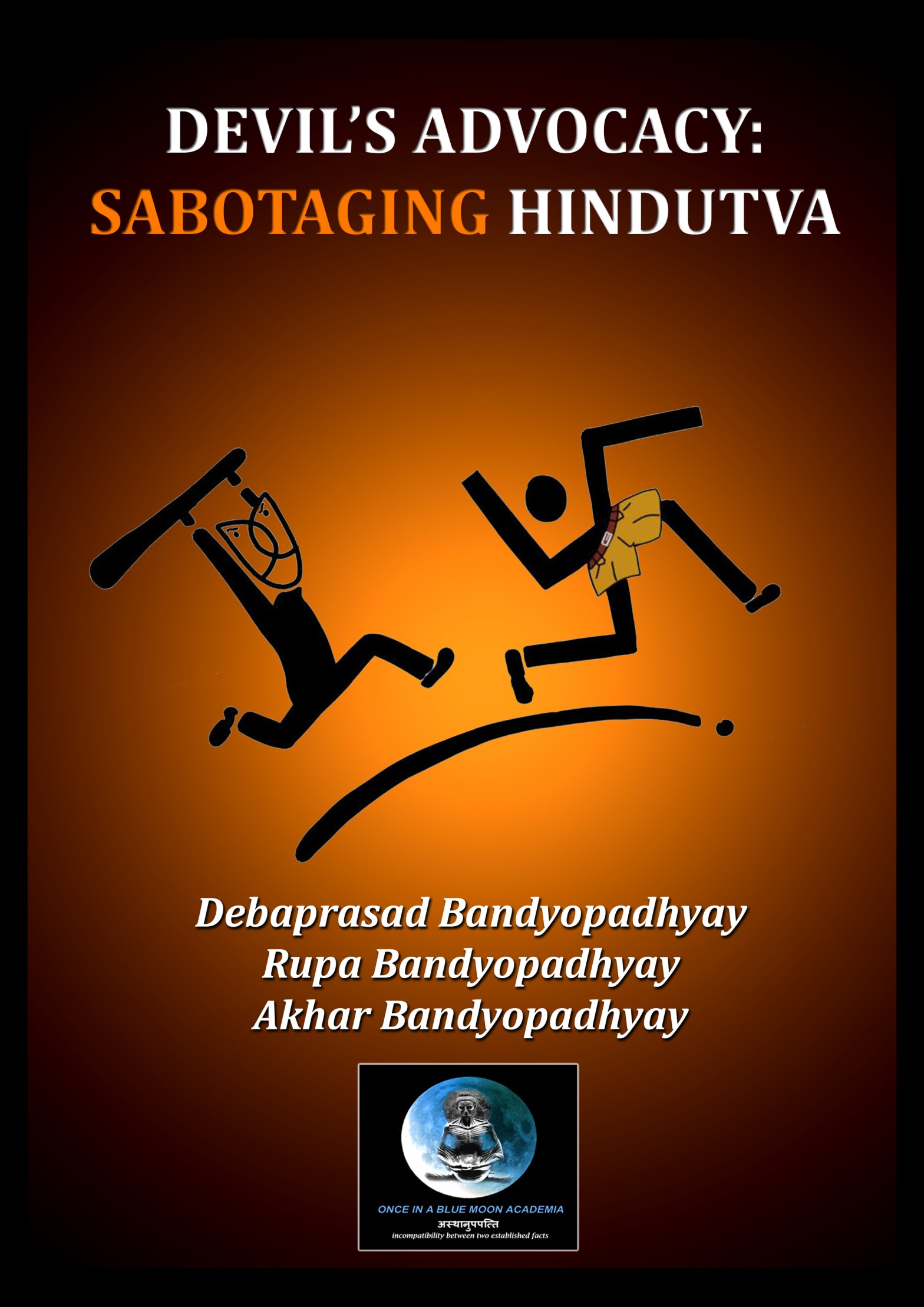
Posted on 06/12/2022 Updated on 23rd September, 2024 (GMT 17:55 hrs) INTRODUCTORY REMARKS Devil’s Advocacy: Sabotaging Hindutva is an anti-fascist critique of the ideological and political underpinnings of Hindutva, the extremist nationalist ideology in India. The authors critically examine the contradictions inherent in Hindutva, which attempts to impose a uniform Hindu identity despite India’s immense religious,Continue reading “DEVIL’S ADVOCACY: SABOTAGING HINDUTVA”
THE DURGA VAHINI: A STUDY OF WOMEN IN HINDUTVA
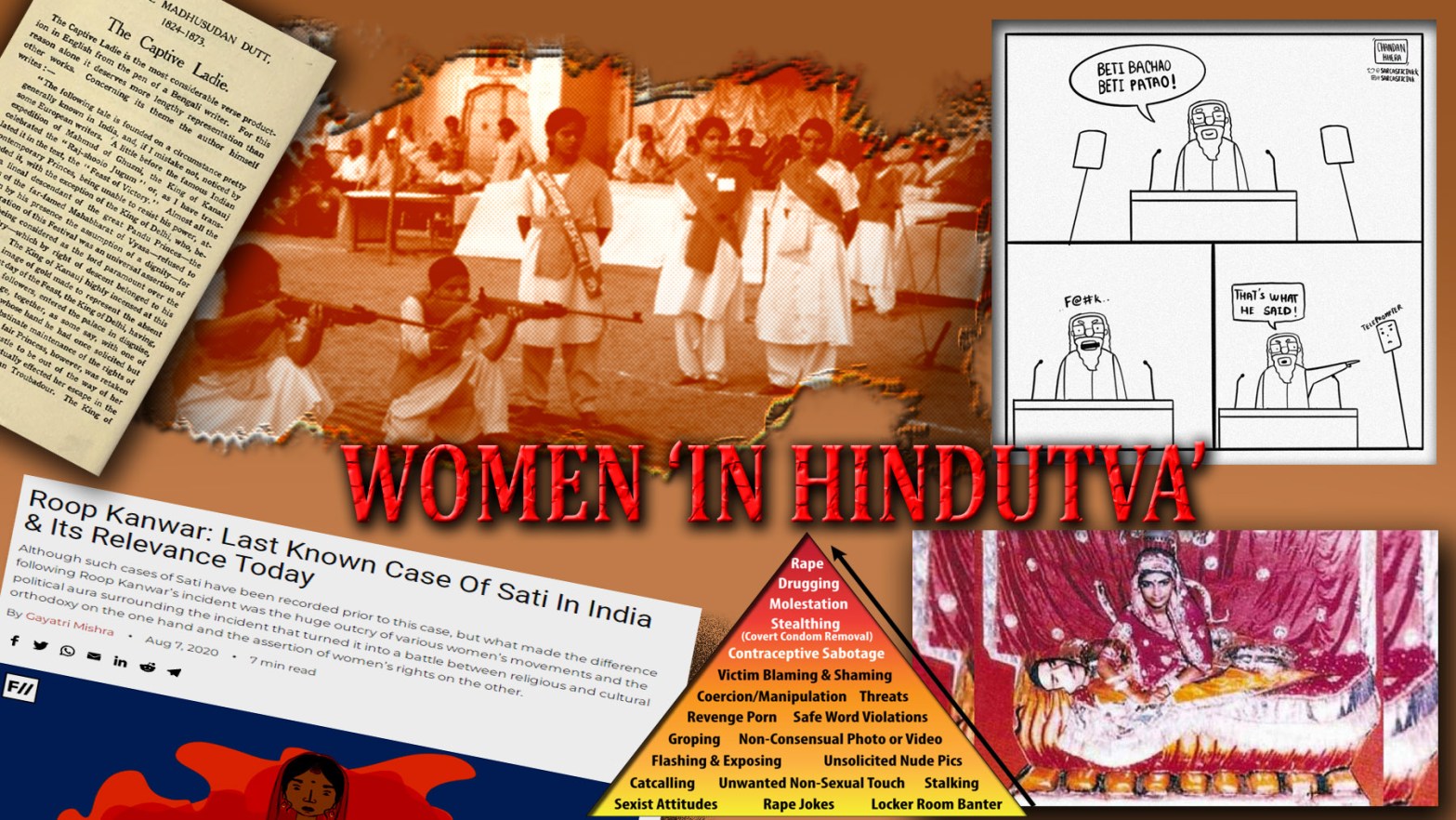
Posted on 12/12/2022 License: CC BY 4.0 DOI: 10.13140/RG.2.2.19382.57920 ABSTRACT This paper-letter strives to sarcastically subvert the perception of the second sex by the members of the Hindutva camp by applying the Brechtian theatrical method as well as the Derridian Militant Deconstruction. The paper-letter specifically focuses on the Durga Vahini, the female wing of theContinue reading “THE DURGA VAHINI: A STUDY OF WOMEN IN HINDUTVA”
 Once in a Blue Moon Academia