

The article discusses the role of economic hitmen, as outlined by John Perkins, Eric Toussaint and other theorists, in manipulating developing nations for financial gain. These individuals exploit countries through excessive loans, leading to debt traps and policies favoring multinational corporations. The piece connects these actions to global economic institutions like the World Bank, IMF, and WTO, highlighting their influence in shaping neo-colonial economic systems. It also examines India’s neoliberal policies since the 1990s, citing key figures who facilitated these strategies.
Category Archives: Ecosophy
OBMA’s initiative “Ecotopians of Alternity” (EOA) responds to the contemporary crises of the natural environment, crises that expose the deepened hyper-separation of human beings from the natural world and/or other-than-human life forms. EOA underscores how the Global South disproportionately bears the burden of a so-called first-world consumerist lifestyle, alongside a debt-ridden developmental paradigm that enslaves minds, bodies, and ecologies. Rather than the term ecology, EOA activists adopt the concept of ecosophy—coined by the Norwegian philosopher Arne Næss—to signify the interrelated and (w)holistic nature of today’s polycrisis, encompassing environmental, social, political, and psychological dimensions. In place of extractivist modernity/coloniality, EOA envisions localized, small-scale, decentralized, low-energy societies—ecological utopias or ecotopias—as the ideals to be cherished and pursued.
Post-Mortem of Parliamentary Democracy and What Is Still To be Done?

This article, published on June 8, 2024, conducts a critical examination of parliamentary democracy, with a likely focus on India’s post-2024 election landscape. It dissects systemic challenges, such as institutional erosion, political polarization, or governance inefficiencies, that undermine democratic processes. The analysis highlights key events or policies contributing to these issues. Proposing a path forward, the article outlines actionable reforms to strengthen democracy, including enhancing transparency, fostering inclusive dialogue, and reinforcing institutional checks. It underscores the urgency of collective action to revitalize parliamentary democracy’s efficacy and resilience.
Ecology, Economics and Elections: The Night Before…
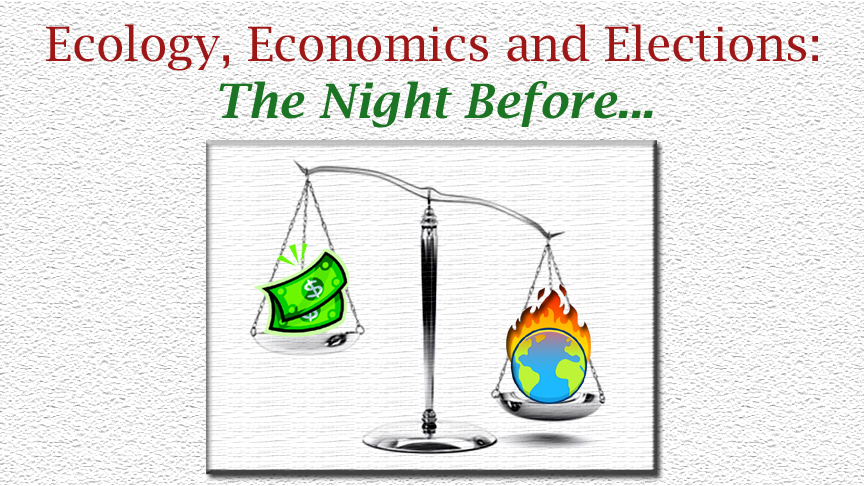
The article critiques the ecological and political consequences of development under the current Indian regime, especially around the 2024 elections. It highlights fatal heatstroke cases among election officials, linking them to climate change and post-vaccination vulnerabilities. Major projects like the UP pilgrimage road (involving massive deforestation), the Mumbai-Ahmedabad bullet train (destroying mangroves), and the Kashi corridor (erasing heritage for religious tourism) are cited as examples of state-driven environmental destruction. The authors warn of a drift toward electoral autocracy, prioritizing economic-political gains over ecological and democratic well-being.
In Defence of the Ladakh Movement: A Faint Voice of Solidarity During the Ominous Hour of Climate Emergency

The article defends the Ladakh movement as a crucial voice against environmental degradation and climate change, particularly in the face of the Himalayan region’s vulnerabilities. It highlights the importance of indigenous and local perspectives in climate activism, emphasizing Ladakh’s ecological sensitivity and the dangers posed by unchecked development. The piece also calls for solidarity with grassroots movements that prioritize sustainable and culturally sensitive practices, urging broader attention to the climate emergency’s impact on marginalized communities.
The Pharmacological Garden of Paramavaiṣṇava Ajay Piramal: A Case Study

The paper engages itself with the question of the predominance of Pharmaceutical industries in over-medicalizing the health of human and non-human populations as well as the supposed “nature”. It focuses on a specific case-study from a village named Digwal, Telangana, India, and performs a Foucauldian investigative discourse analysis on the text in relation to an environmental terrorist big-Pharma headed by business tycoon Mr. Ajay Piramal. The very legitimacy of the medical space and gaze is thoroughly critiqued in the course of the paper by bringing into attention the inevitable failure of the simulated Summersian project of “Let them eat pollution”.
Obituary of M. S. Swaminathan: The Proliferation of Death Industry

The article critiques the legacy of M. S. Swaminathan, highlighting his role in promoting chemical-intensive agriculture during the Green Revolution. It draws parallels between post-World War II repurposing of wartime chemicals into pesticides and fertilizers, suggesting that such practices have commodified life and contributed to environmental degradation. The authors argue that this approach to agriculture has transformed seeds into mere commodities, undermining their natural essence, and liken this to broader themes of exploitation and depersonalization in modern industrial practices.
Ajay Piramal: How Many Times Are You Seeking “Blanket” Stay Orders?
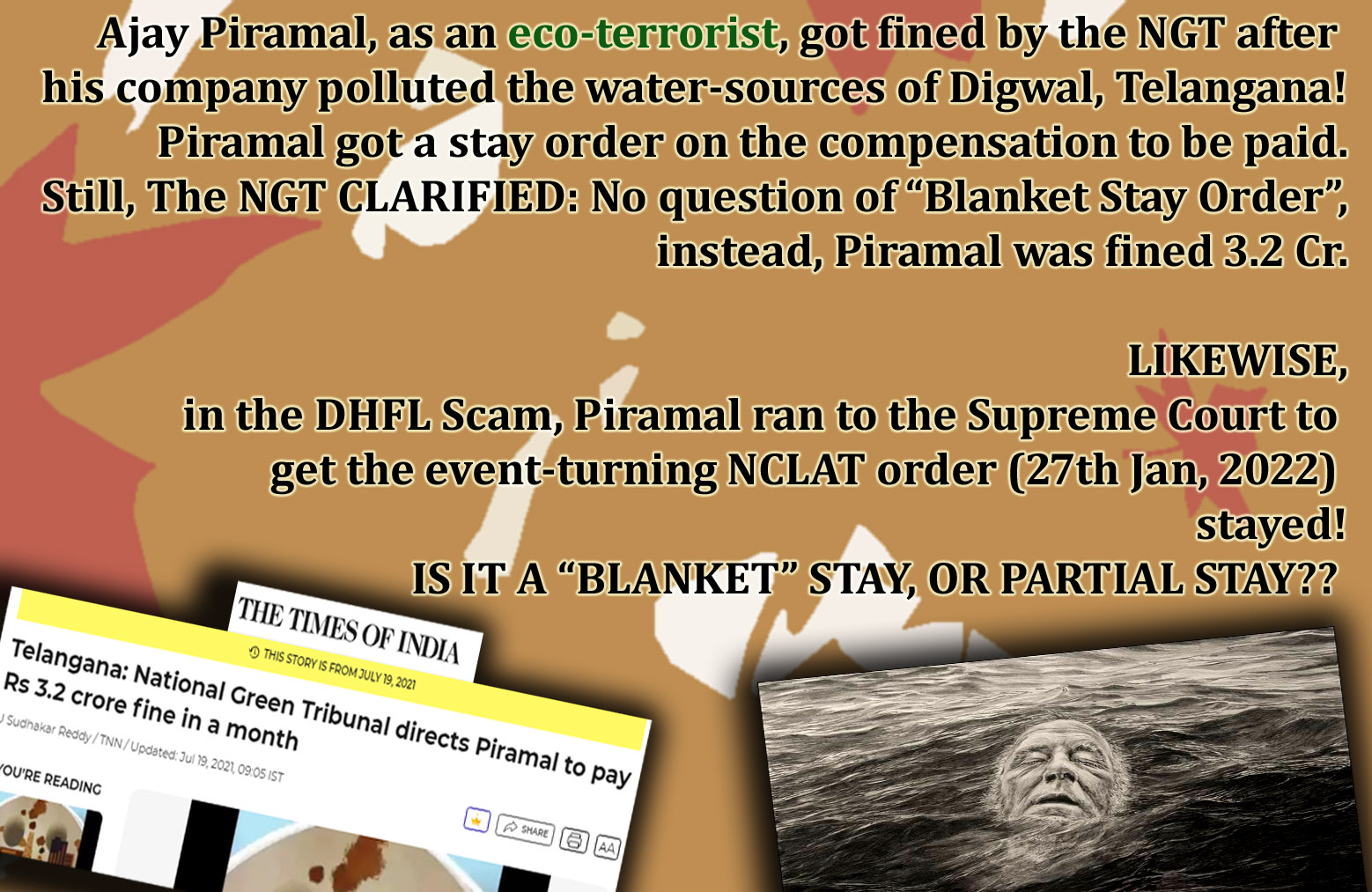
This article critically examines Ajay Piramal, portraying him as a hypocritical “Paramavaiṣṇava” (a non-violent Vaishnava devotee) who acts as an “Eco-Terrorist” by exploiting and damaging natural and financial ecosystems. It highlights his alleged dual personality, contrasting his philanthropic image with violent environmental violations and financial manipulations. Two key instances are discussed: (1) Piramal Enterprises’ pollution of groundwater in Telangana, fined by the National Green Tribunal (NGT), where a partial stay order was misinterpreted as a “blanket” one; and (2) his Supreme Court stay on the NCLAT’s 2022 ruling invalidating his acquisition of DHFL as illegal and irregular. The piece accuses Piramal of repeatedly seeking stay orders to evade accountability, links his actions to cronyism with figures like Mukesh Ambani, and references his wife’s alleged illegal tree chopping. It positions these as part of broader critiques in prior articles, emphasizing the suffering of human and non-human victims while questioning the ethics of wealth concentration in India.
ENVIRONMENTALISM: THE ROLE OF SOCIAL SCIENCE AND HUMANITIES (ECO-ECONOMICS OR GEO-SOCIOLOGY?)
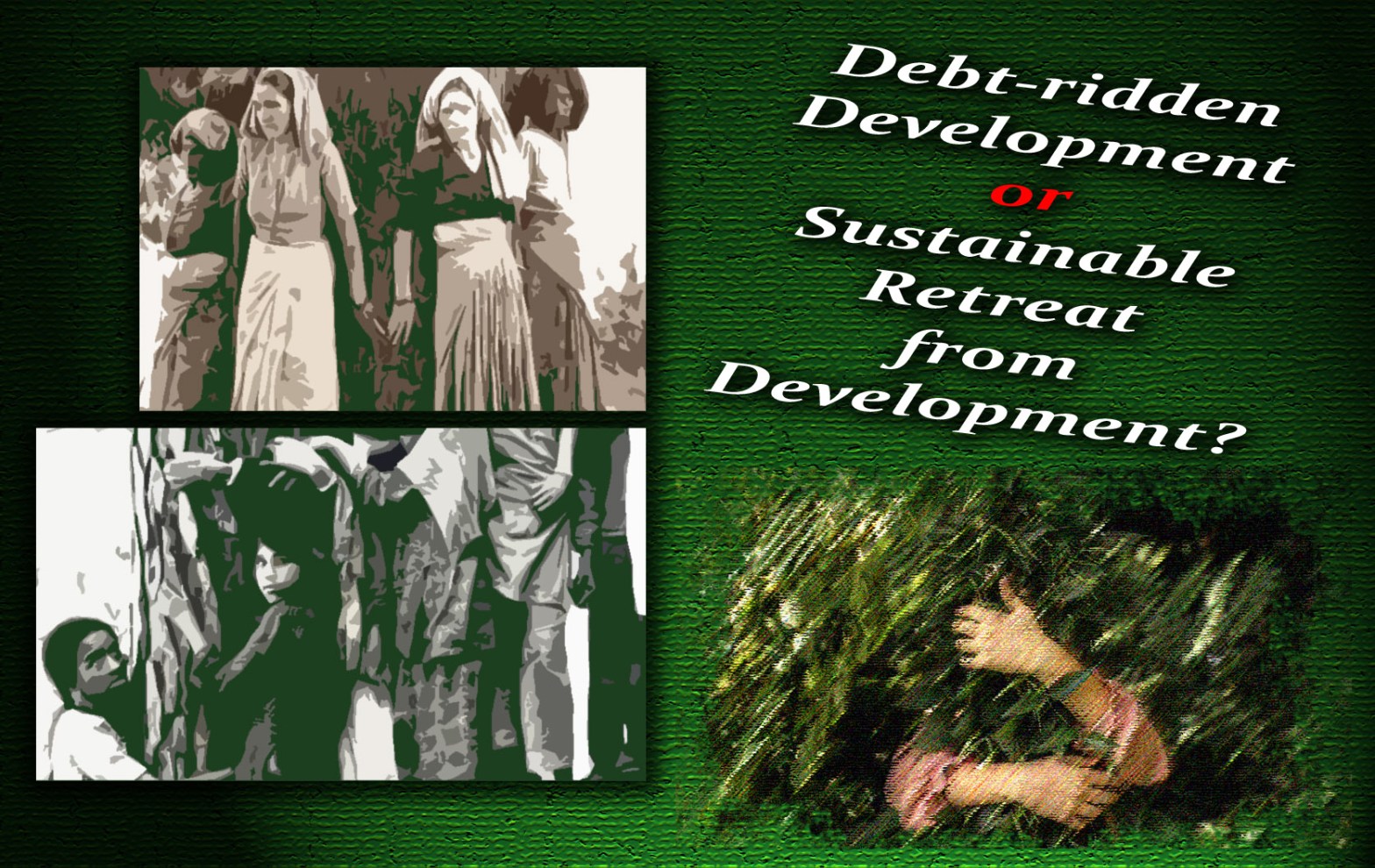
The following papers, mainly written in Bangla, concentrate on the roles of social science and humanities in the domain of specialized environmental science. If the disasters caused by climate change are believed to be inevitable fact, as predicted by some of the scientists, what shall be done by the social “engineers” (!)? Is it not the moral responsibility of the organic intellectuals, barring technical intelligentsia, to leave their mechanical reproduction of cultural capital and join their hands to reduce the poisonous effects of contemporary military-industrial society?
Requesting for the inclusion of the climate agenda in the Bharat Jodo Yatra: a letter to Rahul and Priyanka Gandhi

In a letter dated November 20, 2022, authors Debaprasad Bandyopadhyay and Akhar Bandyopadhyay urged Rahul and Priyanka Gandhi to incorporate climate action into the Bharat Jodo Yatra. They highlighted two critical issues: the escalating climate crisis driven by human activities since the Industrial Revolution, and the deteriorating financial system marked by corporate bankruptcies and economic disparities. The authors advocated for a shift towards sustainable development inspired by Gandhian principles of ‘gram swaraj’ (village self-rule) and Rabindranath Tagore’s concept of ‘samavaya’ (harmony), emphasizing grassroots empowerment and ecological balance. They also called for climate legislation to address environmental challenges and promote economic equity.
EXPOSING PIRAMAL REALTY: KRISHNARAJ RAO

The article “Exposing Piramal Realty: Krishnaraj Rao” highlights several concerns regarding Piramal Realty’s business practices:
One-Sided Agreements: The draft agreements for projects like Piramal Revanta Towers are criticized for being heavily skewed in favor of the developer. These contracts grant PRL Developers Private Limited extensive rights over land development, limiting flat-buyers’ ability to raise objections. Exit clauses are also noted to favor the developer, undermining buyers’ rights.
Environmental Impact: The article labels Mr. Ajay Piramal as an “eco-terrorist,” accusing him of exploiting nature without regard for biodiversity. It references environmental concerns associated with Piramal’s pharmaceutical plant in Digwal, Telangana, and criticizes real estate developments in ecologically sensitive coastal areas like Mumbai, which face risks from climate change and rising sea levels.
Legal and Ethical Issues: The piece suggests that law enforcement and the judiciary may not always protect flat-buyers from exploitation by builders. It mentions that when police mediate between defrauded buyers and builders, resulting agreements often contain loopholes allowing builders to evade accountability. Builders, including Piramal Realty, are accused of proposing out-of-court settlements to avoid civil litigation, which may be ineffective or detrimental to buyers’ interests.
The article includes videos by Krishnaraj Rao and a press conference by Siddarth Jaaju to support these claims.

