
এখানে সময়ের প্রয়োজনে, না-রাষ্ট্রের আশায়, অঘোষিত জরুরি অবস্থার মধ্যে দুটো লেখা সংকলিত করা হলো। বলা বাহুল্য, দুটো লেখাই বর্তমান ভারতবর্ষের রাজনৈতিক পরিস্থিতি আর দুরাশা নিয়ে সুরাশা করা হয়েছে। ভাজপার আইটি সেল মিথ্যে প্রোপাগাণ্ডা করে। উৎপল দত্ত উল্টে বলতেন, “আমি প্রোপাগান্ডিস্ট”। আমরা তাঁকে অনুসরণ করেই আরেকটু বাড়িয়ে বলছিঃ আমরা কাউন্টার-প্রোপাগান্ডিস্ট। ধরে নিন এই গোটাটাই একখানা রাজনৈতিক ইস্তেহারমাত্র, যেখানে ভেন্ন ধাঁচের আকাদেমিয়া সেঁধিয়ে আছে।Here, compelled by the urgency of the moment and sustained by the hope of a no-state imagination, two pieces have been brought together amid an undeclared emergency. Needless to say, both writings engage with the present political condition of India and attempt to wrest hope out of despair. The BJP’s IT cell manufactures false propaganda. Utpal Dutt, by contrast, would turn the charge on its head and declare, “I am a propagandist.” Following his lead—and pushing it a step further—we say: we are counter-propagandists. Consider this entire exercise as nothing more (and nothing less) than a political manifesto, into which a distinctly non-mainstream strand of academia has quietly seeped in.
Category Archives: Ecosophy
From Issuer Pays to Polluter Pays: Unearthing Piramal Pharma’s Credit Ratings
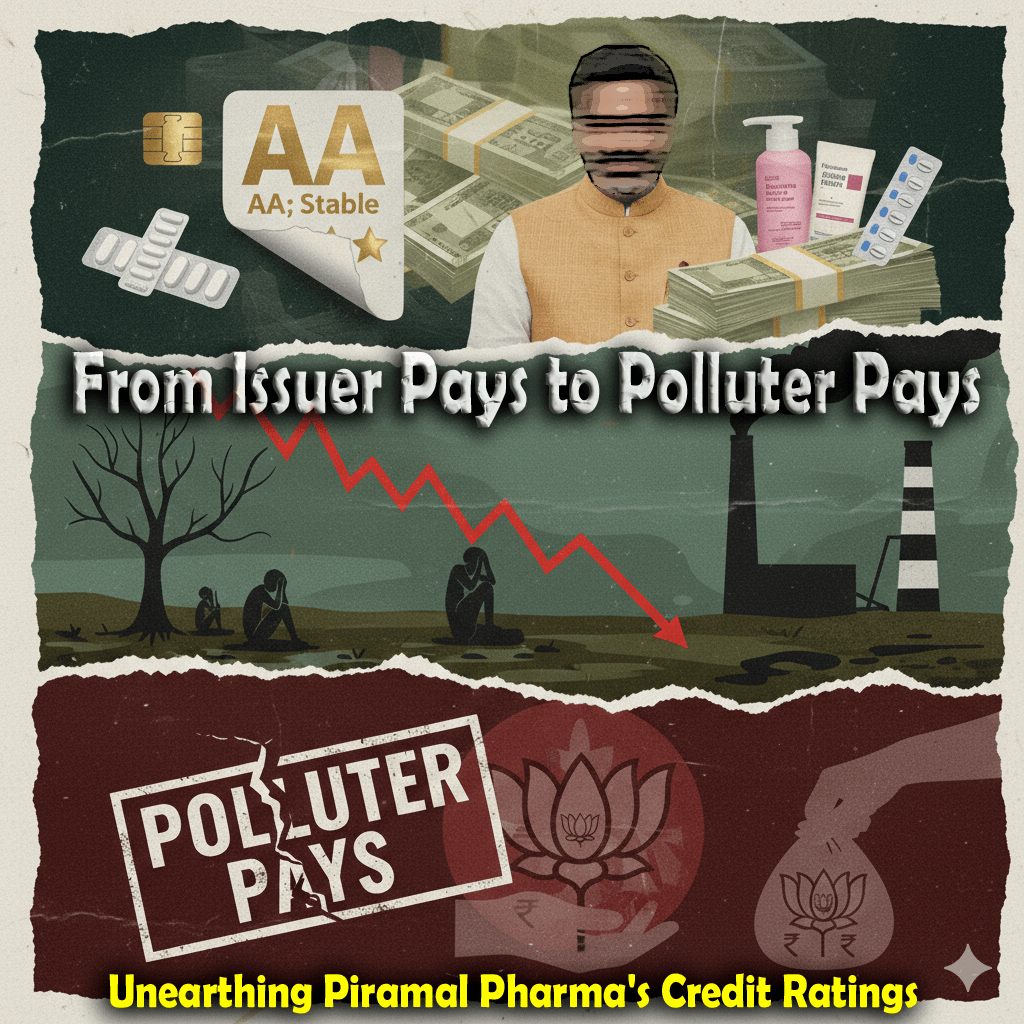
Piramal Pharma Limited (PPL), demerged from Piramal Enterprises in 2022, enjoys high investment-grade credit ratings (e.g., CARE AA; Stable upgraded July 2025) under the issuer-pays model, which critics claim manufactures trust to enable cheap borrowing despite severe financial strain—Q2 FY26 revenue down ~9% to ₹2,044 crore, EBITDA crashed 44%, net loss ₹99 crore, high leverage (~3x net debt-to-EBITDA), weak interest coverage, and share price falling ~19% from ₹204 (July 2025) to ~₹166 (mid-January 2026). This rating resilience contrasts sharply with the alleged “Digwal massacre” at its Telangana plant: repeated effluent dumping (comprehensively reported by 2018) contaminating water/soil, devastating farmland, and linked to spikes in kidney failures, respiratory issues, and cancers among villagers; despite NGT’s ₹8.3 crore polluter-pays fine (2019), TSPCB closure orders, and weak enforcement, SEBI deemed events non-material post-demerger, reportedly shielded by Ajay Piramal’s substantial BJP donations and crony ties. Echoing the Piramal Finance rating controversy, PPL’s playbook—restructurings to quarantine liabilities, OTC pivot to mask industrial risks, and paid-for “stable” ratings—externalizes financial, environmental, and human costs onto investors and poisoned communities, highlighting the urgent need to dismantle the ratings oligopoly and opaque political funding that sustain such systemic expropriation.
OBMA Statement on Neo-Imperialist Violence: Iran, Venezuela, Palestine
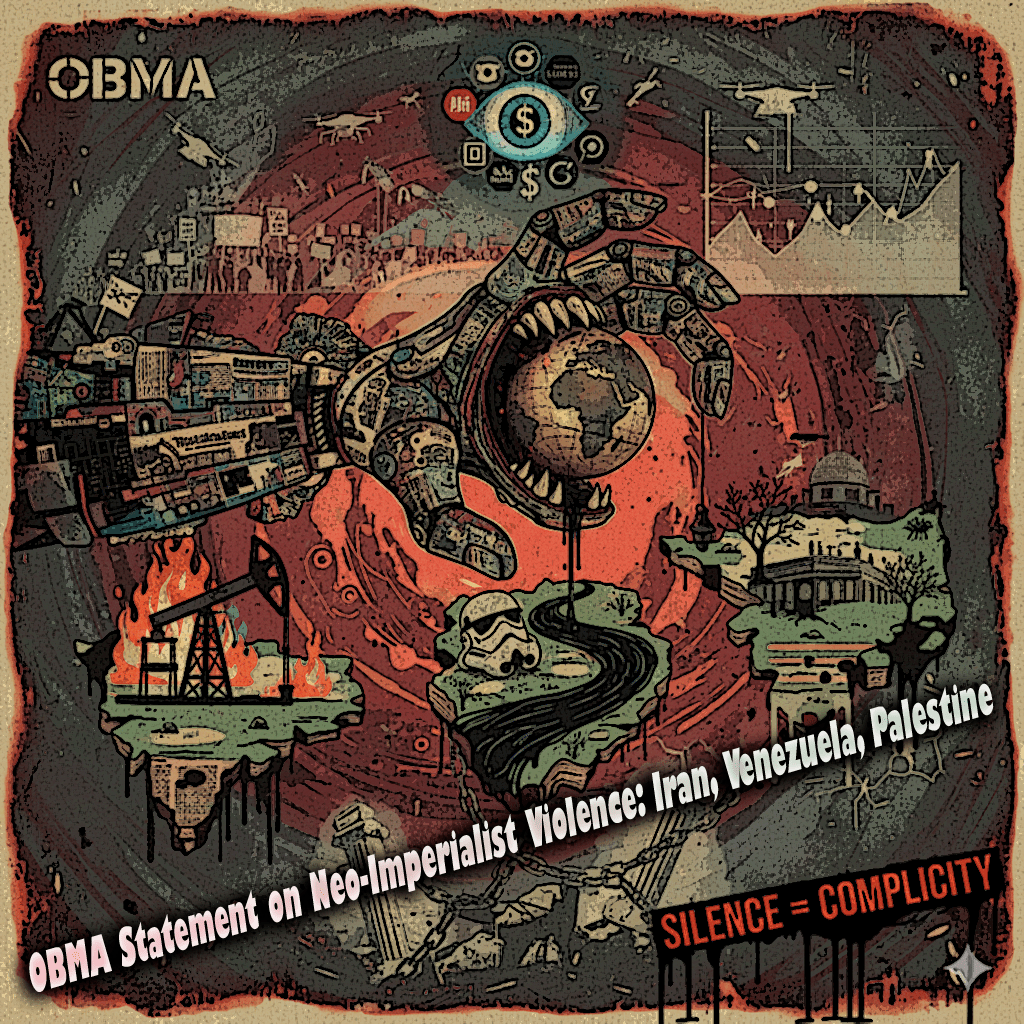
This statement asserts OBMA’s condemnation of neo-imperialist violence in Iran, Venezuela, and occupied Palestine, framing these crises as interconnected expressions of cannibalistic capitalism. It exposes how state repression, militarization, sanctions, and fossil-fuel geopolitics enable genocide, ecocide, and resource plunder. Rejecting technocratic and reformist fixes, OBMA affirms planetary justice, anti-imperialist solidarity, and life-centred transformation through collective struggle and ecological ethics.
End of Year Bombshell: How BJP-NDA-Hindutva Failed India – A Scathing 2014-2025 Indictment
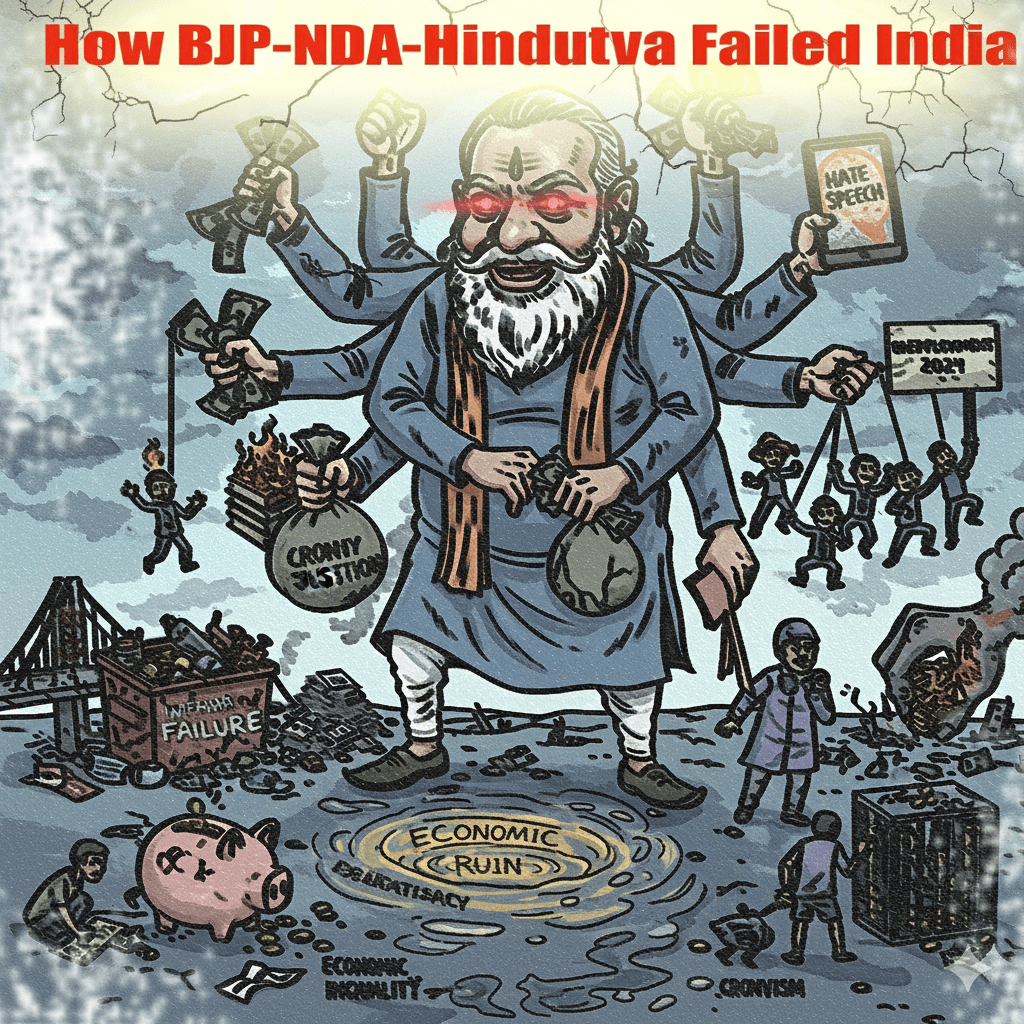
As 2025 draws to a close, this comprehensive dossier documents not a series of discrete policy missteps, but a systemic transformation of governance in India (2014–2025): a shift from democratic accountability to political executive dominance; from evidence-based policymaking to manufactured narrative control; from social protection to structural precarity. Spanning the economy, federalism, data integrity, labour, the natural environment, digital freedoms, education, public health, cultural institutions, civil liberties, and fundamental rights, the record reveals enduring patterns of power centralization, calibrated opacity, selective enforcement, and institutional hollowing—accompanied by crony consolidation and the routinized criminalization of dissent. Democratic indicators decline as surveillance infrastructures expand, grassroots welfare erodes, and truth itself is rendered an object of administrative management. This is not a partisan ledger, but a counter-archive: an evidence-grounded indictment that affirms accountability as the necessary cost of power. In closing the year, it calls for a civic reckoning—not to foreclose debate, but to reclaim and restore it.
Of Debt and Delusion: India’s $747 Billion Burden and the Mirage of Neoliberal GDP Fetishism
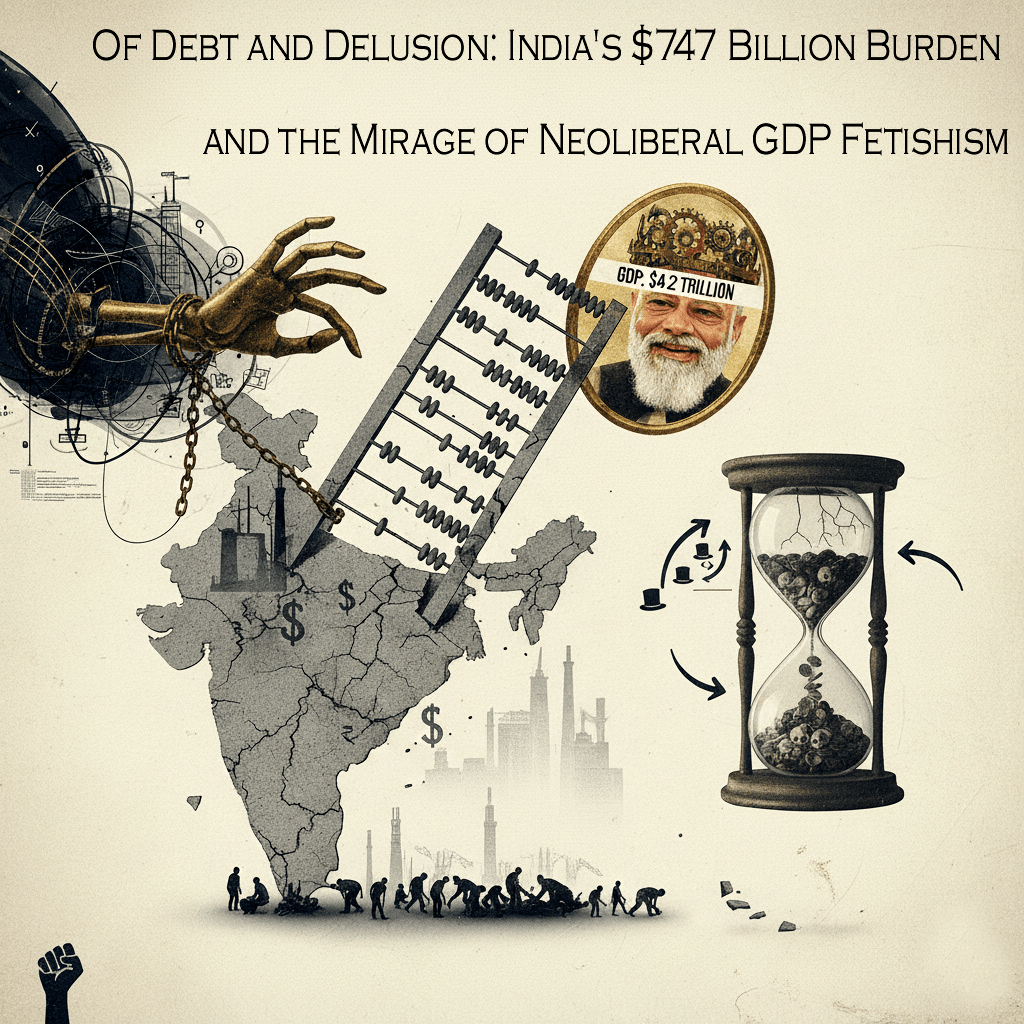
This article critically examines India’s external debt surge to approximately USD 747 billion by mid-2025—a near-doubling since 2014—as a hallmark of crony capitalism under the Modi regime, where liberalized external commercial borrowings (ECBs) and public sector bank hollowing facilitate upward redistribution, oligarchic consolidation (favoring conglomerates like Adani and Ambani), and asymmetric risk socialization amid volatile private dominance (over 77% non-government), USD-heavy exposure (54%), and intergenerational burdens. Intersecting with GDP misreporting flaws (IMF C-grade accounts, unorganized sector proxies inflating growth) and colonial-era inequality peaks (top 1% holding 40% wealth), this financialized precarity—diagnosed via Toussaint’s World Bank “never-ending coup” and Lazzarato’s “indebted man”—enforces neoliberal discipline, commodifies survival, and erodes sovereignty despite orthodox “sustainability” metrics. Countering GDP fetishism’s ontological violence, it invokes Mahabharata’s aṛṇī ethics of non-indebtedness alongside nisargaṛṇa stewardship, proposing pluriversal alternatives like Felber’s Common Good Balance Sheet (non-commensurable axes of dignity, solidarity, ecology), A. K. Dasgupta’s Economics of Austerity, Raworth’s Doughnut Economics, Norberg-Hodge’s localization, degrowth/post-growth sufficiency, and gift/moneyless economies to reclaim community sovereignty from predatory entanglement toward justice, reciprocity, and unburdened flourishing.
Remembering What “Definitions” Make Us Forget: A Statement on the Aravallis and the Politics of Ecological Erasure

The Ecotopians of Alternity (EOA) as part of the Once in a Blue Moon Academia (OBMA) Collective asserts that the current legal crisis surrounding the Aravalli mountain range is a deliberate act of “definitional erasure” that threatens the ecological survival of North India. By narrowing the definition of these ancient hills to landforms rising 100 meters or more, the state effectively excludes over 90% of the range—including critical lower ridges, scrub forests, and groundwater recharge zones—from legal protection. This is not a neutral administrative update but a strategic maneuver that renders ecologically vital terrain “invisible” to the law, thereby clearing the path for corporate mining and real-estate expansion. Drawing on the Indian philosophical concept of lakṣaṇa (defining something based on characteristic mark), the EOA argues that a definition based solely on height fails to capture the holistic reality of an ecosystem that stops desertification and sustains regional aquifers. This logic of reductionism mirrors a broader national pattern of prioritizing extractivist “developmental rationality” over indigenous lifeworlds and long-term climate resilience, as seen in projects from Great Nicobar to Hasdeo Arand. Against this regime, the EOA calls for a coordinated resistance that refuses to let life be reduced to “administrative residue,” demanding a lived ecological imagination that protects the Aravallis as an indivisible, living system rather than a collection of disposable units.
Letters of Blood and Fire: “Terrorism”, Dispossession, and the Distorted Mirrorings of Domination
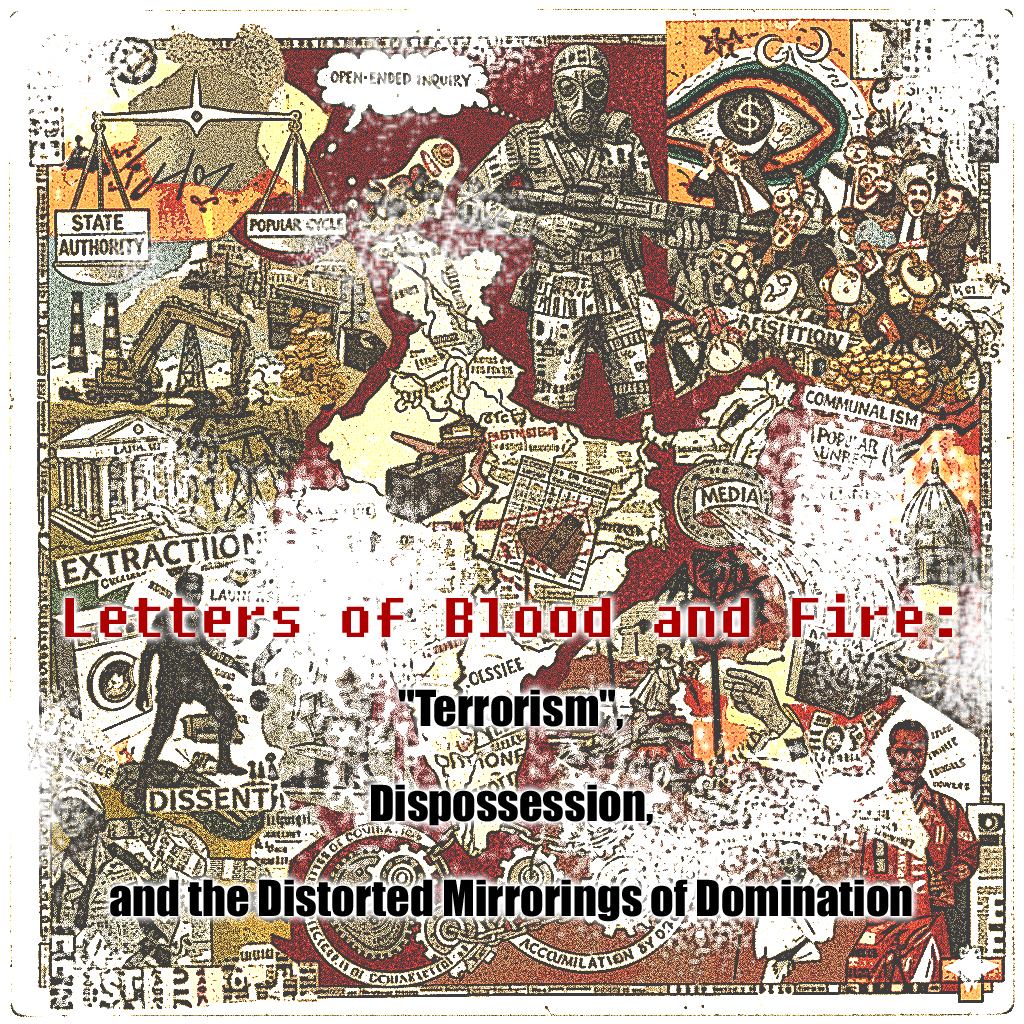
This article critically dissects “terrorism” as a politically contested and asymmetrically applied category, wielded to delegitimize subaltern and non-state violence while normalizing far greater state and corporate terror through legal, discursive, and institutional mechanisms. Drawing on an anarchist methodological lens amid India’s contemporary Islamophobic conjuncture, it provisionally defines terrorism as deliberate civilian-targeted violence intended to induce widespread fear for political, ideological, or social ends, exposing how state practices—from aerial bombings to militarized dispossession—evade the label via sovereign privilege. Integrating Marx’s primitive accumulation, Harvey’s views on accumulation by dispossession, and Toussaint’s analysis of debt-driven imperialism, the analysis frames terrorism as a systemic instrument embedded in neoliberal resource extraction, where conflict in mineral-rich zones (Afghanistan’s lithium, India’s Adivasi belts, Congo’s coltan) functions as both symptom and enabler of corporate plunder, preempted by advanced technologies like remote sensing and veiled by selective narratives that hyper-amplify “Islamic terrorism” while muting Hindutva extremism, Zionist settler violence, and BJP’s hypocritical Taliban engagement amid alleged terror-funding ties. Employing Sāṃkhya’s anyonyapratibimba to reveal power’s projection of its own predation onto the “other,” and balancing economic determinism with religion’s irreducible psychological role in motivating warriors, the piece ultimately reframes terrorism not as pathological or civilizational but as an intrinsic modality of unequal global orders, calling for discriminative clarity (viveka) to dismantle its intertwined logics of capital, technology, ideology, and domination.
Anatomy of Democratic Unmaking: An Open Letter on India’s Transparency, Human Rights, and Accountability Crises

Submitted by activists, whistleblowers, and citizens associated with Once in a Blue Moon Academia (OBMA), this appeal documents a systematic regression in transparency, accountability, civic space, and human-rights protections in India from 2014 to 2025 under successive BJP-led governments. Key manifestations include: declining global rankings on corruption (CPI 96/180 in 2024), press freedom (151/180 in 2025), and rule-of-law indices; erosion of the RTI Act through 2019 amendments, administrative obstruction, and violence against over 100 RTI activists; the impending GANHRI downgrade of the NHRC from “A” to “B” due to executive capture and neglect of systemic violations, exemplified by its handling of the opaque DHFL insolvency harming lakhs of small depositors; electoral-finance opacity via Electoral Bonds and post-2024 anonymous channels; credible allegations of large-scale voter deletions and manipulations (2024–2025); shrinking civic space through UAPA, sedition, PMLA, FCRA, and SLAPP suits; pervasive surveillance (Pegasus, Aadhaar profiling, Sanchar Saathi) with weak data-protection safeguards; and deepening crony-capitalist capture of media, regulators, and public assets. Petitioners urge OHCHR, Amnesty International, HRW, Transparency International, and allied bodies to monitor, investigate, report, provide technical support, protect defenders, and press for urgent reforms to halt India’s slide toward electoral autocracy and restore constitutional guarantees of transparency, accountability, and human rights.
Mukesh Ambani and the Reliance Empire: A Chronicle of Controversies

This December 2025 dossier by OBMA chronicles Mukesh Ambani and Reliance Industries as the distilled essence of India’s crony-capitalist oligarchy: a $108-billion empire built not on innovation but on systematic resource plunder (KG-D6 gas “migration” worth billions still sub judice), predatory telecom consolidation (Jio’s zero-pricing massacre followed by tariff hikes and 40%+ market monopoly), regulatory capture via massive BJP electoral-bond funding, environmental devastation masked by greenwashed spectacles like the refinery-adjacent Vantara menagerie, and dynastic consolidation through the Ambani–Piramal marriage alliance, offshore tax havens (Stoke Park’s “charitable” conversion), and the spiritual whitewashing provided by the controversy-shadowed Radhanath Swami. From insider-trading settlements and GST wrist-slaps to the deliberate silencing of critics via Network18 ownership and legal intimidation, every scandal—from Antilia’s disputed Waqf land to Nita Ambani’s conspicuous silence during Vinesh Phogat’s Olympic heartbreak—reveals the same pattern: profit privatized, risk and ecological burden socialized, accountability deferred indefinitely by a captured state and judiciary that moves at lightning speed for the powerful and glacial pace for everyone else. In Modi’s “Viksit Bharat,” Ambani is not an outlier but the archetype: the apex predator of a political economy where billionaires do not merely influence the rules—they write them, enforce them, and, when necessary, transcend them with impunity.
ধরিত্রীনির্ভর যাপনঃ সহজ জীবনের পাঠ ও শান্ত বিপ্লব (Earth-Centric Living: The Lessons of Simple Life and the Quiet Revolution)

Pathik Basu advocates for an “Planet/Earth-Centric Living” philosophy as a crucial response to both contemporary ecological and social crises, emphasizing a shift away from money-centric existence towards interdependence with nature and community. Based on his practical experience farming in small, decentralized units (even as small as 250 sq ft), Basu proposes a living framework where families can achieve self-sufficiency in food, nutrition, and health—producing daily vegetables, fruit, fish, and eggs organically—by treating “one’s waste as another’s nutrition.” This practical application is paired with a social call to action he terms “Tree, Bird, Fifteen,” urging individuals to nurture the environment in their immediate surroundings and strengthen bonds of trust and support with their 10-15 closest kins, thereby cultivating a network of love and mutual aid that forms the foundation of a prosperous, non-violent, and aesthetically grounded society.
 Once in a Blue Moon Academia