

This petition-letter addresses the ethical, medical, and financial practices of the Piramal Group, linking the continued marketing of Tetmosol (containing Monosulfiram) — an obsolete, unapproved, and potentially harmful dermatological product absent from global pharmacopoeia — with the structural injustices of the DHFL resolution that allegedly stripped ordinary depositors of their life savings. By highlighting toxicity concerns, regulatory loopholes, misleading advertisements, and the export of outdated drugs to vulnerable populations in the Global South, the letter frames Tetmosol as a metaphor for systemic exploitation: superficial relief masking deeper harm, profit extracted from public vulnerability, and corporate narratives of “conscious capitalism” greenwashing exploitation in both health and finance. It calls for urgent regulatory review by CDSCO, WHO, and international agencies, demands alignment with global treatment standards, and urges cross-sectoral accountability where medical and financial mis-selling are recognized as analogous public harms requiring restitution.
Category Archives: Activities
Our current activities concentrate on the case of Dewan Housing Finance Corporation Limited (DHFL), India. While exploring and investigating this particular case, we have found that India’s crony ruling party, gangsters, banksters as well as religious gurus and institutions are involved in the same. Therefore, to break such collusion, we have decided to deploy an “all out attack” on the existing paradigm of neoliberal market economy as well as market fundamentalism. ***DISCLAIMER: We have collected all the data from available sources on the internet as given on the official portals of media houses, websites and institutions and organizations. We are not first-hand reporters and hence, we are not liable for any inadvertent error or value-loaded statements made on those portals. All propositions have to be viewed as descriptive assertions on the given point of concern.***
Piramal, Polycrol, Pesticides, and the Politics of Stomachs

This letter critically examines Polycrol, an over-the-counter antacid by Piramal Pharma, as both a medical product and a metaphor for systemic socio-economic and political injustices in India. While marketed for short-term relief of digestive discomfort, Polycrol contains aluminium compounds whose chronic ingestion poses documented neurotoxic, skeletal, renal, and haematological risks, yet long-term clinical evidence of efficacy is absent. The correspondence situates the product within broader “pharma-political” dynamics, linking corporate profiteering, regulatory laxity, celebrity endorsements, and pesticide exposure to a cultural normalization of self-medication. Drawing parallels between the symptomatic relief of Polycrol and the quick-fix, extractive logic of crony capitalism—as exemplified in the DHFL financial scandal—the letter calls for regulatory transparency, public health accountability, and corporate ethical responsibility, arguing that systemic reform, rather than temporary palliatives, is essential to safeguard health, justice, and societal well-being.
The Pharma-Politics of Headache: Saridon, Piramal, DHFL

This letter to Mr. Ajay Piramal, framed through the metaphor of Saridon’s “triple action” composition, critiques the intersection of corporate power, judicial indulgence, and regulatory opacity in India. It juxtaposes the systemic injustices surrounding DHFL’s takeover with the ethical concerns of marketing a drug banned worldwide yet freely advertised in India. Paracetamol, Propyphenazone, and Caffeine are deployed symbolically to expose how legality masks long-term damage, structural power deepens inequity, and profit stimulation creates societal precarity. A chronology of judicial decisions highlights the asymmetry between corporate privilege and citizens’ prolonged struggles for justice. The letter denounces the collusion of commerce, law, and politics, invoking the concepts of iatrogenic harm and “medical nemesis” to underscore how quick fixes mask deeper crises. Ultimately, it appeals for accountability: transparent dialogue with DHFL victims, establishment of an independent redressal mechanism, alignment of pharmaceutical and financial practices with global safety norms, and the withdrawal of Saridon from the Indian market.
Keep Kolkata’s Roads Open, Safe, and Climate-Resilient (AN ONLINE MASS PETITION)

Kolkata, one of the world’s most densely populated cities, faces a critical urban crisis as its weak road network—covering only 6–7% of city land—struggles under massive congestion from festivals, religious events, political rallies, and private gatherings. This gridlock endangers lives by delaying emergency services, escalates economic costs, worsens air pollution and climate impacts, and violates the constitutional right to free movement. Case studies, including Red Road, highlight the risks of relying on ad hoc permissions in high-security zones. The city urgently needs regulated alternatives for public events, strict enforcement of road-use laws, climate-conscious urban planning, and promotion of sustainable celebrations to balance cultural vibrancy with safety, accessibility, and environmental resilience. This petition is initiated by the Fridays For Future India chapter, supported by the Kolkata unit.
When Hindutva Betrays Hindus: The Market Mask of Identity

This article presents a critical analysis of Hindutva as a political and economic project, arguing that its purported aim of protecting Hindu interests is a façade for market fundamentalism, crony capitalism, and authoritarian consolidation. Using the DHFL financial scandal as a case study, it demonstrates how ordinary Hindu investors and pensioners suffer losses while political insiders and corporate cronies benefit, exposing the betrayal embedded within the saffron narrative. Beyond economic exploitation, the piece highlights the systematic suppression of dissenting Hindu voices—eco-activists, reformist priests, and ascetics—whose advocacy for ecological balance, spiritual pluralism, and resistance to commodification has been marginalized or violently silenced. The article situates communal polarization, Islamophobia, and other engineered religious tensions as deliberate distractions that conceal the underlying agenda of capital extraction and consolidation of power. Through examples from domestic policy, foreign aid, heritage destruction, and environmental mismanagement, it contends that Hindutva endangers Hindu communities from within, revealing a profound contradiction between its rhetoric and its effects. The critique underscores that the issue is not religion per se but the instrumentalization of religious identity for neoliberal and authoritarian ends, culminating in a call for Hindus to recognize and resist Hindutva’s internal threats.
Joyful Festivals, Not Noise and Smoke in Kolkata and West Bengal (AN ONLINE MASS PETITION)

Kolkata, once the “City of Joy,” now faces climate fragility from rising seas, cyclones, and severe pollution. Festivals throughout the year amplify this crisis with high-decibel firecrackers, DJ systems, dazzling lights, and toxic idol immersions, worsening air, noise, and water quality. Despite strong laws and repeated court orders, lax enforcement and state subsidies for festival committees deepen unsustainable practices. The toll is stark—over 18,000 premature deaths annually from air pollution, alongside cardiovascular, respiratory, and mental health harms. This Fridays For Future (FFF) India petition calls for urgent enforcement of pollution laws, ending arbitrary state funding, ensuring just transition for firecracker workers, and promoting sustainable, culturally rooted celebrations that protect citizens, animals, and ecosystems.
Occupation Before Finality: How Piramal’s Takeover of DHFL Allegedly Subverted Due Process with BJP’s Institutional Enablement

The DHFL insolvency reveals how India’s ill-conceived IBC framework enabled “occupation before finality,” letting Ajay Piramal allegedly seize control despite pending appeals—turning depositors into guinea pigs in a neoliberal lab. Cobrapost exposed DHFL’s links to Dawood Ibrahim and Iqbal Mirchi networks, funnelling BJP donations as terror-financing in the name of political donations, while Piramal’s own Electoral Bonds, PM CARES, and Flashnet ties deepened the crony nexus with the BJP. What emerged was not resolution but reportedly an oligarchic lawfare, where judicial pliancy, executive patronage, and opaque financing converged into a paradigm of selective justice and political capture.
Ajay Piramal Exposed: DHFL, Crony Capitalism & Piramal Pharma Boycott (DIGITAL POSTERS)

The DHFL scam exposes alleged crony capitalism by Ajay Piramal, including undervalued acquisitions, insider trading, environmental violations, and SLAPPs against victims. Close ties to the BJP raise accountability concerns, while ordinary investors face massive losses. Citizens are mobilizing to demand justice and protect public health and financial security.
Sorry is Not Enough: Inside the 11th September Call Between OBMA and Piramal Finance

On 11 September 2025 (the DHFL Victims’ 9/11!!!), a phone conversation between Dr. Debaprasad Bandyopadhyay (OBMA) and Mr. Jitendra Wagh (Piramal Finance Ltd.) laid bare the unresolved moral and legal contradictions of the DHFL resolution. While Wagh reiterated corporate apologies and deferred responsibility to court rulings, Bandyopadhyay challenged the moral legitimacy of Ajay Piramal’s acquisitions—juxtaposing philanthropy, political donations, and lavish displays of wealth against the dispossession of DHFL victims. The dialogue exposed how legal frameworks and symbolic appropriations of Gandhi, Tagore, and the Gita serve to shield systemic financial abuse and crony capitalism under the BJP regime. By forcing Piramal Finance into reluctant acknowledgment, OBMA pierced corporate silence, reframing the DHFL struggle as a broader reckoning with India’s oligarchic order.
Non-Godi Media, This Is Your Wake-Up Call: The DHFL Scam
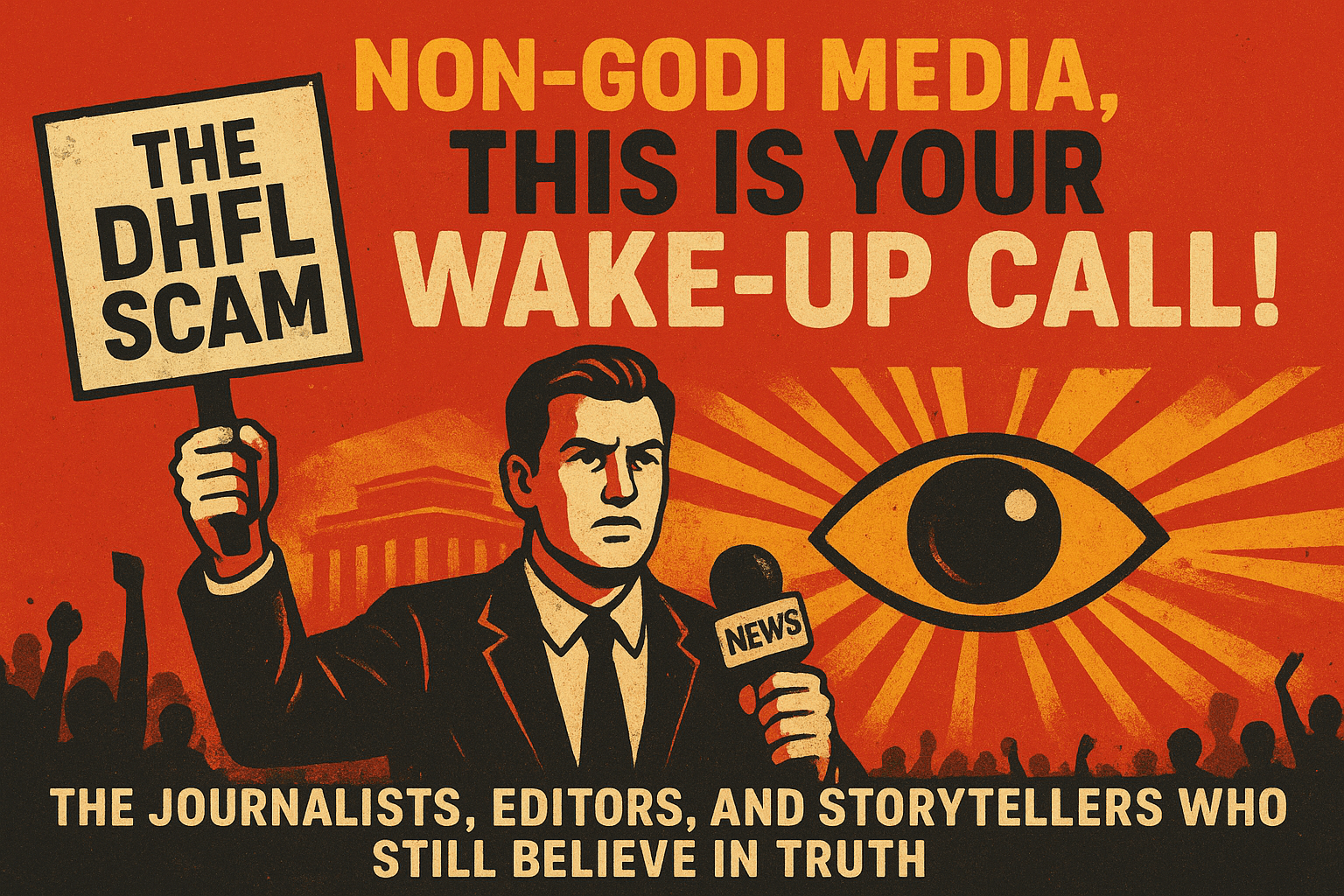
This video is a direct appeal to India’s non-Godi media to break their silence on the DHFL scam—a financial catastrophe that destroyed the savings of pensioners, defence families, employees, and small investors while powerful corporations, auditors, rating agencies, and regulators escaped accountability. It exposes how political donations, celebrity endorsements, fraudulent credit ratings, judicial opacity, and sweetheart deals under the Insolvency and Bankruptcy Code enabled the systematic looting of public wealth and its transfer to oligarchs like Ajay Piramal. By demanding fearless reporting, a Judicial Truth and Accountability Commission, real penalties for gatekeepers, anti-SLAPP protections, and restitution for victims, the video insists that silence from independent media is not neutrality but complicity in state-corporate betrayal.
 Once in a Blue Moon Academia