
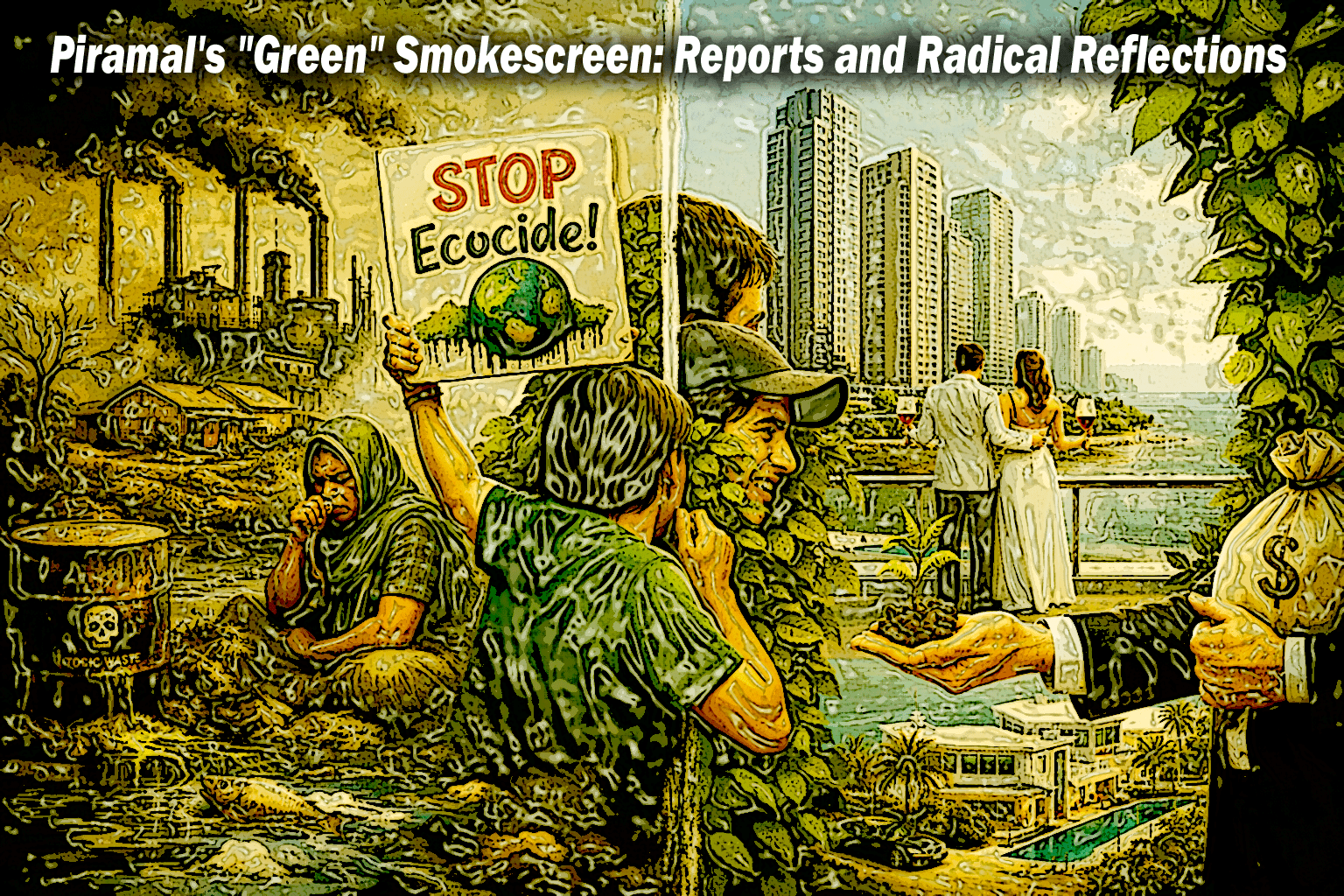
In a scathing indictment of 21st-century Indian philanthro-capitalism, billionaire Ajay Piramal’s empire exemplifies hegemonic subsumption of radical ecology: while Piramal Pharma faces verified allegations of chronic ecocide—groundwater poisoning in Digwal, Telangana (NGT ₹8.3 crore fine, net ₹3.2 crore paid as 0.09% of FY25 revenue; ongoing NGT case OA 1032/2024) and hydrochloric acid dumping in Dahej, Gujarat (GPCB closure, ₹1 crore fine, Supreme Court scrutiny in February 2026, swift interim resumption)—Piramal Realty markets ultra-luxury towers in Mumbai’s IPCC/CRZ high-risk flood zones (e.g., Piramal Mahalaxmi at ~3 m elevation) as “biophilic living” paradises with curated greenery, passive ventilation, and token sapling drives. The family’s own Worli sea-facing mansions (Gulita’s 50,000 sq ft diamond-glass palace) flaunt imported opulence with minimal genuine sustainability, embodying Lewis Mumford’s critique of architectural imperialism. Meanwhile, the Piramal School of Leadership’s Jaipur “walled garden” campus—shortlisted for the 2025 World Architecture Festival—parades biophilic design, passive cooling, and reduced concrete use while branding itself as the future “Piramal University” (a UGC violation) and indoctrinating 50,000–150,000 officials annually in appropriated radical terms like “regenerative agriculture” (Rodale/Shiva lineage), “One Water,” and “systems change” (Macy/Capra/Norberg-Hodge). Through Foucauldian selving, Piramal constitutes itself as “compassionate” and “regenerative” precisely by emptying anti-capitalist vocabularies. Backed by ₹85–88 crore in BJP electoral bonds (2019–2024), this discursive capture enables regulatory impunity amid slow violence on marginalized communities. The article calls for radical rupture: revenue-proportionate penalties, ecological restoration, de-subsumption of language, and militant reclamation by grassroots movements—exposing eco-extortionism where ecocide funds the performance of planetary salvation. Even the Department of Consumer Affairs’ February 2026 anti-greenwashing poster rings hollow when tycoons like Piramal and Adani greenwash unchecked.
Category Archives: Activities
Our current activities concentrate on the case of Dewan Housing Finance Corporation Limited (DHFL), India. While exploring and investigating this particular case, we have found that India’s crony ruling party, gangsters, banksters as well as religious gurus and institutions are involved in the same. Therefore, to break such collusion, we have decided to deploy an “all out attack” on the existing paradigm of neoliberal market economy as well as market fundamentalism. ***DISCLAIMER: We have collected all the data from available sources on the internet as given on the official portals of media houses, websites and institutions and organizations. We are not first-hand reporters and hence, we are not liable for any inadvertent error or value-loaded statements made on those portals. All propositions have to be viewed as descriptive assertions on the given point of concern.***
IBC’s Clean Slate and the Unpaid Sin: Section 32A, Section 66, and the Corporate Metamorphosis of Liability
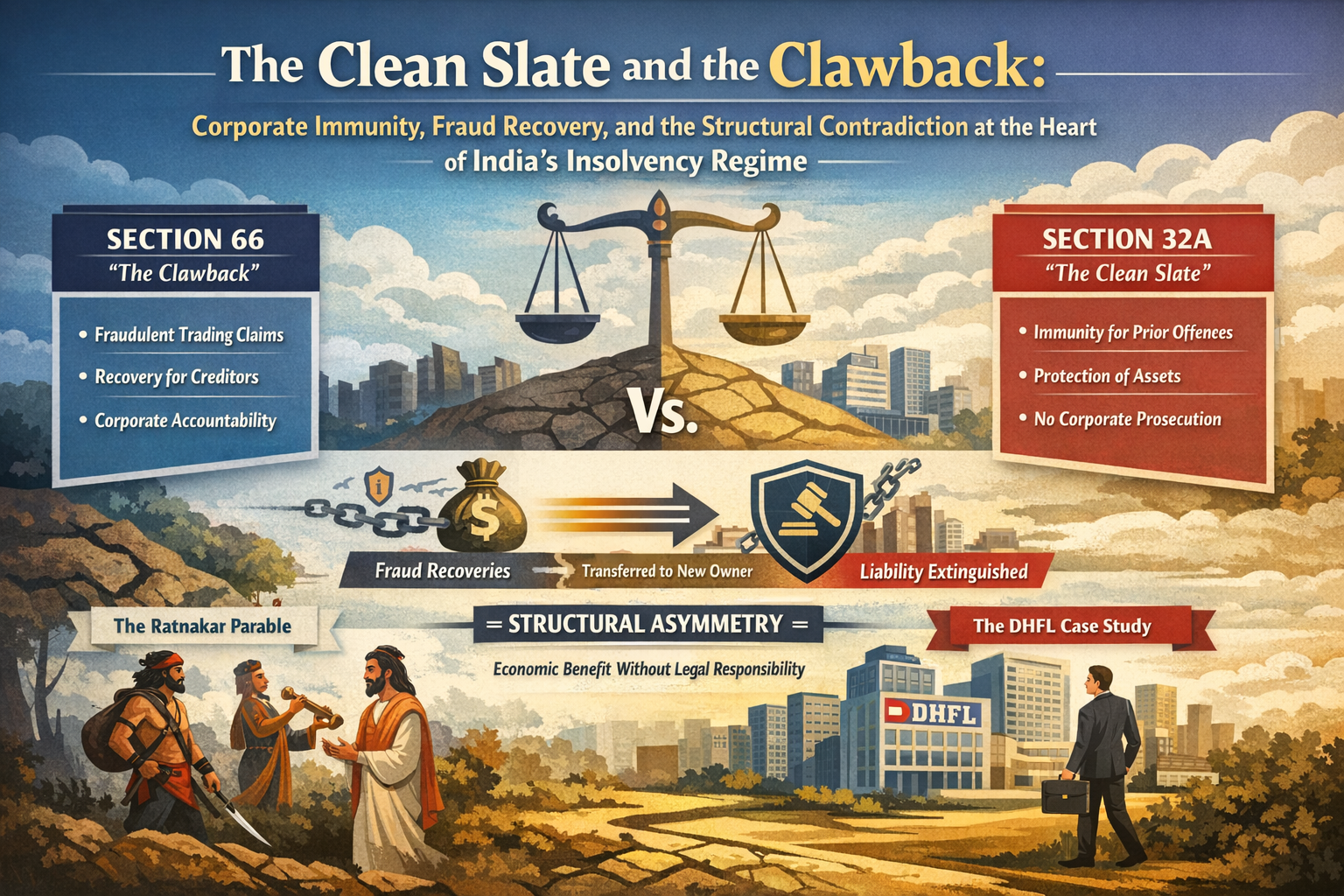
The Insolvency and Bankruptcy Code, 2016 establishes a dual legal framework combining fraud recovery and insolvency resolution. Section 66 embodies the Code’s accountability function by empowering recovery from fraudulent and wrongful trading, thereby restoring value to creditors. In contrast, Section 32A, introduced in 2019 with retrospective effect, extinguishes corporate criminal liability once a resolution plan is approved and control passes to new management. This paper argues that these provisions operate in structural tension: Section 66 presupposes continuity of corporate liability to enable recovery, while Section 32A extinguishes corporate criminal liability while preserving corporate identity, assets, and economic continuity. Through a doctrinal case study of Dewan Housing Finance Corporation Ltd. (DHFL), this paper demonstrates how avoidance recoveries identified under Section 66 remained corporate assets transferred to the resolution applicant, even as Section 32A extinguished the corporate debtor’s criminal liability for the underlying misconduct. This produced a structural asymmetry in which the corporate entity retained the economic benefits of fraud-linked recoveries while being legally immunized from responsibility for the fraud itself. The retrospective insertion of Section 32A further created a temporal dislocation, altering legal consequences after insolvency had commenced. The paper concludes that the interaction between Sections 32A and 66 represents a fundamental transformation in insolvency law—from a creditor-recovery framework grounded in accountability to an acquirer-protection framework grounded in corporate immunity—raising profound questions about equality before law and the political economy of insolvency resolution.
Pamphlet For DHFL Victims: No More “Clean Slates” For IBC-Proof Crony Capitalism!
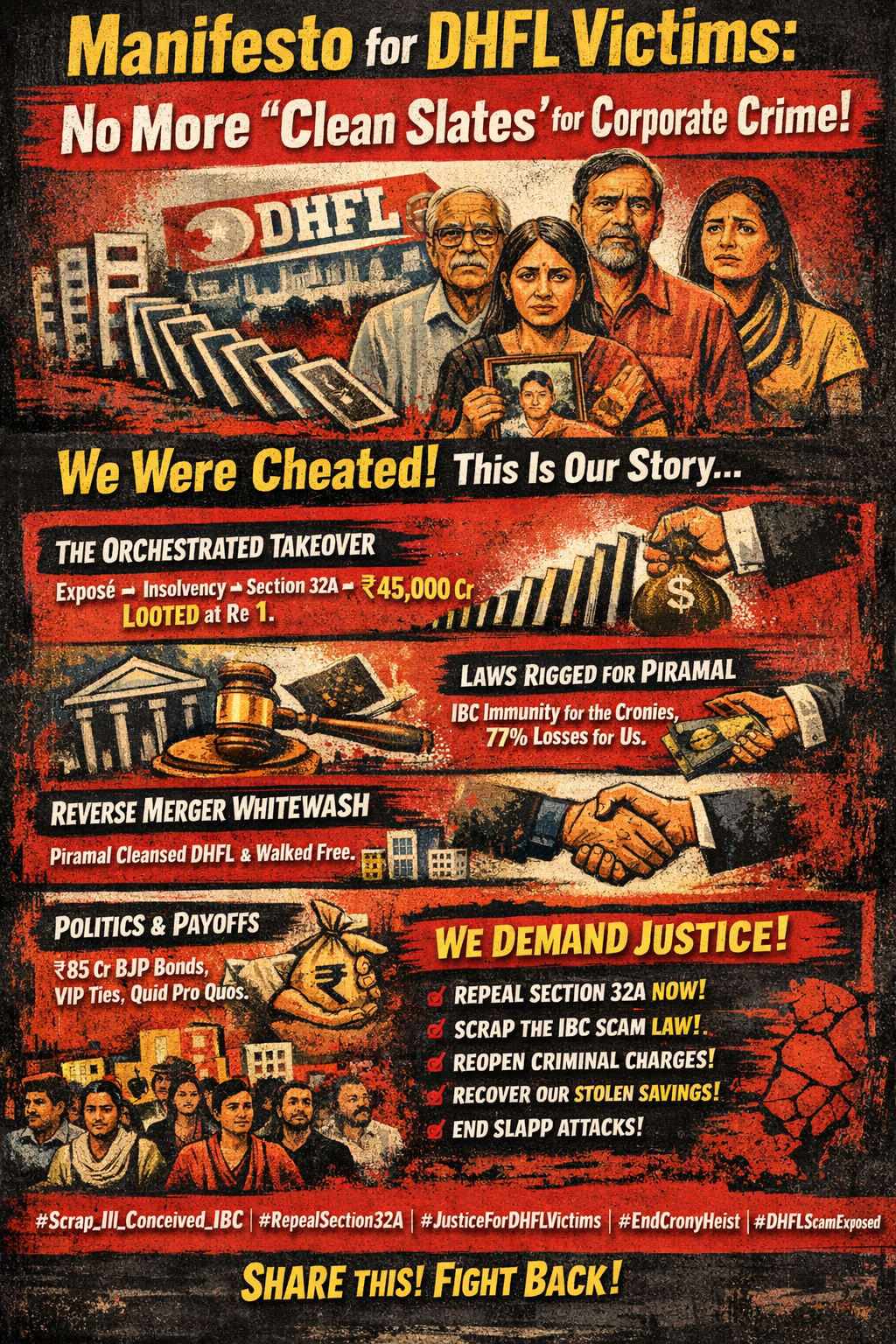
This manifesto is a fact-based cry from over 2.5 lakh DHFL depositors who lost life savings in massive 54–77% haircuts. It chronicles how India’s first AAA-rated NBFC — a sound ₹91,000+ crore housing finance company — was deliberately dismantled under the IBC: starting with Ajay Piramal’s “shock” warning (28 Jan 2019) followed by the Cobrapost exposé (29 Jan 2019), RBI supersession (20 Nov 2019), CIRP admission (3 Dec 2019), mid-process insertion of Section 32A immunity (28 Dec 2019), ignored full-repayment proposals, a Re 1 giveaway of ₹45,000 crore Section 66 recoveries, judicial overrides culminating in Supreme Court approval (1 Apr 2025), reverse mergers to sanitize legacy, and PMLA discharge of the corporate debtor (2 Feb 2026) under Section 32A — while Piramal Finance now thrives (AUM ₹96,690 crore up 23% YoY, PAT up 162%). Highlighting statutory contradictions, CoC bias allegations, and a documented political-corporate nexus, it demands repeal of Section 32A, scrapping the IBC, restitution, and an end to SLAPP suits — framing the DHFL case as engineered crony sanitisation, not genuine resolution.
The “Clean Slate” That Was Engineered: How IBC’s Section 32A Enabled the DHFL–Piramal Takeover
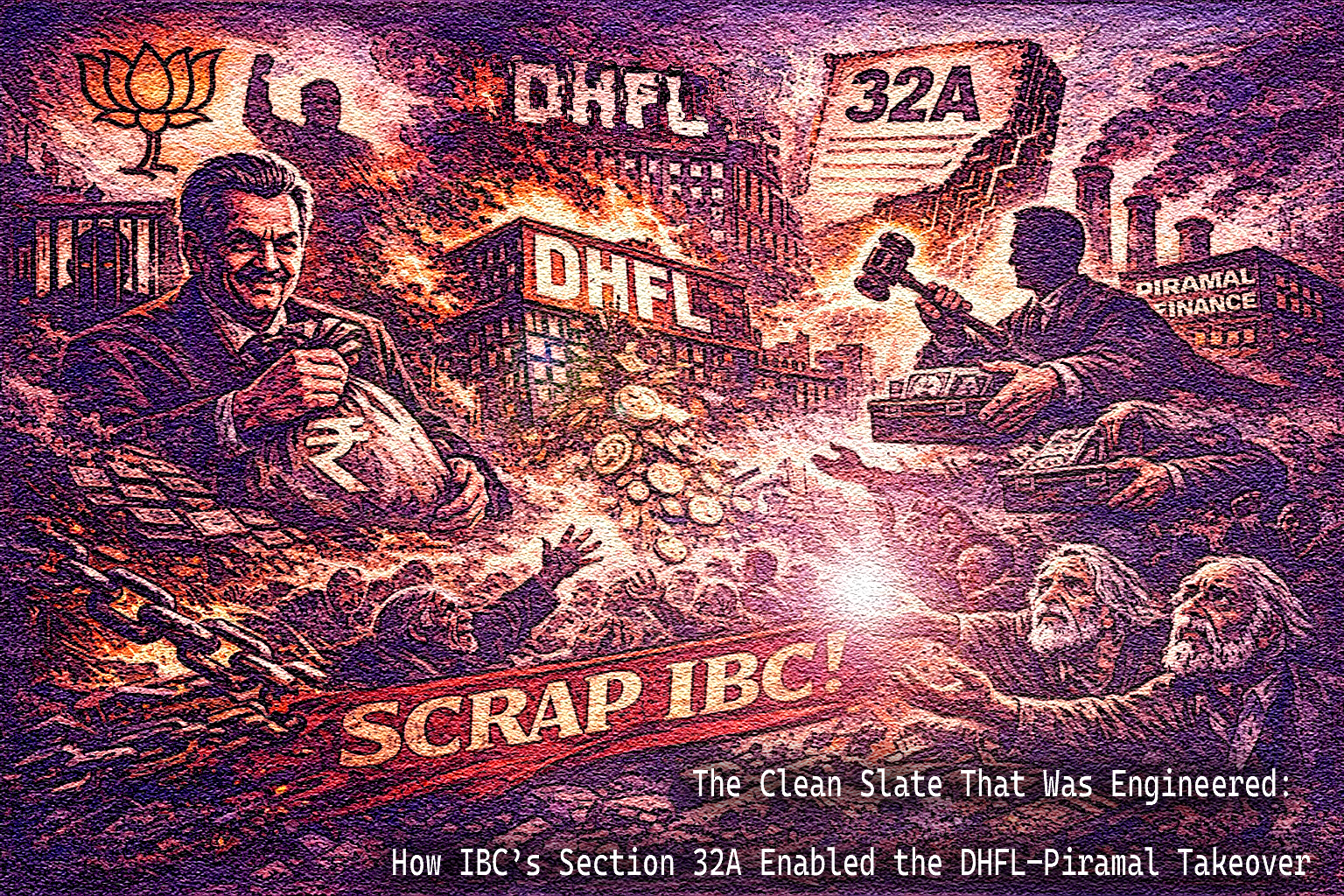
The DHFL insolvency resolution, culminating in its acquisition by Piramal Capital and Housing Finance (now Piramal Finance) and the February 2, 2026, Mumbai PMLA Special Court discharge from a ₹5,050 crore money-laundering case under Section 32A of the Insolvency and Bankruptcy Code (IBC), exemplifies alleged systemic flaws in India’s insolvency framework. This “clean slate” immunity extinguished corporate criminal liability for pre-CIRP offences while preserving prosecution against former promoters like the Wadhawan brothers, despite their ignored full-repayment proposals. Critics portray the process—marked by retrospective Section 32A insertion in December 2019 just before DHFL’s CIRP admission, Ajay Piramal’s January 2019 “shock” prediction preceding the Cobrapost exposé, massive creditor haircuts (54–77% on retail FDs/NCDs), nominal Re 1 valuation for ₹45,000 crore Section 66 avoidance recoveries benefiting Piramal, and upheld “commercial wisdom” in the Supreme Court’s April 1, 2025, judgment—as engineered cronyism favoring politically connected acquirers via electoral bond donations (Piramal entities contributed significantly to BJP coffers per 2024 ECI data), family ties to Ambani, Flashnet deal controversies, and PM CARES funding. Amid Piramal Finance’s resurgence (AUM ₹96,690 crore up 23% YoY, 9M FY26 PAT ₹1,004 crore up 162%, CRISIL AA+ rating), victim groups decry SLAPP suits silencing dissent, statutory contradictions prioritizing new owners over creditors, and demand full repeal of Section 32A to dismantle what they term a sophisticated mechanism of crony enrichment at the expense of lakhs of ordinary depositors’ savings.
Pre-Admission, Perpetual Intimidation: Piramal’s Defamation SLAPP Against DHFL Victims
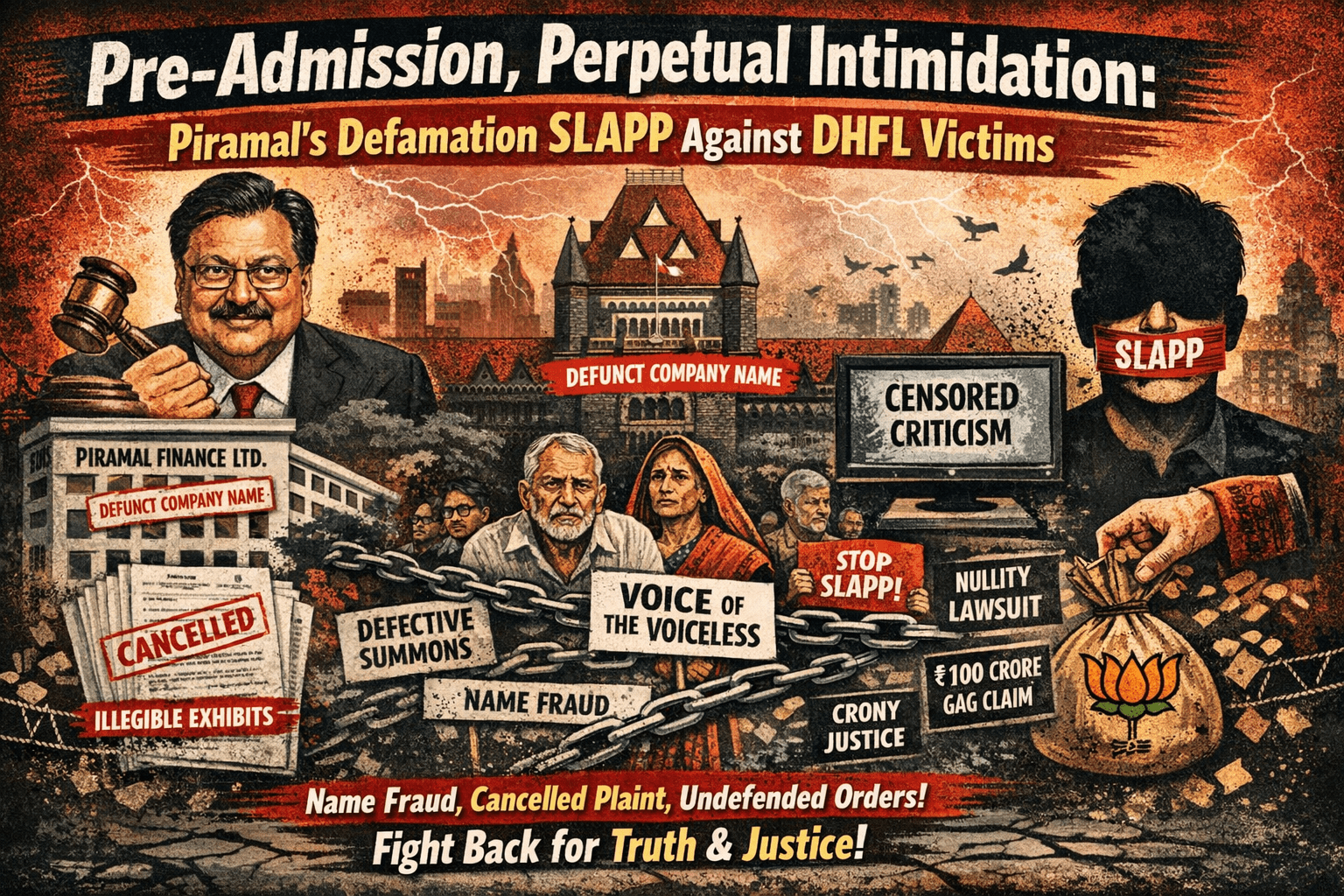
This document contends that the defamation suit filed by corporate tycoon Mr. Ajay Piramal (through DSK Legal) against DHFL victims and activists in Bombay High Court Suit S/42/2025 constitutes a textbook Strategic Lawsuit Against Public Participation (SLAPP), designed to chill constitutionally protected public-interest speech arising from criticism of the 2021 DHFL IBC resolution. Drawing on official court orders, registry records, and procedural chronology, it argues that the suit remains mired at the pre-admission/directions stage due to fatal defects—including continued filings under a defunct corporate name, defective service, ignored written statements, asymmetrical timelines, and uncured plaint infirmities—rendering it vulnerable to rejection under Order VII Rule 11 CPC. Situating the case within broader Indian jurisprudence cautioning against chilling-effect litigation, and invoking Articles 19(1)(a), 14, and 21 of the Constitution, the document frames the proceedings not as bona fide reputational redress but as corporate intimidation of financially devastated citizens engaged in non-violent civil dissent, warranting dismissal with exemplary costs.
Digwal’s Poison, Dahej’s Acid, Mumbai’s Climate Time-Bombs: Mr. Piramal’s Toxic Trails
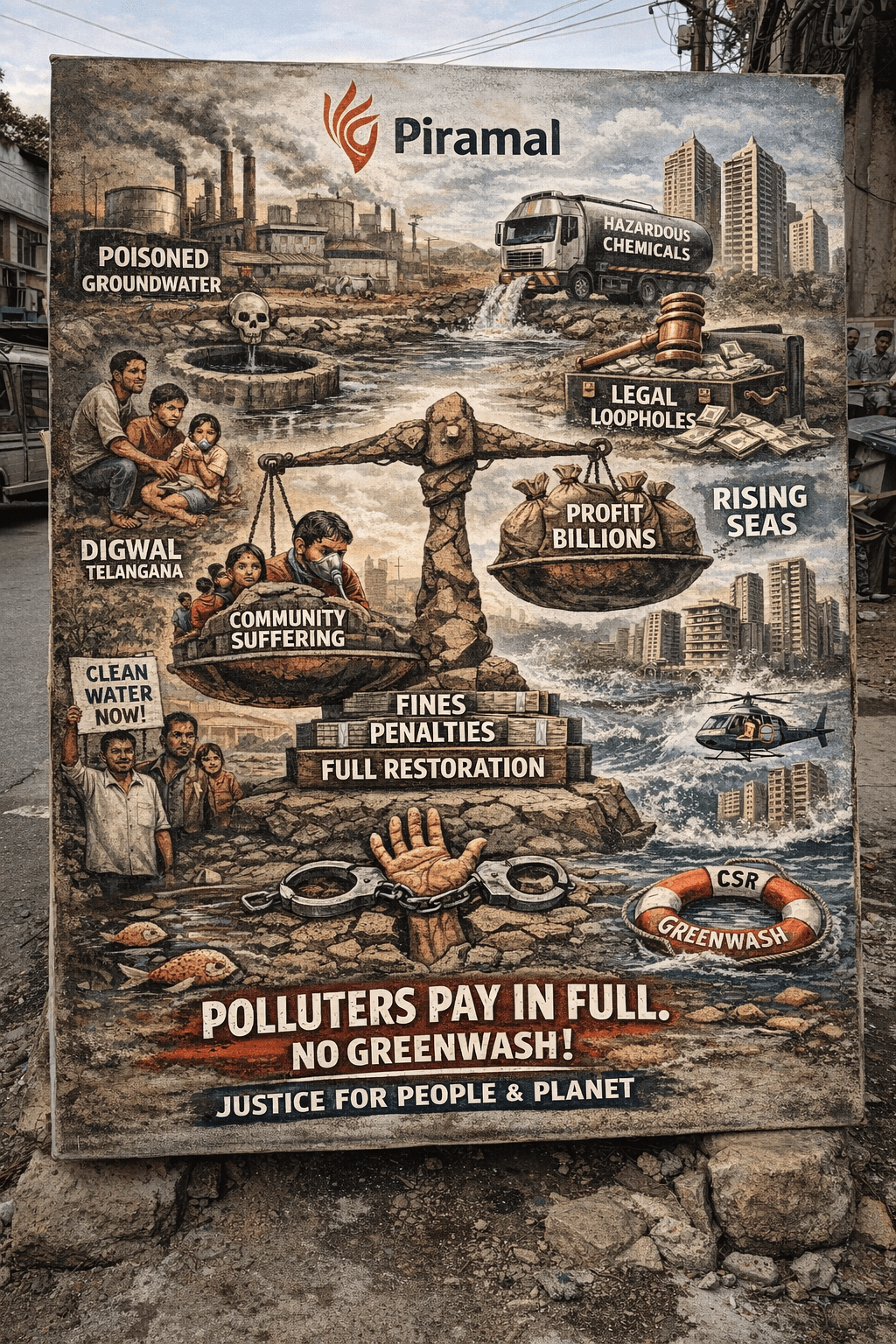
This essay argues that the Piramal Group’s pharmaceutical and real-estate operations exemplify a systemic model of accumulation by dispossession in contemporary capitalism, wherein ecological harm, public-health burdens, and climate vulnerability are externalized onto marginalized communities while profits are privatized and reputational risk is managed through regulatory reprieves, corporate restructuring, and CSR spectacle. Through the long-running groundwater contamination crisis at Digwal, the very recent February 2026 hazardous discharge episode at Dahej affecting the Narmada-linked canal system, and the development of ultra-luxury coastal real estate in flood-prone zones of Mumbai, the text demonstrates a recurring pattern: violation, brief enforcement theatre, rapid operational normalization, and uninterrupted high-margin expansion. It situates these cases within theoretical frameworks of slow violence, ecological surplus extraction, and philanthropic greenwashing, arguing that fines function as licensing fees rather than deterrents and that dynastic corporate networks convert environmental risk into both profit and spectacle. The essay concludes by demanding a materially enforced Polluter Pays regime—extending beyond monetary penalties to full ecological restoration, community restitution, structural limits on expansion, and legally binding accountability—insisting that environmental justice cannot be offset through philanthropy, CSR branding, or procedural compliance while the biosphere itself absorbs irreversible damage.
The Piramal Paradox: Karuṇā–Sevā–Samṛddhi as Valourized Capital?

This essay is a self-reflexive critique that interrogates the corporate deployment of sacred Indian ethical concepts—karuṇā (boundless compassion), sevā (embodied relational service), and samṛddhi (ethically conditioned flourishing)—within the assemblages of philanthro-capitalism, particularly through the Gandhi Foundation and CSR initiatives linked to Ajay Piramal. Drawing on Deleuze and Guattari’s schizoanalysis, it traces how these terms, deterritorialized from Buddhist, Bhakti, Gandhian, and epic traditions, are reterritorialized as branded values that legitimize accumulation while masking asymmetries of power, dispossession, and structural harm—most poignantly exemplified by the author’s lived experience of financial violence in the DHFL collapse. Through philological excavation, ontological reflection (via the Aupaniṣadika two-birds metaphor), and a Kafkaesque plea for coherence before the Supreme Court, the text demands philosophical vigilance: whether ethical rhetoric can coexist with praxis that disperses risk downward and concentrates prosperity upward, or if such invocation fractures the triad, reducing compassion to optics, service to branding, and prosperity to unchecked growth. Ultimately, it calls not for condemnation but for symmetry—where sacred words, once uttered, become answerable to those wounded by the very systems they adorn.
Rana Ayyub’s Gujarat Files and the Politics of the Counter-Archive
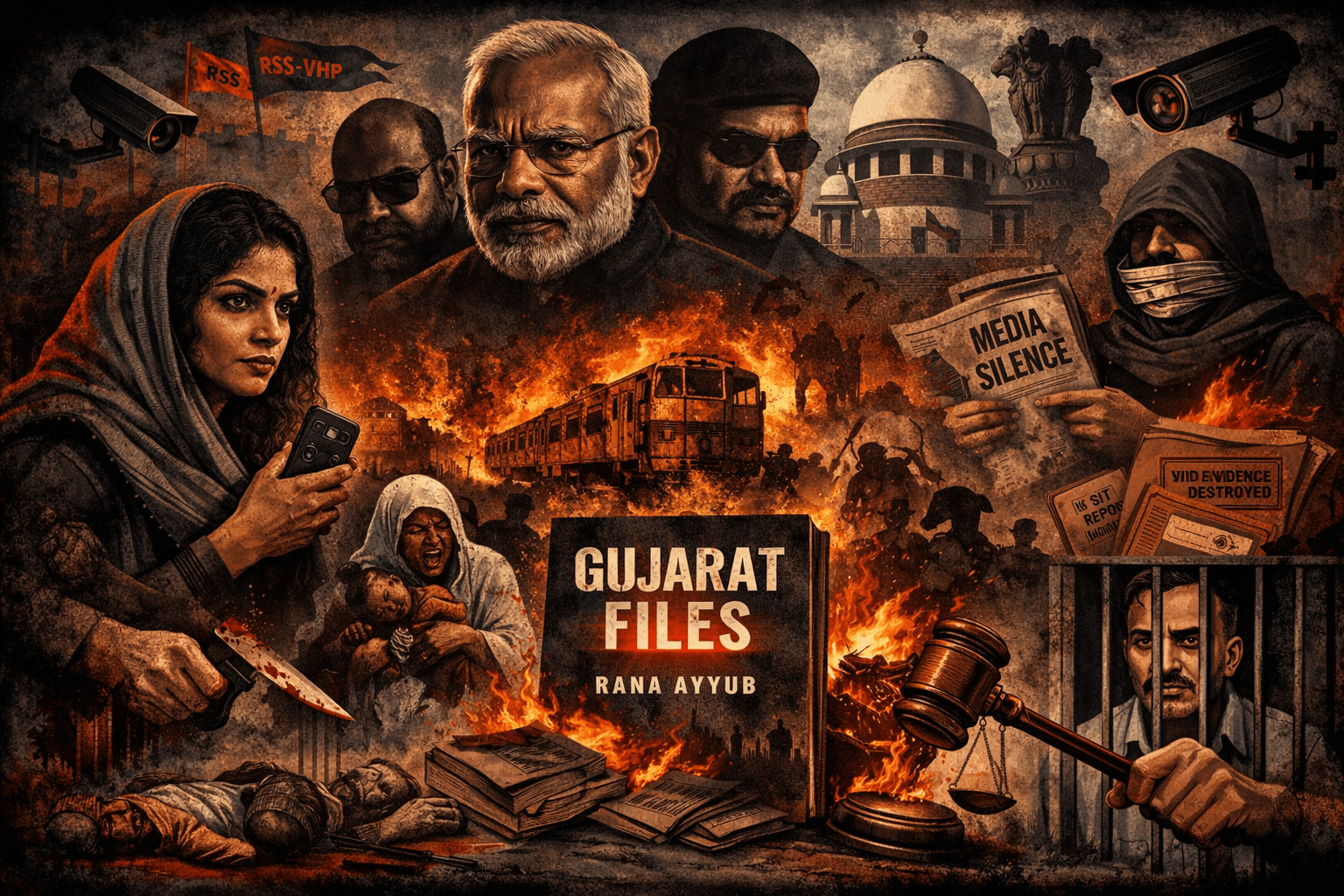
Gujarat Files: Anatomy of a Cover Up by Rana Ayyub is a hard-hitting, self-published investigative book (2016) based on an eight-month undercover sting operation she conducted in 2010–2011 while working for Tehelka, posing as “Maithili Tyagi,” a fictional Hindu-American filmmaker sympathetic to RSS ideology. Through covert recordings of candid conversations with senior Gujarat police officers, bureaucrats, politicians, and insiders—including a direct meeting with then-Chief Minister Narendra Modi—the book presents verbatim transcripts alleging state complicity in the 2002 Gujarat riots (an anti-Muslim pogrom killing over 1,000), orchestrated inaction during the violence, evidence tampering, fake encounters (such as those involving Ishrat Jahan, Sohrabuddin Sheikh, and others), extrajudicial killings used for political gain, caste-based exploitation in law enforcement, and broader cover-ups tied to the rise of Modi and Amit Shah. Rejected by mainstream publishers and media amid fears of reprisal, Ayyub self-funded and released it, selling hundreds of thousands of copies despite blackouts, threats, and criticisms over ethical concerns, lack of forensic tape verification, and sparse analysis; supporters hail it as brave evidentiary journalism exposing systemic impunity and majoritarian consolidation, while critics (including a 2019 Supreme Court dismissal in a related case) view it as conjectural or procedurally flawed, yet no implicated officials have sued or directly refuted the statements, underscoring its enduring, polarizing impact on debates about accountability, press freedom, and Indian democracy.
Unveiling BJP’s Border Blunders: Naravane’s “Censored” Memoir
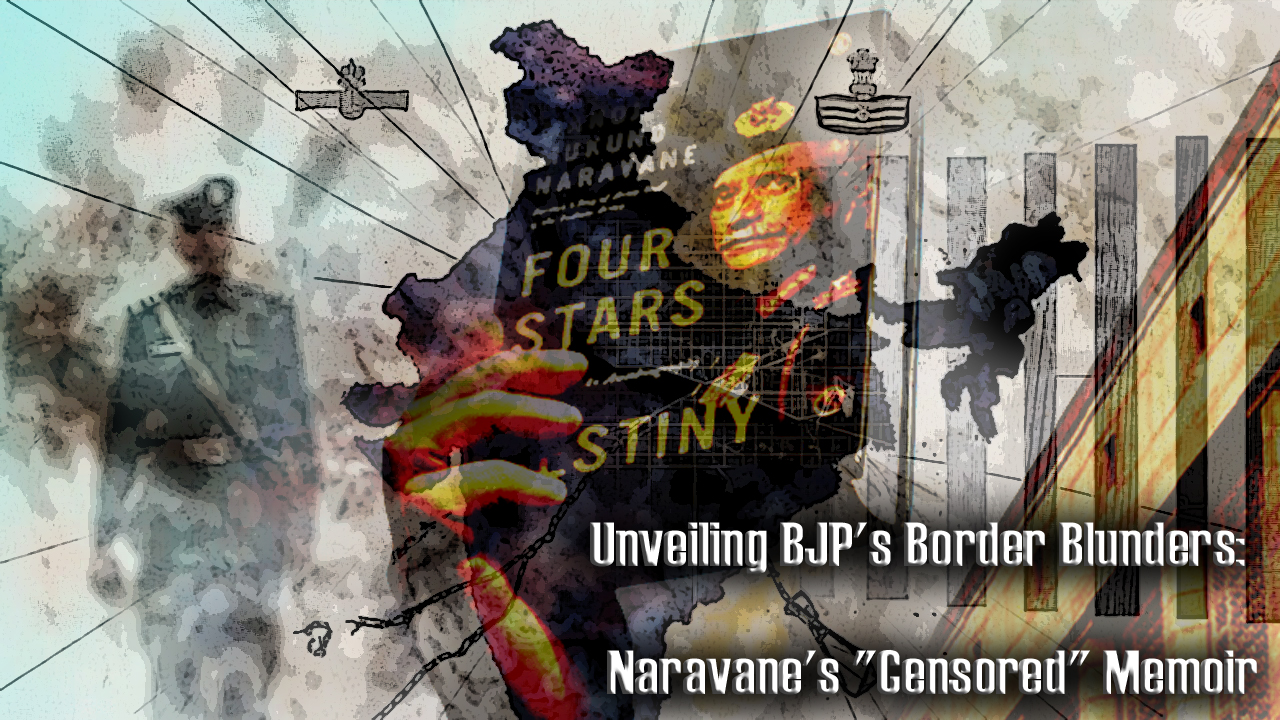
The review examines the “unpublished” (?) book Four Stars of Destiny: An Autobiography by General M.M. Naravane (retd.), former Chief of the Indian Army (2019–2022), in comparative dialogue with three major critical interventions on contemporary Indian state power: the BBC documentary India: The Modi Question, Rakesh Sharma’s Final Solution (2003), and Rana Ayyub’s Gujarat Files: Anatomy of a Cover-Up. While differing in form—military memoir, investigative journalism, and documentary cinema—all four works converge in unsettling dominant state narratives through documented, insider or evidentiary accounts of crisis, violence, and political accountability. The review argues that the prolonged suppression of Naravane’s memoir through bureaucratic delay constitutes a form of de facto censorship analogous to the formal banning, blocking, or marginalization faced by the other works. Read together, these texts reveal a patterned architecture of control in contemporary India, where power manages inconvenient truths not primarily through overt prohibition, but via procedural stalling, digital blocking, market denial, and epistemic delegitimization. The review situates this pattern within broader debates on civil–military relations, communal violence, and the politics of memory, suggesting that the real threat posed by these works lies in their capacity to reinsert ambiguity, failure, and hesitation into an official narrative built on certainty and spectacle.
Standard Chartered and Piramal Group: Regulatory Arbitrage, Insolvency Regimes and Risk Transfer
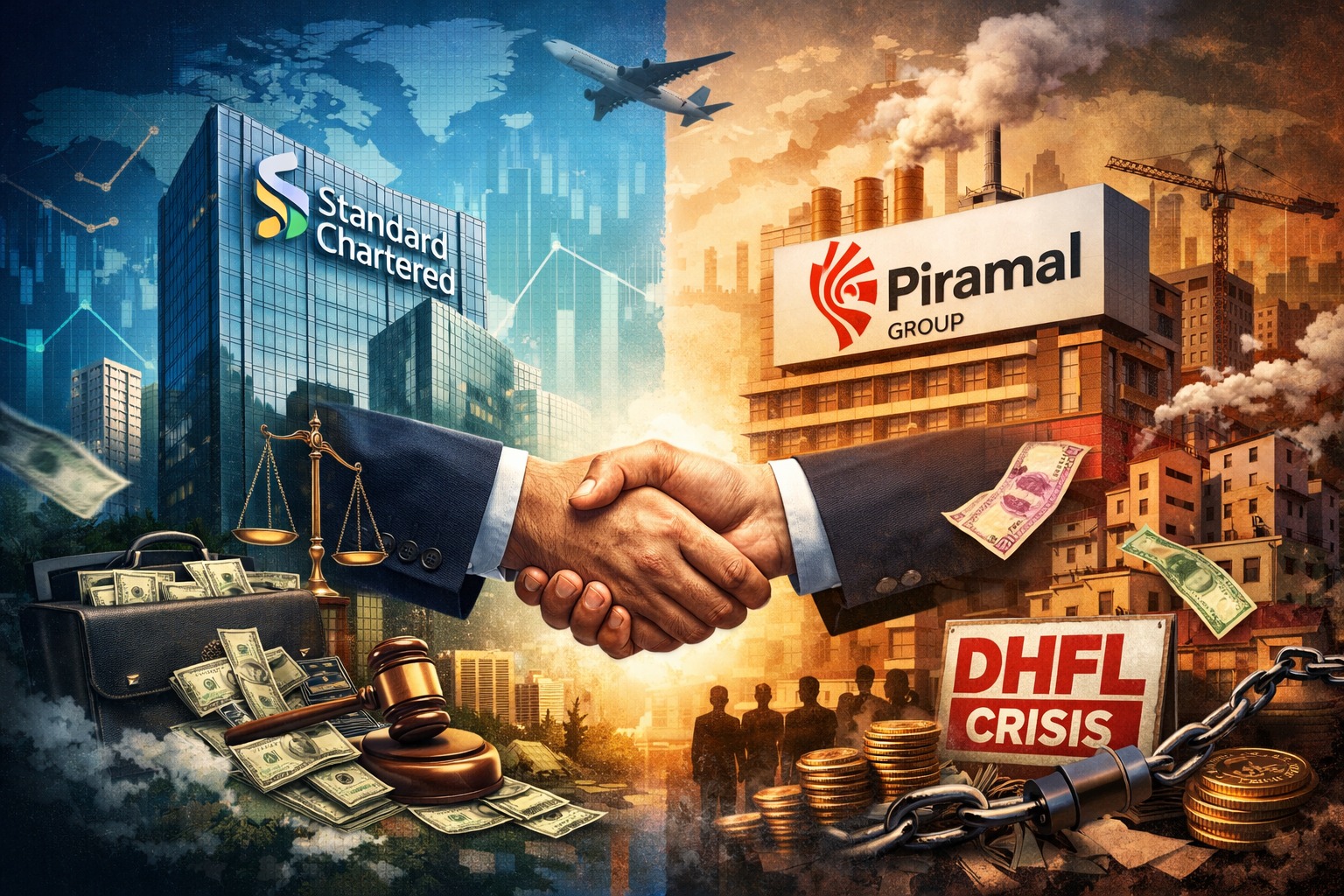
This article examines the structural relationship between global banking institutions and large emerging-market conglomerates through a dual case analysis of Standard Chartered Bank and the Piramal Group between 2012 and 2026. Drawing on regulatory enforcement actions, insolvency proceedings, capital-market transactions, and litigation outcomes, the paper argues that recurrent compliance failures in global banking and aggressive corporate restructuring in emerging markets are not independent phenomena but mutually reinforcing processes. The analysis demonstrates how persistent anti-money laundering lapses, sanctions violations, and settlement-driven regulation in global banks coexist with—and indirectly enable—high-leverage expansion, legal insulation, and accountability dilution within domestic conglomerates. By situating the Standard Chartered–Piramal relationship within the broader context of regulatory arbitrage, insolvency-enabled legal finality, and transnational risk transfer, the article shows how contemporary financial law increasingly prioritizes resolution, liquidity, and market confidence over distributive justice and creditor accountability. The findings contribute to critical debates on global financial governance by revealing how legality itself has become a primary instrument for organizing, rather than constraining, financial risk.
 Once in a Blue Moon Academia