

Posted on 16th September, 2024 (GMT 16:45 hrs) ABSTRACT The article questions Wikipedia’s claim of being crowd-funded, suggesting that the platform is influenced by wealthy individuals and corporations. It shares instances of content deletions, such as references to academic topics and controversies involving business tycoon Ajay Piramal, alleging that Wikipedia may be censoring or manipulatingContinue reading “Donation and Deletion: Is Wikipedia Crowd-Funded or Funded by the Superrich?”
Category Archives: Activities
Our current activities concentrate on the case of Dewan Housing Finance Corporation Limited (DHFL), India. While exploring and investigating this particular case, we have found that India’s crony ruling party, gangsters, banksters as well as religious gurus and institutions are involved in the same. Therefore, to break such collusion, we have decided to deploy an “all out attack” on the existing paradigm of neoliberal market economy as well as market fundamentalism. ***DISCLAIMER: We have collected all the data from available sources on the internet as given on the official portals of media houses, websites and institutions and organizations. We are not first-hand reporters and hence, we are not liable for any inadvertent error or value-loaded statements made on those portals. All propositions have to be viewed as descriptive assertions on the given point of concern.***
Heading Towards a Theocratic Judiciary?

The article criticizes India’s Chief Justice, D.Y. Chandrachud, for publicly participating in religious rituals with Prime Minister Narendra Modi, arguing that this compromises the separation between the judiciary and the executive. It raises concerns about the increasing influence of Hindu nationalism in the judiciary, questioning its impact on the country’s secular constitution. The author also points to selective judicial actions and calls for maintaining scientific temper and critical inquiry as per the constitutional mandate. The overall tone expresses frustration with the blending of theocratic regime
Mouthshut, Why Are You Shutting The Mouths of DHFL Victims?

The article criticizes the review platform Mouthshut for allegedly suppressing the voices of victims of the DHFL (Dewan Housing Finance Corporation Limited) scam. It accuses Mouthshut of removing critical reviews and blocking user accounts(?), thus preventing the victims from sharing their experiences and seeking justice. The article highlights the frustration and helplessness of these individuals, who rely on platforms like Mouthshut to expose corporate malpractices and demand accountability.
The Legitimation Crisis of Indian Elections

The article “The Legitimation Crisis of Indian Elections” explores concerns about the integrity of the 2024 Lok Sabha elections in India. It highlights significant discrepancies between votes polled and counted, with reports suggesting potential manipulation of Electronic Voting Machines (EVMs) and questioning the Election Commission’s transparency. The article argues that these issues have deepened the legitimacy crisis of India’s electoral system, challenging the credibility of the current government and the democratic process as a whole.
Have the RBI and IBBI Lost Their Accountability? An RTI to the CAG, India

Posted on 24th August, 2024 (GMT 13.30 hrs) Updated on 12th October, 2024 (GMT 16:20 hrs) ABSTRACT The article discusses an RTI application filed with the Comptroller and Auditor General (CAG) of India, questioning the accountability of the Reserve Bank of India (RBI) and the Insolvency and Bankruptcy Board of India (IBBI). The RTI seeksContinue reading “Have the RBI and IBBI Lost Their Accountability? An RTI to the CAG, India”
RBI-appointed CoC for DHFL’s total expenditure: An RTI to the RBI

The article discusses an RTI filed to the Reserve Bank of India (RBI) seeking details on the total expenditure of the RBI-appointed Committee of Creditors (CoC) for Dewan Housing Finance Corporation Limited (DHFL). The RTI also asked about funds allocated for litigation and their sources. The response from RBI was vague, stating that the information had been forwarded for a consolidated reply, but no further details have been provided, raising concerns about transparency and accountability.
“This is what usually happens”: Rape Culture in West Bengal, India
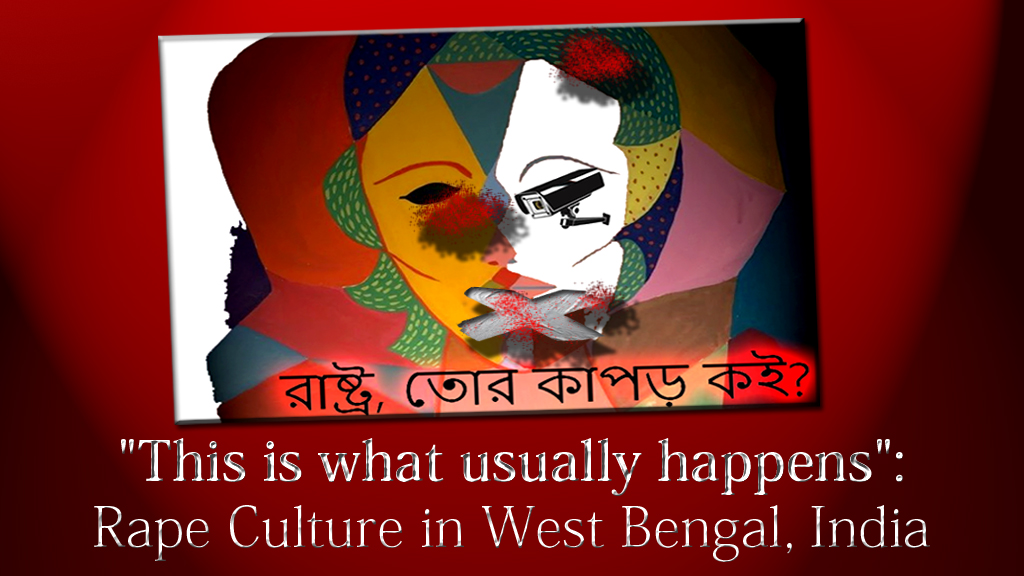
The article discusses the disturbing rape and murder of a female doctor in Kolkata and critiques the West Bengal government’s response, which allegedly involved tampering with evidence and suppressing dissent. The piece also explores broader issues of rape culture in India, highlighting how sexual violence is often normalized and weaponized politically. It criticizes both the current and previous governments in West Bengal for their handling of sexual violence and urges a radical approach to dismantling patriarchal systems.
For more details, you can read the full article here.
Derailed Sarkaar: Unaccountability At Its Peak!

Posted on 2nd August, 2024 (GMT 20:05 hrs) In its fragile and unstable third term, the sarkaar of Saffron Fascists continues to ignore the tragedies of the people. The sheer lack of accountability and care have reached newer heights of apathetic disavowal. This is not unexpected from them. We had earlier composed an article onContinue reading “Derailed Sarkaar: Unaccountability At Its Peak!”
The Post-Budget Scenario and the IBC: Empty Vessel Sounds Much!

Posted on 26th July, 2024 (GMT 19:55 hrs) The so-called “Amrit Kaal” Budget (2024-25) under the flawed leadership of the so-called “Vishwaguru” has arrived and has attracted quite a lot of speculation from all quarters. Most of the opposition leaders have called it a “kursi bachao budget” (save the throne budget), given the fact thatContinue reading “The Post-Budget Scenario and the IBC: Empty Vessel Sounds Much!”
Indian Middle Class: Why are they so apathetic to initiate non-violent civil disobedience movement?

DEBAPRASAD BANDYOPADHYAY ⤡ Posted on 12th July, 2024 (GMT 08: 55 hrs) Dear Friends, As a part of academiocracy, I have experienced both the poles of Indian citizens: one is at the highest level of bureaucracy, embassy as well as the privileged tiers of academics; moreover, I have also witnessed the lowest level of socio-economicallyContinue reading “Indian Middle Class: Why are they so apathetic to initiate non-violent civil disobedience movement?”
 Once in a Blue Moon Academia