The Curious “Dangal” of Vinesh Phogat, Nita Ambani and Jay Shah

The article critiques the contemporary influence of Nita Ambani and Jay Shah in Indian sports, highlighting Vinesh Phogat’s unjustified Olympic disqualification and accusing Ambani and Shah of benefiting from nepotism in their respective sports roles. It argues that Ambani and Shah’s powerful positions are unjustified, questioning their qualifications and linking their influence to political patronage from the ruling BJP. The piece also reflects on larger issues of crony capitalism and the state’s protection of oligarchs, framing Phogat’s struggle as part of a broader fight against corruption.

Defending Piramal: Ethical Integrity in Peril? A Call for Clarification to Dr. A. M. Singhvi

The article criticizes Dr. A. M. Singhvi for defending Ajay Piramal, a BJP-allied businessman linked to the DHFL scam, despite Singhvi’s public opposition to the BJP. The piece highlights ethical concerns, accusing Singhvi of compromising his principles for financial gain by defending Piramal, who is involved in insider trading and crony practices. The post urges DHFL victims to engage in civil disobedience on social media, targeting Singhvi and others for their roles in advocating for those who perpetuated the DHFL scandal.

Tirupati Ka Laddoo Jo Khaya Woh Pachtaya, Jo Na Khaya Woh Bhi Pachtaya!

Posted on 1st October, 2024 (GMT 20:30 hrs) CARTOON COURTESY: SATISH ACHARYA ABSTRACT The article critiques political and religious hypocrisy in India, focusing on the controversy surrounding the sacred Tirupati laddoos. Allegations arose that these laddoos contained animal fats, triggering a political debate between the YSR Congress Party and opposition leader Chandrababu Naidu. The SupremeContinue reading “Tirupati Ka Laddoo Jo Khaya Woh Pachtaya, Jo Na Khaya Woh Bhi Pachtaya!”

Nirmala Sitharaman: ‘FIR’-‘ED’!?

The article discusses an FIR against Finance Minister Nirmala Sitharaman, filed by Adarsh Iyer from the Janaadhikaara Sangharsha Parishath. It accuses Sitharaman and other BJP leaders of extorting corporate entities into purchasing electoral bonds by threatening Enforcement Directorate (ED) raids. The BJP allegedly collected ₹8,000 crores in this manner. While a Bengaluru court ordered a probe into these claims, the Karnataka High Court later stayed the investigation, citing insufficient evidence of extortion. The High Court has paused the case until October 22, 2024. This post also brings out the unconstitutional and crony electoral bonds scheme, the failing state of the Indian judiciary, and the naked collusion amidst the BJP and key corporate figures.

Mr. Kapil Sibal: Defending the Indefensible?

The article criticizes Kapil Sibal for defending controversial figures like Ajay Piramal in the DHFL scam and the West Bengal government in the R.G. Kar case. It questions Sibal’s ethical stance, given his multiple roles as a politician and lawyer, highlighting contradictions in his actions, which seem to favor the powerful over justice. The piece laments the perceived shift from his earlier values to opportunism, leaving DHFL victims and others disillusioned by his alignment with the rich and politically connected.

Autopsy of RTI in the Police Universe of the Indian Polity

The article critiques the weakening of the Right to Information (RTI) Act (2005) in the context of politico-economic policing in India involving the rapid censorship or suppression of democratic spaces for dissent by means such as the Digital Personal Data Protection Act, 2023. It highlights how crony oligarchical forces of exclusion often resist transparency, using legal loopholes or claiming exemptions under the guise of national security or privacy. Despite RTI’s intent to empower citizens and ensure accountable communicative competence, it is frequently undermined by bureaucratic hurdles, delaying tactics, and increased threats on RTI Activists. The piece underscores how this undermines democratic engagement and public trust in the various law enforcement institutions in India.

FAQ: When Will We Get Back Our Hard-Earned Money?

The article addresses the DHFL scam victims’ frustration, urging them to take proactive measures instead of repeatedly asking when they’ll recover their funds. It highlights systemic issues, such as the influence of the ruling party, judicial delays, and the questionable role of key figures like Ajay Piramal. Victims are encouraged to pursue civil disobedience and legal action, emphasizing that pressure from organized activism could hasten justice. The court and executive failures are criticized, suggesting activism as a means to reclaim their rights.

The Modani “Saga”: The Failed State of India

The article “The Modani Saga: The Failed State of India” critiques the state of financial as well as political governance in India, focusing on political corruption, financial mismanagement, growing crony-monopoly practices, and the over-polarization between the wealthy and the poor (1% versus the other 99%). It highlights the influence of powerful business figures, focusing particularly on Mr. Gautam Adani in terms of his questionable as well as controversiable business deals in and outside India, whereof it could be seen that Adani is running after shaping policies for personal profits at the cost of nature’s rights and people’s rights. The piece argues that India’s democratic and financial institutions such as the SEBI are eroding, and the country is spiraling into a “failed state” due to a lack of accountability and governance failures as revealed through reports released by Hindenburg Research Team.

Donation and Deletion: Is Wikipedia Crowd-Funded or Funded by the Superrich?

Posted on 16th September, 2024 (GMT 16:45 hrs) ABSTRACT The article questions Wikipedia’s claim of being crowd-funded, suggesting that the platform is influenced by wealthy individuals and corporations. It shares instances of content deletions, such as references to academic topics and controversies involving business tycoon Ajay Piramal, alleging that Wikipedia may be censoring or manipulatingContinue reading “Donation and Deletion: Is Wikipedia Crowd-Funded or Funded by the Superrich?”

Heading Towards a Theocratic Judiciary?

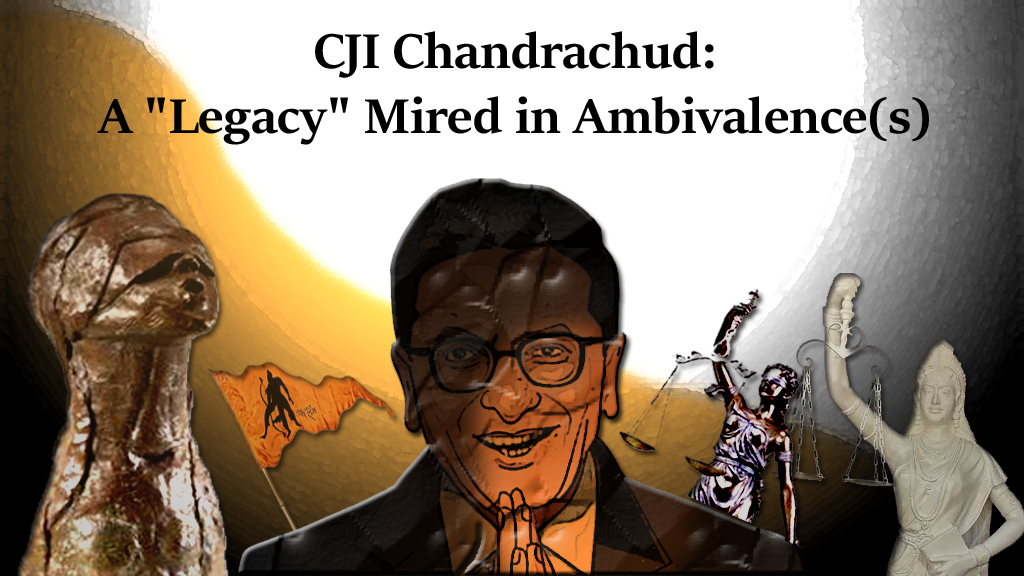
The article criticizes India’s Chief Justice, D.Y. Chandrachud, for publicly participating in religious rituals with Prime Minister Narendra Modi, arguing that this compromises the separation between the judiciary and the executive. It raises concerns about the increasing influence of Hindu nationalism in the judiciary, questioning its impact on the country’s secular constitution. The author also points to selective judicial actions and calls for maintaining scientific temper and critical inquiry as per the constitutional mandate. The overall tone expresses frustration with the blending of theocratic regime