

Posted on 21st July, 2024 (GMT 15:35 hrs) ABSTRACT The paper-letter deals with different types of intoxication (alcoholic drinks, wet/dry drugs/narcotics etc.) in the “ancient” South-East Asia as practiced by the “Hindus” (?). The perception of contemporary ethnographic Hindutva is suffering from a different kind of non-contradictory contradiction, at a time when the deep stateContinue reading “Alcoholism and Herbal Narcotics in Sanātana Bhārat”
Indian Middle Class: Why are they so apathetic to initiate non-violent civil disobedience movement?

DEBAPRASAD BANDYOPADHYAY ⤡ Posted on 12th July, 2024 (GMT 08: 55 hrs) Dear Friends, As a part of academiocracy, I have experienced both the poles of Indian citizens: one is at the highest level of bureaucracy, embassy as well as the privileged tiers of academics; moreover, I have also witnessed the lowest level of socio-economicallyContinue reading “Indian Middle Class: Why are they so apathetic to initiate non-violent civil disobedience movement?”
Requesting for raising the issue of financial abuse of DHFL victims by the BJP: A Letter to the Leader of the Opposition

PAINTING OF GANDHIJI IN THE ABOVE POSTER (ENTITLED “GANDHIPIN”): PROF. DEBRAJ GOSWAMI Posted on 7th July, 2024 (GMT 06: 59 hrs) “When I despair, I remember that all through history the way of truth and love have always won. There have been tyrants and murderers, and for a time, they can seem invincible, but in theContinue reading “Requesting for raising the issue of financial abuse of DHFL victims by the BJP: A Letter to the Leader of the Opposition”
Reporting A Possible Phishing from Mumbai, Maharashtra, by Using Dr. Debaprasad Bandyopadhyay’s Aadhaar No.
Posted on 2nd July, 2024 (GMT 07:33 hrs) First of all, we think it is necessary to inform all the well-wishers of OBMA that our founder-member Dr. Debaprasad Bandyopadhyay was: A) Accused for Defamation by Mr. Ajay Piramal’s Legal Firm DSK Legal for a sum of 100 crore rupees; B) Accused for Contempt of CourtContinue reading “Reporting A Possible Phishing from Mumbai, Maharashtra, by Using Dr. Debaprasad Bandyopadhyay’s Aadhaar No.”
The “New” (?) Criminal Laws in India from the Shaheed-e-Azam’s Perspective

Posted on 29th June, 2024 (GMT 16:20 hrs) AKHAR BANDYOPADHYAY ⤡ This post is dedicated to all those undefeated Indian revolutionaries, whose sacrifice we have betrayed in broad daylight… What if Shaheed-e-Azam Bhagat Singh (1907-1931) was alive today, witnessing all that has been happening in India right now? How would he have felt? Those ofContinue reading “The “New” (?) Criminal Laws in India from the Shaheed-e-Azam’s Perspective”
“Public Comments” on the Sic(k) IBC (2016) to the IBBI

Posted on 27th June, 2024 (GMT 16:40 hrs) Dear DHFL Victims, Nearly four days ago, we found the following report on the Insolvency and Bankruptcy Board of India (IBBI): Insolvency and Bankruptcy Board clampdown on personal guarantors in bid to bolster creditor rights VIEW HERE ⤡ (As reported on 24th June, 2024 ©Telegraph) In theContinue reading ““Public Comments” on the Sic(k) IBC (2016) to the IBBI”
The New Criminal Laws in India: Old Wine in a New Bottle?
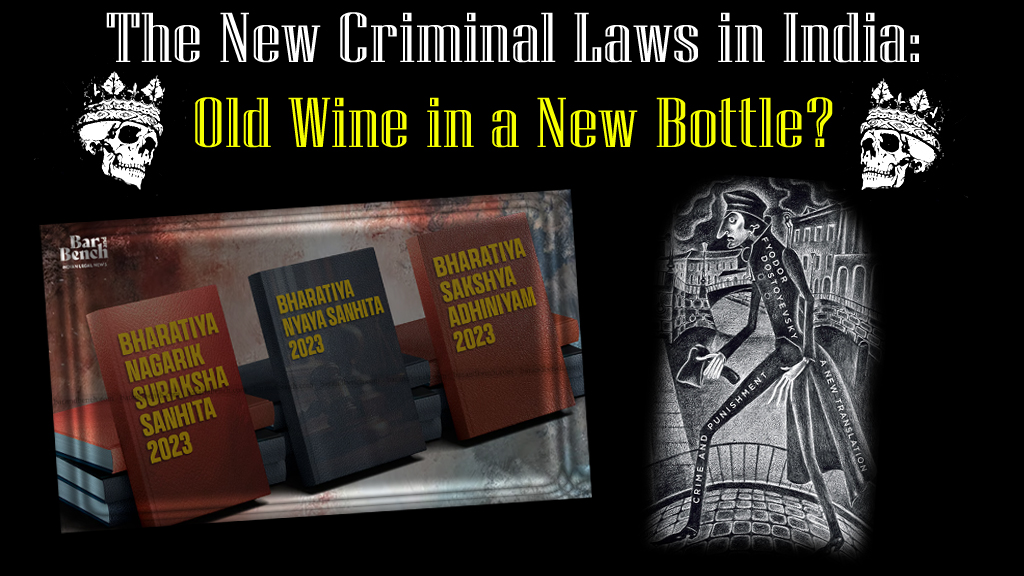
Posted on 25th June, 2024 (GMT 19:50 hrs) With the beginning of the 18th Lok Sabha and the formation of a new, fragile coalition government that appears to have lost all of its previous show-off of tyranny and terror, it is time for three new criminal laws to take effect, viz., the Bharatiya Nyaya SanhitaContinue reading “The New Criminal Laws in India: Old Wine in a New Bottle?”
SOS Intimation regarding Infringement of Business-Related Human Rights of Indian Citizens in the DHFL Scam: A Letter to the OHCHR (UN)

Posted on 25th June, 2024 (GMT 16:15 hrs) Introduction: Few of the OBMA activists sent this letter to the Office of the High Commissioner for Human Rights (OHCHR), United Nations, intimating the said international body regarding the status and briefing of the DHFL Scam as a case of financial abuse in a summarized manner onContinue reading “SOS Intimation regarding Infringement of Business-Related Human Rights of Indian Citizens in the DHFL Scam: A Letter to the OHCHR (UN)”
Who are the Money-Mongers in India: Hindutvavadins or Muslims?
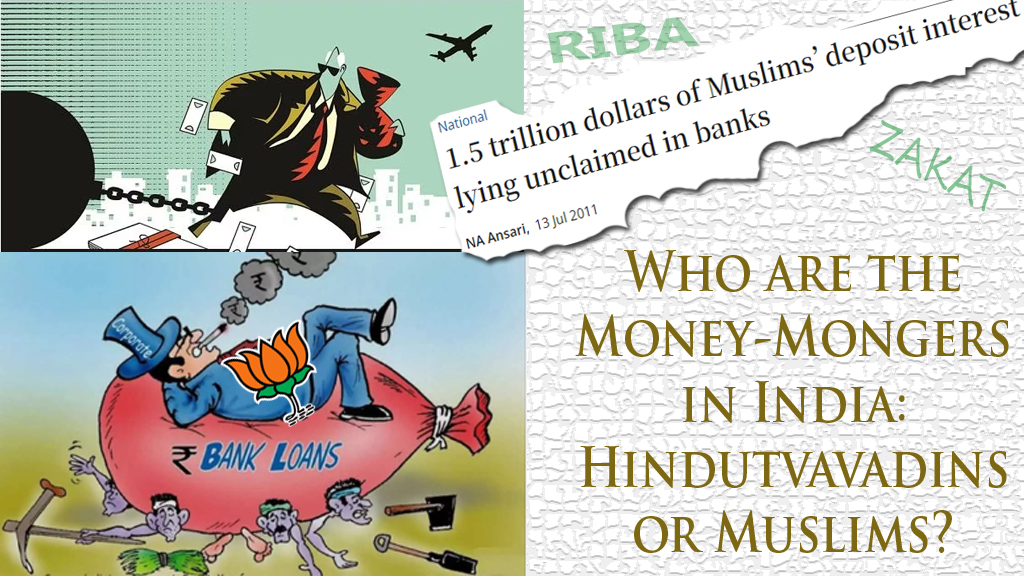
The article investigates the economic dimensions of communal narratives in India, specifically challenging the Hindutva-driven stereotype of Muslims as “money-mongers” or economic threats. Employing a socio-economic and historical analysis, the author debunks myths of Muslim wealth accumulation, tracing such tropes to colonial-era policies and post-independence Hindutva propaganda. The article contrasts the economic marginalization of Muslims—evidenced by their underrepresentation in formal employment, lower per capita income, and exclusion from financial systems—with the significant corporate and political wealth amassed by Hindutva-aligned elites, including RSS-affiliated organizations and BJP-linked business tycoons. It argues that Hindutva’s economic nationalism masks crony capitalism and diverts attention from systemic inequities. The piece calls for dismantling communal stereotypes through data-driven discourse and equitable economic policies to foster social cohesion.
‘Educate, Agitate, Organize!’: OBMA Video Report-IV
The article is a motivational appeal to the victims of the DHFL (Dewan Housing Finance Corporation) scam, urging them not to lose hope in their struggle for justice. It criticizes the RBI-appointed Committee of Creditors (CoC) and the political machinery for exploiting victims. The piece encourages victims to engage in non-violent civil disobedience, utilizing all available means to resist, and emphasizes that the struggle is a political battle that requires persistence and collective action.
 Once in a Blue Moon Academia