Is it “Gen Z” Enough? The Limits of Generational Categories
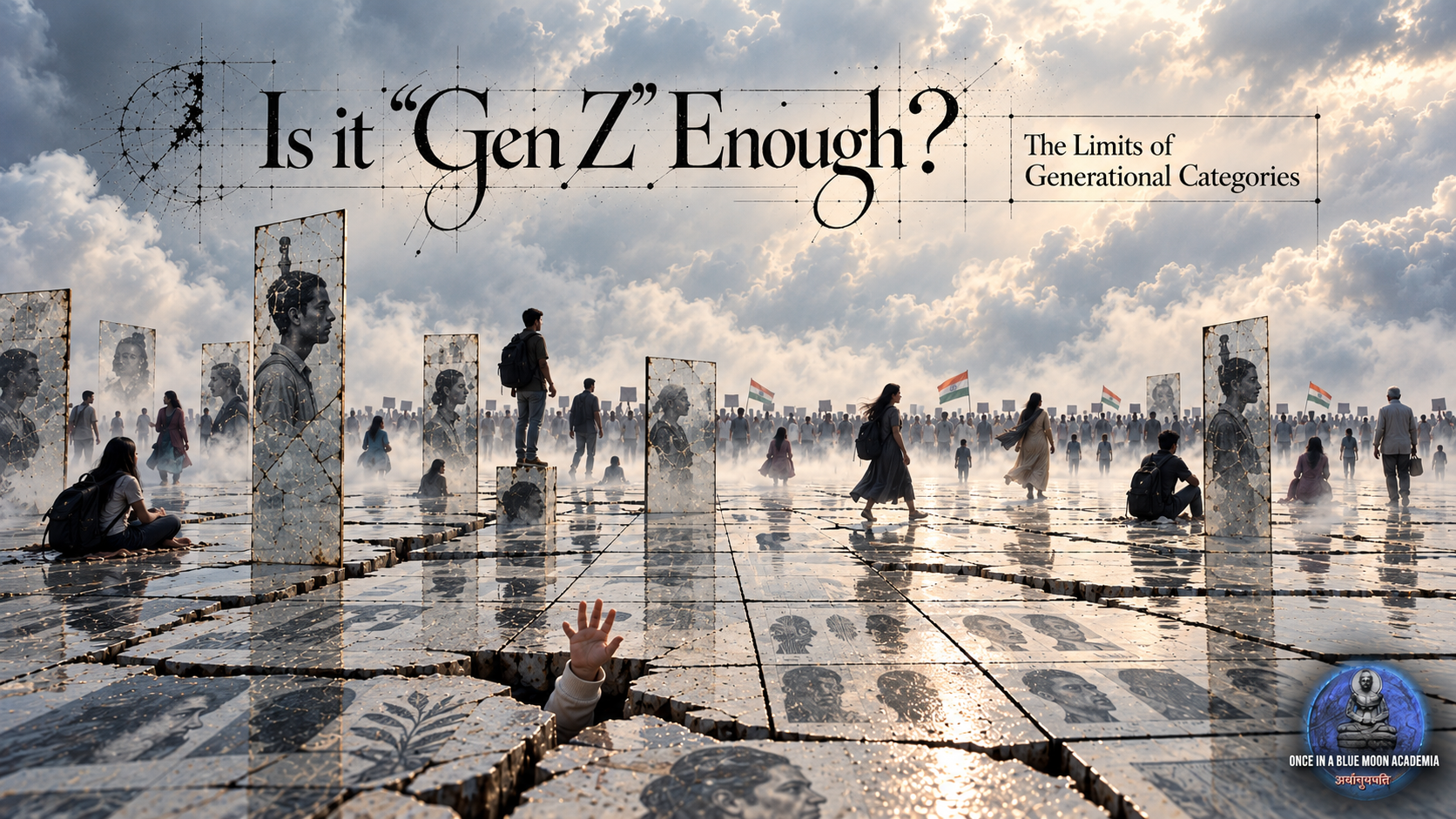
Generational labels function as a historically specific technology for ordering persons; the classification itself, not the cohorts it names, requires analysis. Drawing on Foucault’s archaeological and genealogical methods, the article traces the grid’s descent through state registration, demography, journalism, marketing and consultancy, showing how it imposes discrete essences on a continuum of births, scales disciplinary seriation to the population, generates looping effects, and recodes structural antagonisms as conflicts between age cohorts. The 2026 Indian mobilisation, branded a “Gen Z” uprising, serves as the principal test case: its composition, demands and alliances exceed any single cohort, demonstrating the non-contemporaneity of the contemporaneous. The Yayati–Babur circuit names the patriarchal mechanism that sustains this reduction. Within the same mobilisation the slogans of the dominant are echoed by the street; the echoing, read through Bhabha’s mimicry and Guha’s prose of counter-insurgency, opens a Third Space in which the national cry is made to carry a demand the apparatus refuses to hear. A parallel episode during Durga Puja in West Bengal—attacks on Left bookstalls resisted by student cadres of comparable age—further shows that shared birth years explain neither the violence nor the defence. The article rejects “mental age” as an alternative scale and proposes instead the plurality of temporalities that run through every subject and every movement.
