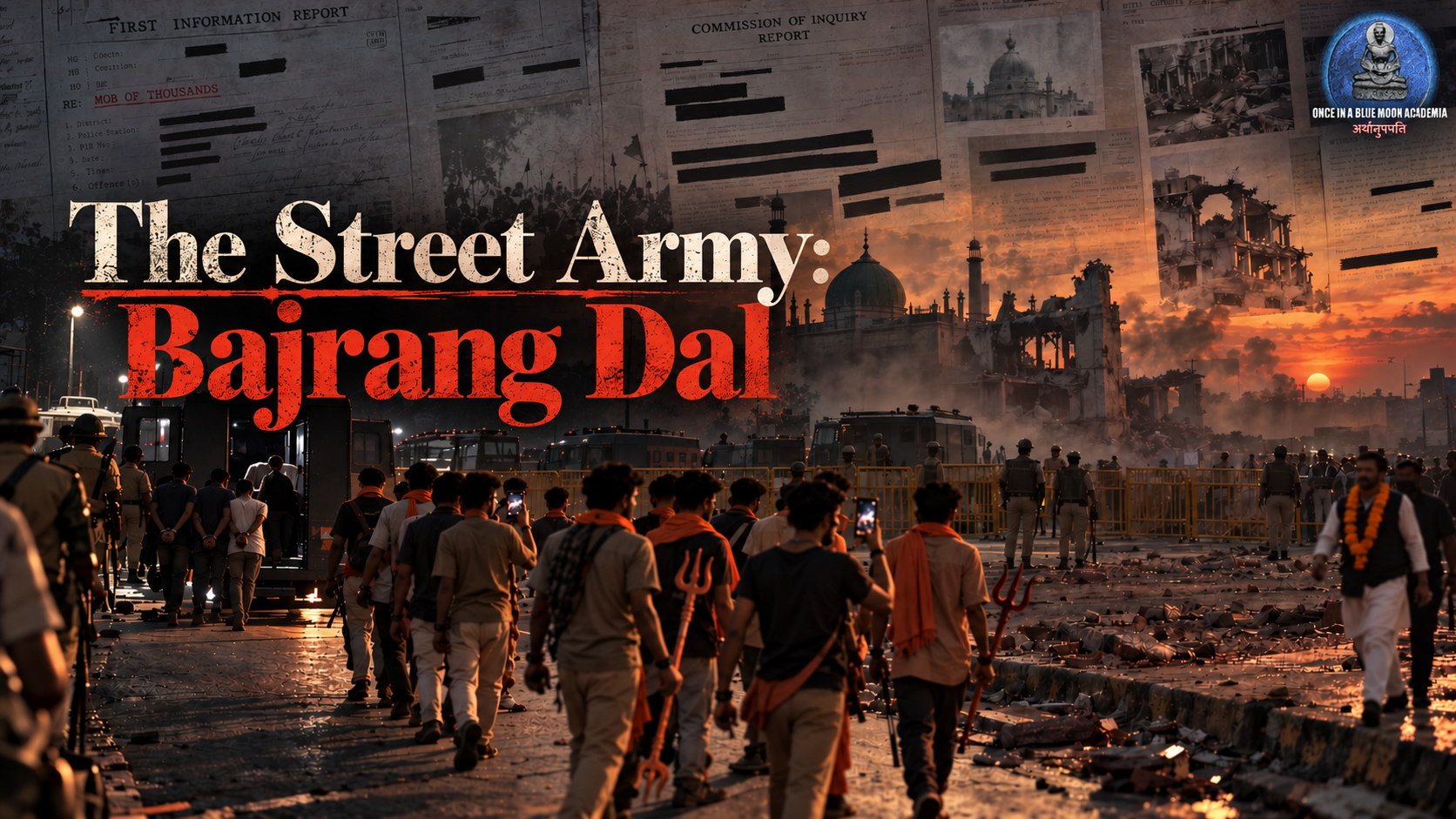
The official Indian record of Bajrang Dal and Sangh Parivar violence does not cohere on its own terms: it counts its dead by the dozen in cow-protection attacks while securing convictions by the handful, files named killers as anonymous mobs of thousands, convicts the gang-rapists of a pregnant woman and then releases them to garlands, and constitutes commissions only to bury their findings. This dossier reads that systematic incoherence as the evidence itself. The Bajrang Dal was manufactured by the RSS in 1984–86 as a deniable youth militia for the Ayodhya campaign; it has since operated, with BJP-supplied licence, as a cadre street-army whose repertoire—gau-raksha lynching, moral policing, anti-Christian violence, processions-as-detonators, and filmed humiliation—runs from the Babri demolition through Kandhamal, Gujarat 2002 (including Naroda Patiya and Bilkis Bano), the post-2014 lynching years (Akhlaq, Pehlu Khan, Tabrez Ansari), Nuh 2023, and Kathua. The same architecture converts authored atrocity into unprosecutable events through non-registration, reclassification, dilution, attrition, and inversion, while routing unemployed young men from shakha to Bajrang Dal, Sri Ram Sene, and Hindu Raksha Dal. In 2026 the machine applied direct state terrorism—mass preventive detention, blackouts, and site denotification—against the non-violent Cockroach Janta Party protest at Jantar Mantar, while a self-identified Hindutva affiliate’s filmed confession of assault received delayed process and restored liberty. The licence is not the absence of a finding; it is the finding. The record is the charge.
