The Goonda Returns: How a Category Became a Statute (Again!)
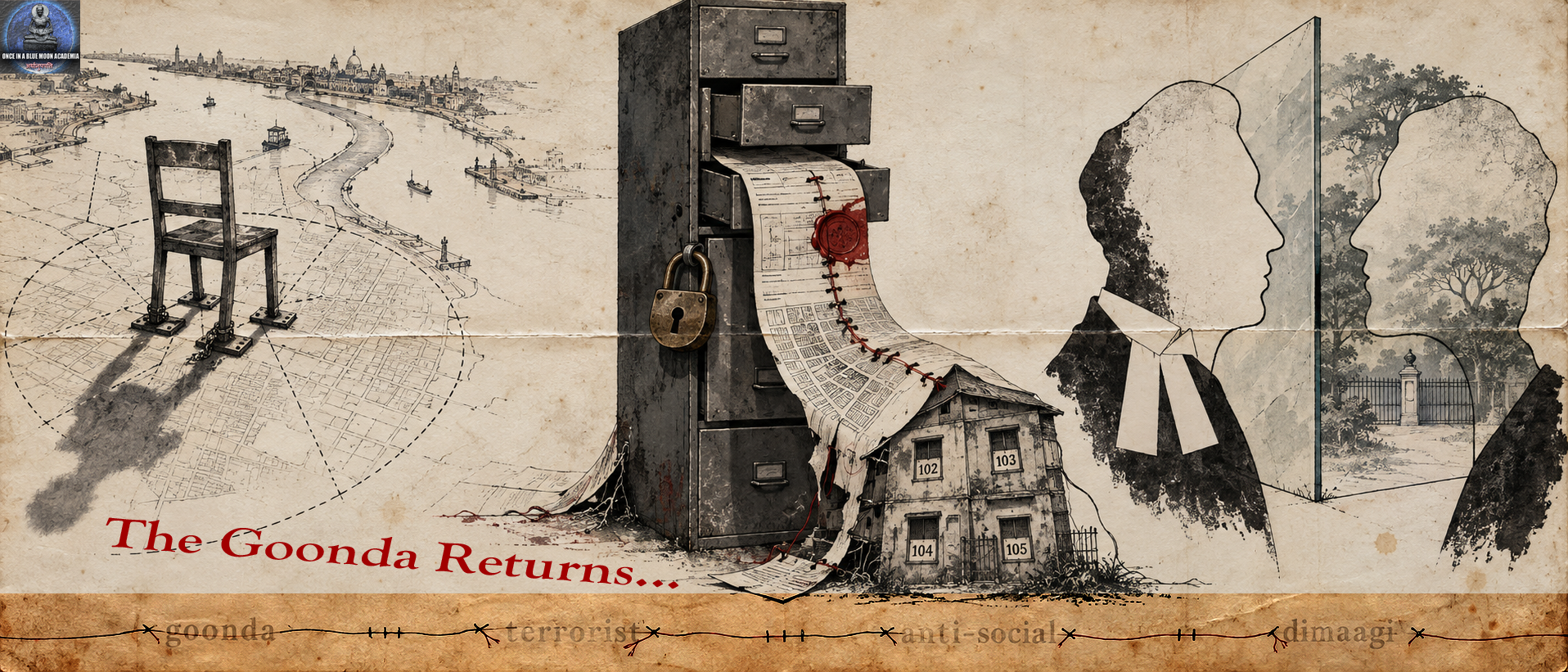
On 13 July 2026 West Bengal’s new BJP government announced that the Public Safety and Control of Anti-Social Activities Act (gunḍā-damana) and the Maintenance of Public Order (Amendment) Act were in force. The first allows twelve months’ charge-free detention of anyone a magistrate or commissioner deems a reputational “goonda,” criminalises harbouring the externed, and permits year-long district banishment. The second lets a Claims Commission attach and auction the property of alleged rioters and of protest organisers, financiers, instigators and logistical supporters, up to twice assessed damage. A High Court bench later treated the Public Safety instrument as still awaiting assent; the government had already declared midnight commencement. The article reads both statutes as Bengal’s own colonial archive reprinted — Regulation III of 1818, Rowlatt 1919, the Goondas Act 1923, the 1929 Safety Bill against which Bhagat Singh timed the Assembly bombs — and as a Foucaultian status crime. Against ICCPR Articles 9, 12, 14, 15, 19, 21–22, General Comment 35 and CCPR/C/IND/CO/4 (2024), the design fails at every limb; India’s 1979 Article 9 declaration does not shelter what Article 22 never required. The same circuit is the impunity loop mapped in OBMA’s DHFL and bulldozer work. A coda tests damana against daṇḍanīti, sets ADR affidavits inside the definition, and reads anyonya-pratibimba, Barthesian myth, and the July naming of Forward Bloc as goonda as a category that cannot close. It ends with a protocol: document the order, litigate the interior, internationalise now, count who is named, protect the harbourer. The goonda of the file is not the person. The second file is the remaining procedure.
