“Man Na Raṅgāye”: Embodied Austerity and Leadership Praxis During the Climate Crises
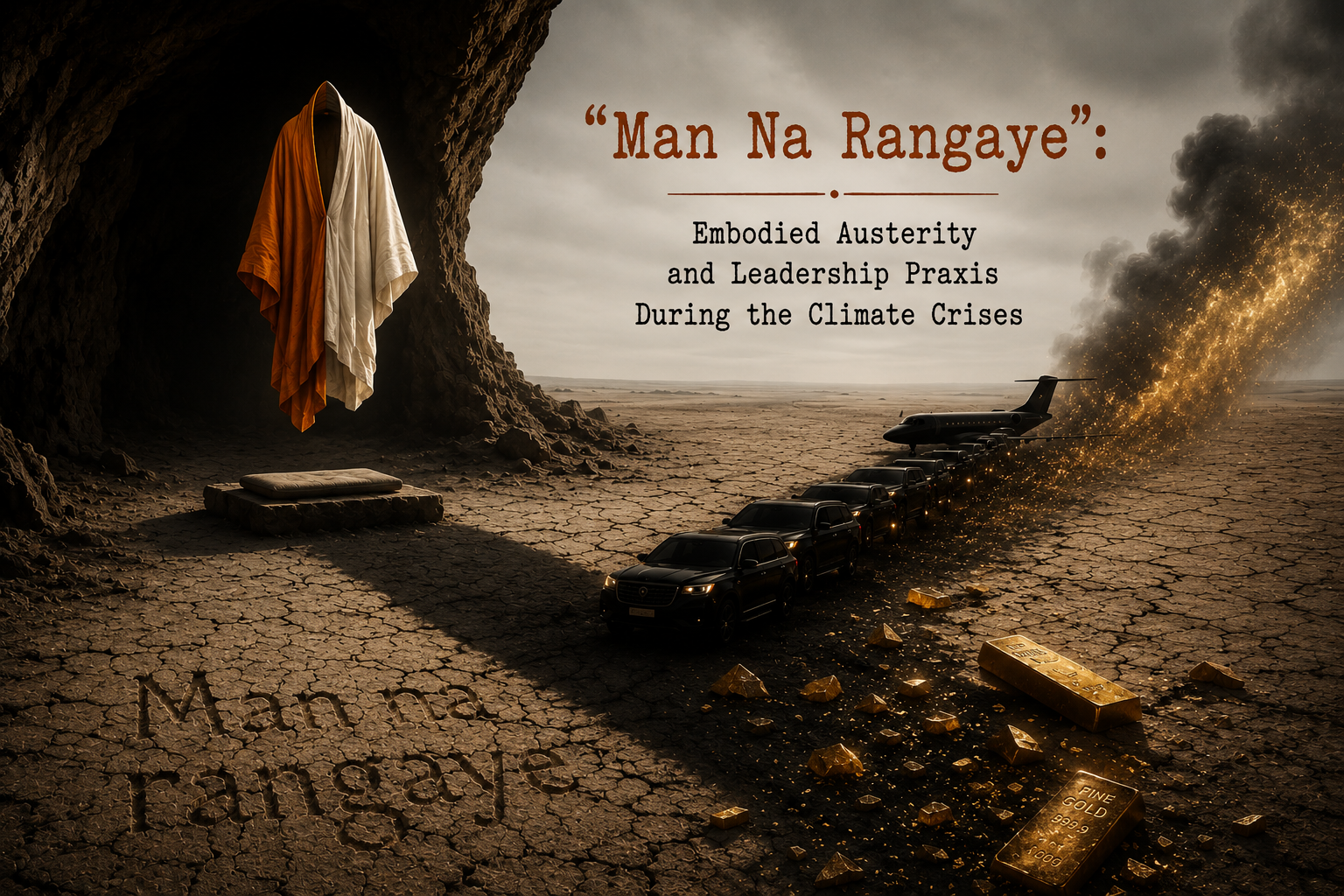
On 10 May 2026, Prime Minister Narendra Modi urged Indian citizens to adopt sweeping austerity measures—restraining petroleum use, reviving work-from-home, minimising non-essential foreign travel, postponing gold purchases, reducing imports of edible oils and chemical fertilisers, promoting natural farming and Swadeshi consumption, and preferring public transport, carpooling, and EVs—amid West Asia tensions, rising oil prices, and forex pressures. This paper delivers an uncompromising critique of these imperatives, examining their genuine ecological co-benefits in the climate crisis alongside the cross-traditional philosophical demand for ācaraṇa (embodied praxis) drawn from Chaitanya Mahaprabhu, Imam Abu Hanifa, Gandhi, Kant, Marx, Tagore, and Kabir; the glaring contradictions with the Prime Minister’s opulent lifestyle, extravagant foreign travels, luxury branding, and high-carbon Z+/SPG security protocols; and the deeper theoretical foundations in A.K. Dasgupta’s Economics of Austerity (1975), the Mahābhārata’s Vana Parva, the Bhagavad Gītā’s teachings on lokasaṅgraha and rejection of karmavirati, and Swami Vivekananda’s Practical Vedanta. It argues that in the Anthropocene, genuine austerity requires visible leadership embodiment for moral legitimacy, ecological efficacy, and spiritual coherence; absent such praxis, Modi’s call stands exposed as the very hypocrisy Kabir satirised in his pad “Man nā raṅgāye raṅgāye jogī kaprā” — performative asceticism and ruling-class doublespeak that fatally undermines its own imperatives. The paper proposes a framework of ecological austerity as lokasaṅgraha, integrating economic theory, environmental analysis, South-East Asian philosophy, and uncompromising political ethics.
