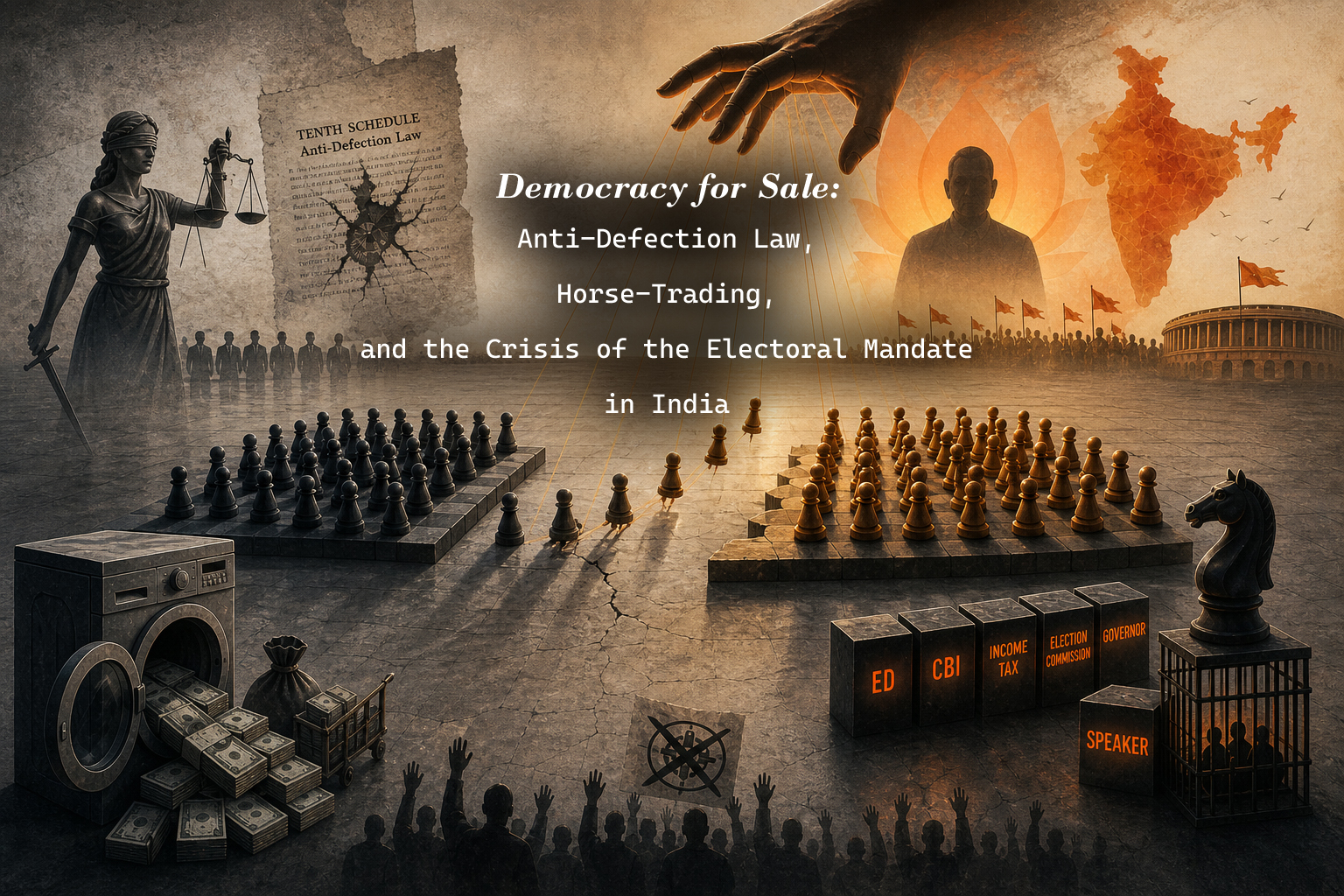
The Anti-Defection Law (Tenth Schedule, introduced by the 52nd Amendment 1985 and strengthened by the 91st Amendment 2003) was designed to curb opportunistic defections and safeguard the electoral mandate in India’s parliamentary democracy. Yet its critical loopholes—the two-thirds merger exception (Paragraph 4), unpenalised mass resignations, partisan Speakers, and ambiguities between organisational and legislature parties—have institutionalised sophisticated horse-trading. This article offers a doctrinal and empirical critique, centering on the Shiv Sena crisis (2022–23) and the Supreme Court’s Subhash Desai judgment (2023), which exposed how rebellion, strategic resignations, resort politics, and institutional delays enabled the toppling of a democratically elected government. Examining defection patterns from 2014 to 2026—including the April 2026 merger of seven AAP Rajya Sabha MPs with the BJP—it reveals the BJP’s “Operation Lotus” and “washing machine” machinery, sustained by opaque political funding, crony corporate networks, and quid-pro-quo clean chits, that betray the electorate’s verdict, erode ideological conviction, and accelerate democratic backsliding under the centralising “double engine sarkar” model. These practices undermine India’s federal structure as a Union of States and necessitate radical reforms: independent adjudication, strict timelines, tighter merger rules, bars on defectors, and full transparency in political finance—before the Tenth Schedule becomes a constitutional tool for authoritarian consolidation rather than democratic safeguard.
