কোন্ দেবতারে ভোট মোরা করি সমর্পণ?
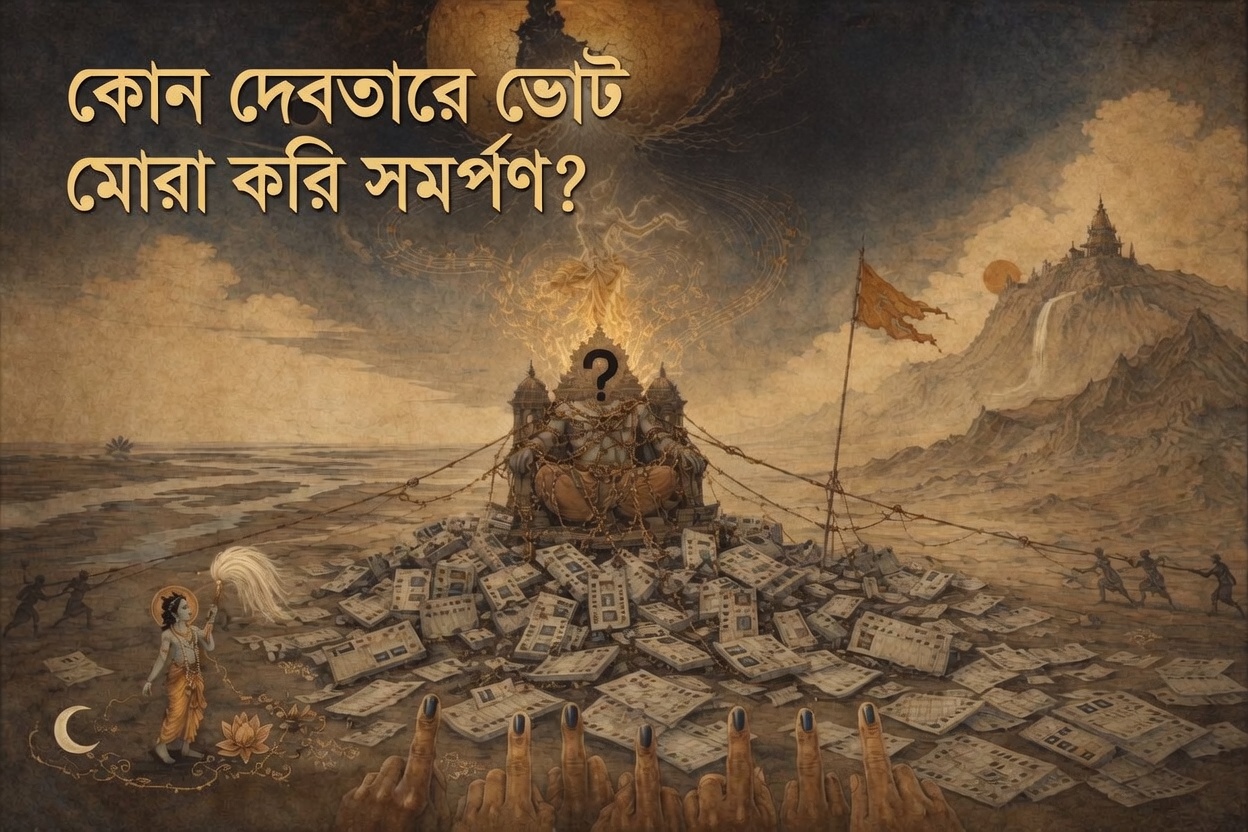
এই নাটকের মূল বিষয়বস্তু ঠিক করাটা বেশ খ্যাঁচাম্যাঁচা একখানা ব্যাপার। এখানে ব্যাপক ঝগড়া, তর্ক, চাপানউতোর, গালি-গালাজ, এবং সেসবের মাধ্যমেই সরাসরি কিংবা
পরোক্ষভাবে একাধিক সূত্রনির্দেশ ঘটে চলে জবানির অন্দরে-বাহিরে। আজকের ভারত তথা পশ্চিমবঙ্গের ভোটাভুটির রাজনীতিকালে এই নাটক একটা ফুলকি থেকে আগুন ধরানো agit-prop হিসেবে নিজেকে পেশ করে তাত্ত্বিক মননের উপস্থিতির পাশাপাশিই। এই নাটকের উদ্দেশ্য চিন্তার দৈন্যকে পেরোনো। পড়ে নেওয়া যাক তবে!
“To Which God Shall We Offer Our Vote?” (Kon Devotare Vote Mora Kari Samarpan?) is a bold, agit-prop Bengali political satire that fuses Vedic philosophy, Sufi syncretism, and sharp contemporary critique.
Set against the backdrop of electoral frenzy and rising majoritarianism, the play opens with the ancient Rigvedic question — “To which god shall we offer our oblation?” — and relentlessly interrogates modern democracy: To which “god” (leader, ideology, or system) do we surrender our vote?
Through a chaotic, interactive performance blending Vedic chants, Odissi dance, folk songs, revolutionary anthems, and raw audience confrontation, the central figure “I” grapples with spectators who defend “Sanatan” traditions while the bold dancer (Nati) asserts women’s agency and challenges patriarchal and caste hierarchies. The narrative explodes into a ritualistic feast involving beef and rum — reclaiming Vedic practices — even as it skewers Hindutva nationalism, voter list manipulations, algorithmic governance, and the deification of political leaders.
Drawing from the Nasadiya Sukta’s cosmic doubt, the Hiranyagarbha hymn, Tagore’s universalism, and Bulleshah’s call to break temples and mosques but never the heart filled with love, the play dismantles blind faith, communal polarization, and electoral farce. It urges the audience to choose critical inquiry (pariprashna) over blind surrender and syncretic humanity over division.
Provocative, multilingual, and deeply theatrical, this piece is both a Vedic question and a urgent political provocation — asking whether democracy itself has become just another god demanding blind oblation.
A powerful meditation on faith, power, and the right to doubt in an age of manufactured certainty.
