Retrospective Truths: Valmiki, Ayodhya, IBC 32A, and the Stake of Constitutional Secularism
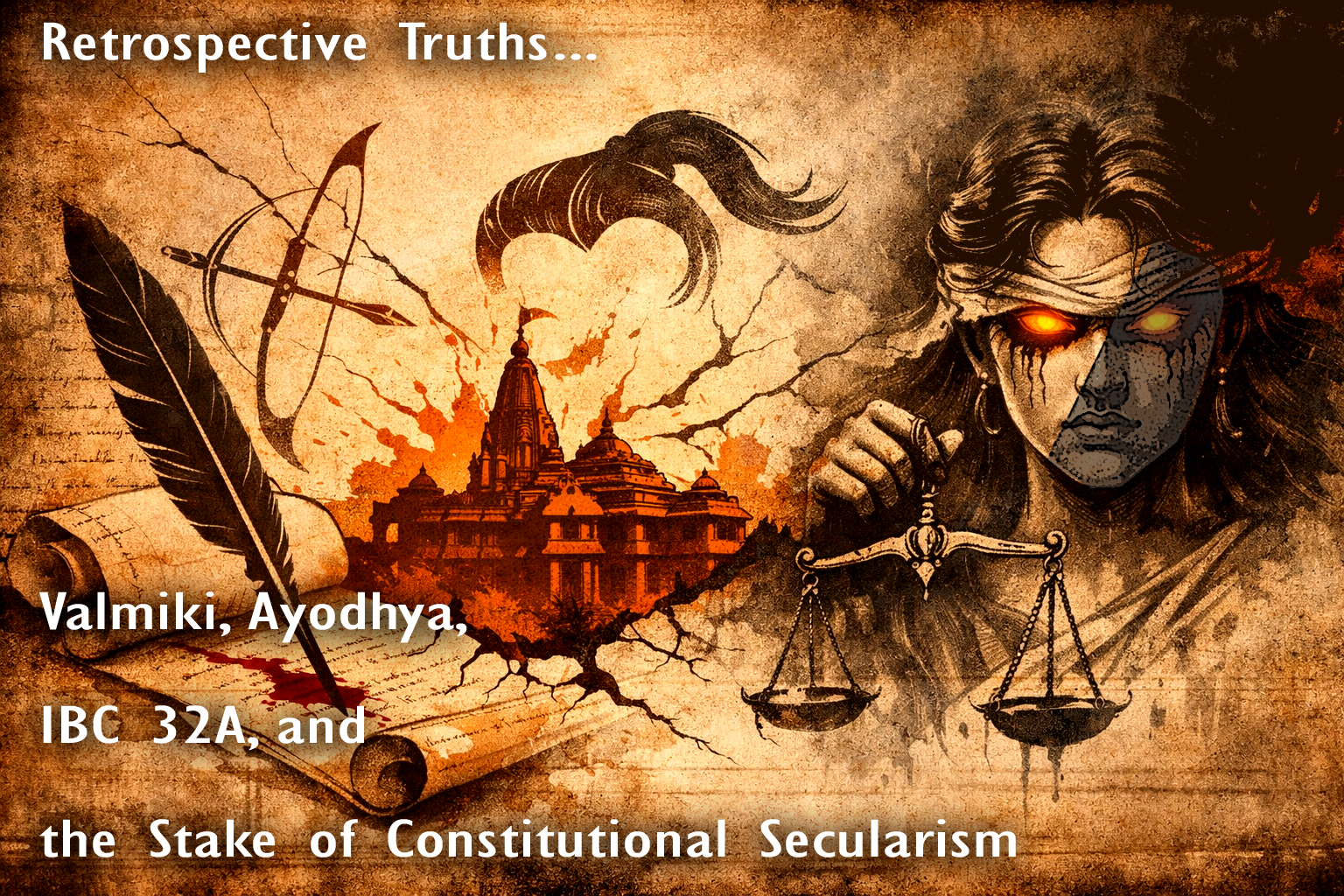
This short article explores a striking parallel between poetic creation and state-sanctioned reality-making in contemporary India. Drawing from Rabindranath Tagore’s poetic dialogue with Narada in the context of Valmiki’s Ramayana—where the poet’s imaginative mind-realm is declared Rama’s truer birthplace than historical Ayodhya—the discussion extends to two landmark institutional acts: the Supreme Court’s 2019 Ayodhya verdict (with Justice D.Y. Chandrachud’s later confession of seeking divine guidance) and Section 32A of the Insolvency and Bankruptcy Code (IBC), which retrospectively absolves corporate debtors of pre-insolvency offences upon plan approval, as vividly illustrated in the DHFL-Piramal takeover. Both instances represent exercises in retrospective ontological surgery: the poet erases or reconfigures the past through fiction for ecstatic delight (jouissance), while the judiciary and legislature do so through unsigned judgments infused with faith-based inspiration and statutory “clean-slate” mechanisms that shield economic continuity at the expense of accountability. The article argues that such sovereign rewritings—whether sacralising faith in a title suit or engineering corporate rebirth—breach the thick wall of separation between powers, subordinate evidence-based adjudication to revelation or expediency, and inflict profound injury on constitutional secularism. By collapsing the distinction between objective historical/legal truth and creatively decreed higher truth, these developments risk transforming the secular Republic into a palimpsest open to majoritarian or crony capture, where Article 51A(h)’s mandate of scientific temper yields to engineered absolution and divine endorsement. Ultimately, while the poet may harmlessly invent birthplaces, when the State borrows that crown, the stake is nothing less than the integrity of constitutional secularism itself.
