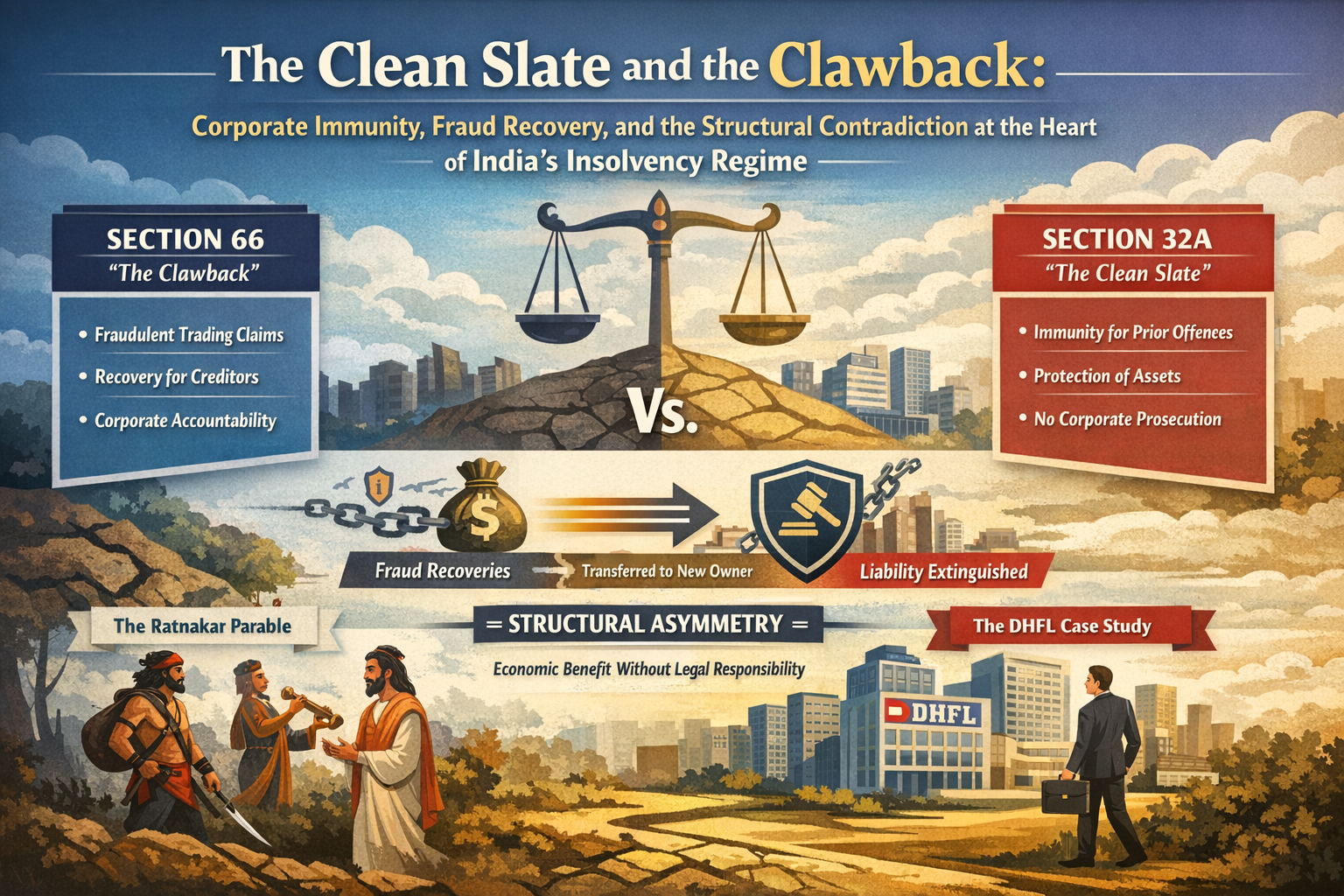
The Insolvency and Bankruptcy Code, 2016 establishes a dual legal framework combining fraud recovery and insolvency resolution. Section 66 embodies the Code’s accountability function by empowering recovery from fraudulent and wrongful trading, thereby restoring value to creditors. In contrast, Section 32A, introduced in 2019 with retrospective effect, extinguishes corporate criminal liability once a resolution plan is approved and control passes to new management. This paper argues that these provisions operate in structural tension: Section 66 presupposes continuity of corporate liability to enable recovery, while Section 32A extinguishes corporate criminal liability while preserving corporate identity, assets, and economic continuity. Through a doctrinal case study of Dewan Housing Finance Corporation Ltd. (DHFL), this paper demonstrates how avoidance recoveries identified under Section 66 remained corporate assets transferred to the resolution applicant, even as Section 32A extinguished the corporate debtor’s criminal liability for the underlying misconduct. This produced a structural asymmetry in which the corporate entity retained the economic benefits of fraud-linked recoveries while being legally immunized from responsibility for the fraud itself. The retrospective insertion of Section 32A further created a temporal dislocation, altering legal consequences after insolvency had commenced. The paper concludes that the interaction between Sections 32A and 66 represents a fundamental transformation in insolvency law—from a creditor-recovery framework grounded in accountability to an acquirer-protection framework grounded in corporate immunity—raising profound questions about equality before law and the political economy of insolvency resolution.
