From Immunity to Impunity: India’s Predatory Insolvency Regime, Electoral Autocracy, and DHFL Scam
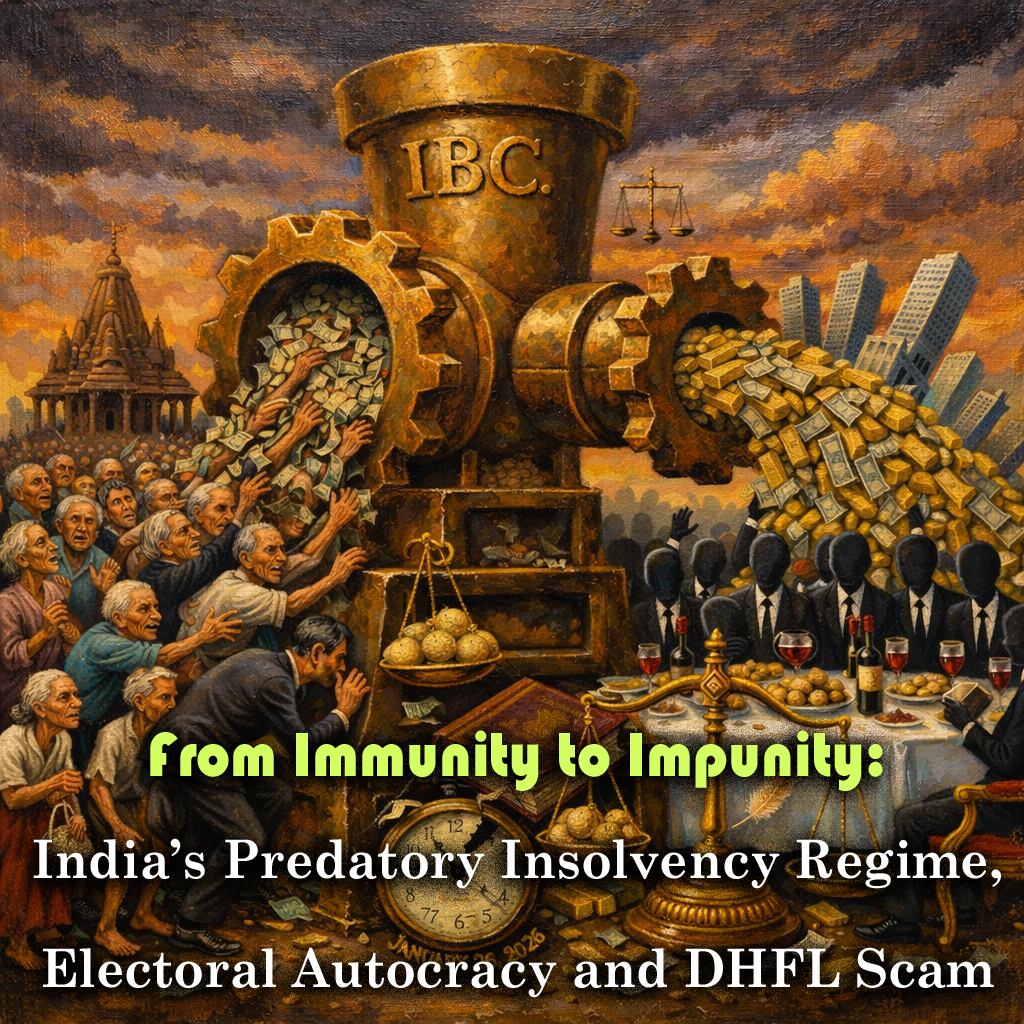
This article critically examines the Insolvency and Bankruptcy Code (IBC), 2016, arguing that it has evolved into a structurally predatory regime enabling the systematic transfer of public, depositor, and taxpayer-backed wealth to politically connected private entities. Through the lens of the DHFL resolution, it analyzes key judicial rulings—including the Delhi High Court’s holding that Insolvency Professionals are not “public servants” under the Prevention of Corruption Act, 1988, and the Supreme Court’s 2025 affirmation of the Piramal plan—revealing chronic delays, 67–68% average haircuts, fraud laundering via Section 32A, and unchecked Committee of Creditors (CoC) dominance. Situating DHFL within India’s declining Corruption Perceptions Index (96th/180, score 38/100 in 2024), the study highlights premature occupation by Ajay Piramal, enabled by his secondary kinship to Mukesh Ambani and BJP-linked patronage. It concludes that incremental amendments are insufficient and advocates complete repeal in favour of a transparent, constitutionally compliant framework prioritizing public interest, restitution, and accountability under Articles 14 and 21.
