Manifesto for Scrapping the Ill-Conceived Insolvency and Bankruptcy Code (IBC) 2016
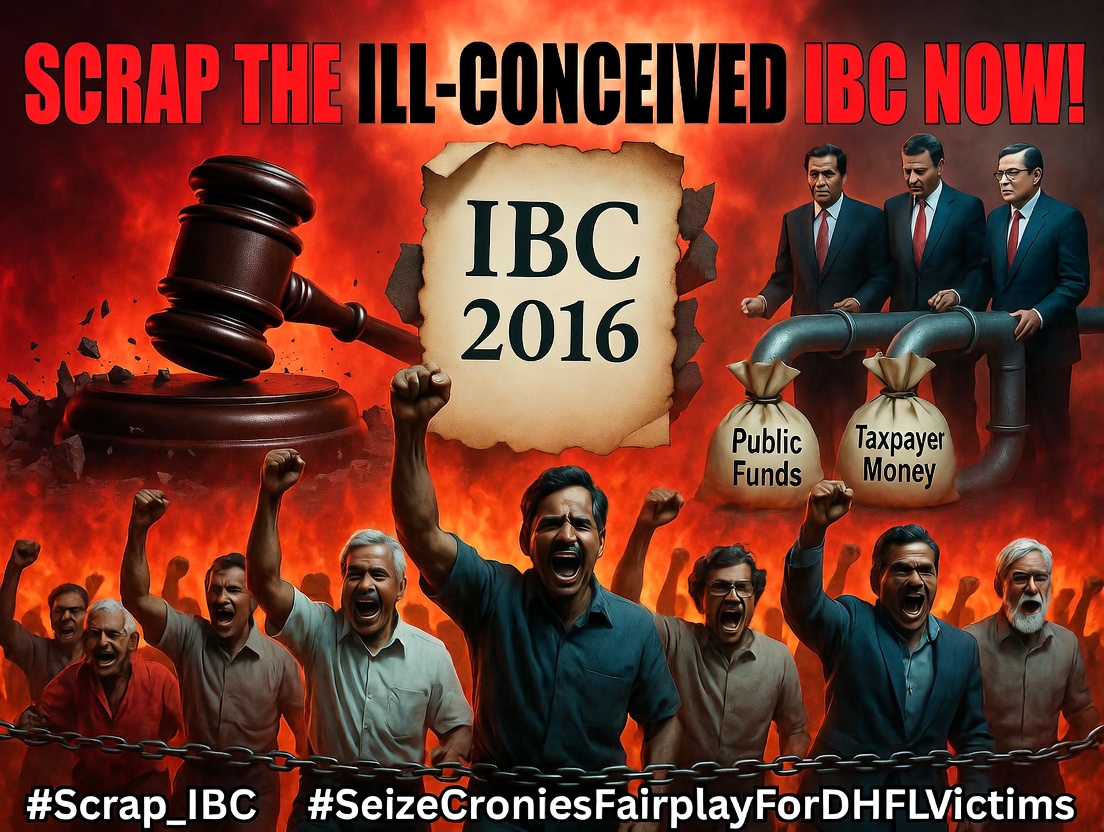
This manifesto advances a sustained, evidence-based critique of India’s Insolvency and Bankruptcy Code (IBC), 2016, arguing that the regime has evolved into a structurally predatory legal apparatus that facilitates large-scale transfer of public, depositor, and taxpayer-backed wealth into private corporate hands under the guise of “efficient insolvency.” Drawing on IBBI data up to 2025, landmark cases such as DHFL, Bhushan Power & Steel, Videocon, and Aircel, and recent Supreme Court jurisprudence, the analysis demonstrates how the IBC has systematically failed its own statutory promises of time-bound resolution, value maximization, equitable treatment, fraud recovery, and economic revival. Instead, prolonged delays, extreme haircuts averaging 67–68%, marginalization of retail depositors and public-interest claims, laundering of fraud through Section 32A immunity, and near-absolute deference to creditor “commercial wisdom” have produced a regime marked by judicial ritualism, moral hazard, and deep constitutional infirmities under Articles 14 and 21. The DHFL resolution is presented as a “laboratory case” exposing the IBC’s core pathologies—where a solvent, fraud-tainted institution was transferred at a steep discount, avoidance recoveries worth tens of thousands of crores were privatized, and lakhs of small savers were effectively dispossessed. Situating the IBC within a broader political economy of crony capitalism and opaque political funding, the manifesto rejects incremental reform as inadequate and calls for the complete scrapping of the Code in favor of a transparent, people-centric insolvency framework grounded in accountability, restitution, constitutional justice, and public interest.
