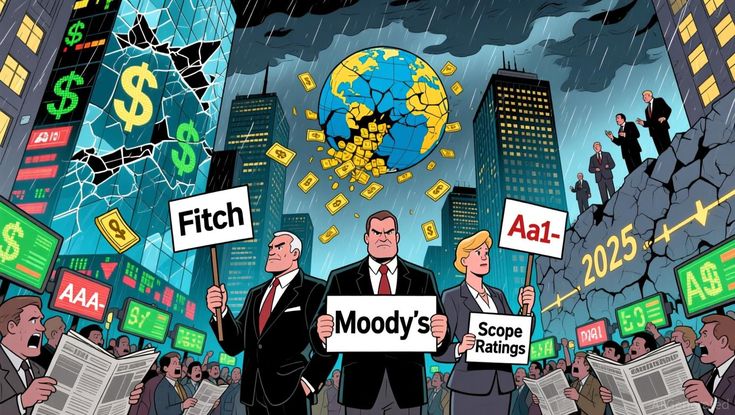
Credit rating agencies (CRAs) in India occupy a paradoxical position: their ratings shape investor behaviour, influence borrowing costs, and determine market access for corporations, yet they operate within a regulatory and commercial architecture that structurally disincentivizes critical scrutiny and accountability. The issuer-pays model — wherein the rated entity pays the rater — creates endogenous conflicts of interest that privilege quantifiable metrics like capital adequacy and liquidity while marginalizing qualitative governance and forensic risks. This article argues that under such a regime, investment-grade ratings (including the recent CRISIL AA+/Stable assigned to Piramal Finance in early 2026) function less as independent credit assessments and more as manufactured assurances that legitimize capital flows for well-connected conglomerates. Drawing on legal, financial, and political economy frameworks, this piece situates India’s CRA ecosystem within a broader pattern of regulatory compliance without substantive responsibility, oligopolistic market concentration, and political-corporate crony interlocks. It contends that ratings resemble self-assessment with outsourced certification, transferring systemic risk downstream to retail investors, pension funds, and the public. The Piramal example is explored as a paradigmatic case in which ratings have obscured deep-seated governance vulnerabilities and deferred accountability, underlining the need for structural reforms in rating incentives, liability regimes, and public interest protections.
