Of Debt and Delusion: India’s $747 Billion Burden and the Mirage of Neoliberal GDP Fetishism
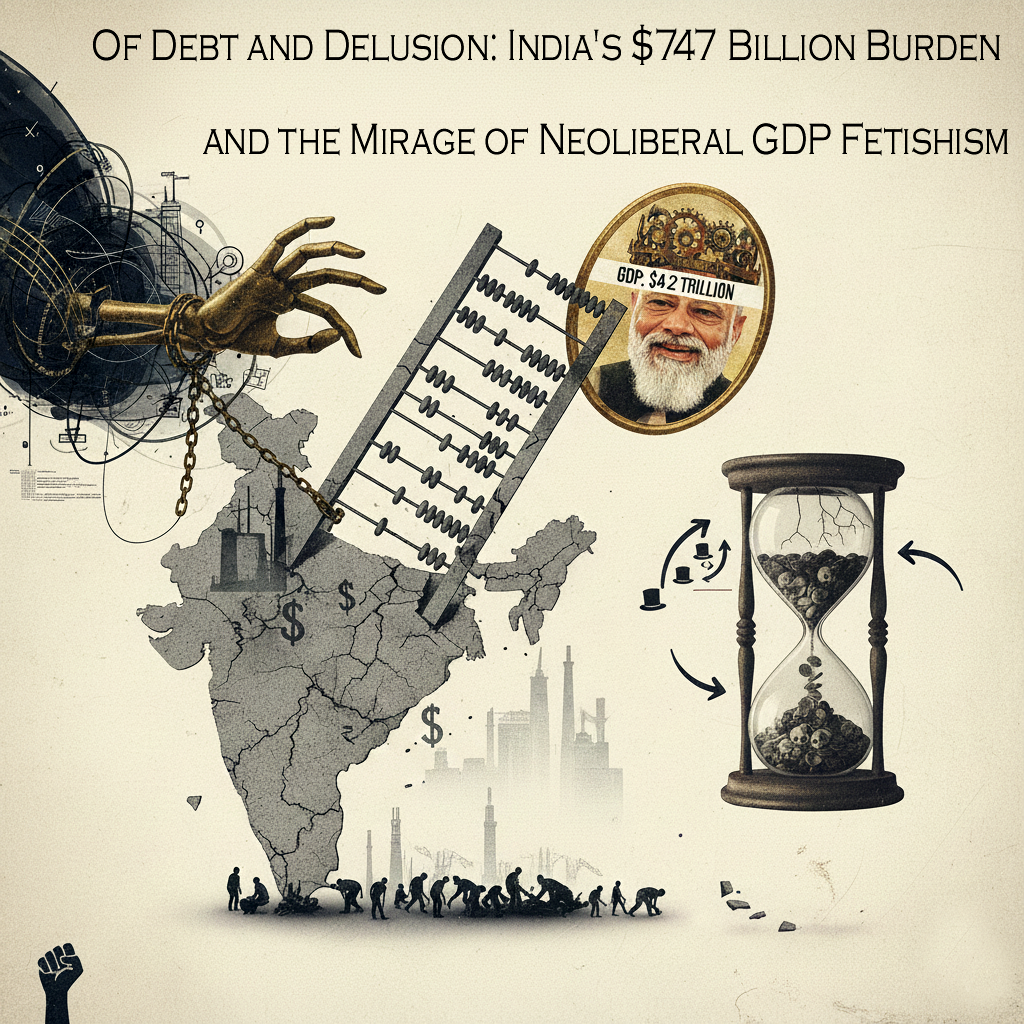
This article critically examines India’s external debt surge to approximately USD 747 billion by mid-2025—a near-doubling since 2014—as a hallmark of crony capitalism under the Modi regime, where liberalized external commercial borrowings (ECBs) and public sector bank hollowing facilitate upward redistribution, oligarchic consolidation (favoring conglomerates like Adani and Ambani), and asymmetric risk socialization amid volatile private dominance (over 77% non-government), USD-heavy exposure (54%), and intergenerational burdens. Intersecting with GDP misreporting flaws (IMF C-grade accounts, unorganized sector proxies inflating growth) and colonial-era inequality peaks (top 1% holding 40% wealth), this financialized precarity—diagnosed via Toussaint’s World Bank “never-ending coup” and Lazzarato’s “indebted man”—enforces neoliberal discipline, commodifies survival, and erodes sovereignty despite orthodox “sustainability” metrics. Countering GDP fetishism’s ontological violence, it invokes Mahabharata’s aṛṇī ethics of non-indebtedness alongside nisargaṛṇa stewardship, proposing pluriversal alternatives like Felber’s Common Good Balance Sheet (non-commensurable axes of dignity, solidarity, ecology), A. K. Dasgupta’s Economics of Austerity, Raworth’s Doughnut Economics, Norberg-Hodge’s localization, degrowth/post-growth sufficiency, and gift/moneyless economies to reclaim community sovereignty from predatory entanglement toward justice, reciprocity, and unburdened flourishing.
