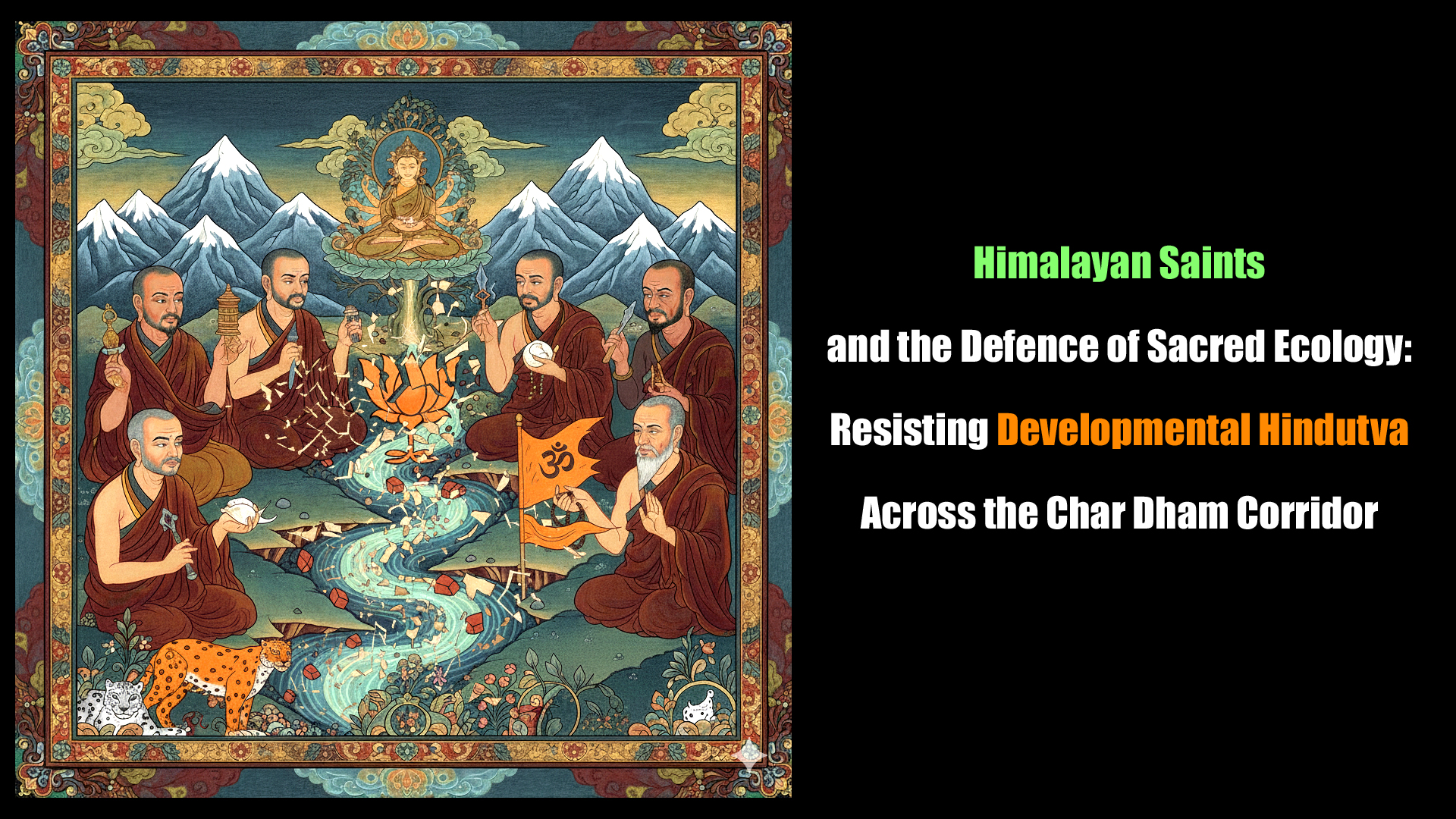
The Char Dham conflict in Uttarakhand exposes a deep contradiction within contemporary Hindutva: a BJP-led “developmental Hinduism” that fuses neoliberal infrastructure, militarized nationalism, and centralized temple governance is destroying the sacred-ecological fabric it claims to protect. The 2016 Char Dham all-weather highway and the 2019 (later repealed) Devasthanam Management Act have sought to convert the fragile, divine Himalayan shrines of Yamunotri, Gangotri, Kedarnath, and Badrinath into a securitized tourism-military corridor. In response, hereditary priests, ascetics, and local communities have mobilised a powerful resistance, framing the mountains and rivers as the living body of Shiva rather than exploitable resources. Drawing on Guattari’s three ecologies, their protests defend an embodied, relational sacred ecology against the state’s homogenizing, extractive logic. Far from a mere environmental dispute, this struggle reveals Hindutva’s betrayal of plural, place-based Hinduism and challenges the secular-pluralist foundations of the Indian republic.
