Unmasking Electoral Fraud in India: Patterns of Voter Roll Manipulation and Institutional Complicity
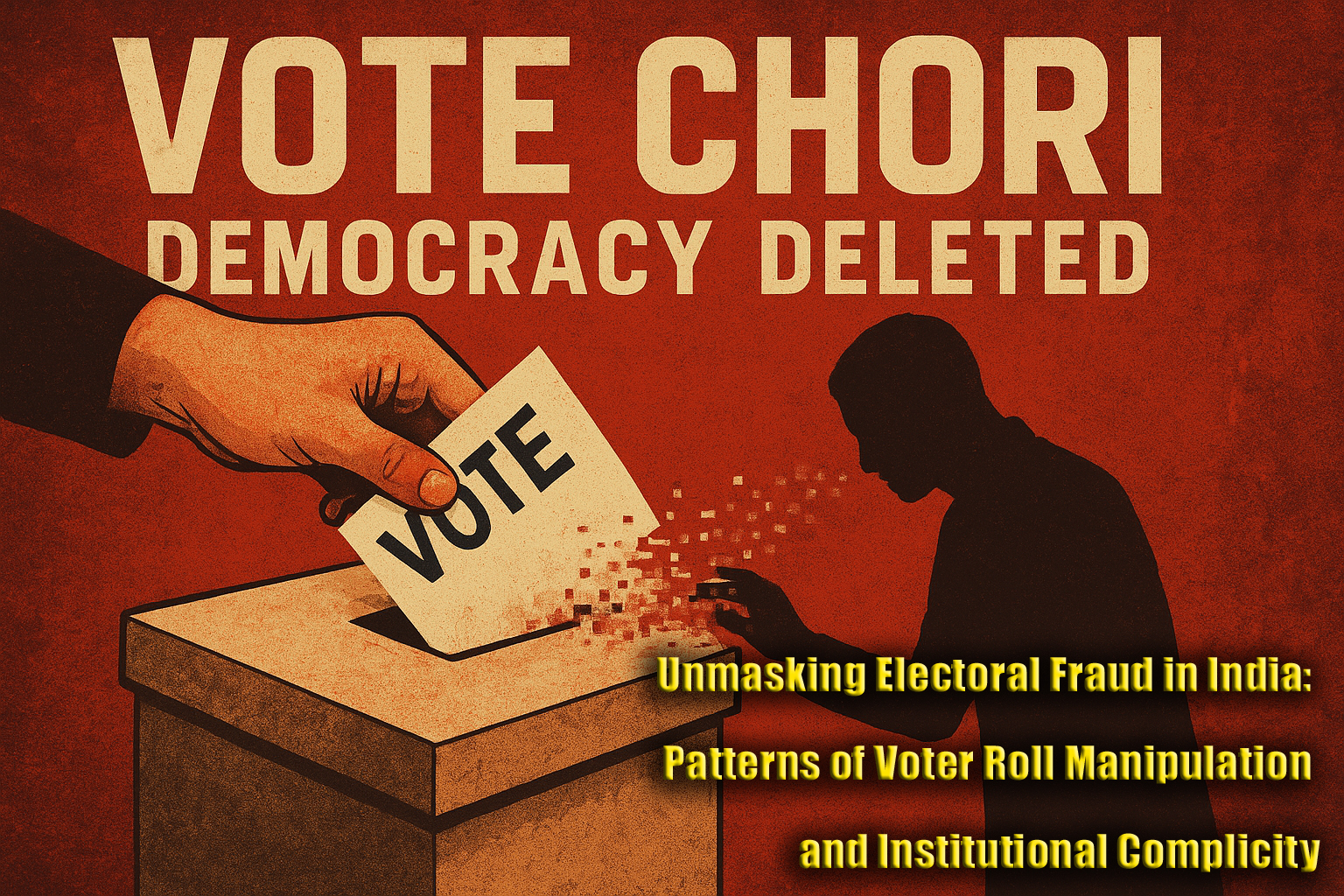
This article investigates the phenomenon popularly termed Vote Chori (“vote theft”) in contemporary India, revealing a systemic pattern of voter roll manipulation that challenges the credibility of the world’s largest electoral democracy. Drawing upon verified evidence from Rahul Gandhi’s disclosures, Ajit Anjum’s field investigations, voter testimonies such as that of Punam Kumari, and journalistic reporting from The Wire, the study identifies recurring techniques of disenfranchisement—including bulk deletions, forged Form-7 entries, and centralized, software-enabled tampering. Evidence from Karnataka, Bihar, and Maharashtra demonstrates how digital governance infrastructures, designed for efficiency, have become instruments of exclusion and partisan control. The Karnataka Special Investigation Team’s findings of call-centre operations and monetary inducements (₹80 per deletion) corroborate the allegations of industrial-scale roll manipulation. The Election Commission of India’s opacity and resistance to external audits reveal deeper institutional complicity and democratic erosion. By situating these developments within theoretical frameworks of algorithmic governance and bureaucratic authoritarianism, the paper argues that India’s electoral crisis marks not a failure of democracy per se, but its mutation into a technocratic apparatus of managed consent. The conclusion calls for independent digital audits, legislative oversight, and citizen-led verification systems as urgent correctives to restore electoral legitimacy.
