The Pharmakon of Coca Cola Capitalism: Paradigm of Thirst
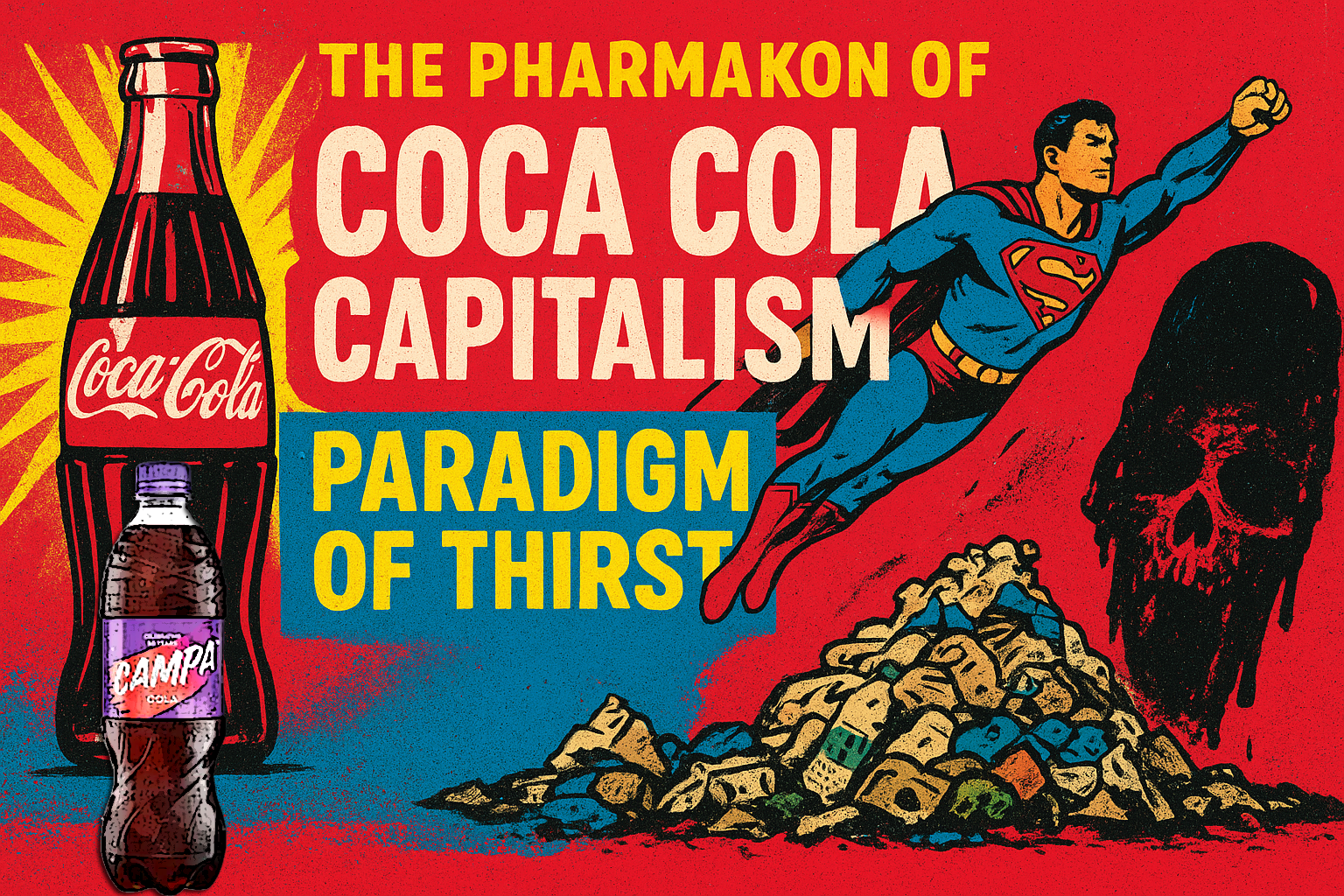
This paper synthesizes a sustained conversation into a coherent, comprehensive, and rigorous research paper that maps the concept of Coca-Cola capitalism to concrete historical and contemporary case studies in India. The analysis traces the genealogy of the term, situates it within scholarship on globalization and cultural imperialism, and offers a detailed historical narrative on Coca-Cola’s presence in India: its arrival (1950), exit (1977) amid FERA (Foreign Exchange Regulation Act) disputes, the growth of “indigenous” soft-drink alternatives, and Coca-Cola’s re-entry after economic liberalization (1993). The paper then examines the contemporary re-territorialization of the Coca-Cola model under Indian oligarchic capital—focusing on Reliance Consumer Products (Isha Ambani’s corporate sphere) and its acquisition and relaunch of legacy brands such as Campa and minority stakes in heritage regional companies (e.g., Sosyo). Ecological footprints of cold-drink production (water use, agricultural inputs, packaging waste, energy and emissions, and local social-ecological conflicts) are analyzed, alongside health hazards of carbonated soft drinks, including obesity, diabetes, and cardiovascular risks. A critical examination of corporate social responsibility (CSR) initiatives, such as the Piramal Foundation’s Sarvajal RO water ATMs in the context of the Digwal case-study, highlights hypocritical dimensions in water governance amid industrial extraction. The paper argues that Reliance’s strategy constitutes a domesticated variant of Coca-Cola capitalism—what the paper terms Ambani-Cola capitalism—which mechanically reproduces branding, distribution, and extraction logics while reorienting profit streams to domestic oligopoly. Drawing on Zizekian ideology critique, Lacanian psychoanalysis, and the Derridean interpretation of pharmakon, the analysis reveals the ideological surplus in commodified consumption. Policy implications and recommendations for environmental governance, community rights, competition policy, and corporate accountability are offered.
